A pattern that gives phrases direction
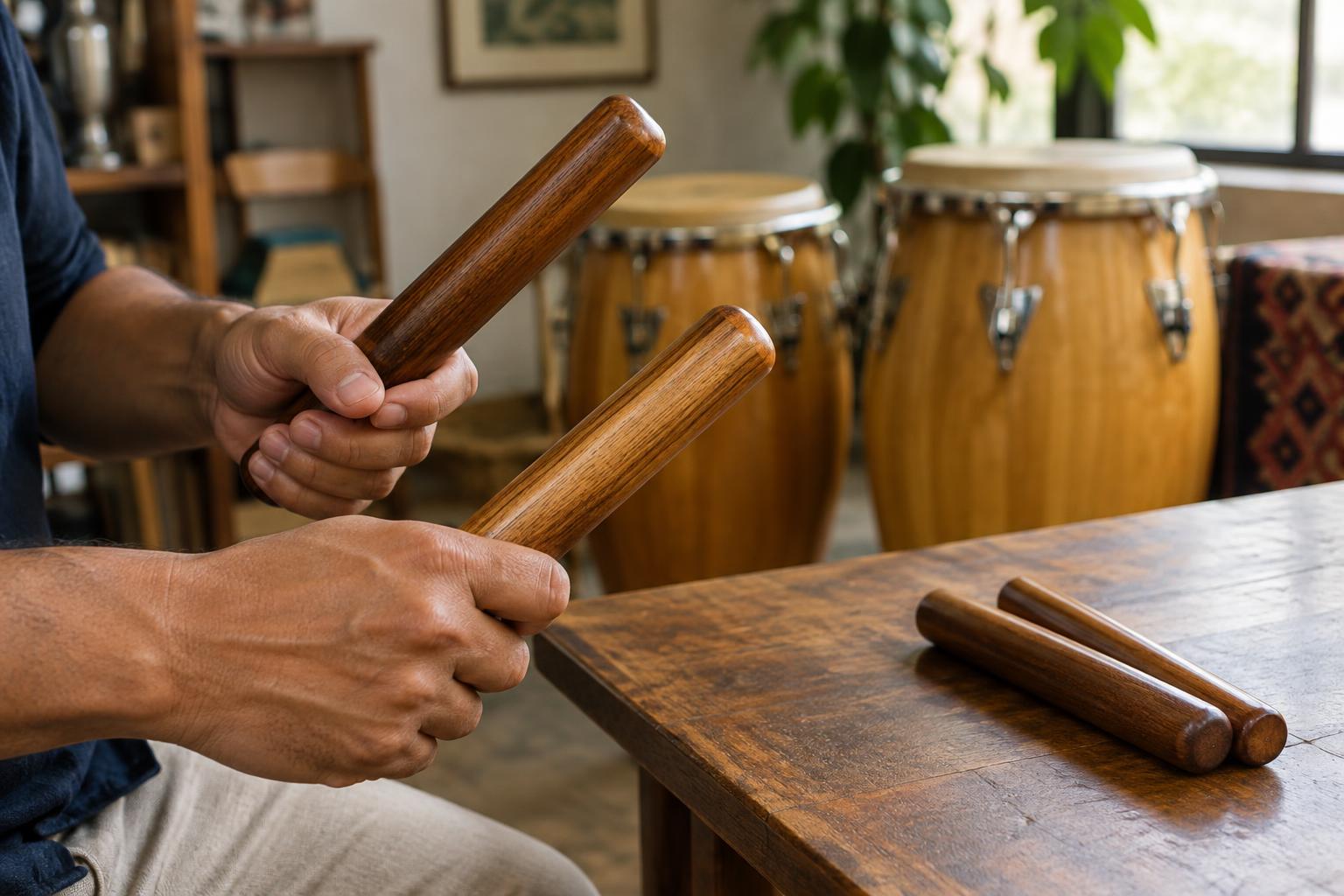
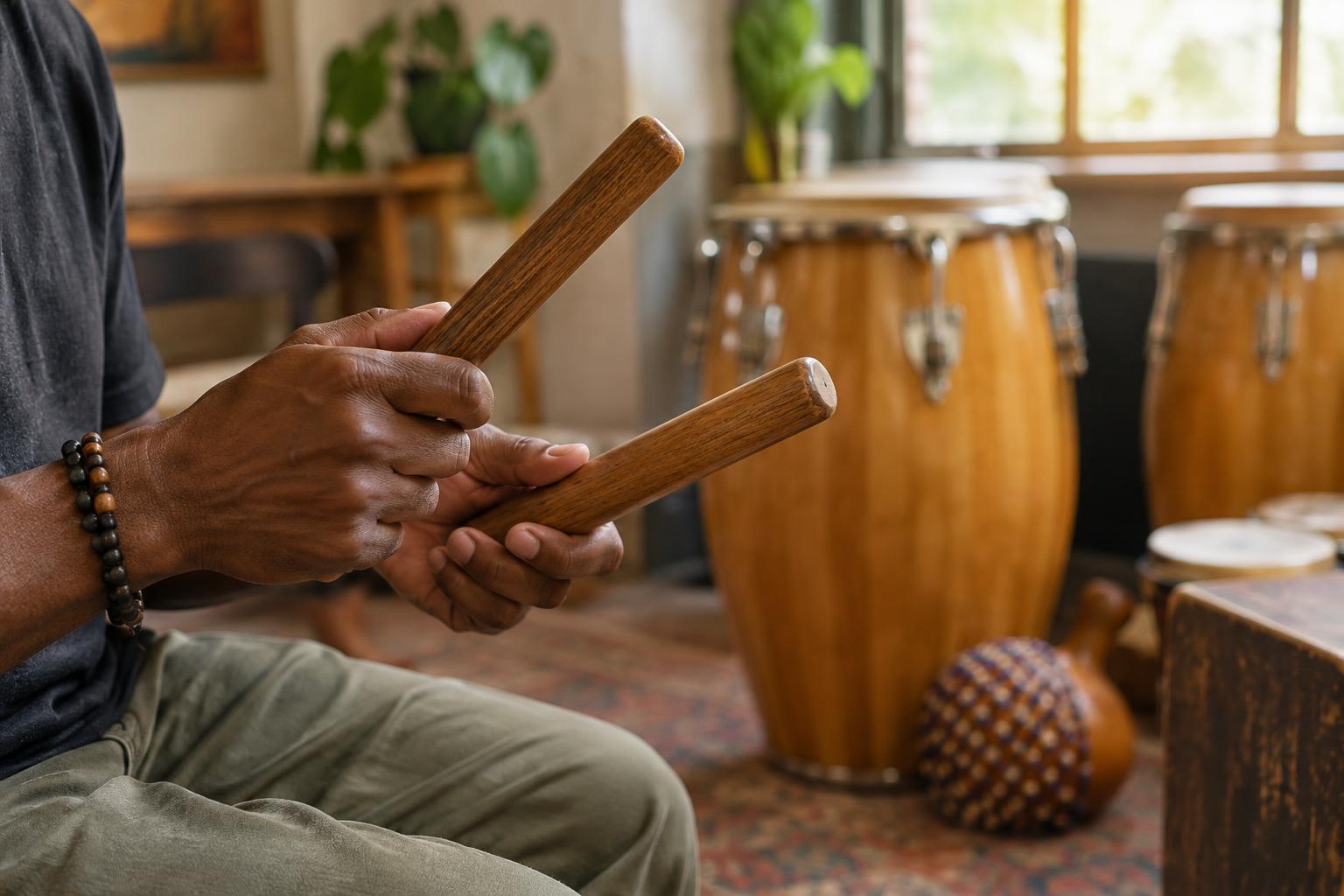
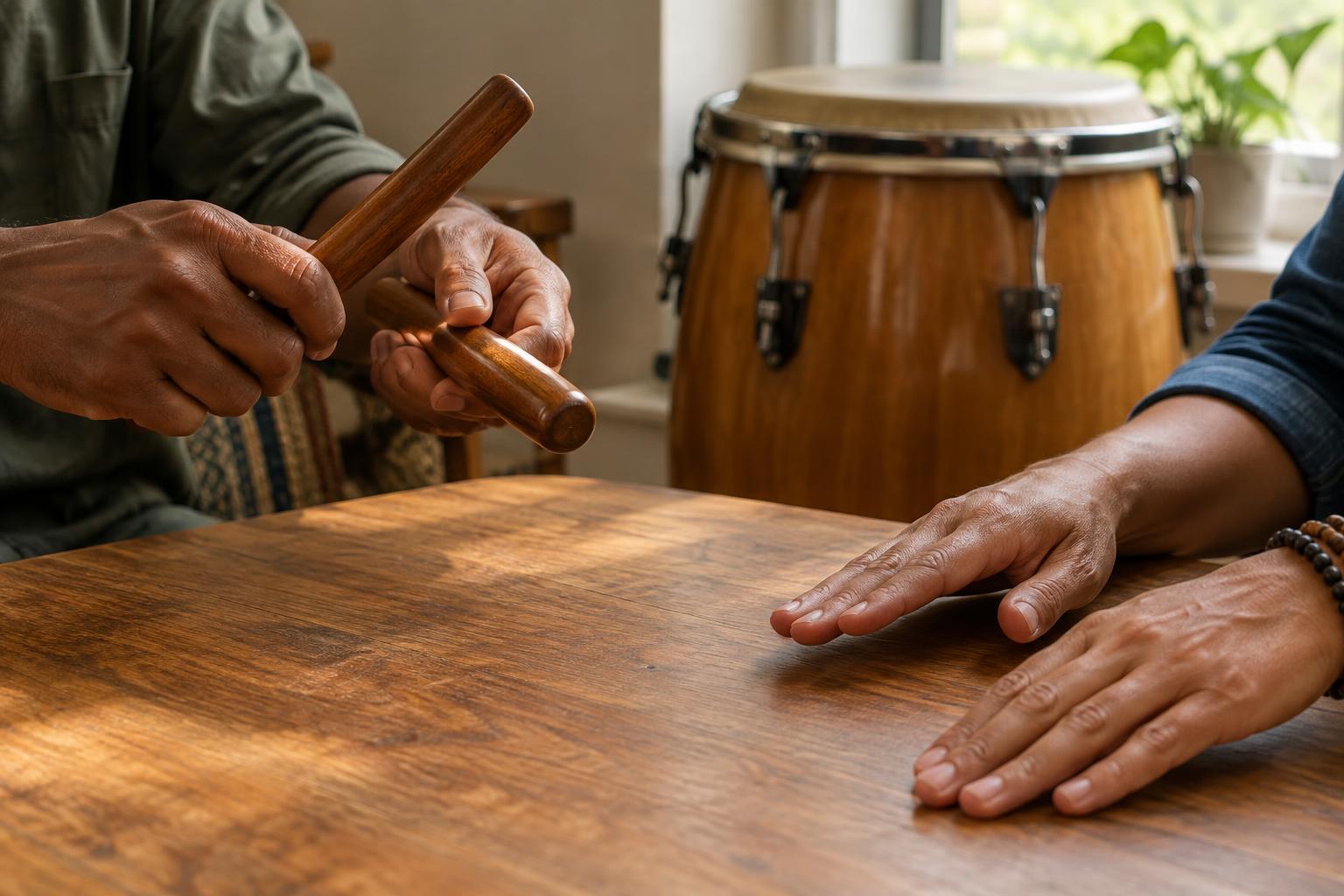
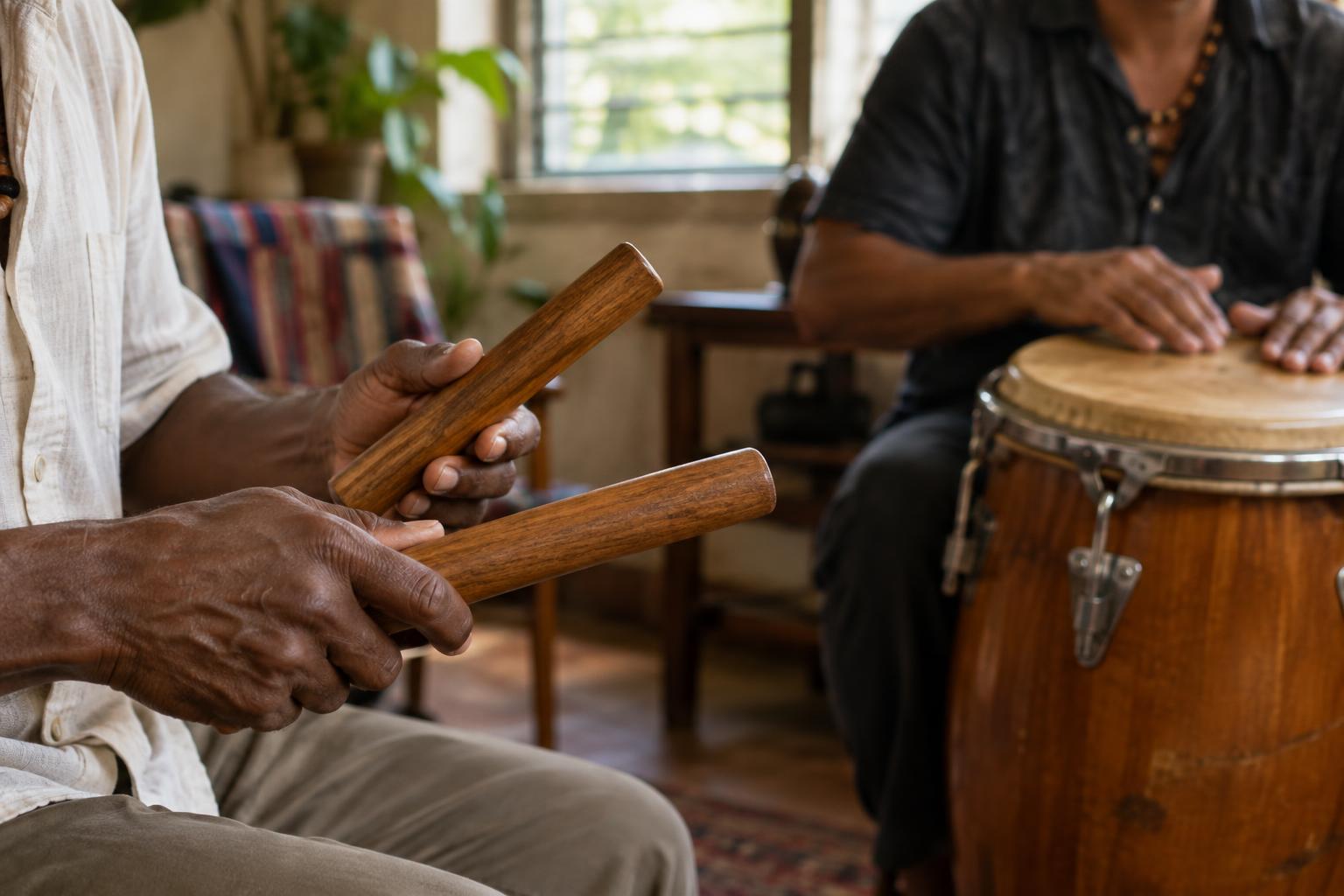
In Afro-Cuban music, clave can refer to a rhythmic pattern and to the wooden sticks that may play it. Musicians also use “in clave” to describe how a part sits within a piece. A singer, bassist or pianist can be in clave without playing any of the clave’s strokes. Their part makes sense against the pattern’s repeating shape.
A useful starting point is son clave, often heard as a five-stroke pattern spanning two measures. One measure has three strokes; the other has two. Musicians call the order 3–2 when the three-stroke side comes first and 2–3 when the two-stroke side comes first. These labels describe the pattern’s orientation in a musical phrase. They are not rankings, and neither orientation is automatically easier or better.
Why counting the strokes is only a beginning
Counting can help you locate the pattern. In one common way of counting son clave in 4/4, the three-stroke side falls on beat 1, the “and” of 2, and beat 4; the two-stroke side falls on beats 2 and 3 of the next measure. If the two-stroke side comes first, you hear the same two-measure cycle as 2–3. This count is a learning aid, not a complete description of how the rhythm feels.
A melody may begin before a strong beat, hold a note across it or leave a space where you expect a clave stroke. A bass line might repeat a figure whose accents do not copy the clave. Neither part is necessarily out of clave. The question is whether its entrances, accents and resolutions feel coherent as the cycle repeats. Matching every note to a stroke would leave little room for the interplay that makes an arrangement move.
Listen for relationships, not a hidden click track
Try listening to a passage twice. First, follow the steady beat with your foot and notice where a musical phrase seems to begin and settle. Then listen for a recurring two-measure shape in the percussion, piano, bass or voice. Does a short figure answer a longer one? Does a break create an expectation that the next entrance fulfills? Those relationships can help you hear the orientation even if no one is playing the wooden claves.
Do not assume that every Afro-Cuban piece uses the same clave pattern or that every passage announces its orientation plainly. Son and rumba clave, for example, have different shapes, and musical styles use rhythmic guides in different ways. If you cannot identify the clave immediately, keep listening rather than forcing a count onto the music. Hearing the full arrangement usually tells you more than isolating one instrument.
A simple way to practice feeling the cycle
Begin with a steady four-beat pulse. Clap son clave for several two-measure cycles: three strokes in the first measure, then two in the second. Say “three side, two side” as you go. Once you can maintain the pattern comfortably, keep the pulse going and leave out the claps for one cycle. Bring them back without restarting. The goal is to retain your sense of place while the pattern is silent.
Next, sing or tap a short phrase over the cycle. Let it begin on a beat, then try beginning it between beats or holding its final note into the next measure. Listen to how the same phrase feels when the two-stroke side comes first. Do not switch orientation halfway through an exercise to make a difficult entrance fit; keep track of the whole cycle and notice how the phrase relates to it.
A musical guide, not a pass-or-fail rule
Clave has deep roots in Afro-Cuban musical traditions and is learned through playing, dancing and listening as well as through verbal counts. A diagram can show where strokes fall, but it cannot fully convey the timing and conversation among parts in a performance. Learning from musicians and recordings within a tradition helps put the pattern in context.
For a developing musician, “in clave” is best treated as a question to explore: Where am I in the cycle, and what does my phrase do there? Once you can answer that while the clave is sounding—and when it is not—you are moving beyond memorizing five strokes toward hearing how the music fits together.