The basic setup: two drums with distinct voices
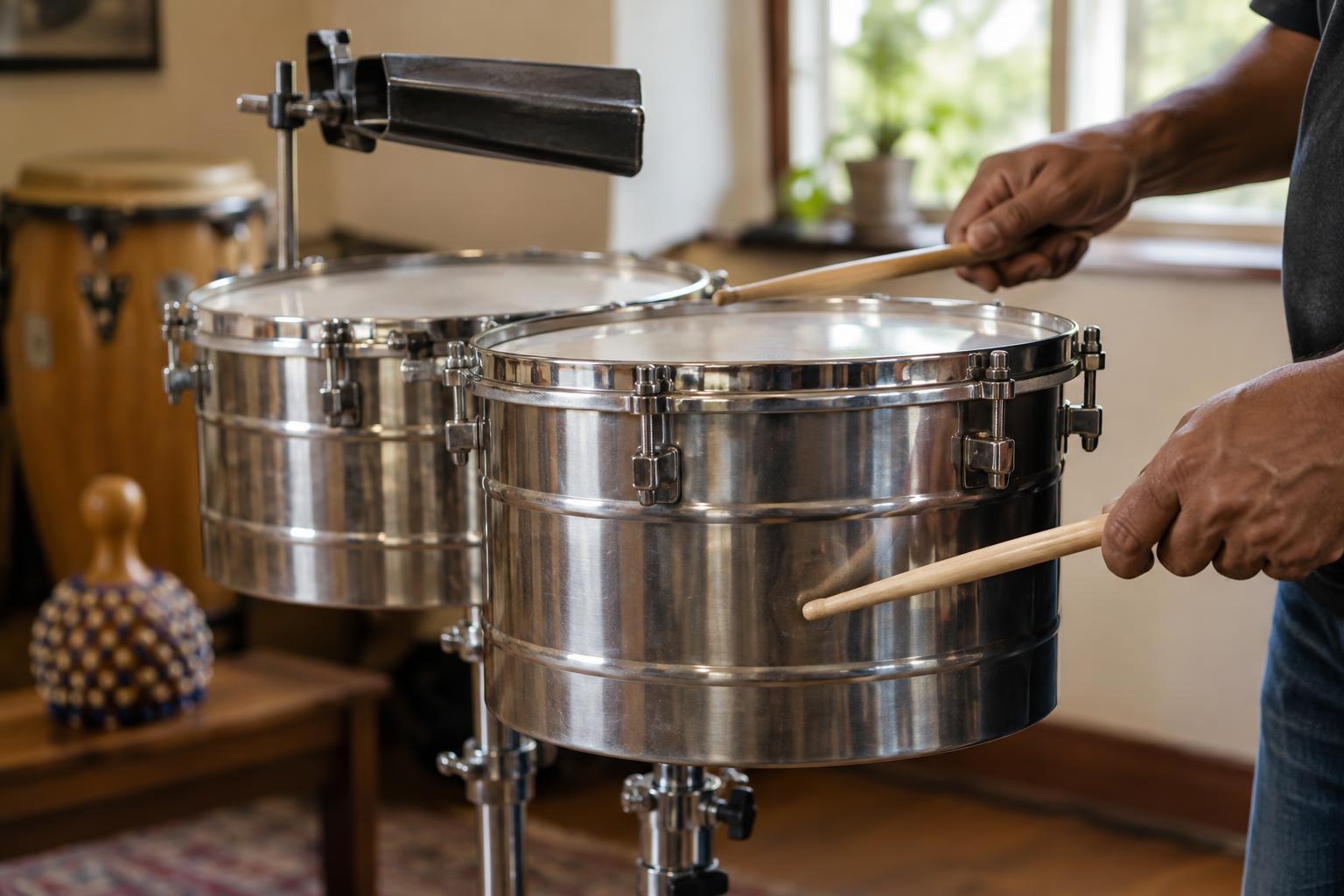
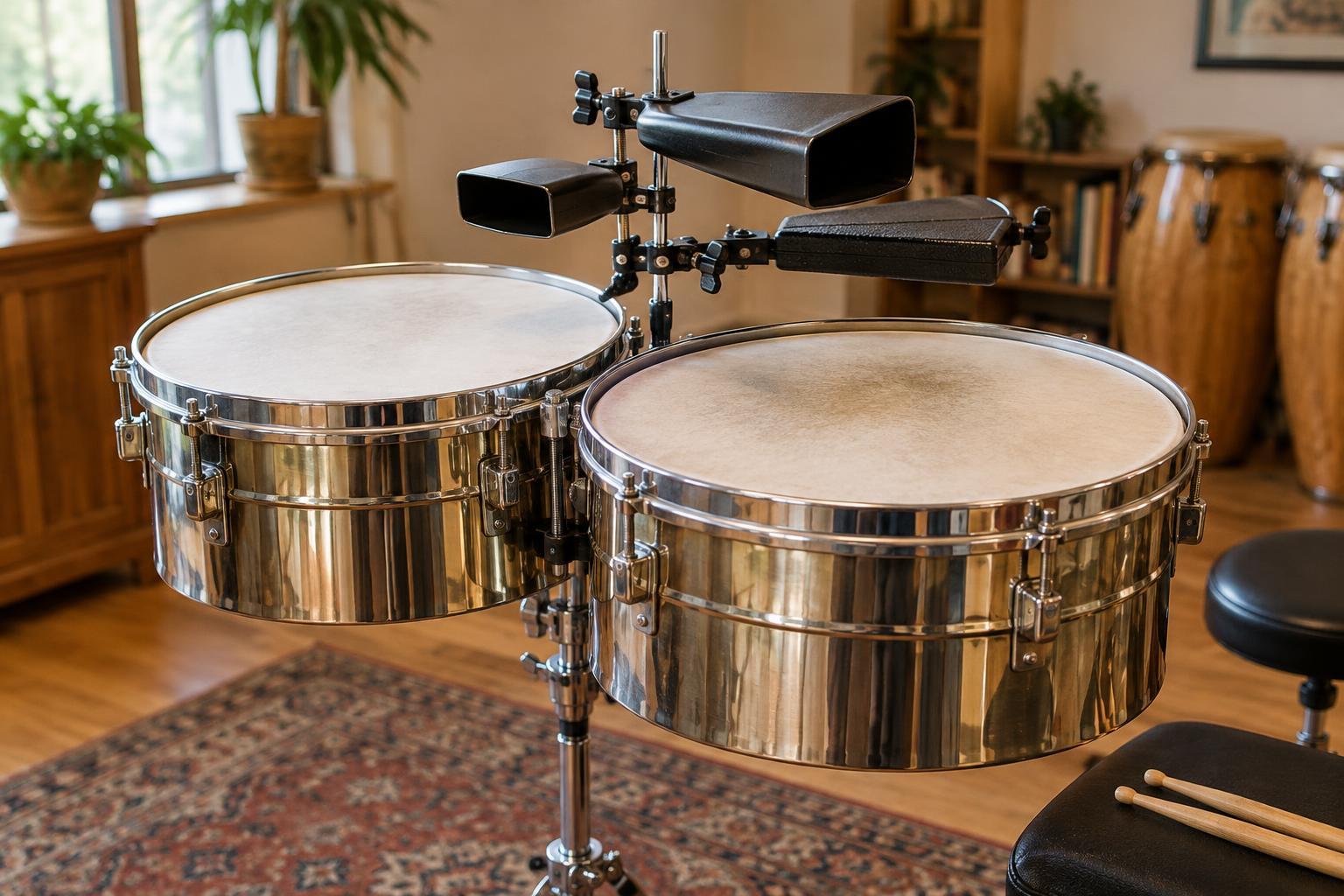
A typical timbales setup has two shallow drums mounted side by side on a stand. Unlike many other drums, they usually have a playing head on top and an open bottom, with no lower head. Their metal shells help produce a bright, projecting sound. One drum is larger and lower in pitch; the smaller drum is higher. Players use that contrast for short phrases, accents and fills rather than treating the pair as two interchangeable surfaces.
The heads are held in place by hoops and tension rods. Adjusting the rods changes each head’s tension and pitch, but there is no single tuning interval that suits every player or ensemble. A useful starting point is to make the drums clearly distinguishable while keeping each head responsive. Listen for an open tone after a clean strike: if a drum sounds choked or uneven, its tension may need attention.
Heads, rims and shells: three kinds of attack
A strike near the center of a head generally sounds rounder than one nearer the edge. Timbaleros use these changes in tone to give a fill shape, even before moving between the high and low drums. They also use rimshots, striking the head and rim together for a sharp accent. A rimshot is powerful partly because it contrasts with lighter notes; playing every note at that intensity leaves less room for the music to build.
The rim can provide a crisp click, while the side of the shell offers another important sound. A repeating pattern played on the shell is commonly called cáscara. It can help carry the groove when full drum strokes would crowd the singers or other instruments. The exact surface and pattern vary with musical setting and player preference. When listening, try separating the dry shell sound from the ringing head sound: they often serve different jobs in the same passage.
Bells: a small change in surface, a large change in role
One or more metal bells are often clamped to the timbales stand. A common setup includes bells with contrasting pitches and characters, giving the player options for different sections. Bells cut through an ensemble with a focused attack, so a switch from shell to bell can make a groove feel more driving without changing its underlying pulse.
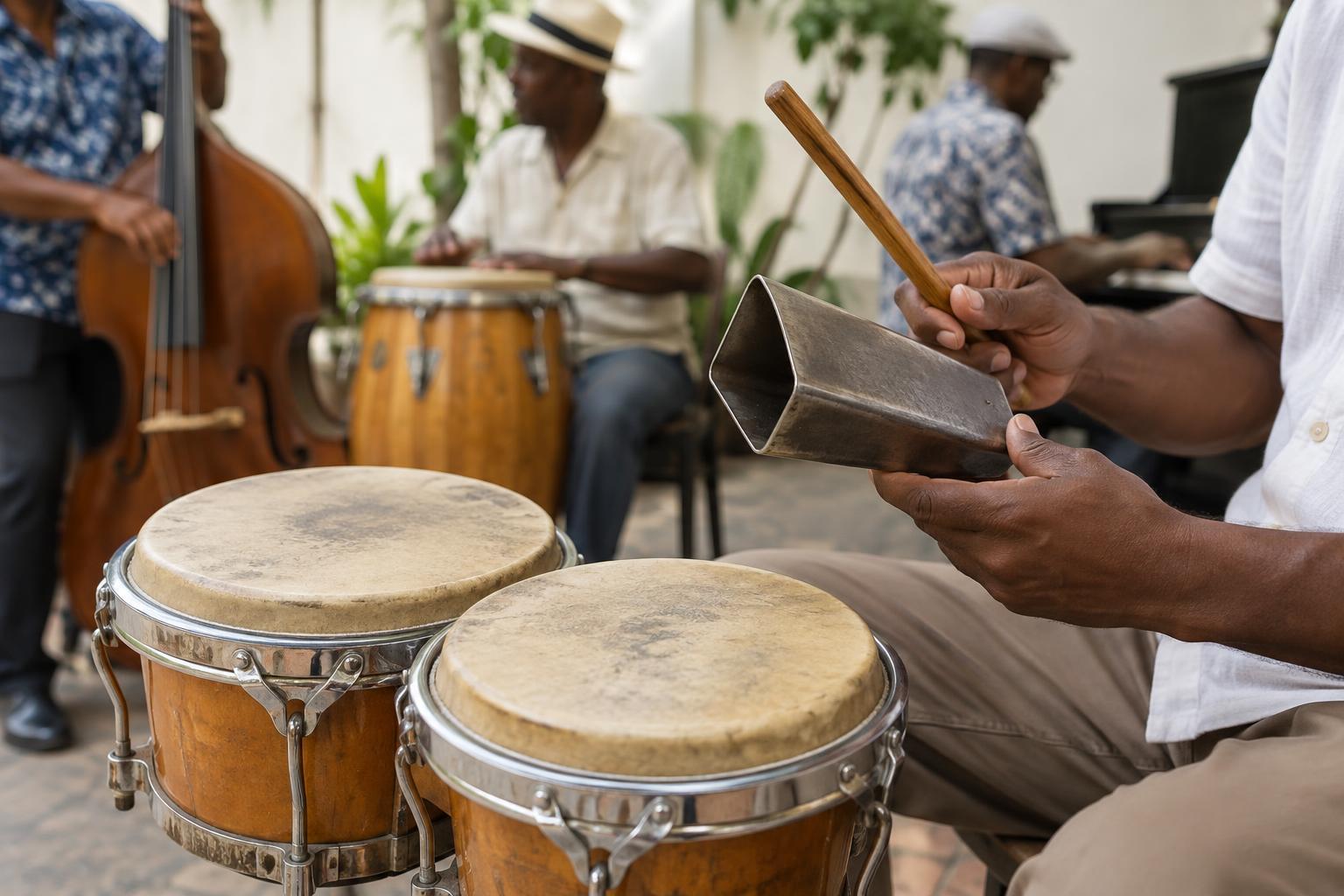
Bell patterns are not simply a louder version of what happens on the drums. Their placement can clarify a repeating rhythmic cycle and interact with bass, piano, voices and other percussion. In Afro-Cuban-derived ensemble music, that interaction also relates to clave: a guiding pattern and organizing principle that musicians learn to hear across the group. No single bell pattern defines every style or song. To hear the bell’s function, follow it through a section change and notice which other parts shift with it.
Mounted accessories and practical layout
Some players add a woodblock or synthetic block, cymbal, or other small percussion instrument to the stand. These are options, not required parts of a timbales setup. A block offers a dry, short sound; a cymbal can mark an entrance or the end of a fill. Each addition expands the palette, but it also creates another choice to make in an arrangement.
Placement matters as much as selection. A player needs to reach the heads, shell and bells without making large, awkward movements. Accessories should be secure, with enough clearance that they do not rattle against the drums or obstruct the sticks. Timbales sticks are often straight, without the shaped tips familiar from many drum-set sticks; their light, direct feel suits quick changes between surfaces. Whatever the setup, controlled strokes usually reveal more useful sounds than hitting every surface as hard as possible.
Hear the whole instrument, not just the fill
Timbales are closely associated with Afro-Cuban music, and their sounds have traveled into many other ensembles. Those contexts deserve attention rather than a single catchall rhythm. A part that supports dancers, a vocal phrase or an instrumental solo may call for different choices of surface and intensity. Learning the instrument’s anatomy is therefore also a way to learn restraint: the player can keep time on a quieter surface, move to a bell for a new section, then use the drums to punctuate a transition.
For a simple listening exercise, choose a recording with clearly audible timbales. On the first pass, identify the high and low drum tones. On the second, listen for the drier clicks of rim or shell and the sustained metallic character of the bell. Finally, notice when the player changes surfaces and what happens elsewhere in the ensemble at that moment. This turns a collection of hardware into a set of musical roles you can recognize, practice and arrange with intention.