A flourish with a destination
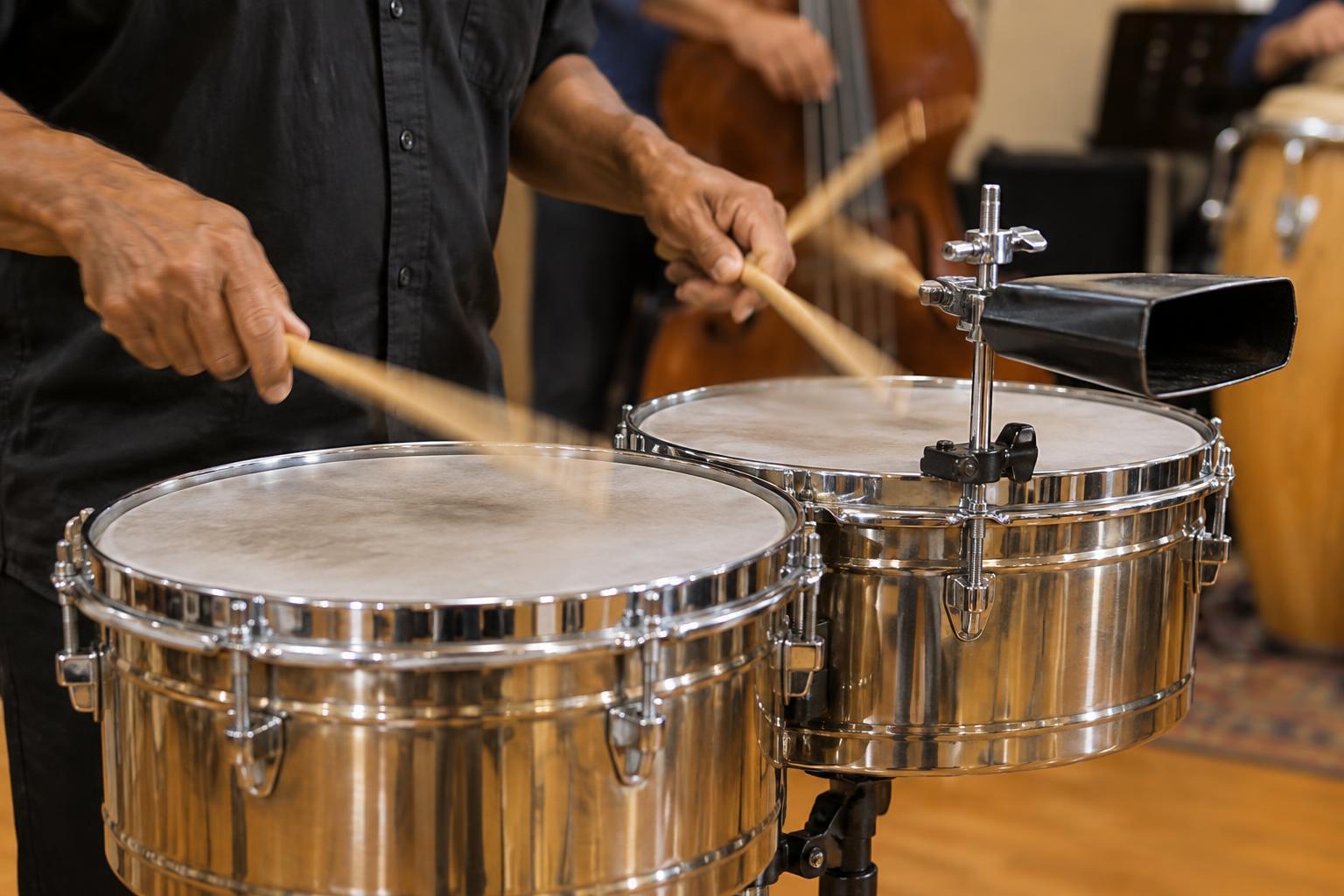
On timbales, an abanico is a rolling flourish that draws attention to a transition. The word means “fan” in Spanish, a useful image for a sound that opens out before coming to a point. A player might use one to lead into a new section, set up a band accent or announce a return to the main groove. The exact sticking, length and ending can vary. What makes the gesture effective is not simply its speed, but the way the band and listener can hear where it is going.
Timbales are typically played with sticks on two shallow metal drums, with their shells, rims, mounted cowbells and other accessories offering contrasting sounds. Against that range of colors, a roll on the drumheads stands out. Its ending can feel even more decisive when the player moves to a rim, cymbal or bell. That change in sound helps turn a fill into a cue: the flourish has finished, and the next part of the arrangement has begun.
Hear the ending before the roll
To hear an abanico in context, listen first for what happens immediately after it. Does the ensemble strike an accent together? Does a singer enter, or does the percussion settle into a bell pattern? Those events reveal the fill’s destination. Then listen backward: notice where the strokes become denser, whether the player shapes them with accents, and how much space remains before the next strong beat.
This approach is useful because a roll can obscure the underlying pulse if you focus only on its individual strokes. Keep a steady count while listening, and follow another part of the ensemble if the timbales become busy. The bass, a handclap or your own foot tap may help you feel the time. The abanico creates excitement around that pulse; it does not replace it. When the landing is clear, even a brief flourish can make the following groove feel stronger.
Fit the fill into the ensemble
In Afro-Cuban-derived ensemble music, the relationship between a fill and the surrounding rhythm matters as much as the fill itself. Clave is one important organizing pattern, but it is not a rule that requires every stroke to coincide with a clave hit. A player needs to know where the phrase sits, where the ensemble expects an accent, and how the groove resumes. A fill that crosses several beats can still feel grounded when its destination is agreed upon.
The abanico also works best when it leaves room for other musicians. If a horn figure or vocal pickup leads into the next section, the percussionist can shape the roll around that entrance rather than cover it. In an arrangement, a shared accent may be powerful because everyone reaches it together—not because the timbales player used the maximum number of strokes. Listen to the full ensemble before deciding how long or loud the fill should be.
Practice the transition at a comfortable tempo
Start with one bar of steady time in 4/4, followed by another bar that begins with a clear ensemble-style accent. Clap or tap quarter notes as you count “1, 2, 3, 4.” In the last two beats of the first bar, alternate right and left stick strokes evenly on the timbales. Aim the final strokes toward the next bar’s beat 1, where you play a single, deliberate accent. Return immediately to a simple timekeeping pattern. This is a practice frame, not a fixed abanico formula.
Once that transition feels reliable, try a longer roll, a quieter beginning or a different ending sound. You might finish on a drumhead, then try a rim or bell if it suits the groove. Keep checking three things: the pulse stays steady, the landing is unmistakable, and the timekeeping after the accent does not rush. Recording a short practice loop can help you hear whether the fill leads forward or sounds like it interrupts the music.
Make the groove the payoff
A strong abanico creates an expectation and then fulfills it. The roll catches the ear, its accents point ahead, and the next beat tells everyone where they have arrived. For developing players, that makes the transition a better goal than raw speed. Practice with a groove you can already hold comfortably, and add only as much flourish as you can bring to a clear ending.
As you listen to timbales in different ensembles, notice how players adapt the gesture to the song rather than treating it as an isolated trick. The most memorable part may be the moment after the roll: the band lands, the time feels settled, and the groove moves on.