A lead voice inside an ensemble
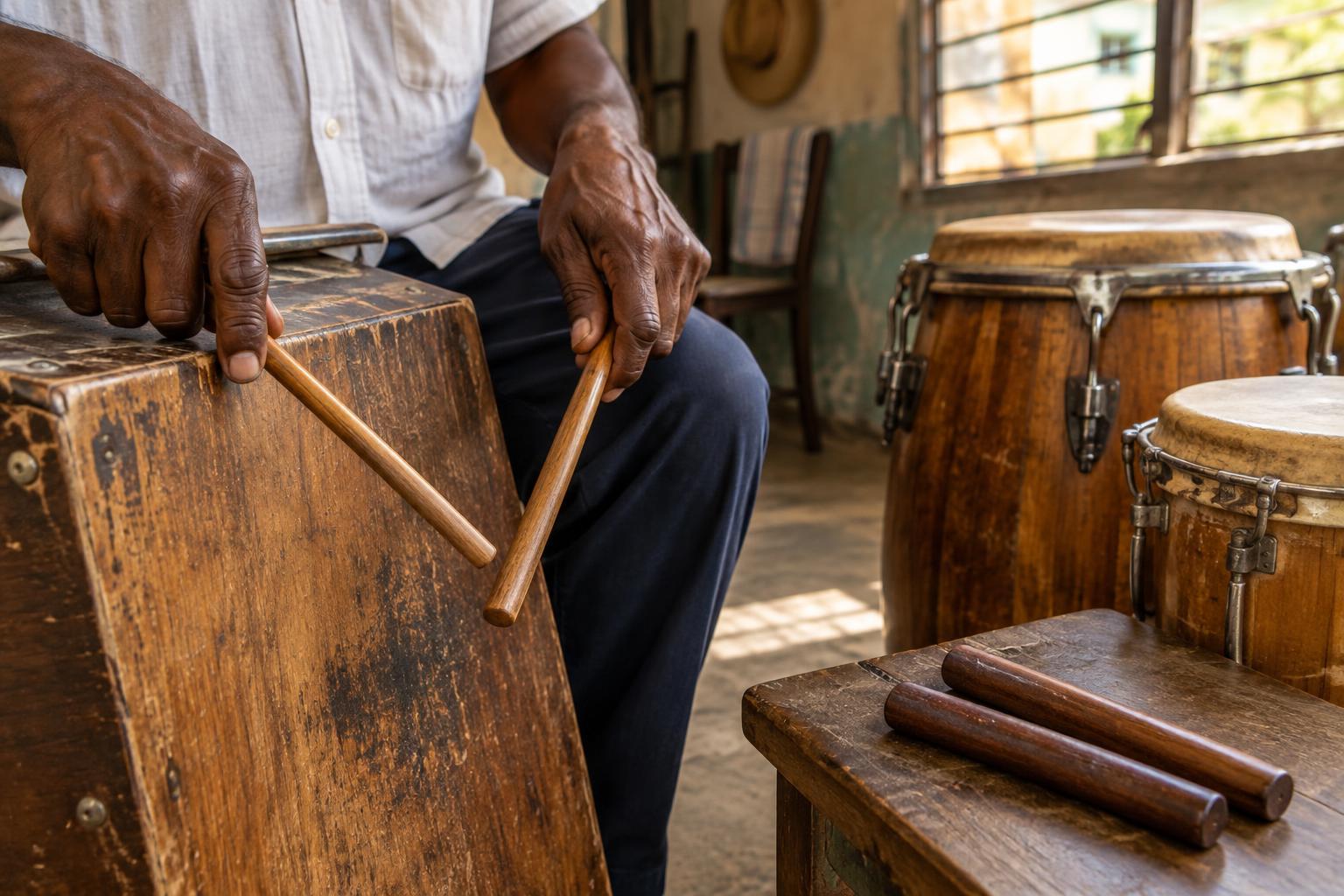
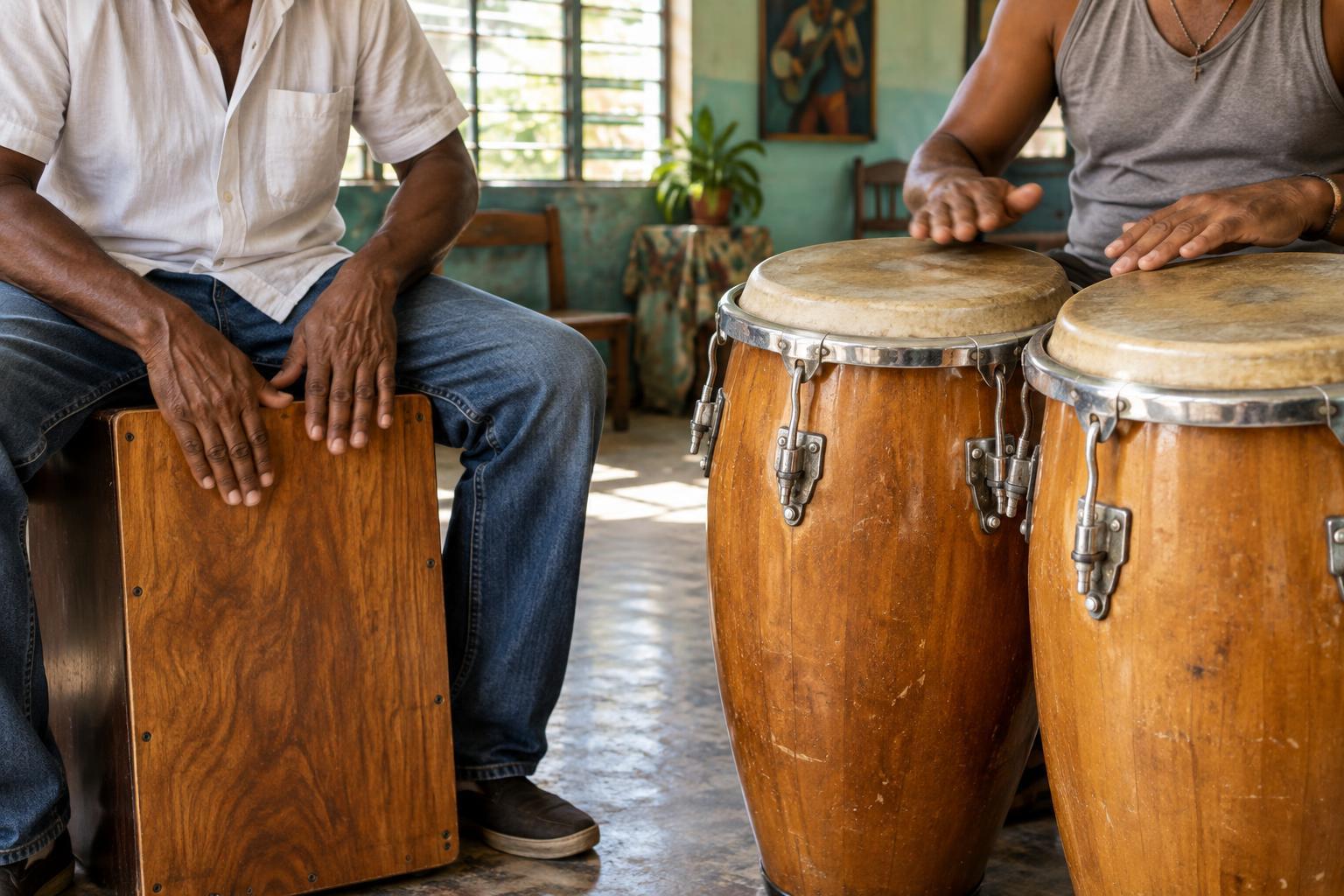
In Cuban rumba, the quinto is usually the highest-pitched of the hand drums. Its part is often described as improvising, but that does not mean playing without limits. The quinto speaks within a shared rhythmic setting created by the other drums, clave, voices and hand percussion. A phrase can stand out because the surrounding parts keep moving; without those parts, the same strokes may sound like an isolated drum solo.
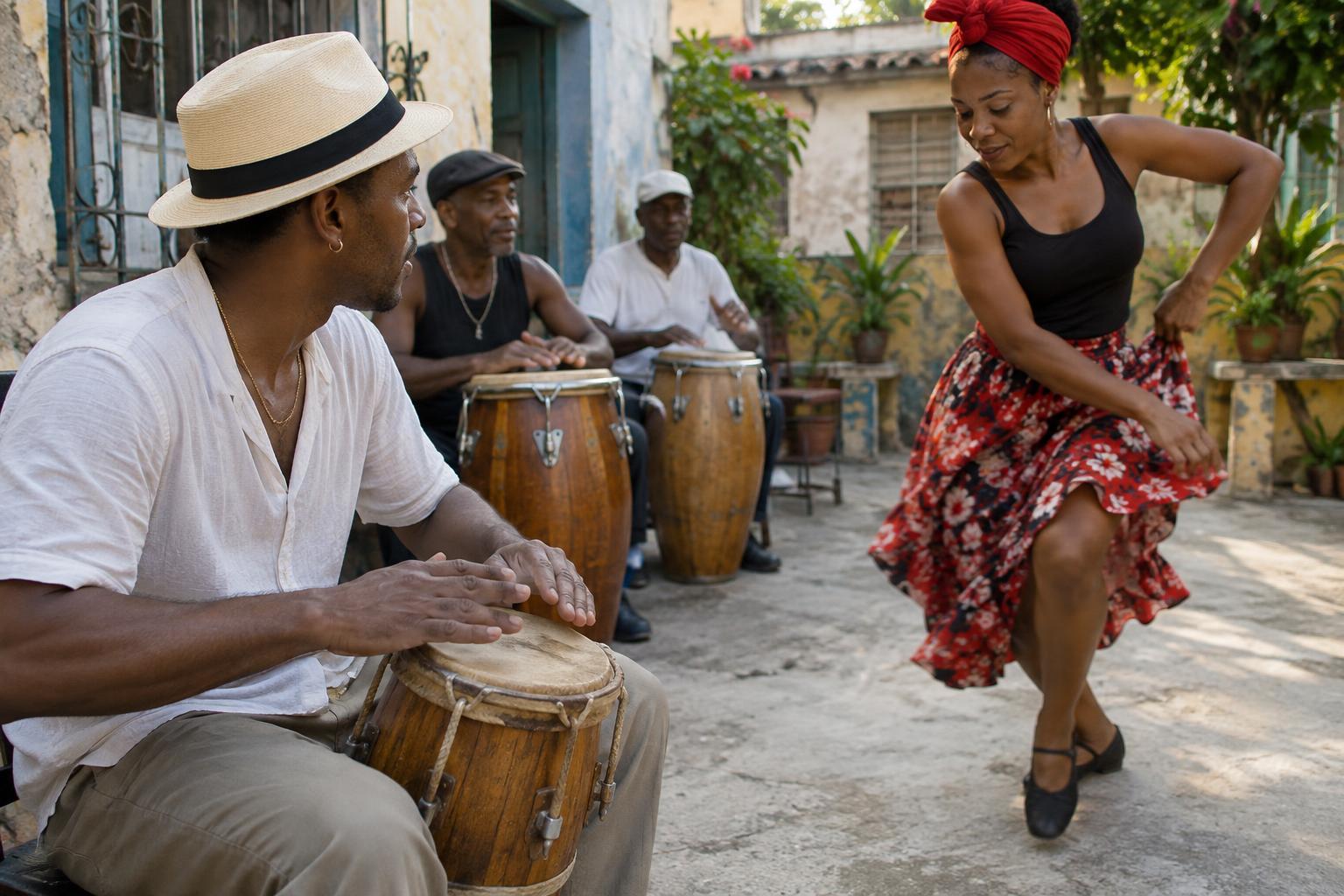
The relationship between quinto and dancer is especially vivid in rumba settings where dancing takes a central role. The player may notice a change of direction, a pause or a burst of footwork and answer with a compact rhythmic idea. The dancer can respond in turn. Neither participant has to copy the other exactly. The exchange works because both are listening to the ensemble and making choices within it.
What a phrase can do
A quinto phrase might be a quick cluster of strokes, a repeated shape with a changing ending, or a single accent that lands after a stretch of space. Tone matters as much as placement. Open sounds, muted strokes and sharper slaps give a player different ways to make a phrase feel light, insistent or abrupt. A busy dancer does not always call for busy drumming; one well-placed response may make the movement easier to hear.
Listen for beginnings and endings rather than trying to count every stroke at first. Does the quinto enter as a dancer starts a gesture, or does it wait until the gesture is nearly complete? Does it seem to invite another move, underline one that just happened, or deliberately leave room? These are listening questions, not fixed rules. Players and dancers may shape an exchange differently from one performance to another.
Different dances, different exchanges
Rumba is not one uniform rhythm or dance. In guaguancó, a dancer’s approaches, feints and changes of level can create moments for pointed quinto responses. In columbia, often danced by a soloist, athletic movement and rhythmic play can invite a different kind of back-and-forth. Yambú may bring another sense of pace and gesture. These descriptions are starting points for listening, not templates that every performance must follow.
It is also worth looking beyond the most striking exchange. Singing, chorus responses, clave and supporting drum patterns all help give a movement meaning in time. If you focus only on whether a drum stroke matches a step, you may miss how a dancer waits through a vocal phrase or how the quinto builds tension against a steady accompaniment. The conversation belongs to the whole group.
A listening exercise: follow one question at a time
Choose a recording or video of Cuban rumba in which you can distinguish the quinto from the lower drums. On a first pass, do not track the dancer. Tap a comfortable pulse and listen for the repeating framework beneath the lead drum. Then listen again for the quinto’s spaces. Notice when it stops, not just when it plays. If you lose the pulse during a dense phrase, return your attention to the supporting parts.
On a third pass, watch the dancer while keeping the sound in mind. Pick one short exchange and ask what happened first: a movement, a drum phrase or a cue elsewhere in the ensemble? Replay it and consider more than one interpretation. A recording cannot show every glance or intention, but repeated listening can reveal how carefully the parts fit without reducing the exchange to a simple call-and-response formula.
A practice exercise: make room for a reply
If you play percussion, begin with a steady accompaniment supplied by another player or a simple loop you have made yourself. Rather than filling every opening, try a two-measure cycle: play one brief phrase, then leave the next measure mostly open. Vary its ending while keeping the length manageable. The goal is to hear how your entry and your silence relate to the ongoing rhythm, not to imitate the sound of a seasoned quinto player immediately.
With a willing partner, let one person make a small, repeatable movement while the other answers with a short rhythmic gesture. Switch roles, and discuss which responses felt supportive, surprising or crowded. Treat this as an exercise in attention, not a substitute for learning rumba from knowledgeable Cuban practitioners and their communities. The most useful habit it builds is simple: listen to what is already happening before deciding what to play.