Hear the pattern before you play it
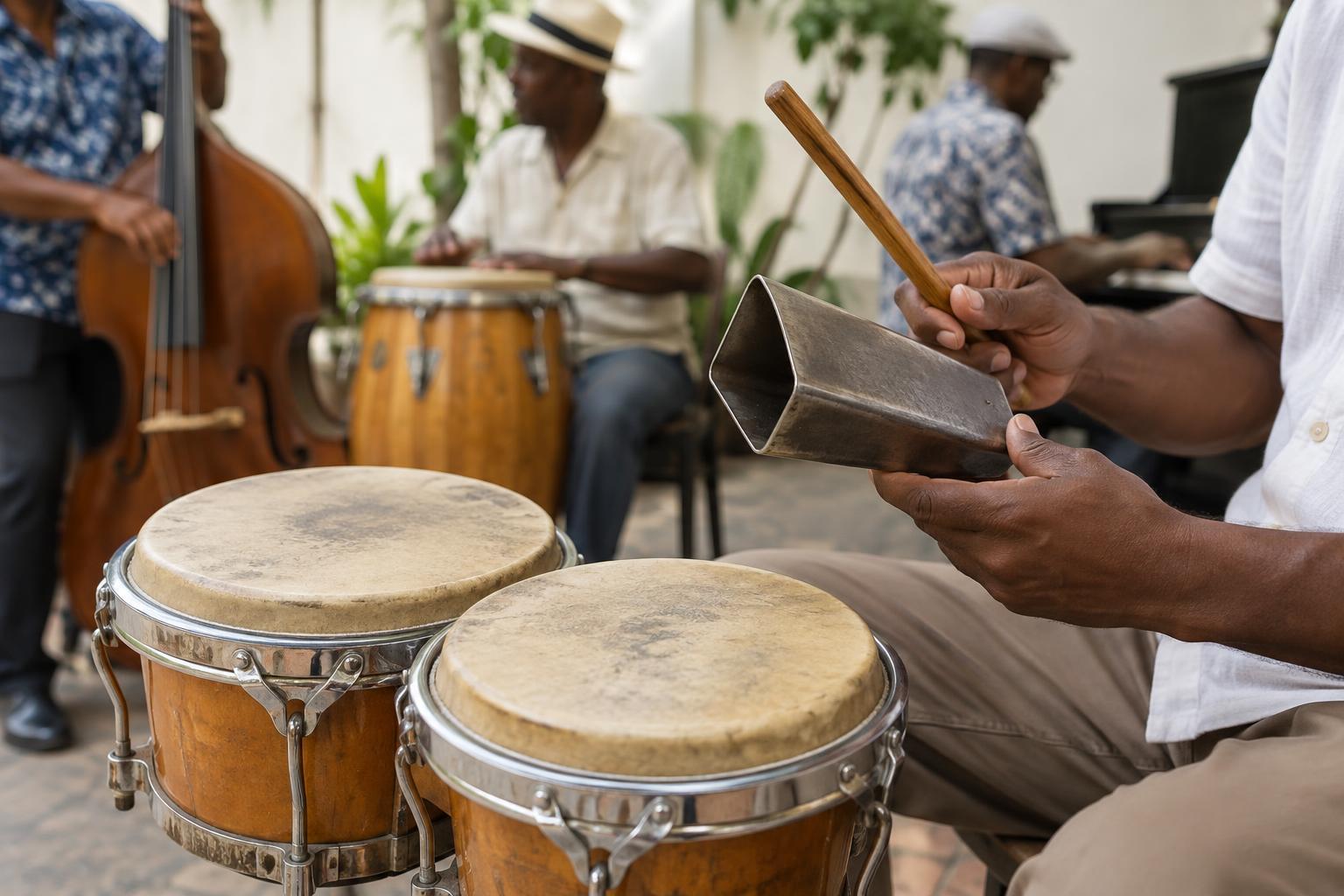
The martillo, or “hammer,” is a repeating bongó pattern heard in many Afro-Cuban musical settings. Its motion comes from a conversation between bright notes on the smaller, higher-pitched drum—the macho—and a deeper note on the larger hembra. Players shape that conversation in different ways, so a written exercise is a starting point, not the only correct way to play.
Before touching the drums, count “1 and 2 and 3 and 4 and” at an easy walking pace. Keep the count even. The martillo should eventually feel like a continuous, lightly turning rhythm rather than eight equally forceful hits. If you can, listen for the bongó in a recording and notice where a low sound rounds off the phrase before it begins again.
Set up for a clear, relaxed sound
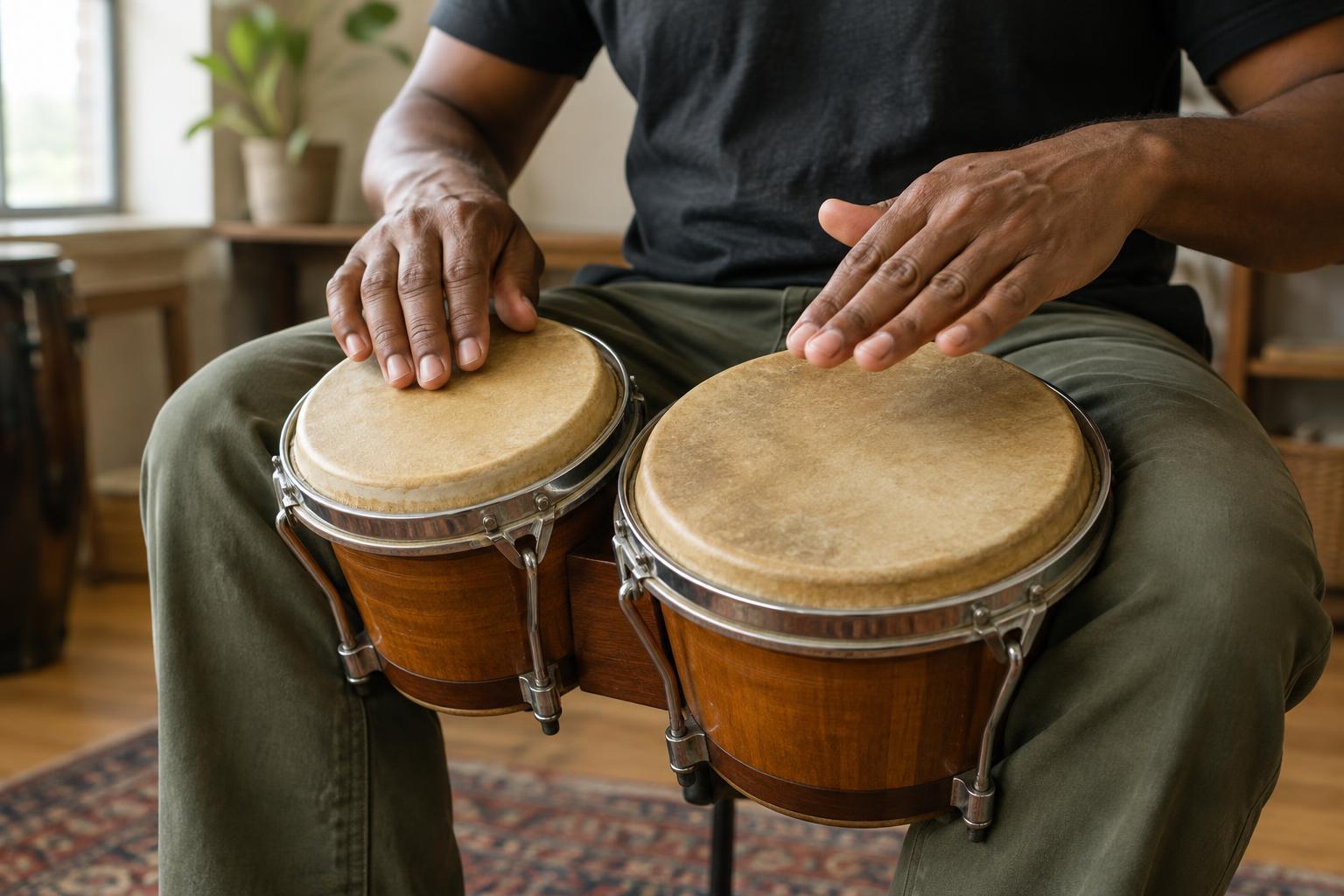
Place the bongó between your knees, with the macho on the side that makes your playing position comfortable. In the exercise below, the right hand supplies the more distinct notes and the left hand supplies quieter connecting strokes; left-handed players can reverse those roles. Sit upright enough that both hands can move freely. Aim for a controlled touch, not maximum volume.
Start with a light fingertip stroke near the edge of the macho. Let the fingers rebound rather than press into the head. Then try a quiet heel stroke: lower the fleshy base of the other hand onto the macho so it makes a short, muted sound. Follow it with a fingertip stroke from that same hand, lifting the heel as the fingers touch. Practicing that heel-to-fingertip change slowly will help the hand move without stiffening the wrist.
Build a one-bar martillo, one stroke at a time
Use this simplified learning loop over one bar of four beats. On beats 1, 2, and 3, play a clear but gentle right-hand fingertip note on the macho. On the “and” after beat 1, add a quiet left-hand heel stroke on the macho. On the “and” after beat 2, use the left fingertips there instead. On the “and” after beat 3, return to the left-hand heel. For beat 4, move the right hand to the hembra for a fuller, lower note; on the final “and,” add a soft left-hand fingertip stroke on the macho.
In count order, that gives you: 1—right macho; and—left heel; 2—right macho; and—left fingertips; 3—right macho; and—left heel; 4—right hembra; and—left fingertips. Repeat without pausing after the last “and.” Think of the left-hand notes as a quiet thread joining the clearer right-hand notes. This version is a practice scaffold: you may hear players place, mute, or accent particular strokes differently.
Practice the motion without losing the pulse
First play only the right-hand notes while counting aloud. Make the three macho notes similar in tone, then let the hembra note sound round rather than harsh. Next, practice the left hand alone, alternating its heel and fingertips on the offbeats. Finally, combine the hands at a tempo slow enough that you can anticipate each stroke. If the pattern breaks at beat 4, rehearse just “3 and 4 and 1” until the return to the macho feels natural.
Keep your shoulders loose and listen for unwanted accents. The connecting strokes need not compete with the main notes. Once the loop is comfortable, try tapping your foot on the numbered beats without speeding up. Then play along with music at a manageable tempo, listening to the wider percussion and bass rather than treating your part as a solo.
Let the pattern serve the music
Bongó playing is more than memorizing an eight-stroke sequence. In an ensemble, the martillo fits alongside other rhythmic parts, including patterns related to clave. You do not need to force a clave accent into every bongó stroke; instead, learn to hear where the phrase sits in the whole arrangement. Give singers and other instruments space, and notice how a player’s touch changes with the musical setting.
When this basic loop feels reliable, vary one thing at a time: soften the left hand further, make the hembra note more resonant, or practice starting on a count supplied by someone else. Listening closely to experienced players is the best way to hear how a useful exercise becomes a flexible musical part.