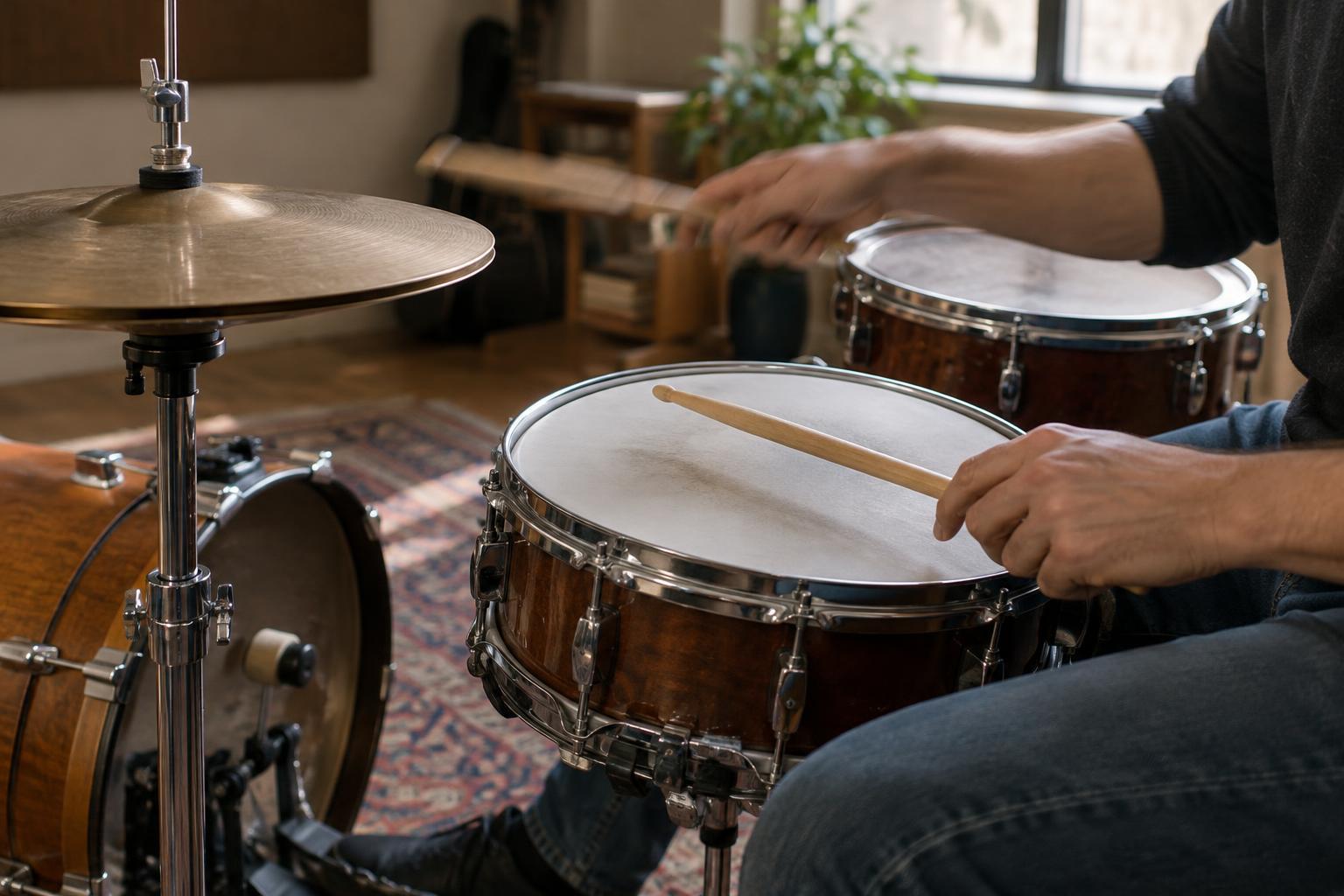
An accent needs something to lean against
Imagine walking at an even pace while someone claps halfway between two of your steps. The clap catches your attention, but it does not have to interrupt your walk. You can feel exactly where it falls because your steps continue underneath it. Syncopation works in much the same way: a note, chord, or percussion hit draws attention to a point that is less expected within a rhythm.
In a simple count of “one and two and three and four and,” the numbered beats offer familiar landmarks. An accent on an “and” may feel unexpected because it arrives between them. A sound can also begin before an expected strong beat and continue across it, leaving that beat unstated. Neither gesture erases the underlying pulse. Often, the clearer that pulse is in your body or in the other instruments, the easier it is to enjoy the displacement.
Surprise and stability can happen together
Syncopation is not a contest to put every sound in an unusual place. If a pattern offered no sense of expectation, an accent could not meaningfully play against it. Stability might come from a bass line, a repeated percussion part, a dancer’s steps, or simply the listener’s memory of the pulse. An offbeat note feels grounded when you can hear its relationship to those anchors.
Repetition helps, too. The first time a chord lands between beats, it may seem like a small jolt. When that placement returns, it becomes part of a recognizable phrase. Musicians can then vary the phrase without making it feel arbitrary. Silence also matters: leaving space on a beat can make the sound just before it more noticeable. What feels “unexpected” depends on the musical setting and on what a listener has learned to anticipate.
Listen for relationships, not isolated hits
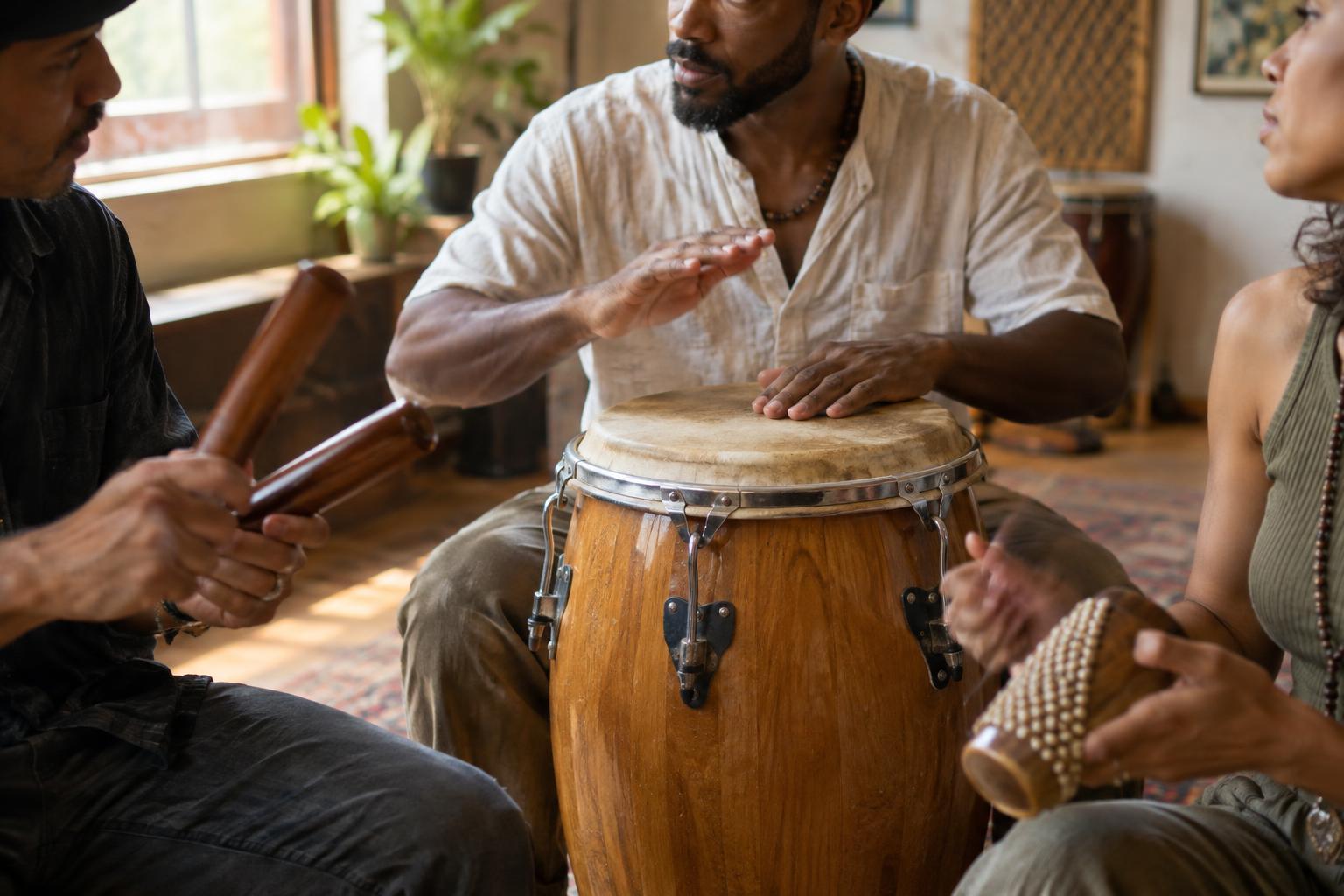
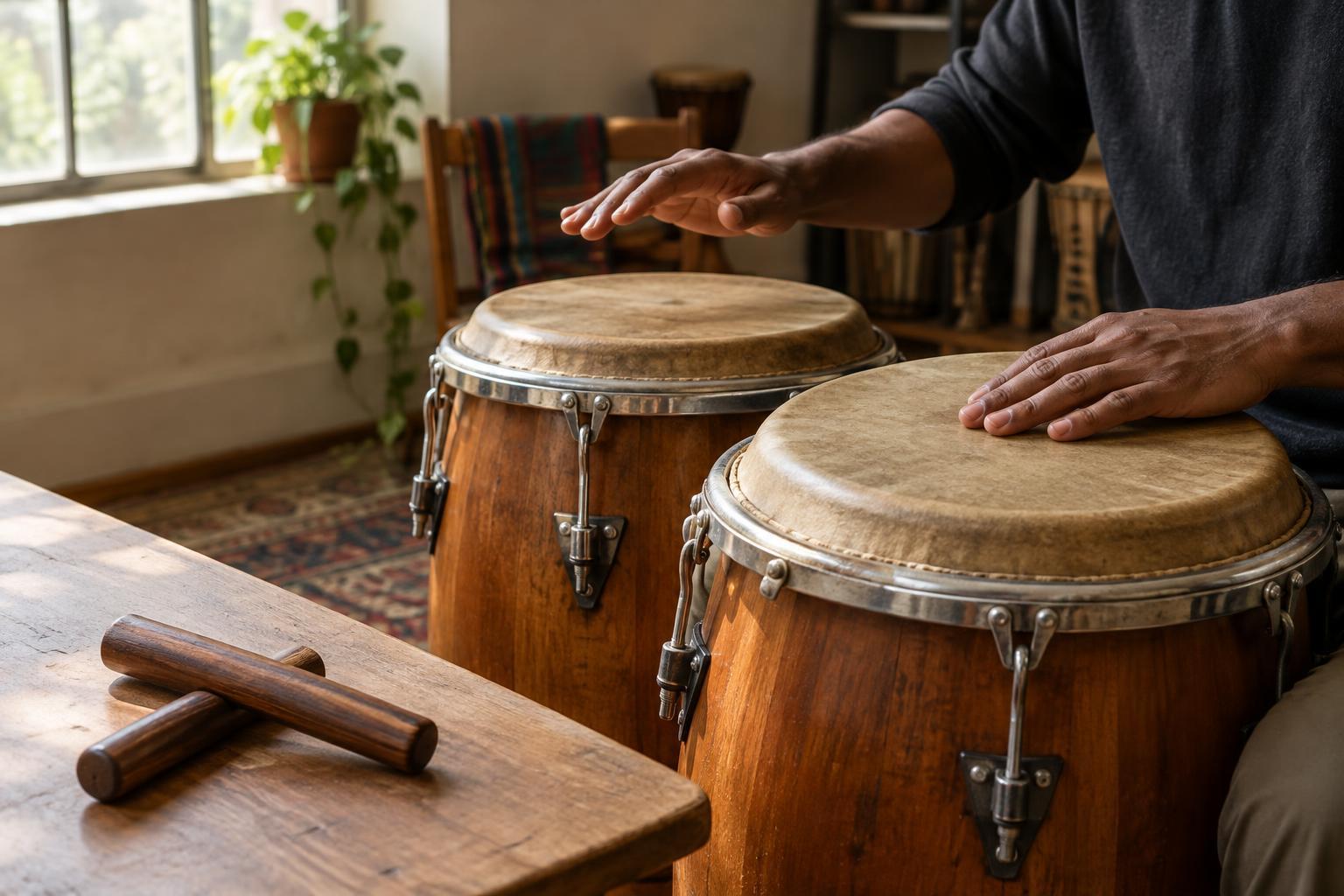
In many Afro-Cuban musical settings, rhythmic parts are understood through their relationships with one another. A repeating clave pattern can serve as an organizing reference, while other parts phrase around it. That does not mean every offbeat accent is a clave pattern, or that one generic rule explains every Afro-Cuban tradition. The useful listening question is how a particular part fits the recurring pattern and the rest of the ensemble.
Try following one layer at a time. Keep the pulse with your foot, then listen to a repeating percussion figure. Next, notice where a bass note or melodic phrase begins in relation to that figure. A note may seem to pull forward when heard alone, yet feel settled when the full pattern returns. Rather than labeling a hit as simply “early” or “late,” ask what it anticipates, answers, or leaves open.
A short exercise for hearing the shift
Start without an instrument. Tap your foot evenly and count aloud, “one and two and three and four and.” Clap only on the numbered beats for several cycles. Keep your foot going, but move one clap from “two” to the “and” after two. Continue counting aloud. The moved clap may feel as though it leans toward three; your foot shows that the pulse has not moved with it.
Next, clap on the “and” after two and stay silent on three. Repeat that small phrase until you can keep counting without rushing toward the clap or slowing down afterward. If you play an instrument, try a short note on the “and” after two, then try sustaining it across three. Compare those sounds: the short note marks a point between beats, while the held note also makes the following beat feel open.
Finally, switch roles. Keep an even clap on the numbered beats while you speak “ta” on the “and” after two. Then have a partner take the even clap, if one is available. Hearing and producing the two parts separately can make their connection clearer. Go slowly enough that you can tell where each sound belongs; speed is not the goal.
Make room for the accent
When arranging or playing with others, an unexpected accent need not be loud to register. A brief chord can stand out because the surrounding part leaves it space. A bass note can make the next beat feel present even if no one attacks a note exactly on it. Adding more hits is not always the best way to strengthen a groove; sometimes a simpler supporting part makes the syncopation easier to hear.
As a listener, notice what lets you keep your place while the music draws your attention elsewhere. As a player, practice holding that place without forcing every part onto the same beat. Syncopation gets much of its character from this balance: the accent invites you away from an expected landing, while the pulse and the surrounding pattern tell you where you are.