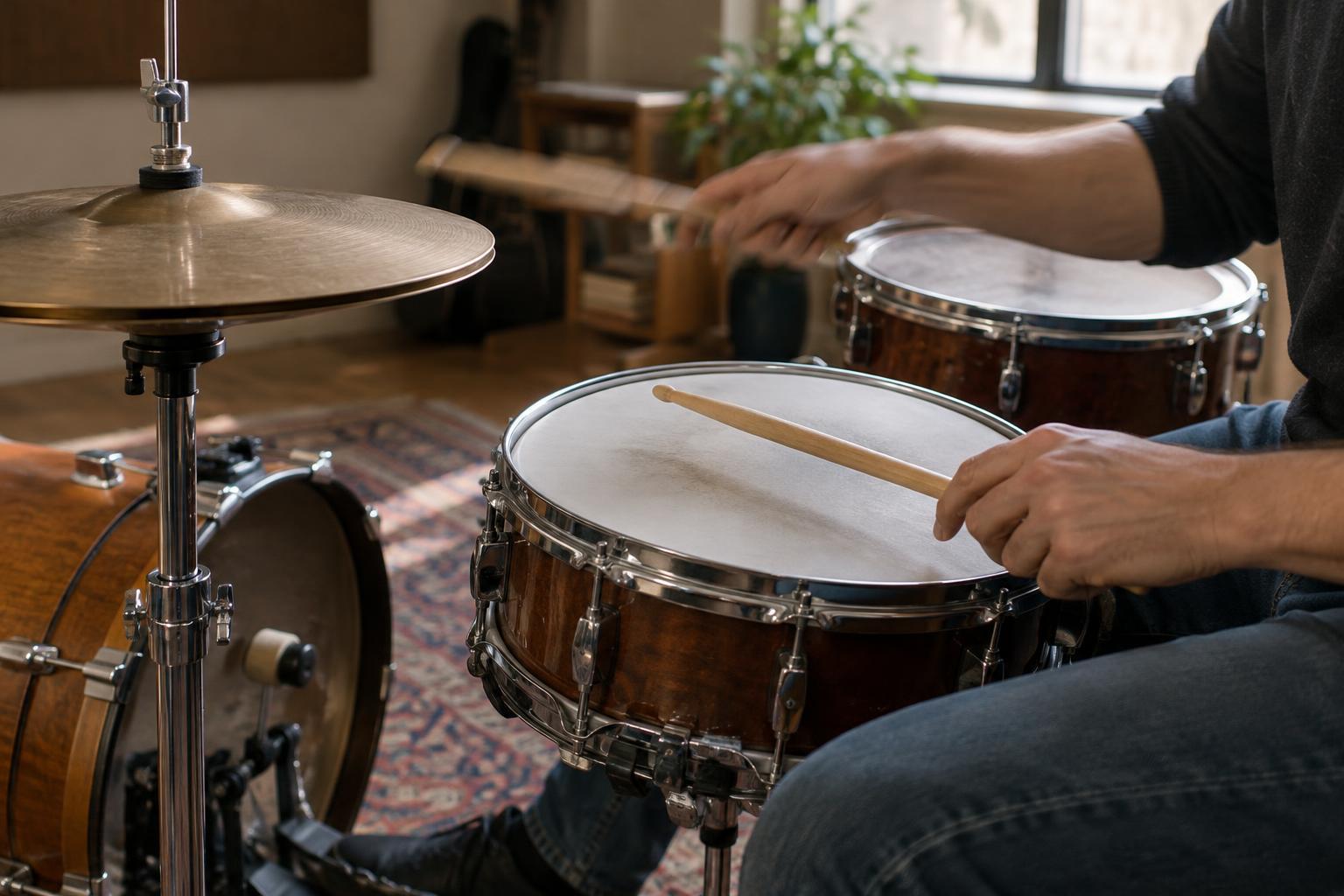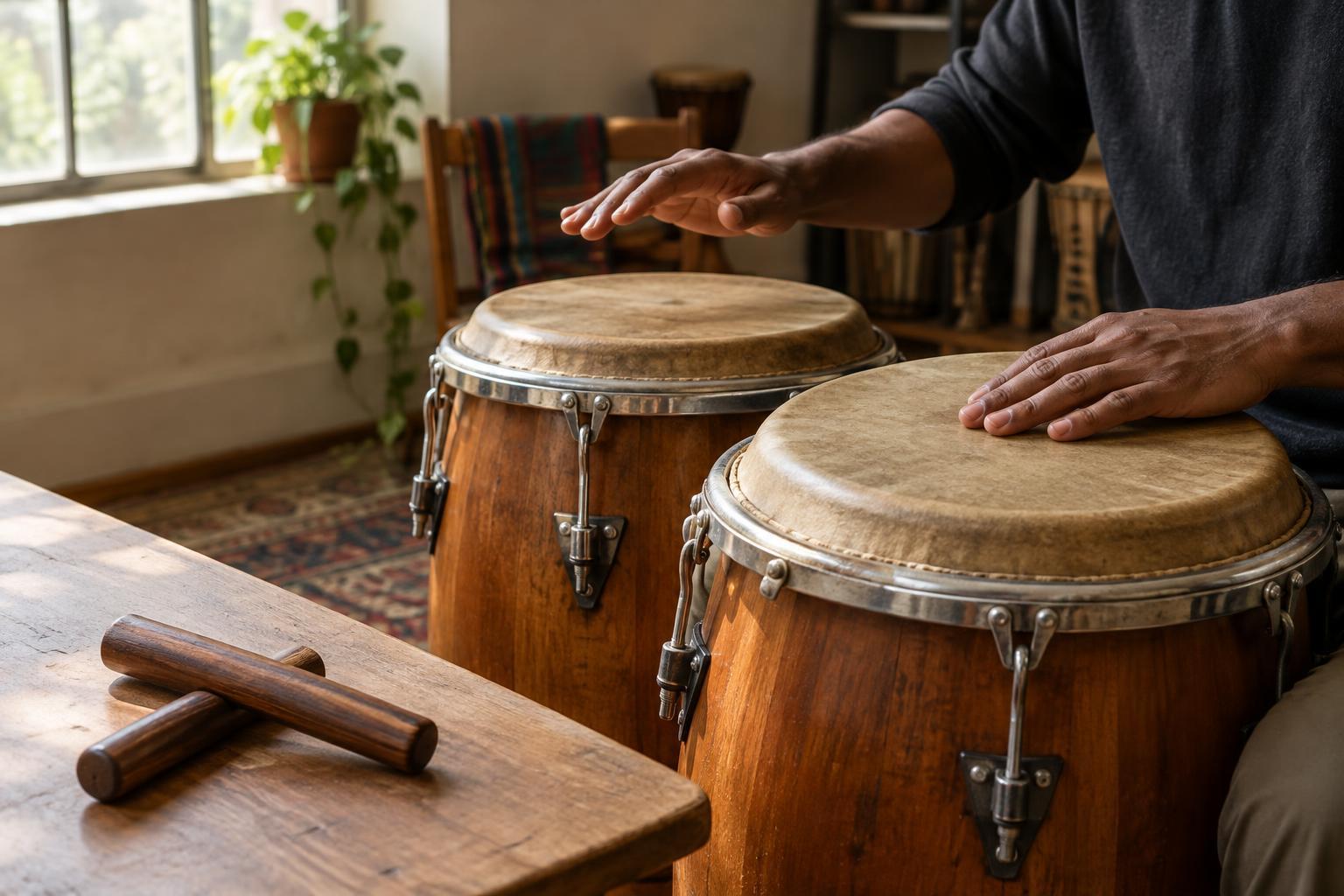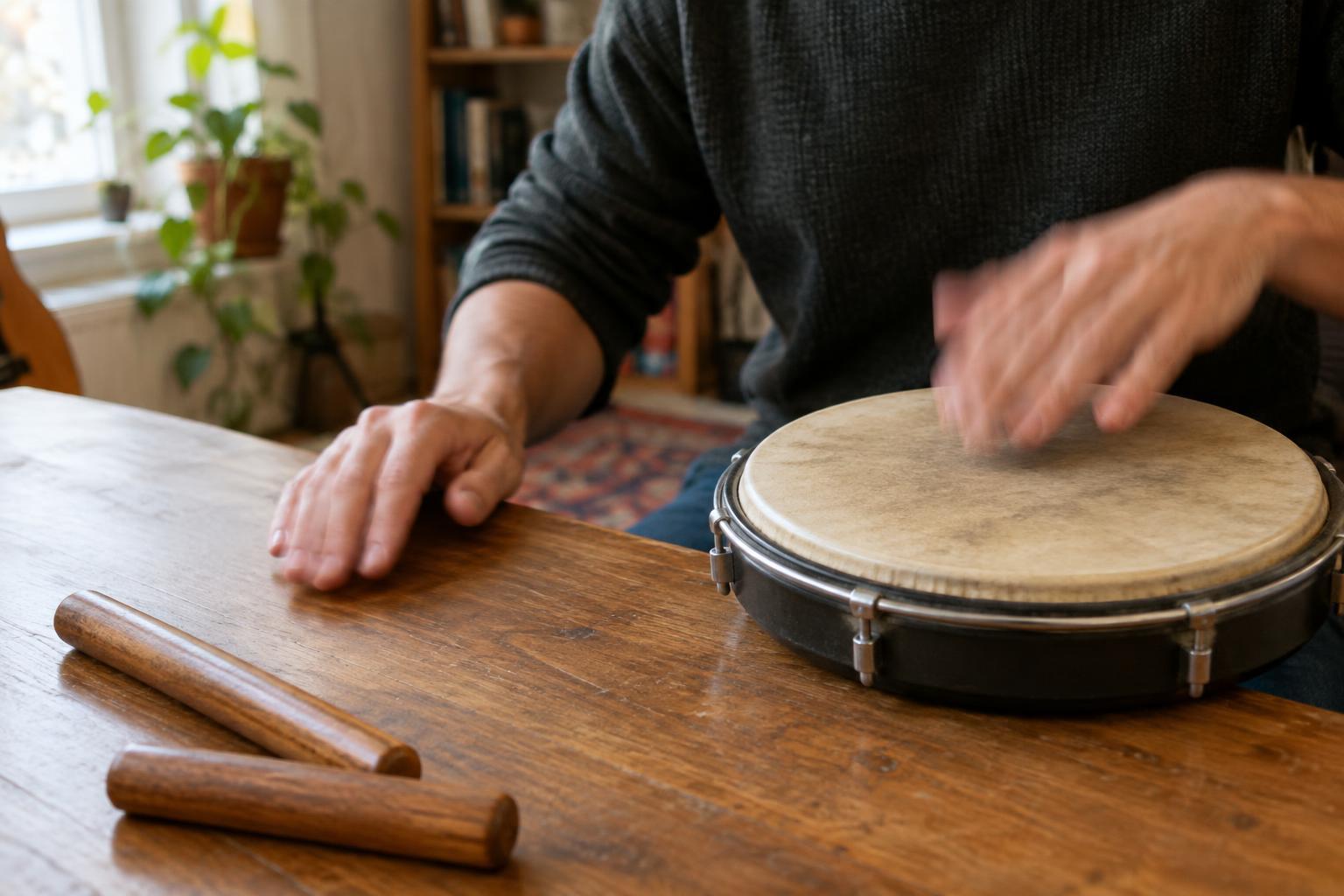
The beat stays steady; the space inside it changes
Tap a comfortable, even pulse with your foot. Each tap marks a beat. Now imagine playing two notes during every beat: one with the tap and one before the next tap. In a straight eighth-note feel, that second note falls halfway between the taps. The two spaces are equal: note, gap, note, gap. You can count it as “one and two and,” giving each spoken syllable roughly the same amount of time.
In a swung eighth-note feel, the second note arrives later. The first space is longer and the second is shorter, but your foot keeps marking the same steady beats. If you play pairs of eighth notes across a bar, that repeated long-short motion can give the music a lilting or forward-leaning quality. The difference is not necessarily how fast you play, or which notes you choose. It is where those notes land between beats.
Swing is a feel, not one fixed ratio
A common introduction to swing is to divide a beat into three equal parts and play on the first and third parts. That can be a useful starting exercise: say “one-trip-let” evenly, then play on “one” and “let.” It makes the longer first space easy to hear. But it is a practice model, not a rule that describes every swung performance.
The amount of unevenness can vary with tempo, the players, and the musical setting. At one tempo, the second eighth may sound distinctly delayed; in another passage, the pair may approach even spacing while still feeling swung through phrasing and accents. Rather than trying to force every pair into an exact proportion, keep the main beats steady and listen to how the offbeat relates to them. A recorded example can teach you more about a particular feel than a ratio alone.
What your ear hears beyond the eighth notes
Spacing matters because it changes how notes lead into the next beat. With straight eighths, the midpoint provides an even stepping stone. With swung eighths, the later offbeat sits closer to the following beat, which can make that beat feel anticipated. Try clapping on each beat while speaking straight eighths, then swung eighths. Your claps should not move; only the syllables between them should.
Spacing is only part of a groove. Accent, note length, dynamics, and the interaction among instruments also affect what you hear. A drummer might keep a steady pulse while another player phrases lightly around it; two musicians need not strike every note at precisely the same instant for a groove to feel cohesive. When comparing straight and swung passages, listen for both the placement of the offbeats and the way the whole ensemble supports the beat.
Listen to the style before choosing a feel
“Straight” and “swung” describe useful differences in eighth-note spacing, but they do not name every kind of rhythmic feel. In Afro-Cuban music, for example, clave can provide a guiding pattern for how phrases relate across measures. Percussion parts may interlock with it through distinct patterns, accents, and subdivisions. Calling an entire groove “swung” simply because it feels lively can hide those relationships.
When learning music from a particular tradition, begin with the sound of that music rather than imposing a generic straight-or-swing setting. Listen for the recurring pulse, the placement of repeated patterns, and how individual parts answer one another. If you are learning an Afro-Cuban arrangement, identify its clave orientation where relevant and learn the characteristic parts in context. An eighth-note label can help describe one detail, but it cannot replace attentive listening.
A short practice routine for switching feels
Set a metronome to a comfortable pulse and tap your foot with each click. First, clap straight eighths for four beats, counting “one and two and three and four and.” Next, keep the foot and clicks unchanged while delaying each “and” to make long-short pairs. Alternate four beats of each feel. If the transition makes your foot speed up or slow down, return to clapping only on the clicks before adding eighths again.
Then choose a simple two- or three-note phrase and play it in both feels. Record yourself if you can. On playback, check whether the main beats remain steady and whether the offbeats shift as intended. Finally, listen to a passage you want to learn and imitate its spacing and accents without counting for a moment. Counting helps you locate the notes; listening helps you discover how their placement becomes a groove.