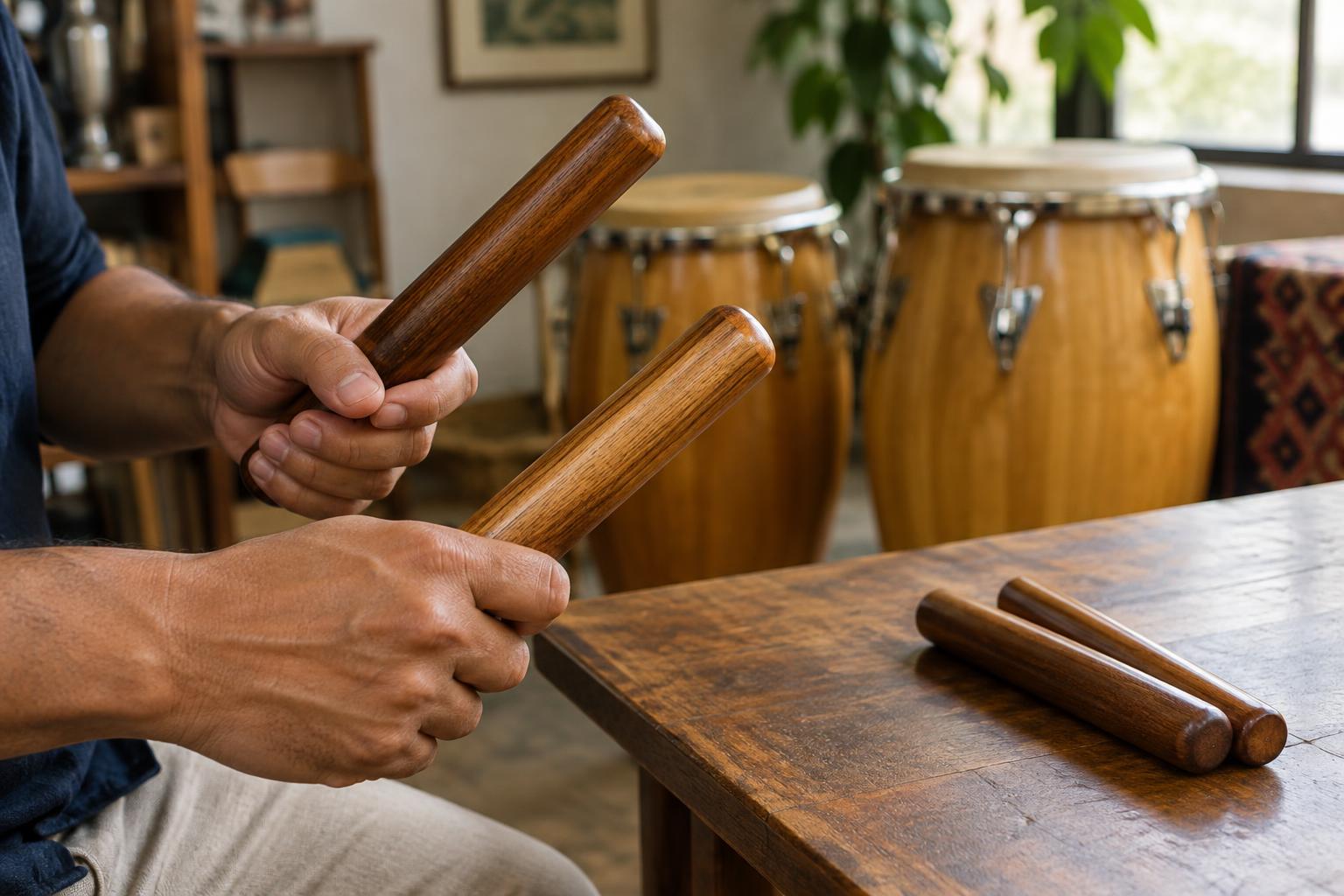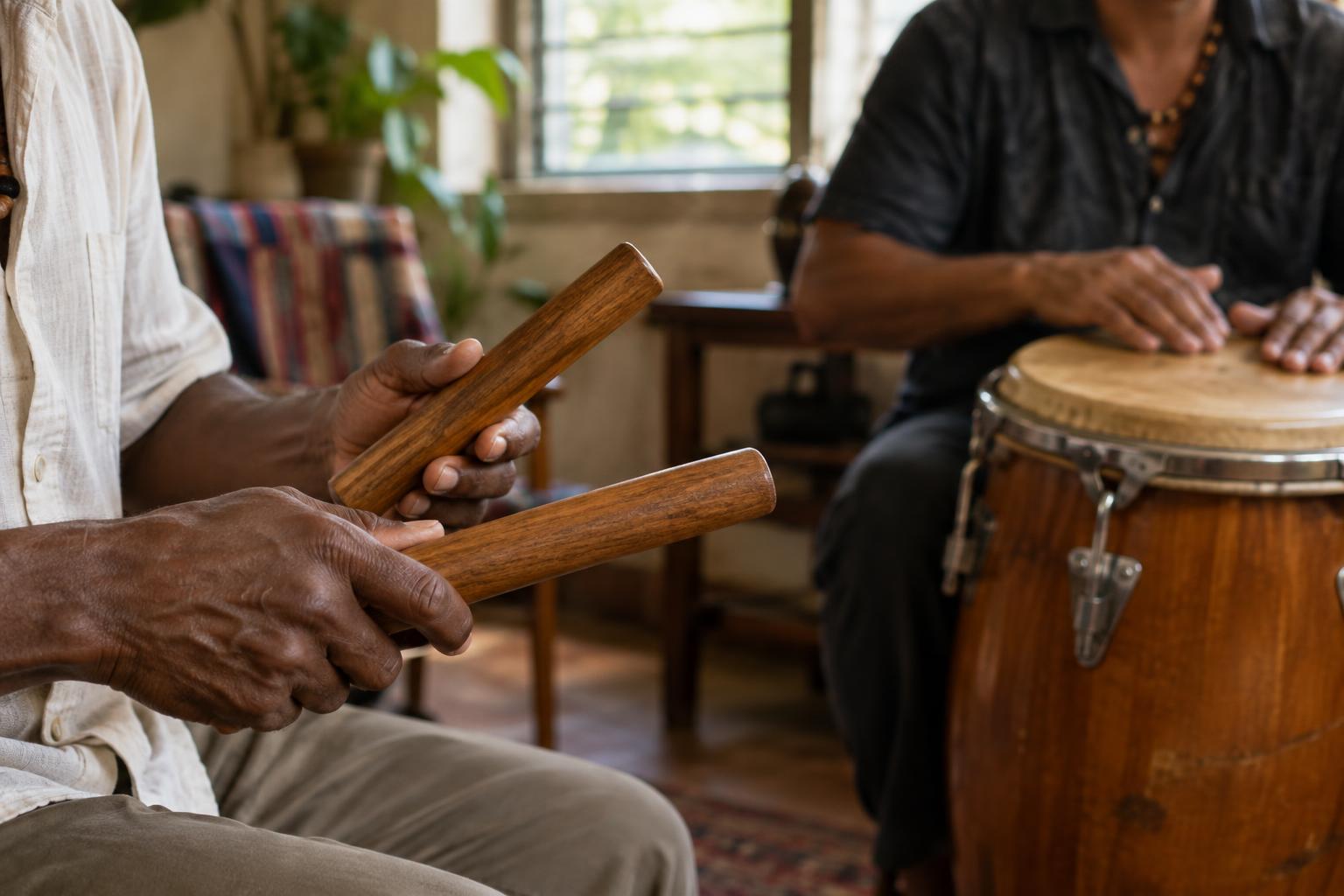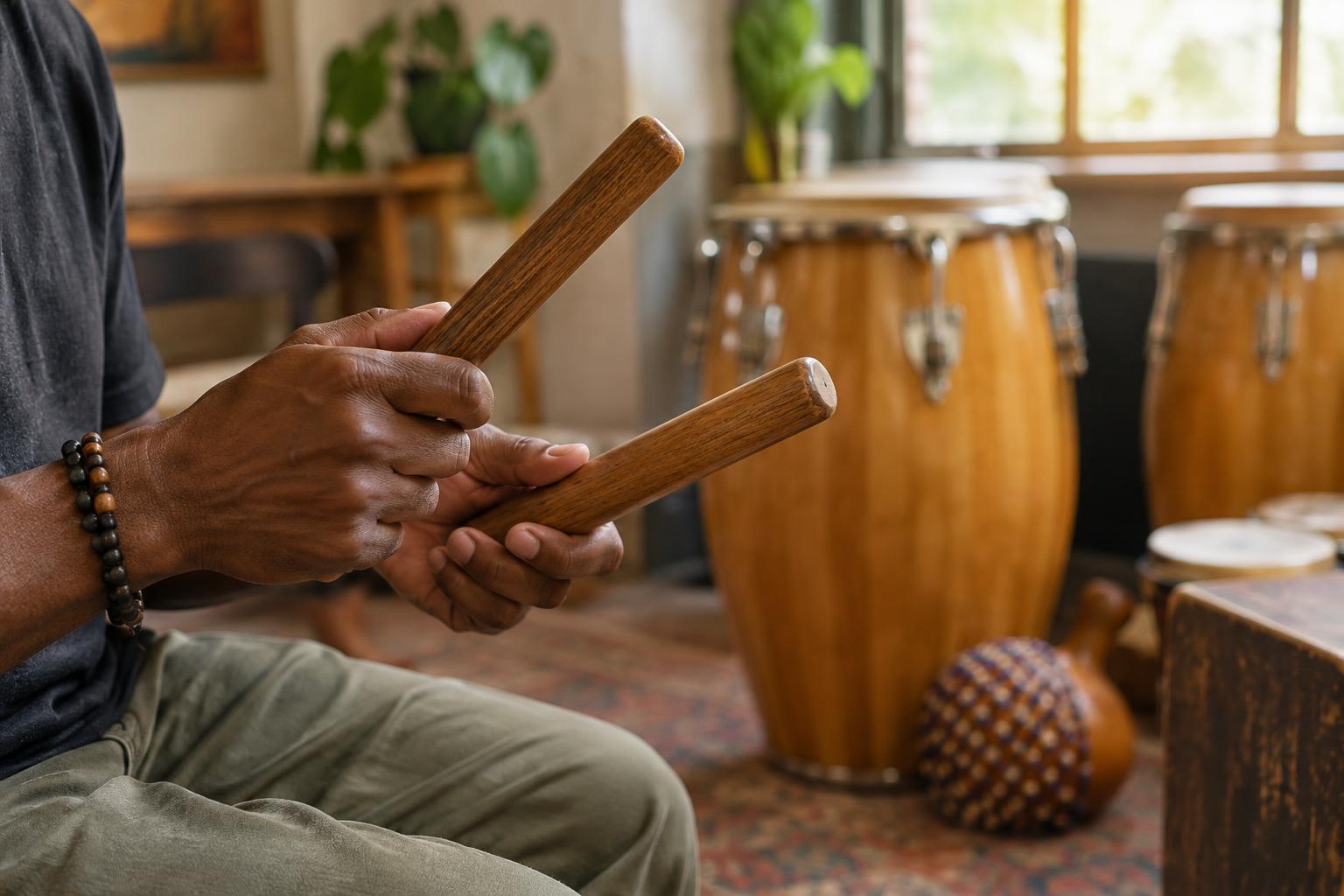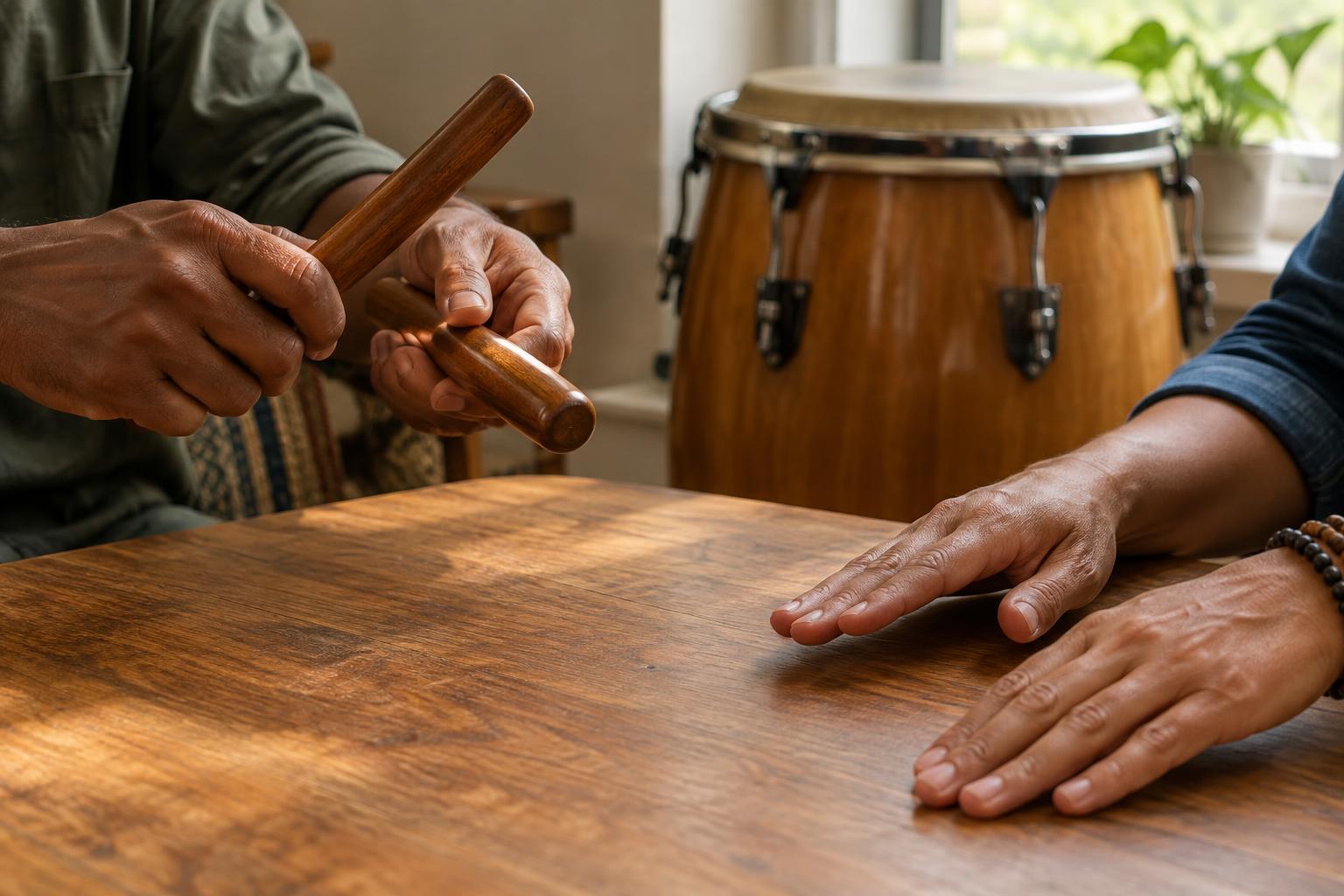
Start with the pulse, not the terminology
Imagine walking at a comfortable, even pace. Each step marks a pulse. Now imagine clapping between some steps, or clapping in a pattern that makes one part of the walk feel especially important. Your feet have not changed speed, but the relationship between the layers changes what you hear. That relationship is at the heart of both polyrhythm and cross-rhythm.
The terms are useful, but they are not opposites. Polyrhythm usually describes the simultaneous presence of contrasting rhythmic divisions or patterns. Cross-rhythm draws attention to a pattern that seems to pull against an established pulse or grouping. The same passage can be described both ways: one term identifies the layers, while the other describes the tension between them. To hear either clearly, first find a reference pulse you can keep steady.
Polyrhythm: different divisions in the same span
A straightforward polyrhythm is three against two. Within one shared stretch of time, one layer places three evenly spaced attacks while another places two. Both begin together; after that, their attacks fall at different points until the pattern repeats. Neither layer has to speed up or slow down. Each follows its own even division of the same span.
You can picture the shared span as six small, equal slots. The three-part layer sounds on slots one, three, and five. The two-part layer sounds on slots one and four. This is a counting aid, not a requirement that performers think in six tiny notes. It simply shows how the attacks can line up.
Polyrhythm need not mean that every layer is played on a separate instrument. One person can tap one division with a foot and another with a hand. In an ensemble, contrasting parts may be distributed among players. What matters for this basic example is that the divisions coexist, rather than taking turns.
Cross-rhythm: hearing a pattern against the grid
Cross-rhythm becomes easier to notice when you have a strong sense of where the regular beats fall. In a bar of four beats, for example, you might hear eight even subdivisions while a player accents them in groups of three, three, and two. Those accents do not erase the four-beat framework. They make it feel temporarily unsettled: the emphasis crosses the grouping your ear expects.
An accent can be louder, but it might also come from a different drum sound, a lower note, or a change in articulation. Listen for the recurring beat underneath, then notice where the other pattern asks you to shift your attention. If you lose the underlying beat, the phrase may sound like a new meter rather than a pattern playing against one.
Definitions of cross-rhythm vary by musical context. Some musicians use the term especially for contrasting divisions such as three against two; others apply it to accent patterns that challenge the prevailing meter. The practical question is consistent: what is the reference, and how does the second layer interact with it?
A note on Afro-Cuban listening and clave
Afro-Cuban music offers rich opportunities to hear interlocking rhythmic parts, but a generic three-against-two exercise is not a substitute for learning a particular musical tradition. Clave is a guiding rhythmic pattern and an organizing relationship for many Afro-Cuban styles. Its strokes are not simply an evenly spaced three-part layer placed over an evenly spaced two-part layer.
You may hear people say “3-2 clave” or “2-3 clave.” Here, the numbers refer to the order of the three-stroke and two-stroke sides of a clave pattern, not to the three-against-two polyrhythm described above. Keeping that distinction clear helps you listen to how a melody, bass line, or percussion part relates to clave instead of trying to force every part into one counting formula. Specific patterns and their roles depend on the style and musical setting.
Two short exercises for your ears and hands
To try three against two, tap a steady two-part layer with one hand: one, two; one, two. With the other hand, fit three even taps into the time occupied by each pair. Start both hands together and let the next pair begin only after both parts have completed their shared span. Go slowly enough that the three taps feel evenly spaced. Then stop playing one hand but keep hearing its part while the other continues.
For a cross-rhythm exercise, tap four steady beats with your foot and count eight even subdivisions aloud. Clap on subdivisions one, four, and seven, leaving the remaining subdivisions quiet. The claps form a three-plus-three-plus-two grouping across the eight subdivisions. Repeat it without changing the pace of your foot. Finally, listen to a layered passage and ask two questions: What stays steady, and which attacks draw my attention away from it? Those questions will often teach you more than choosing a label immediately.