What does “palitos” mean in rumba?
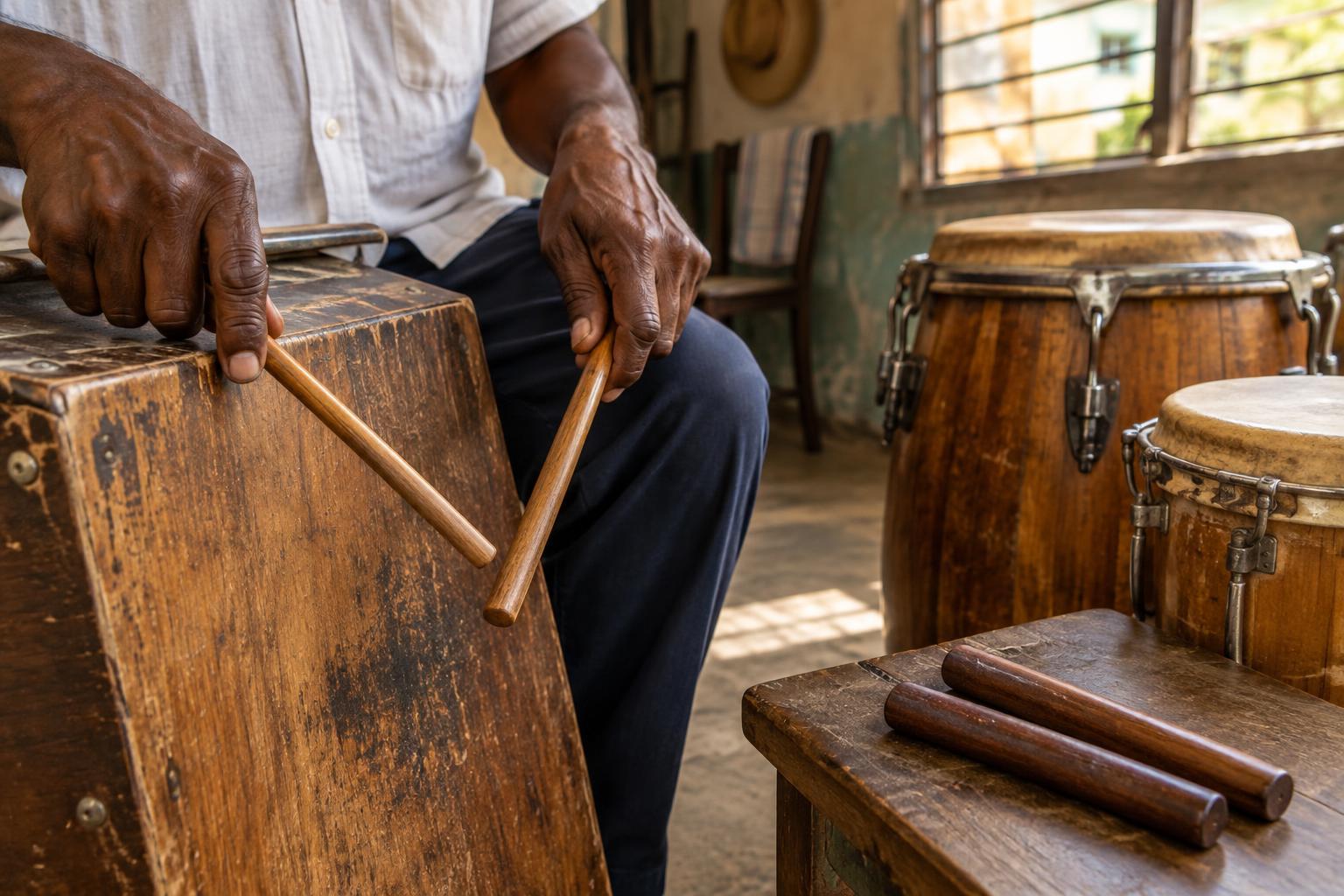
Palitos means “little sticks,” and in rumba it commonly refers to both the sticks and the rhythmic part played with them. A player strikes a hard surface—often a wooden or bamboo percussion instrument that may be called a guagua or catá—to make short, bright sounds. Those strokes can be easy to miss beside the deeper voices of the drums, yet they help define the groove’s texture and momentum.
Think of palitos as one voice in a conversation, not a background metronome. The part often provides a stream of crisp attacks while leaving gaps that make the other instruments easier to hear. Its exact strokes and playing surface can vary with the rumba style, the musicians and the setting. Learning to recognize its role is more useful at first than memorizing a single pattern and expecting every performance to match it.
A practice rooted in Cuban rumba
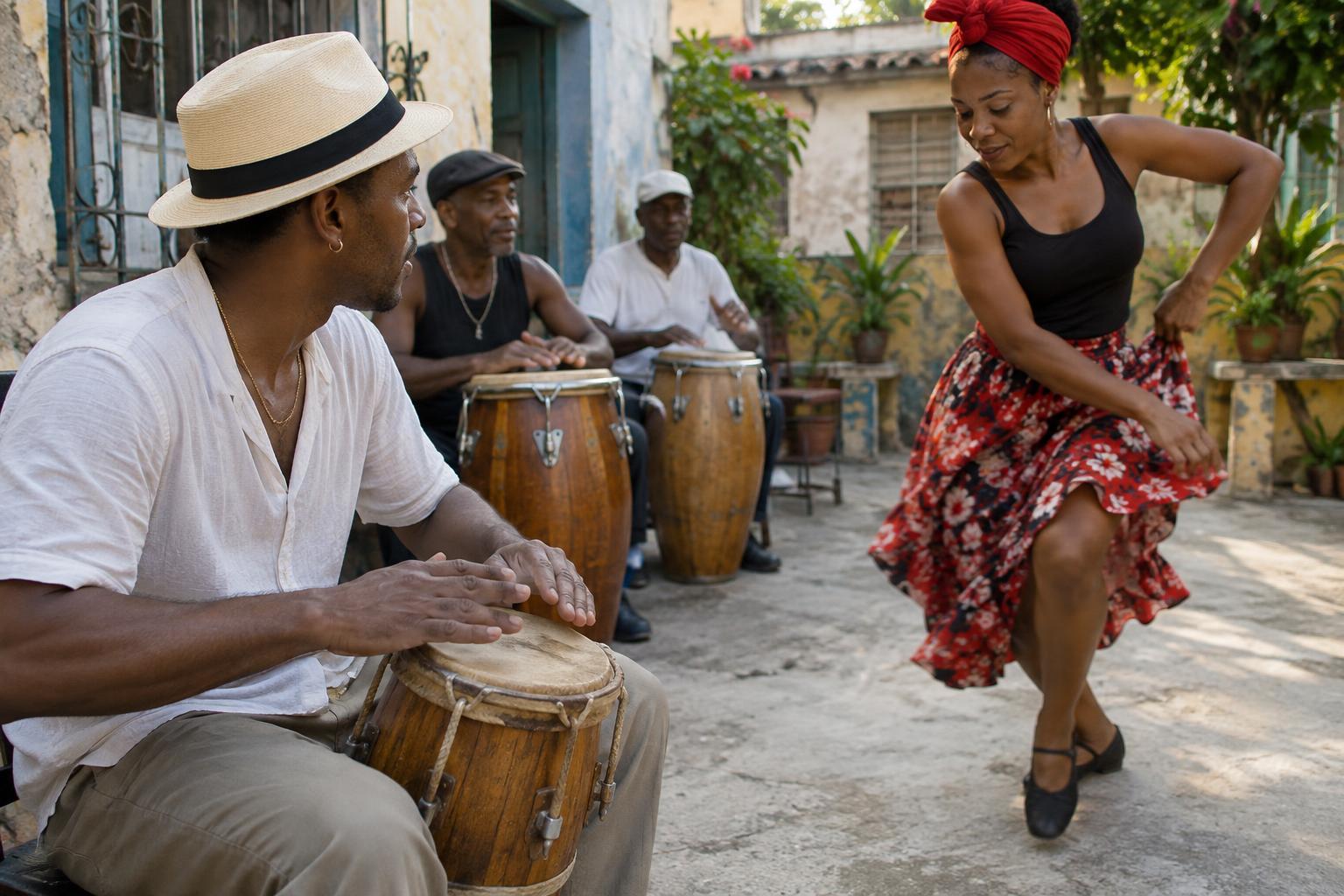
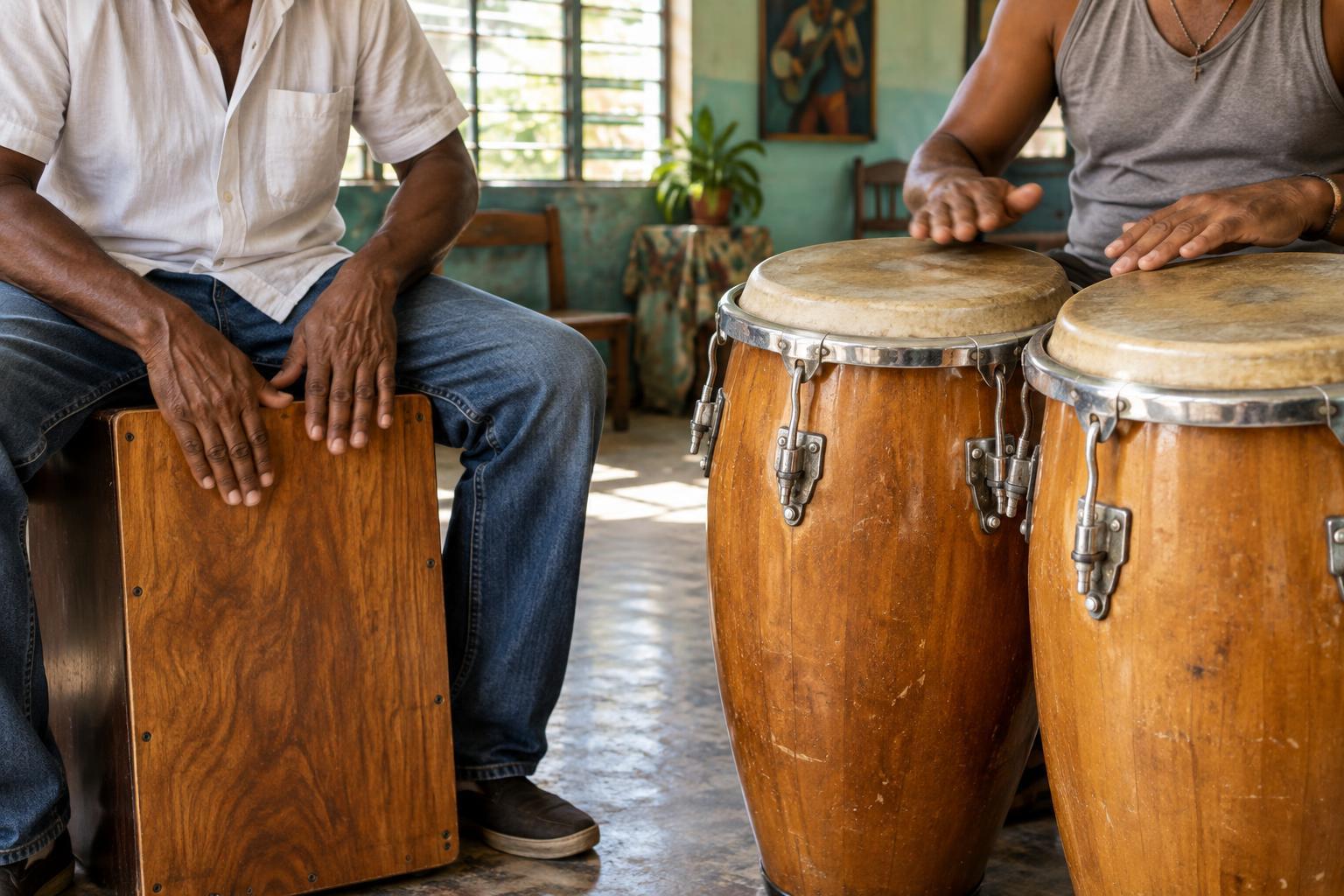
Rumba developed within Afro-Cuban communities in Cuba as a social music involving percussion, song, dance and shared participation. Its percussion draws on the possibilities of available objects as well as purpose-made instruments: different struck surfaces offer different pitches, resonances and ways to project rhythm. The bright stick sound belongs to that broader practice of building a layered ensemble from distinct rhythmic voices.
There is no need to reduce palitos to one inventor, one object or a neat point of origin. Rumba encompasses forms such as yambú, guaguancó and columbia, and practices differ across communities and performers. Even when a similar stick part appears in two performances, its feel may change with the tempo, the singer’s phrasing and the dancers’ movement. Listening for those choices respects rumba as a living practice rather than a fixed percussion exercise.
How the sticks fit with clave and drums
Clave supplies a recurring organizing pattern, but it does not have to be the loudest sound for the ensemble to feel its direction. Palitos place quick, clear attacks around that framework. Some strokes may coincide with clave; others land between its strokes. The result can sound busy on its own but settled when heard with the whole group.
The lower drums give the texture weight, while a lead drum such as the quinto may answer the singer or respond to a dancer with changing phrases. Against those moving lines, palitos can provide continuity without making every beat identical. Pay attention to the spaces as much as the hits: a gap in the stick part may let a drum accent speak, and a cluster of sharper attacks may add lift without requiring anyone to play louder.
A useful distinction is between pulse and pattern. You might tap a steady pulse with your foot while the sticks seem to skip across it. If you lose your place, return to the larger cycle rather than chasing every individual stroke. That approach makes it easier to hear how the percussion parts interlock.
What to listen for in the sound
Start with timbre. Palitos produce a dry, pointed attack that fades quickly, unlike the rounded ring or thud of a drum. The playing surface matters: a hollow wooden surface can give a different color from a denser one, and recordings may bring one sound forward more than another. Try to follow the highest, shortest repeated taps without assuming that every sharp sound is part of the palitos line.
Next, listen to placement. Do the taps feel evenly spaced, or do they bunch and open up? Which strokes seem to lean toward a drum accent, and which seem to answer one? Listen through several cycles before deciding what repeats. A phrase may sound different when the singer enters even if the stick player has changed very little; the surrounding parts alter what your ear notices.
A simple way to explore the pattern
For a quiet practice exercise, mark a comfortable pulse with your foot and clap a short, repeating clave pattern you already know. Then set the clapping aside and tap a light sequence on a safe surface with two fingers. Leave deliberate gaps. Aim to keep the pulse steady while hearing how your taps relate to the remembered clave, rather than trying to play as many notes as possible.
When listening to a rumba performance, try a second exercise: follow only the stick sound for one cycle, then shift your attention to the drums for the next. Finally, hear both together. If you want to learn a specific traditional part, study it in the context of its rumba style and, where possible, learn from experienced practitioners. The goal is not to make the sticks sound mechanically perfect; it is to understand how their bright voice helps the ensemble breathe.