Start with the pulse
Tap your foot at a comfortable, steady pace. Each tap marks a pulse: a point you can return to even when the sounds around it become busy. In a four-beat measure, you might count “one, two, three, four” with your taps. A note that begins at one of those counted points is on the beat, or an onbeat. A note that begins between them is an offbeat.
You do not have to hear a drum strike on every pulse to feel one. A bass line, melody, or repeating pattern may leave some beats silent while still giving you enough information to keep tapping. This distinction matters: the pulse is your reference, not necessarily the loudest or most frequent sound. Before deciding whether a note is an offbeat, establish where you think the beat is and test whether you can maintain it through several repetitions.
Find the spaces between beats
Keep tapping four steady beats and say “one and two and three and four and,” placing each “and” halfway between taps. The numbers mark onbeats; the “ands” mark eighth-note offbeats. Now clap only on the “ands” while your foot continues on the numbers. If the clap starts to pull your foot toward it, slow down. The aim is to feel two connected layers: a steady main pulse and an evenly spaced point between each pair of pulses.
You can divide each beat further by saying “one e and a, two e and a.” At this level, the “e,” “and,” and “a” all occur between one numbered beat and the next, but they occupy different positions within that space. Counting is a map, not a rule that every style must be performed mechanically. In some music, subdivisions may be played with an uneven or flexible feel. First locate the main pulses; then listen to how the notes between them are placed.
Hear what an offbeat does
An offbeat can add forward motion without changing the tempo. Try clapping on beats two and four while saying the four numbers. Then move each clap to the “and” just before its original beat. Your foot should keep the same pace, but the claps may now seem to lead into the next pulse. Move them to the “and” after each beat and notice a different relationship: the sound answers the pulse instead of anticipating it.
An offbeat is not automatically a syncopation. Syncopation generally involves emphasizing a point where a listener might not expect the main accent, or sustaining a sound across an expected accent. An offbeat note can create that effect, but it may also be a quiet, regular part of a pattern. Listen for emphasis, duration, and what the other instruments are doing before labeling a passage.
Listen within the whole groove
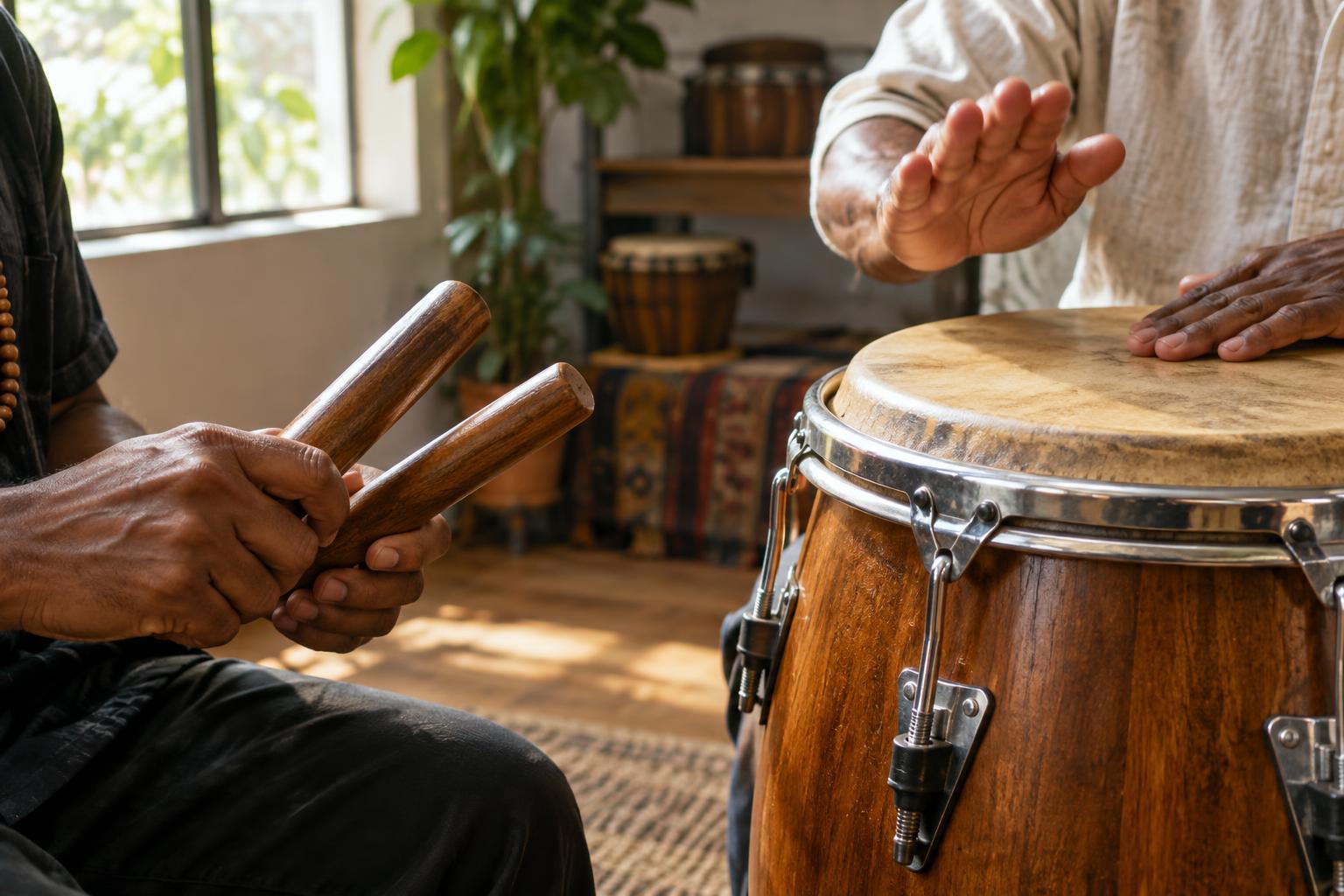
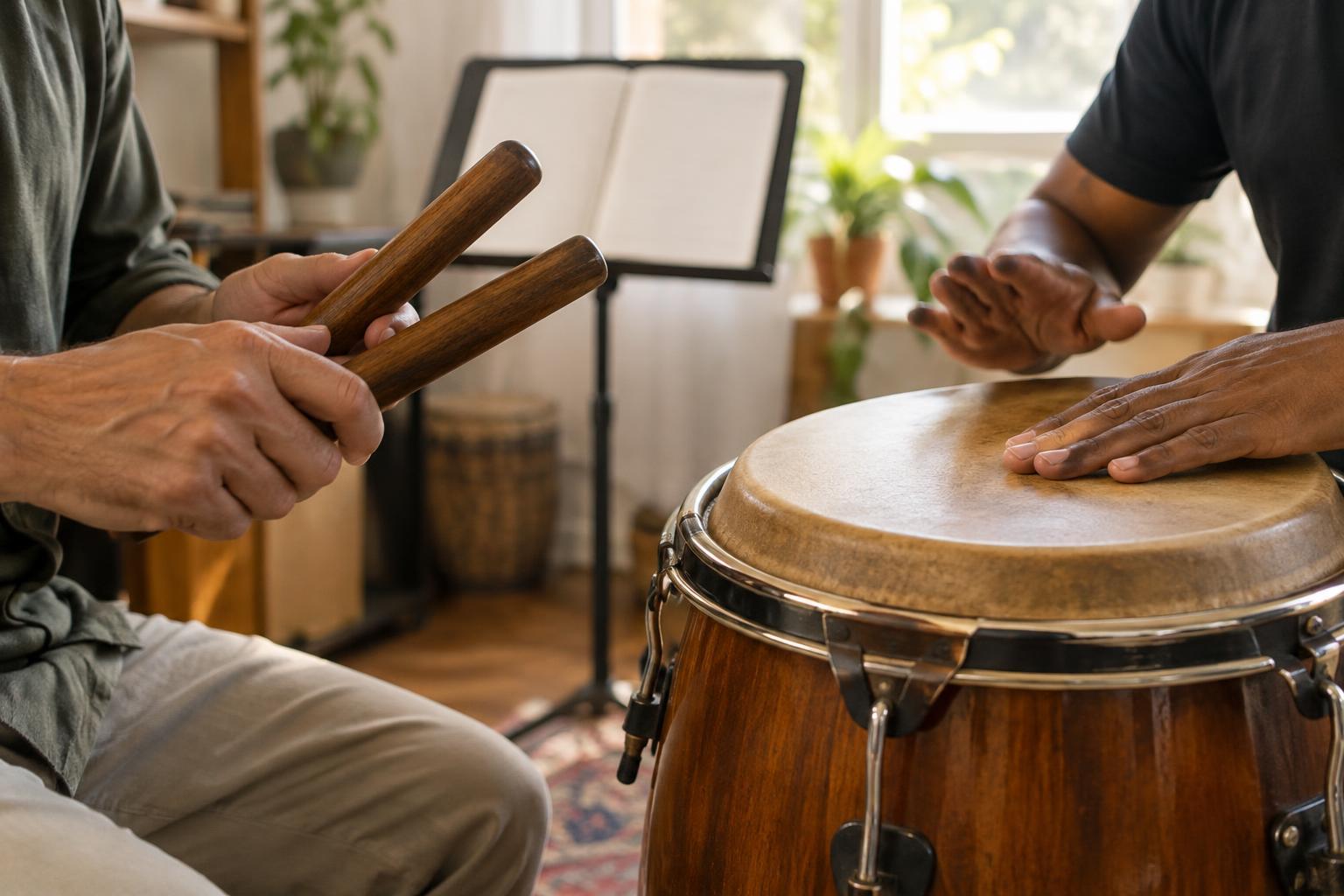
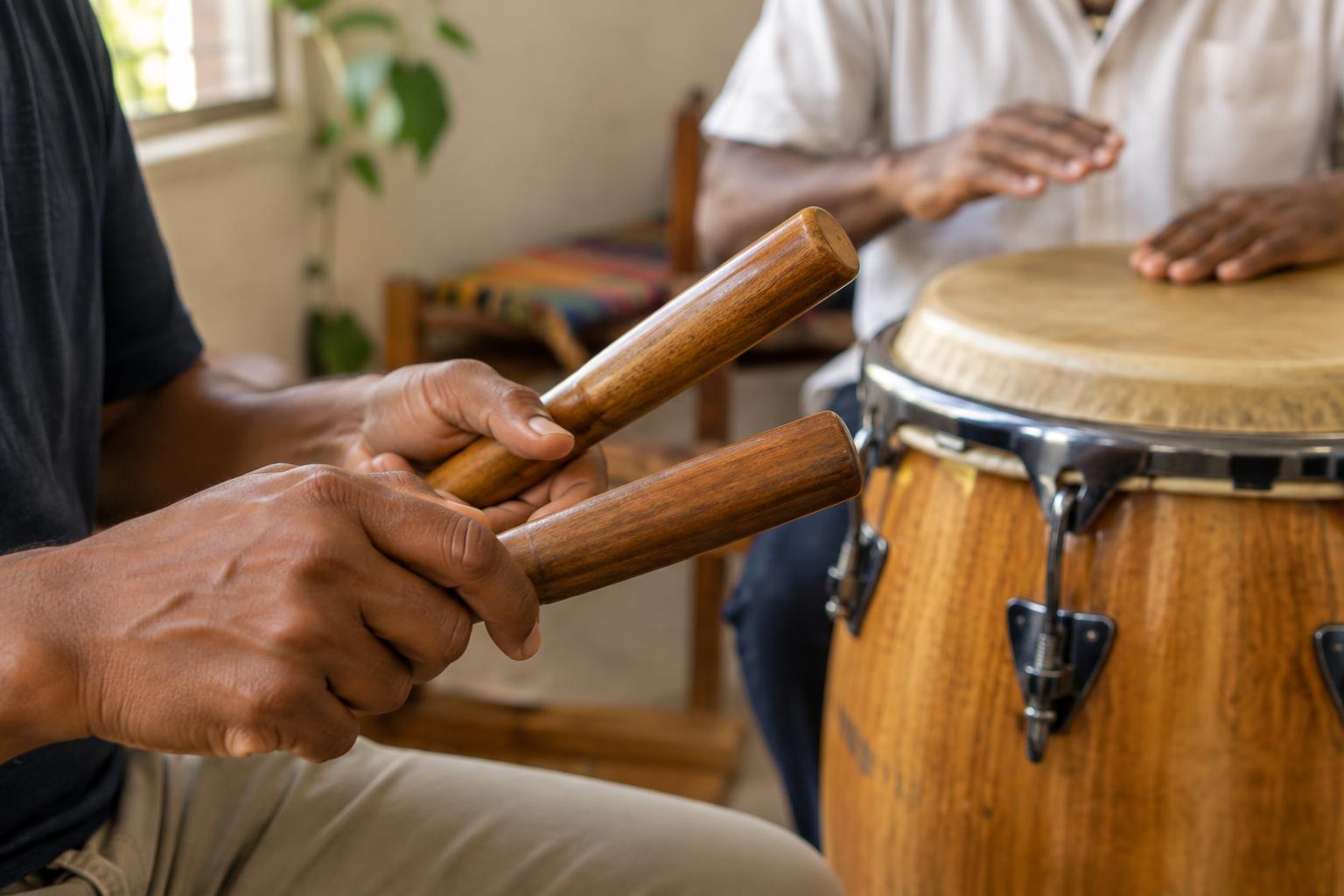
In many Afro-Cuban musical settings, percussion parts, voices, bass, and other instruments fit together through distinct repeating patterns. Clave can be an important organizing pattern in particular traditions and arrangements, but it is not simply another name for the beat, nor is every offbeat a “clave note.” If you are listening to music built around a clave pattern, try keeping a gentle pulse first. Then follow one instrument at a time and notice which notes coincide with your taps and which fall between them.
Resist the urge to treat one isolated part as the entire rhythm. A sparse pattern may feel surprising on its own yet clear in relation to the ensemble. You may also find that your first guess about the pulse was wrong. That is useful information: listen again for recurring points of agreement among the parts rather than forcing every sound to match your initial count. Describing where a note lands is a starting point for listening, not a substitute for learning a tradition’s own patterns and practices.
A short practice routine
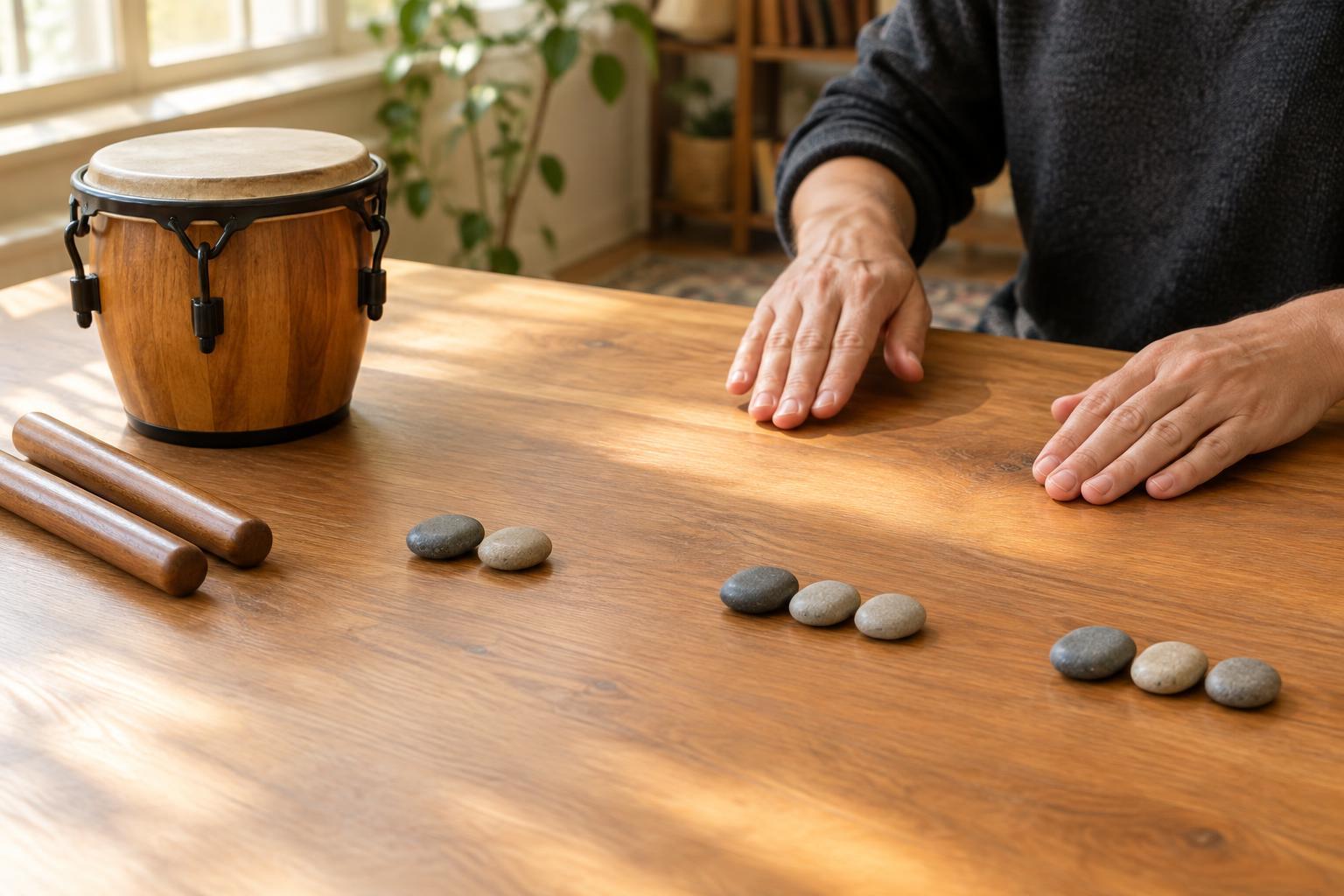
Set a comfortable pulse by tapping your foot or using a simple click. For four measures, clap with every tap. For the next four, clap halfway between taps while counting “one and two and three and four and” aloud. Alternate the two versions without stopping your foot. If you lose your place, return to clapping the onbeats; there is no benefit in speeding past a subdivision you cannot yet hear clearly.
Next, invent a two-beat pattern with one clap on a numbered beat and one on an “and.” Repeat it until you can say exactly where both claps land. Finally, listen to a recording and tap along without trying to name every sound. Choose one brief, repeated phrase and ask: Which notes meet my tap? Which arrive between taps? That small question can make a dense groove easier to follow while leaving room for everything else you have yet to hear.