Start with the sound under your hands
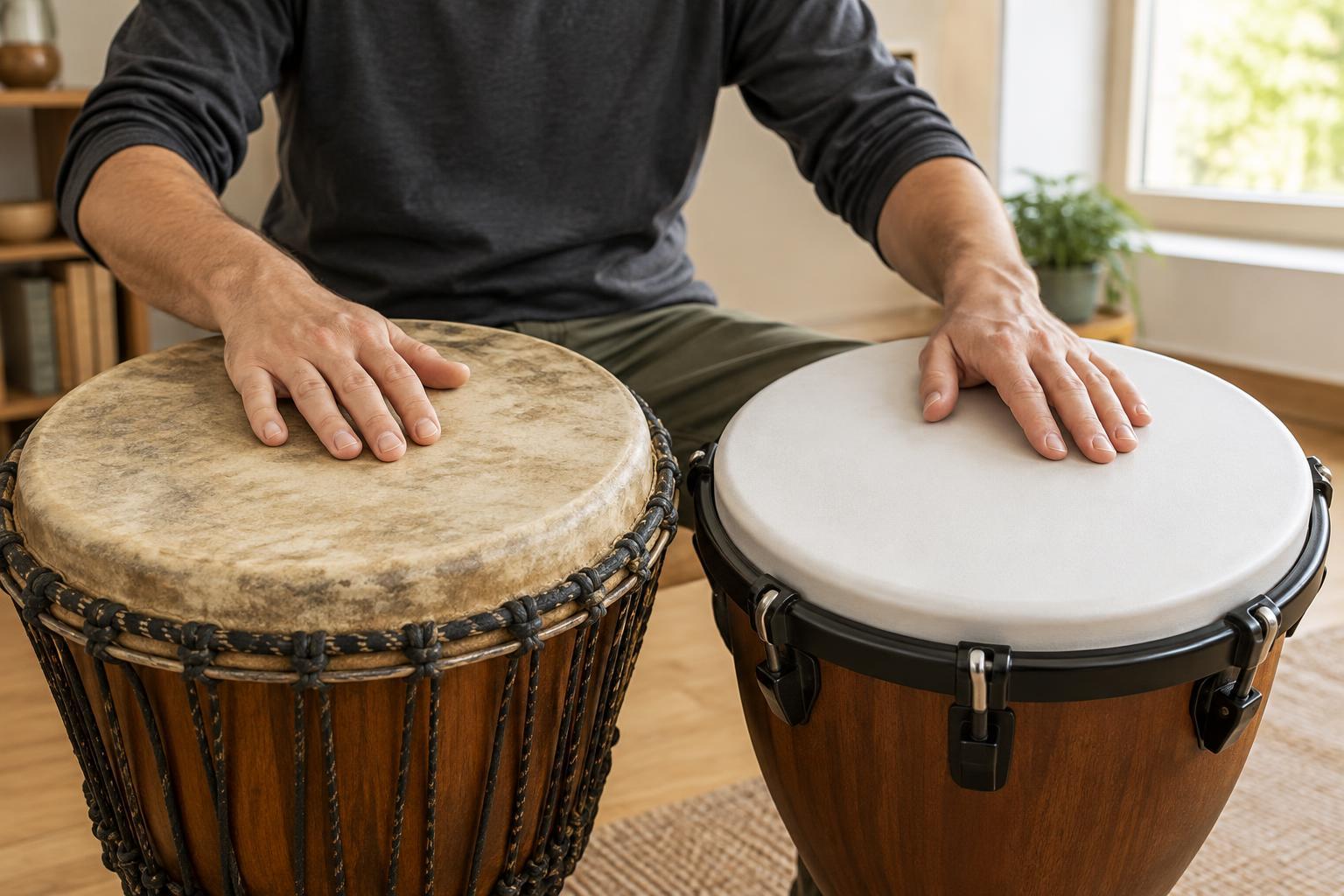
On a hand drum, the head is both the playing surface and a major part of the instrument’s voice. Its material affects how a fingertip stroke speaks, how an open tone sustains and how a slap cuts through an ensemble. Natural skin and synthetic heads can both work well, but neither has one fixed sound. Thickness, construction, mounting, tuning and the drum itself all matter.
If you can compare heads in person, begin with the strokes you actually use. Play a soft touch near the edge, an open tone and a controlled slap at a comfortable volume. Listen for the attack, the length of the note and whether you can clearly distinguish one stroke from another. Also notice the response at low volume: a head that sounds impressive when struck hard may not give you the detail you need for quieter playing.
What natural skin tends to offer
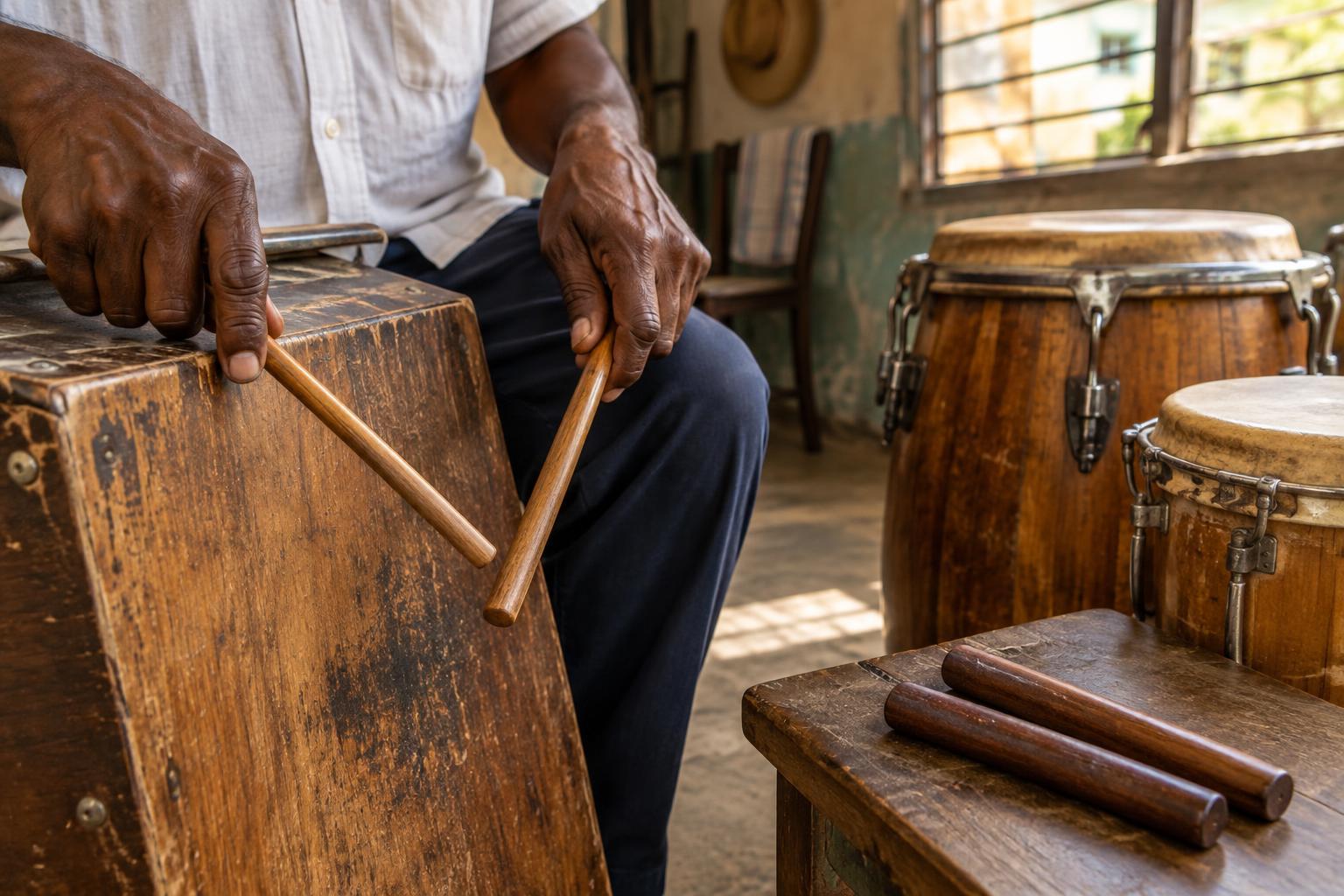
Natural heads are made from animal hide. Players often value their tactile response and the range of tones they can draw from small changes in hand position or pressure. On congas and bongos, a well-matched skin can give open tones body while allowing muted strokes and slaps to retain distinct character. Those are useful tendencies, not guarantees; two hides fitted to the same drum may feel and sound different.
That variation is part of the practical decision. Hide responds to changes in moisture and temperature, so its pitch and feel may shift between a dry practice room and a humid performance space. A player may need to check tuning more often and allow the drum time to settle after moving it. Natural skin also raises questions of material preference and sourcing. If those concerns matter to you, ask what a replacement head is made from rather than relying on a label such as “traditional.”
What synthetic heads can make easier
Synthetic heads are designed to provide a more consistent playing surface. Many hold their feel and tuning more steadily as room conditions change, which can help a player who moves between rehearsal spaces or needs a predictable setup. They may also be a practical choice for someone who prefers not to use animal products. Synthetic is a broad category, though: different films, coatings and layered designs can respond quite differently.
Some players hear a sharper attack or a more focused tone from a particular synthetic head; others find that a model feels less yielding under the hand than the skin it replaced. These impressions depend on the instrument and the player’s technique. A synthetic head is not automatically louder or easier to play, just as a natural head is not automatically warmer. Match the comparison to a specific drum, tuning range and musical setting.
Choosing for the drum and the music
Before buying, confirm that the head fits the drum’s bearing edge, hoop and mounting system. A head that sits poorly can be difficult to tune and may obscure the differences you hoped to hear. Check the maker’s guidance for your instrument, especially if it uses an unusual rim or mounting method. Do not assume that a head sold for one type of hand drum will fit another with a similar stated diameter.
Think about your role in the ensemble as well. A conga player supporting a groove may prioritize clear separation between bass, open tones and slaps. A bongo player may care most about crisp accents and the contrast between the two drums. When comparing options, listen from a few steps away as well as from the playing position. What feels bright to the player might sit neatly among other instruments, while a long, pleasing sustain might blur a busy pattern.
A simple comparison and care routine
For a useful test, keep as many variables steady as you can. Record the same short pattern at a similar tuning and volume on each head, including quiet strokes and rests. Play it back at a consistent level. Rather than asking which head is “best,” ask whether the notes remain clear, whether the surface encourages relaxed technique and whether the sound suits the parts you play. Give yourself time to adjust: an unfamiliar feel can change your first impression.
Whichever material you choose, tune gradually and evenly, following the instrument’s recommended method. Avoid forcing a head far beyond a comfortable range to chase a sound it does not readily produce. Wipe away moisture after playing and store the drum away from extreme heat or dampness; natural skin is especially sensitive to changing conditions. A good head is one you can maintain, play comfortably and hear clearly in the music you make.