Silence can be part of the rhythm
A singer pauses at the end of a phrase. The percussion drops out for a moment. The next sound arrives, and it feels perfectly placed—or surprisingly early. What happened during the gap? Even when no instrument states the beat, musicians and listeners may continue to feel its regular motion. The silence has a position within the rhythm rather than sitting outside it.
The distinction is between a pulse and the sounds that make it audible. A pulse is a recurring point in time that you can follow by counting or moving. An instrument may play on some of those points, between them, or not at all. When you hear a gap, keeping the pulse going helps you understand where the next note lands. Otherwise, it is easy to treat that next note as a fresh beat one simply because it is the first sound you hear.
Start with a beat you can carry
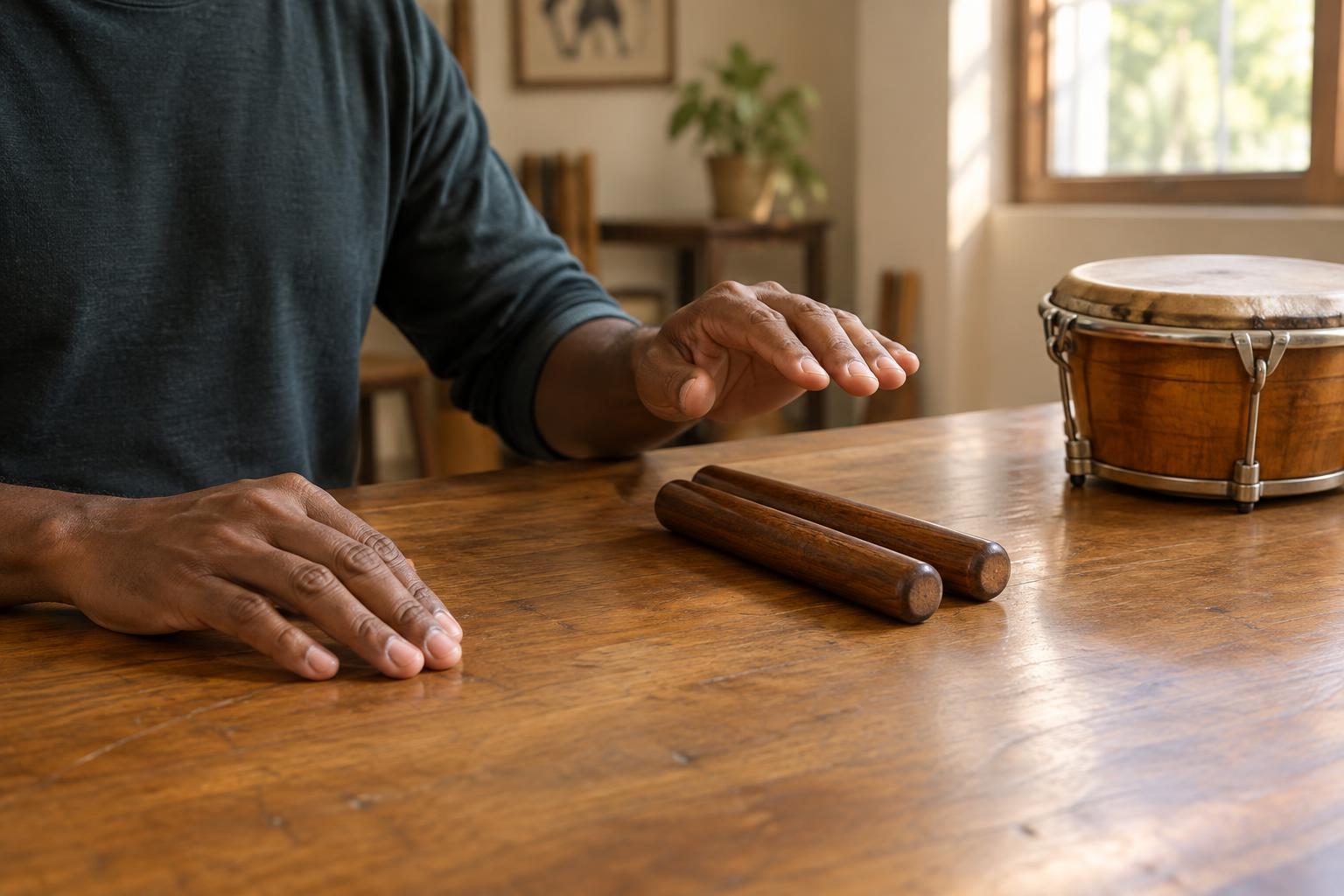
Try counting “one, two, three, four” at a comfortable, even pace while tapping your foot on each number. After several cycles, stop tapping on beats two and three but keep counting. Your foot should return on four without speeding up to meet it. Then reverse the task: tap on every beat, but say the numbers only on one and four. These small gaps let you test whether the beat continues in your mind when one way of marking it disappears.
Next, count one complete four-beat cycle aloud and one silently. Resume speaking on the following one. If that return feels uncertain, shorten the silent stretch to two beats before trying a full cycle again. A metronome can provide a reference while you learn, but the aim is not merely to follow its clicks. See whether you can maintain your own count when some of those reference sounds are absent.
Listen for the shape around a gap
In recorded music, a rest may be easier to place when you listen to what surrounds it. A bass note before the gap, a repeated chord after it, or a dancer’s step can help you sense the ongoing pulse. Notice which events recur predictably across several cycles. Follow one layer at a time, then listen again to how the layers meet. You do not need every instrument to play constantly for the groove to remain coherent.
If an entrance catches you off guard, avoid deciding immediately that the music changed tempo. Keep tapping where you thought the beats were, and replay the passage. Does the new sound arrive on your tap, between taps, or just before the next one? If your tap no longer fits the surrounding pattern, start farther back and rebuild your sense of the cycle. This is often more useful than trying to correct yourself at the instant of the entrance.
A simple missing-beat exercise
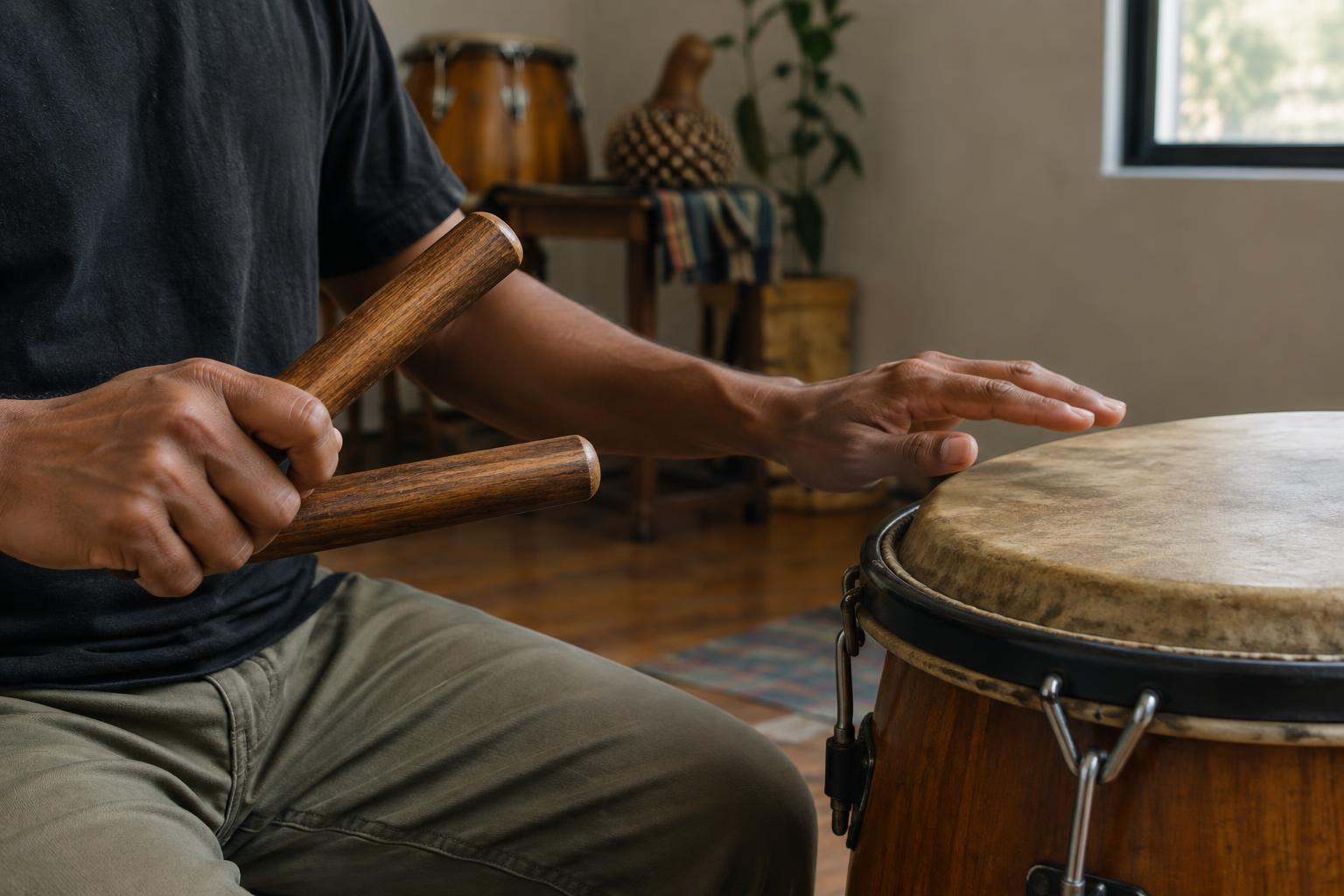
Make a four-beat pattern using only your hands: clap on one, two, three and four. Repeat it until it feels settled. Now leave out the clap on three while continuing to count and gently move your hand as though the clap were still there. The next clap, on four, should arrive at the same time it did before. You have removed an attack, not a beat.
For a second version, clap on one and on the “and” after two, leaving the other positions silent. Count “one and two and three and four and” evenly, giving each spoken syllable the same amount of time. Your second clap falls between numbered beats; the later silence still occupies time. Switch between the full-clap pattern and the sparse one without changing your counting speed. If you lose your place, return to the full pattern and simplify.
Carry the cycle, not just the loudest part
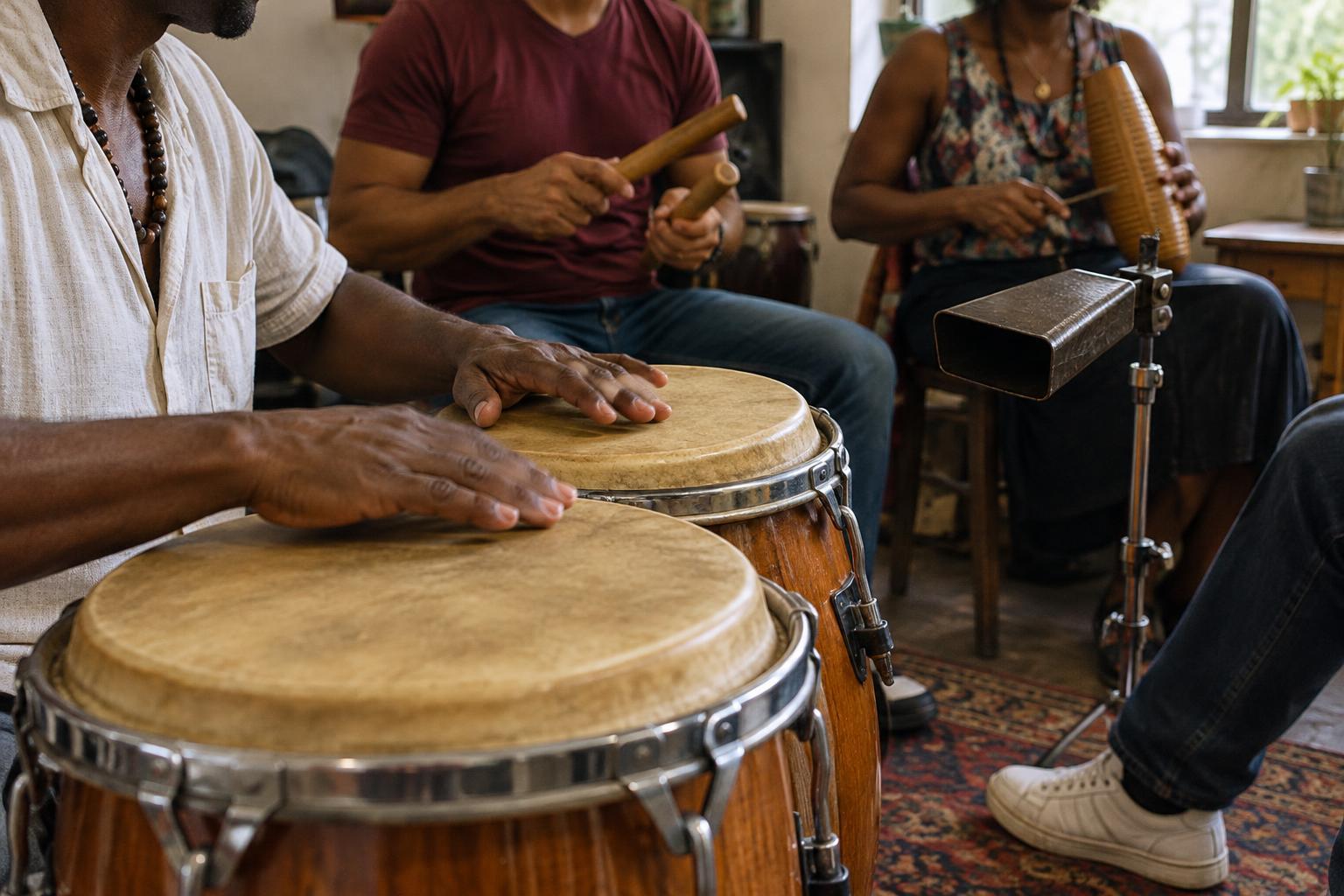
This skill becomes especially useful in layered music. In many Afro-Cuban settings, different parts have distinct roles, and a phrase may make sense in relation to a larger recurring cycle even when one part rests. Clave can provide an important point of orientation, but learning to hear it takes more than waiting for a particular stroke or assuming every song presents it in the same way. Listen to the whole arrangement and give each tradition and performance its own attention.
When you practice, treat a gap as a place to stay engaged. Count quietly, move with the pulse, and notice where the next entrance belongs. Over time, silence can become less of a cue to restart and more of a way to hear the rhythm’s shape.