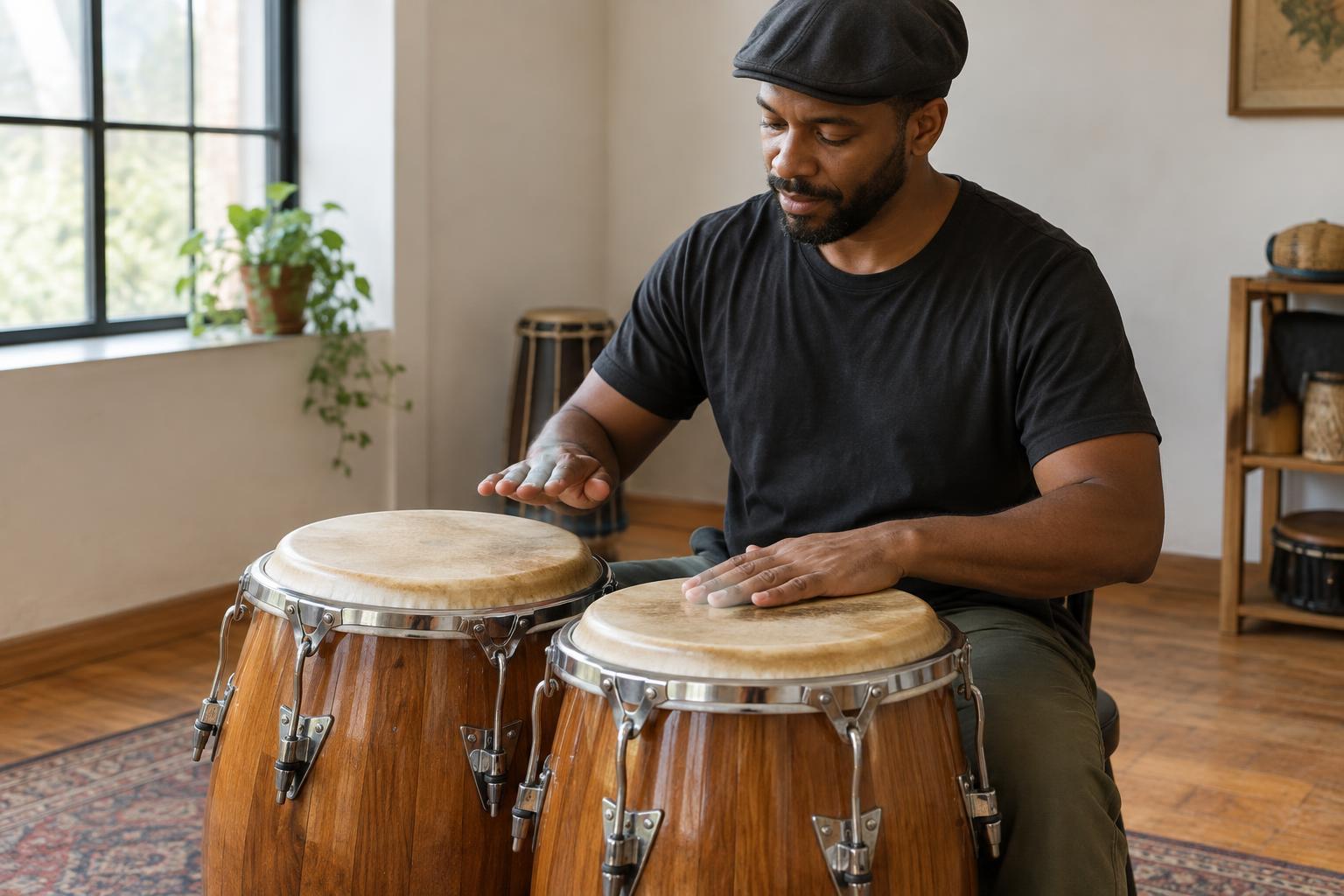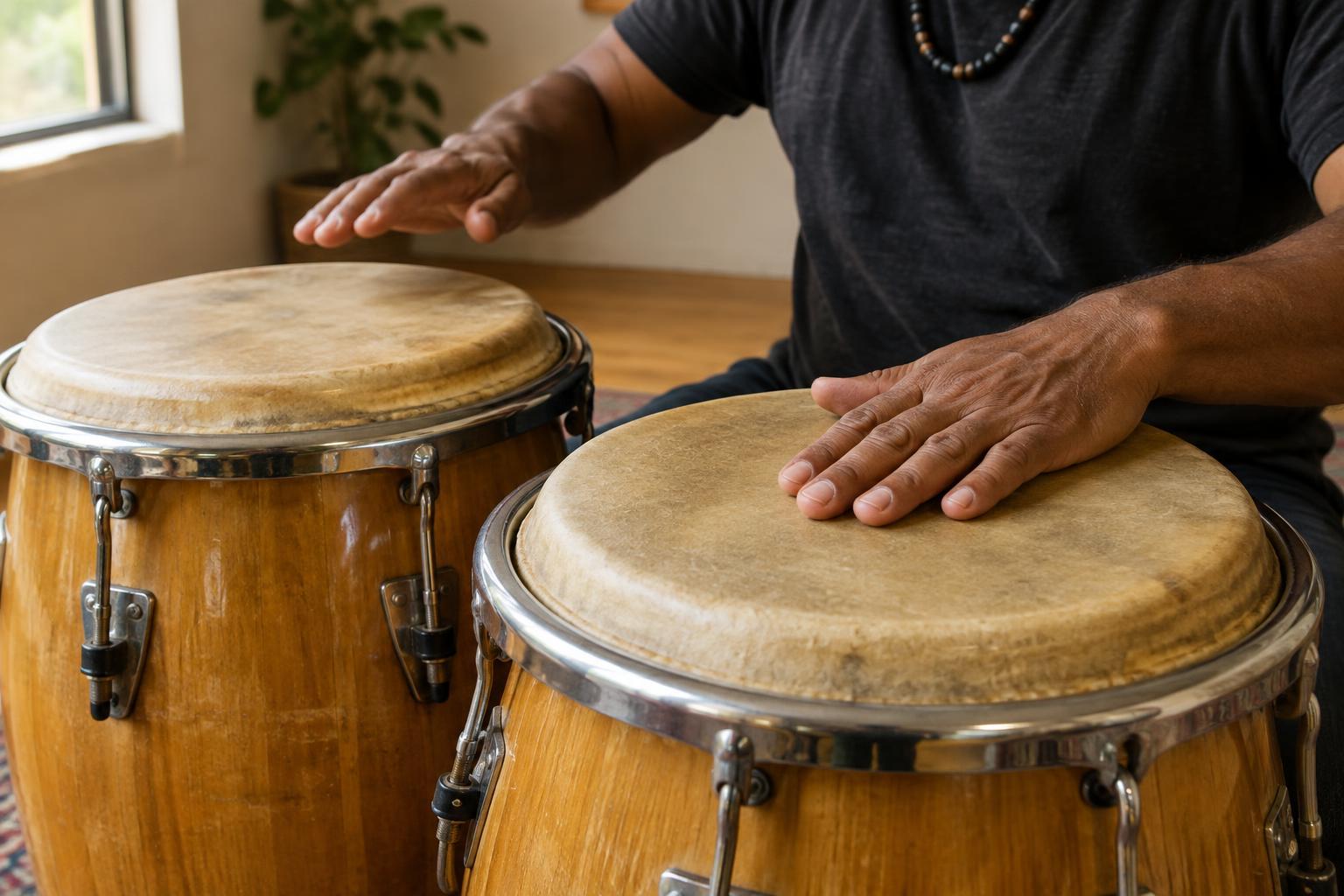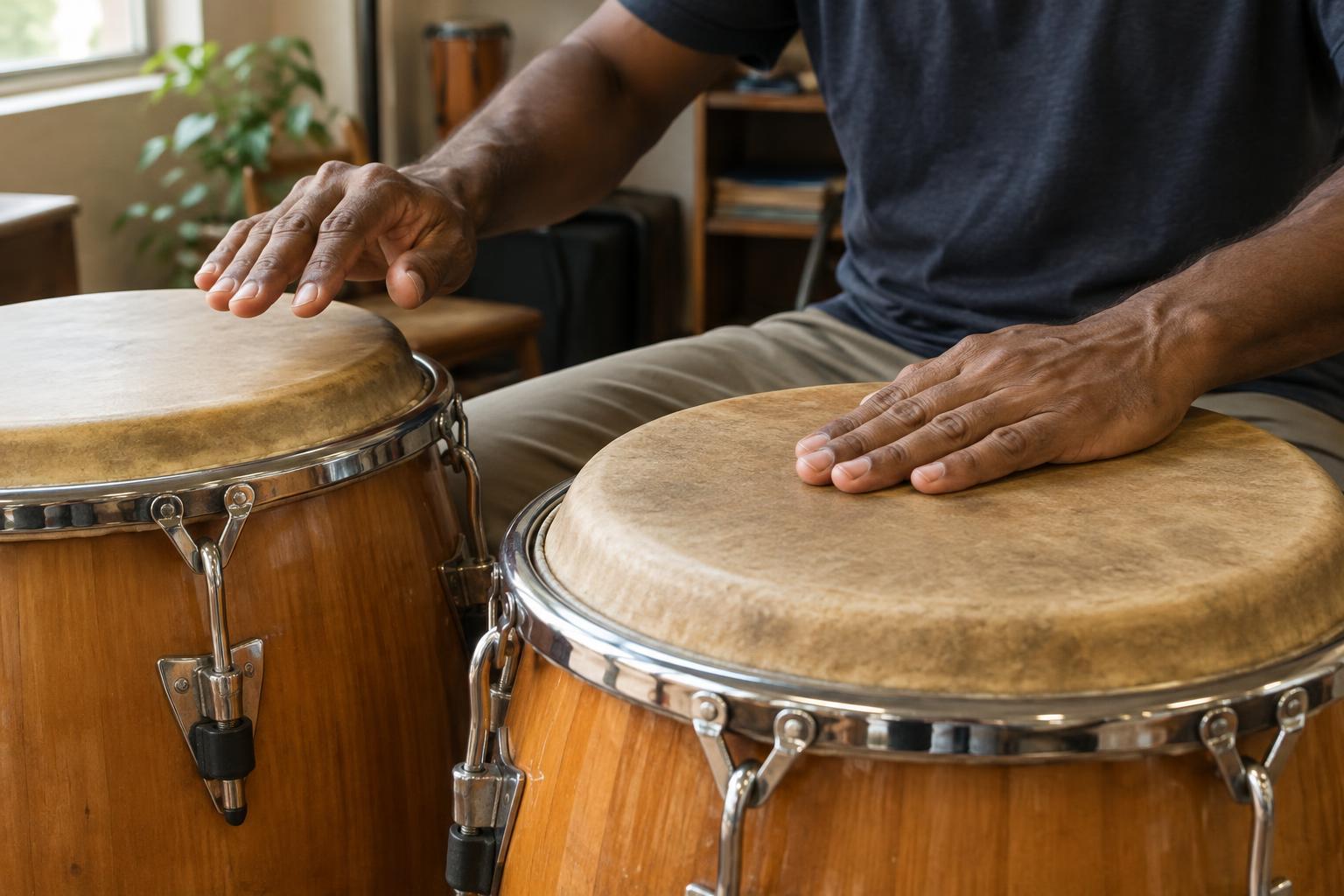
Start with the sound you need
There is no single correct pitch for every conga. A useful tuning lets the drum speak clearly at a comfortable playing touch, with an open tone that suits the music and blends with any other drums in the setup. The drum’s size, head, shell and playing space all affect what that sounds like. Aim for a responsive instrument rather than a particular note at any cost.
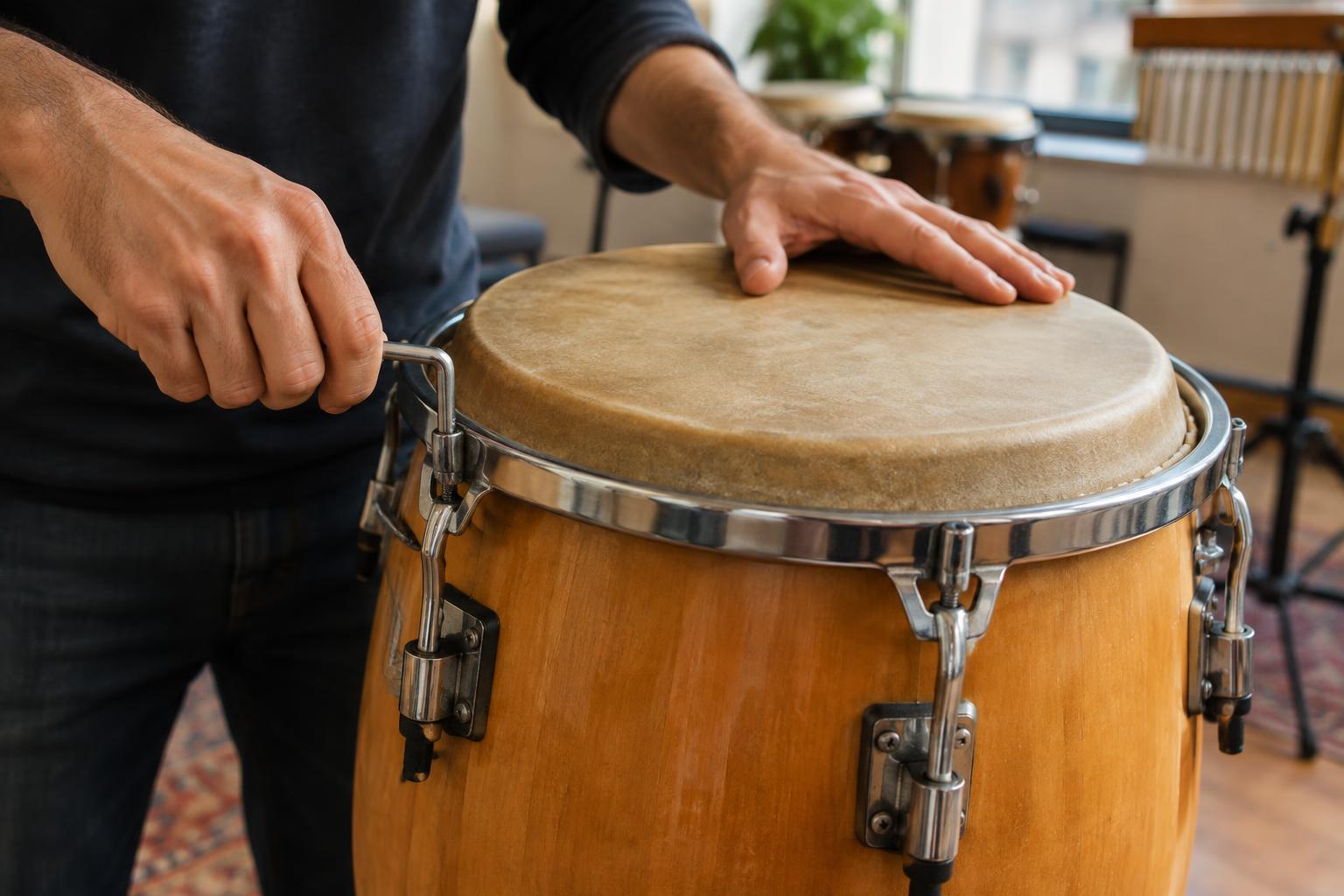
This method is for a conga with a modern lug-and-bolt tuning system. Before turning anything, set the drum securely on its stand or a stable surface and look around the rim. Check that the head and rim appear seated evenly, and note the number and positions of the lugs. If a bolt is difficult to turn, a hook looks misaligned, or the head is visibly damaged, do not force the hardware. The problem may not be solvable by tuning.
Make small, balanced adjustments
Use the correct wrench and work in small increments, such as a quarter-turn or less per lug. Choose one lug, then move to a lug across the drum rather than tightening its immediate neighbor. Continue across the head in a crisscross pattern until every lug has received approximately the same adjustment. On a drum with an odd number of lugs, alternate between widely separated lugs and complete a full circuit before making another.
After each circuit, play a few open tones with the same hand position and stroke. Listen for clarity and sustain, but also notice how the drum feels. If the tone is still low and unfocused, another small, even circuit may help. If it is already clear and comfortable, stop. Large turns at one lug can pull the rim out of balance, making the drum harder to assess and increasing stress on the head and hardware.
Listen for uneven tension
A drum can have a pleasing overall pitch while its head is tighter on one side than the other. To check, lightly tap the head a short, consistent distance inward from each lug. Keep the tapping position and force as similar as you can. You are listening for differences between these nearby areas, not trying to produce your full playing tone.
If one area sounds noticeably lower, raise that lug by a very small amount, then compare again. If one area sounds noticeably higher, a slight loosening may make more sense than tightening every other lug to match it. Recheck the open tone after each correction. Perfectly identical taps are not always possible, especially with natural skin; the goal is a reasonably even, playable head, not an endless chase for tiny differences.
Know when to stop tightening
Tension is not a substitute for listening. If each adjustment makes the drum sound thin, pinched or harsh rather than clearer, stop raising the pitch. A head that feels unusually rigid, a rim that appears uneven, or hardware that becomes hard to turn also calls for a pause. Do not use extra leverage to push past resistance. An open tone should have room to speak without requiring you to strike harder than is comfortable.
Natural skin responds to changes in humidity and temperature, so yesterday’s tuning may not be today’s. Make modest adjustments after the drum has settled into the room where you will play. Some players ease tension after playing, particularly when storing a natural-skin drum in changing conditions, but avoid loosening so far that parts become unstable. Follow the care guidance for your particular drum and head.
Use the music as the final check
Once the tension seems even, play the sounds you actually use: open tones, bass tones, slaps and quieter touches. A drum that sounds good under light tapping near the lugs still needs to work in a pattern. If you play multiple congas, listen to how their tones relate. They should be easy to distinguish without forcing either drum beyond a comfortable range.
For a developing player, tuning is also a listening exercise. Make one small change, play the same short rhythm, and notice whether the drum gained clarity or lost warmth. That habit builds a more reliable sense of the instrument than turning bolts until the head feels tight. Even tension, patient listening and a willingness to stop are the foundations of a useful conga tuning.