Start with a steady beat
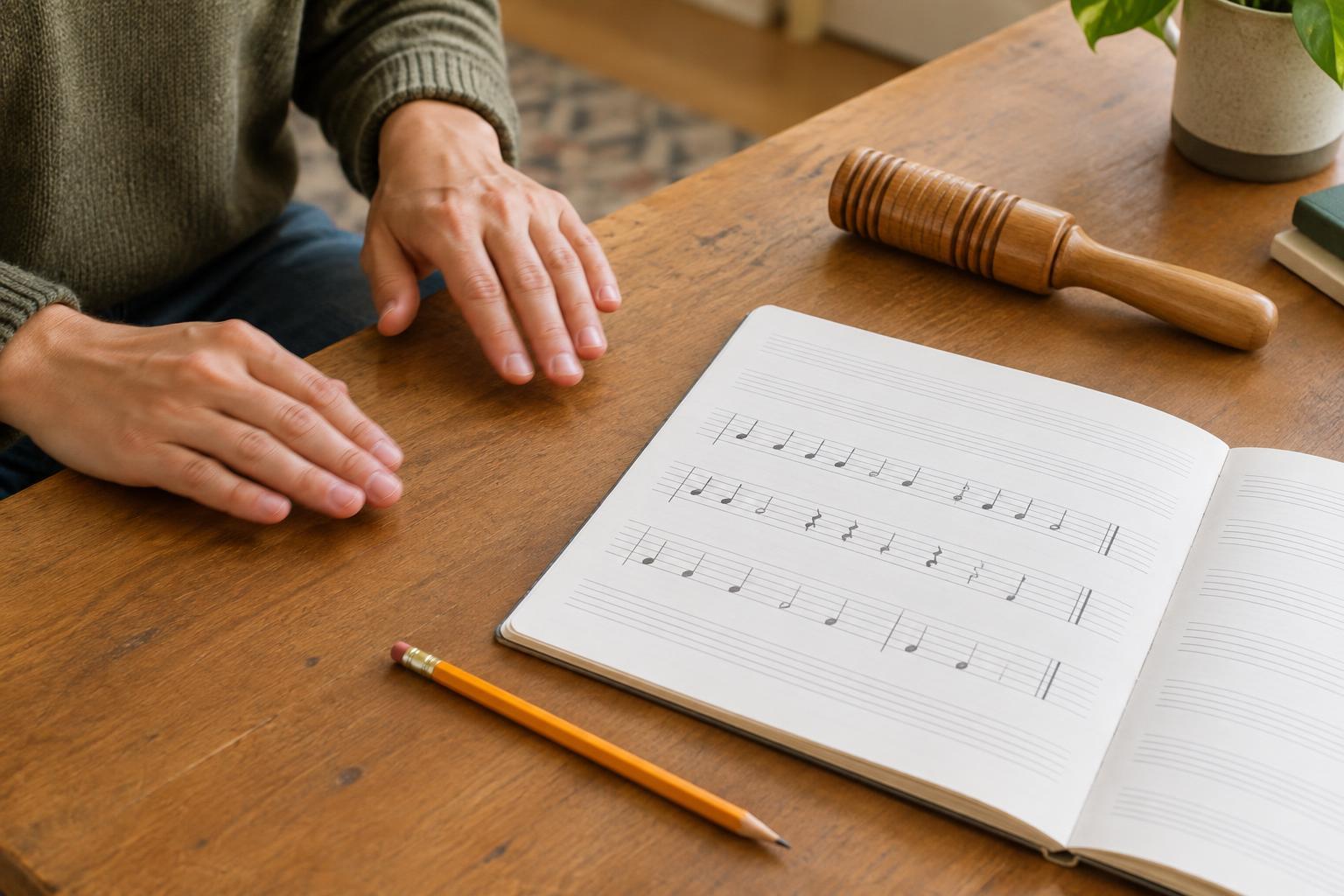
A rhythm on the page is a set of instructions for timing. Note values tell you how long written sounds last; rests tell you how long to leave space; and bar lines divide the music into manageable units. To make sense of all three, begin by feeling a steady beat. Tap your foot at an even pace and say “one, two, three, four” repeatedly. The numbers mark beats, not necessarily notes: a musician might play on every beat, between beats or not at all.
A time signature near the start of a piece gives you a counting framework. In 4/4, the top number indicates four beats in a measure, and the bottom number identifies the quarter note as the written beat unit. A measure, also called a bar, is the span of music between bar lines. The time signature helps you count that span; it does not tell you which beats must be played or accented.
Understand note values as proportions
In 4/4, a whole note lasts four beats, a half note lasts two, and a quarter note lasts one. Two eighth notes fit into one quarter-note beat, while four sixteenth notes fit into that same beat. These values describe duration, not loudness. If you tap four steady beats, one whole note could begin on beat one and continue through beat four; four quarter notes would begin separately, one on each beat.
Eighth notes are often counted “one and two and three and four and,” with “and” halfway between numbered beats. For sixteenth notes, you can say “one e and a” across a single beat. Keep the foot tap steady while you speak: the added syllables divide the beat rather than speed it up. When reading a note, notice both where it starts and how long it continues. A longer note is not a request to strike repeatedly; on a drum, for example, its written length may indicate the space before the next event.
A dot after a note adds half of that note’s original value. A dotted quarter note therefore lasts one and a half quarter-note beats. A tie, shown as a curved line joining two notes of the same pitch, combines their durations into one sustained sound without a new attack. Dots and ties let a written rhythm extend across the subdivisions you are counting.
Read rests as timed silence
Each common note value has a corresponding rest. A quarter rest occupies one quarter-note beat; an eighth rest occupies half of one. Half rests and whole rests mark longer stretches of silence. In 4/4, a whole rest commonly indicates an entire silent measure. Whether you are playing an instrument or listening, keep counting through rests so you know precisely when the next sound belongs.
Try this one-bar pattern in 4/4: play quarter notes on beats one and three, and take quarter rests on beats two and four. Say all four numbers aloud, but make a sound only on “one” and “three.” Next, replace beat two with two eighth notes, played on “two” and “and.” The bar still lasts four beats. Only the placement of sounds within it has changed.
Silence can give a rhythm its shape. In an ensemble, a rest may leave room for another part to answer, or it may make the next entrance more noticeable. Reading the rest accurately matters as much as reading the notes around it.
Use bar lines to stay oriented
A single bar line marks the end of one measure and the start of the next. It is a visual boundary, not a sound you have to play. A double bar line can mark a larger division or an ending, depending on the notation around it. If you lose your place, locating the next bar line and restarting your count at the next measure can help you regain your bearings.
In 4/4, the written durations within a regular measure generally add up to four quarter-note beats, including any rests. Check a bar by counting its contents: a half note, a quarter rest and a quarter note fill four beats. Bar lines make that arithmetic easier to see. They also help musicians rehearse together by giving everyone a shared way to identify a passage.
Not every piece groups its beats in fours. In 6/8, a measure contains six eighth-note units, often felt as two groups of three. Counting its six written units is useful, but feeling the larger grouping can make the rhythm easier to perform. Look at the time signature and listen for the pulse rather than assuming every bar works like 4/4.
Turn notation into a listening skill
Choose a short, simple rhythm and work through it in layers. First, count the beats aloud while tapping a steady pulse. Next, speak the subdivisions needed for the written notes. Then clap only the notes, continuing to count silently through rests. Finally, listen back to yourself or play alongside another person keeping the beat. If the pattern shifts, slow down and find the exact subdivision where the sound should begin.
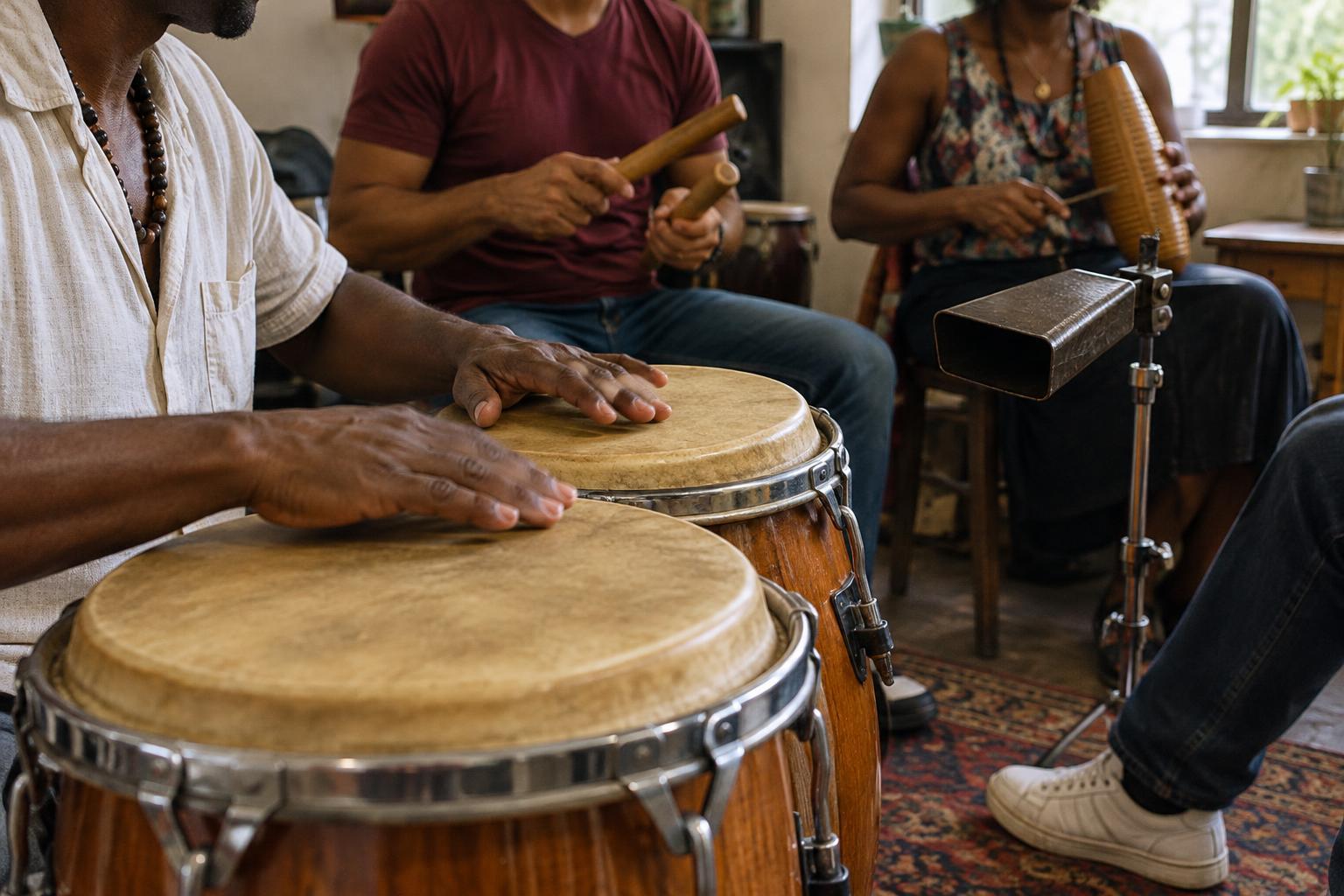
This approach is useful beyond a notation exercise. In percussion and Afro-Cuban ensemble music, different parts can place sounds in different parts of the beat, creating a larger rhythmic conversation. A written bar can help you locate those entrances, but it cannot replace listening to how the parts relate. Treat notation as a map: learn its symbols, keep the pulse steady and use your ears to understand how the rhythm moves.