Keep the pulse going while your hands are still
A rest is not a break from the music. If you stop tracking the pulse when you stop playing, your next note becomes a guess. Keep a quiet count, feel the beat in your body, or follow a small, comfortable motion such as a gentle shift of weight. The goal is to stay connected without adding an audible part that the arrangement does not call for.
Before practicing an entrance, identify exactly where it falls. Is it on a main beat, between beats, or after a particular phrase? Count through the silence and say the entrance aloud before touching the instrument. If the pattern begins with an offbeat note, resist the temptation to wait for the next strong beat. That small delay can make an otherwise correct pattern feel misplaced.
Listen for a cue, but do not depend on just one
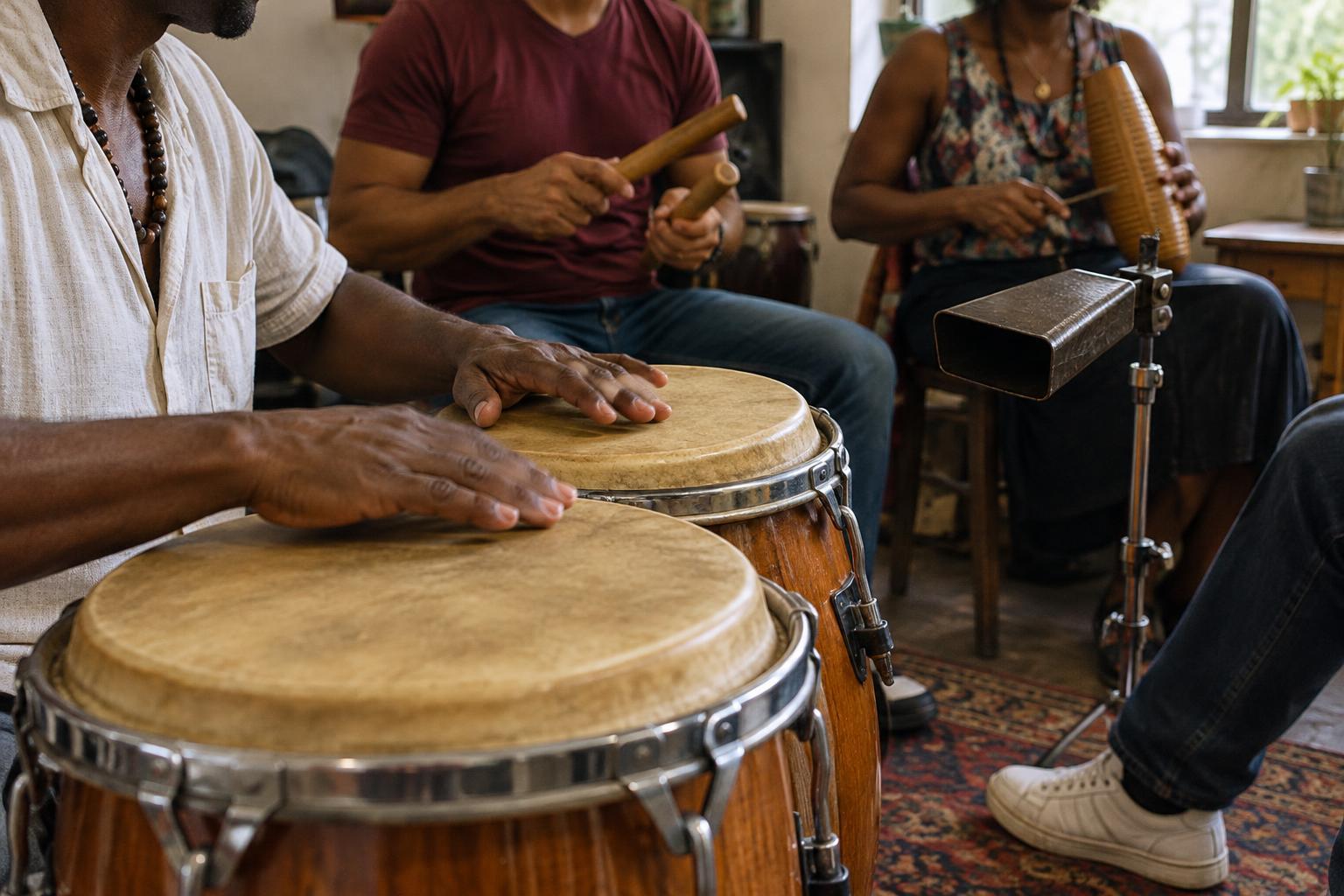
Counting gives you a position; listening helps confirm it. An ongoing percussion part, bass phrase, sung line, or repeated figure may help you hear where you are. In an Afro-Cuban ensemble, a bell or clave pattern can offer orientation when it is part of that particular music. Neither should be treated as a universal cue: listen for the relationships in the arrangement you are actually playing.
Choose at least two things to follow. You might count the pulse internally while noticing where a recurring bell phrase begins. If one sound becomes hard to hear in a rehearsal or performance, the other can help you stay grounded. Notice where phrases turn around, not merely where a loud accent occurs; the loudest event is not always the start of the phrase.
Prepare the first sound before it arrives
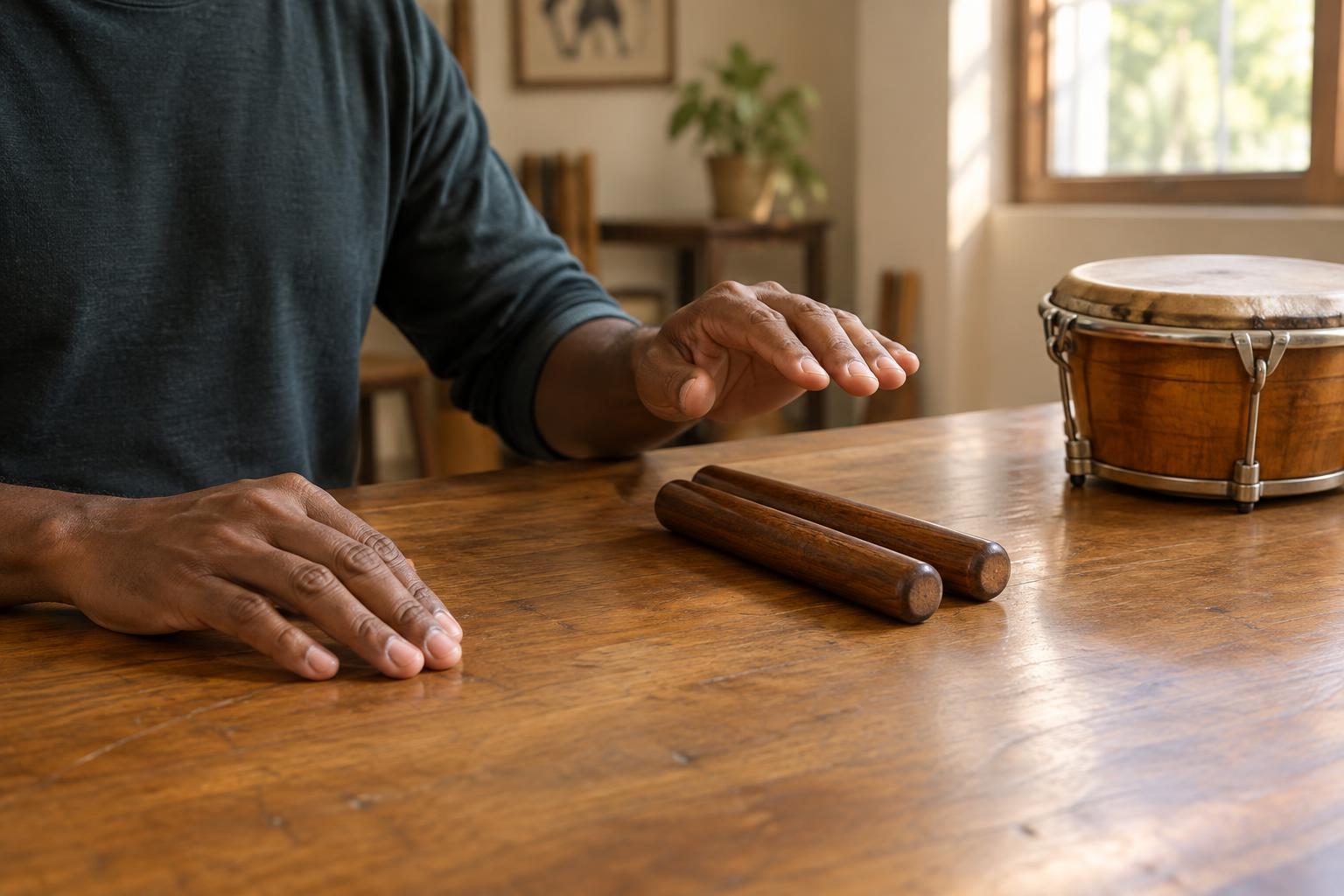
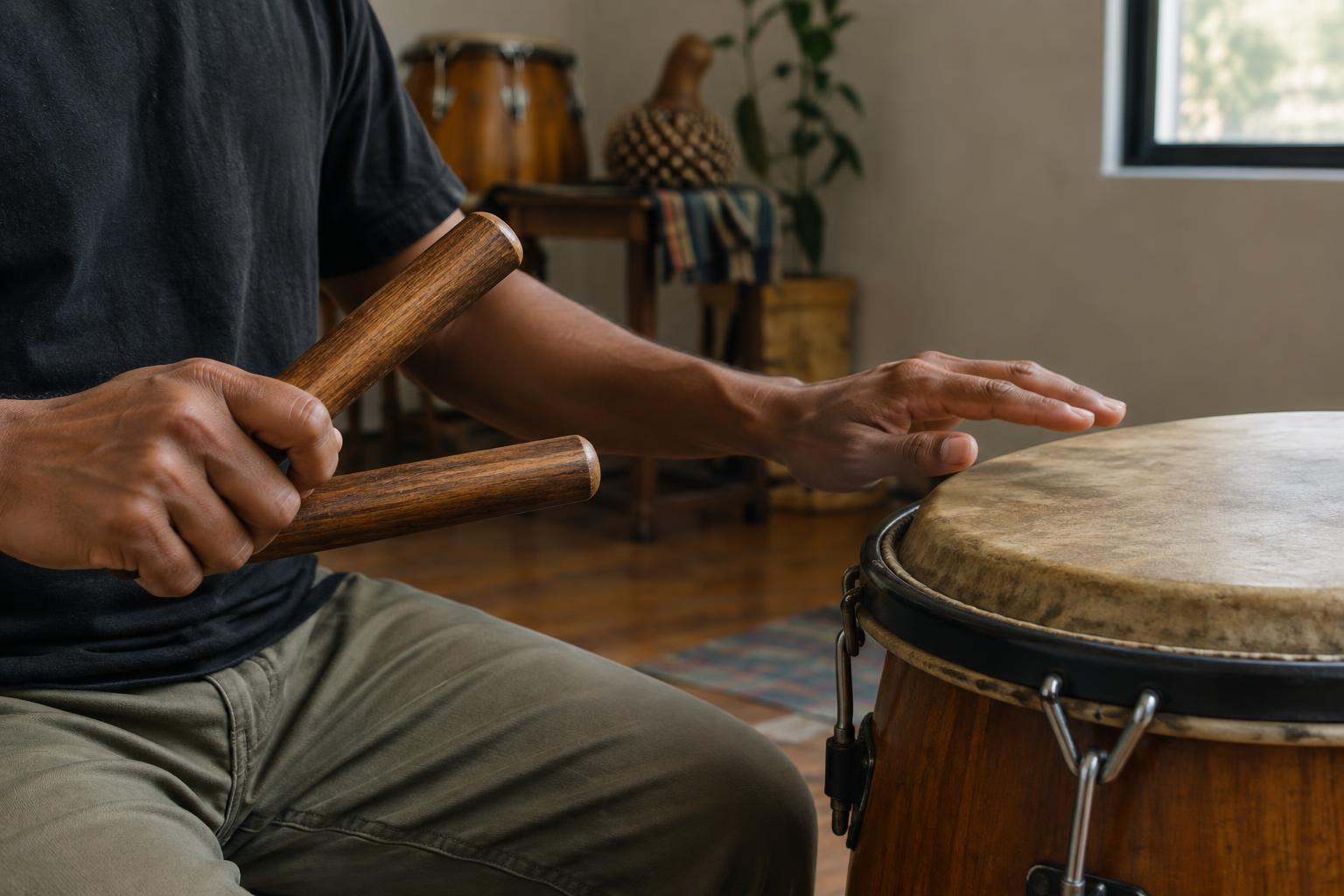
Many rushed entrances begin with a last-second physical adjustment. Place your hands, sticks, or shaker in a ready position early enough that you do not need to lunge toward the instrument. If a hand drum part begins with a specific tone, set up the hand shape during the rest. For a bell or other handheld instrument, check that your grip allows the intended first stroke.
Decide how loud that first note should be. A strong entrance is not necessarily a loud one; it is a note placed at the right time with a clear sound. When joining a groove that is already in motion, start at the ensemble’s dynamic rather than announcing your arrival. You can shape the part once you have settled into its relationship with the other players.
Practice the silence as carefully as the pattern
Try a simple exercise with a steady click or another player keeping time. Play a short pattern for two measures, rest for two measures, then return. Repeat until the first note after each rest feels no different from a note played mid-pattern. Next, lengthen the rest while keeping the same entrance point. Record yourself if possible, and listen specifically to the note before the rest and the first note after it.
For a harder version, let the click sound less often while maintaining the same tempo, or have a partner play a repeating part without marking every beat. Count aloud at first, then count silently. If you lose your place, shorten the rest again. Rebuilding from an easy version is more useful than repeatedly guessing through a long gap.
Recover without disrupting the ensemble
Even prepared players occasionally miss an entrance. If you realize you are unsure where you are, listen for the next phrase point you can identify confidently. Rejoining there is often better than forcing in notes to make up for what you missed. Avoid speeding through the pattern to catch up: rhythm is a shared timeline, not a set of notes that must all be completed.
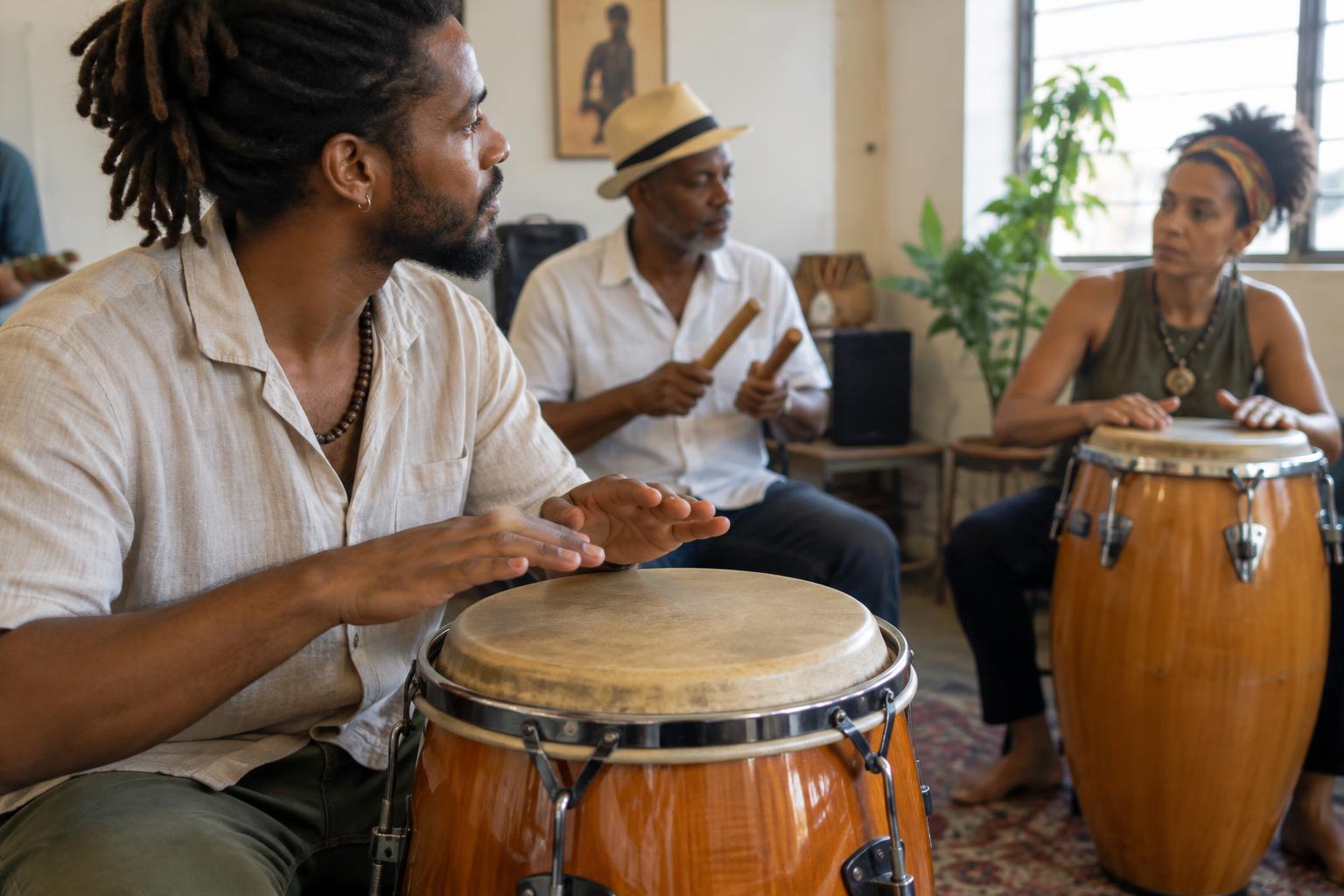
In rehearsal, ask which cue the other players use and agree on a clear entry point if the arrangement leaves room for doubt. That conversation is part of learning the music together. With practice, a rest stops feeling like empty space and becomes an active part of your percussion phrase.