Start with two different jobs
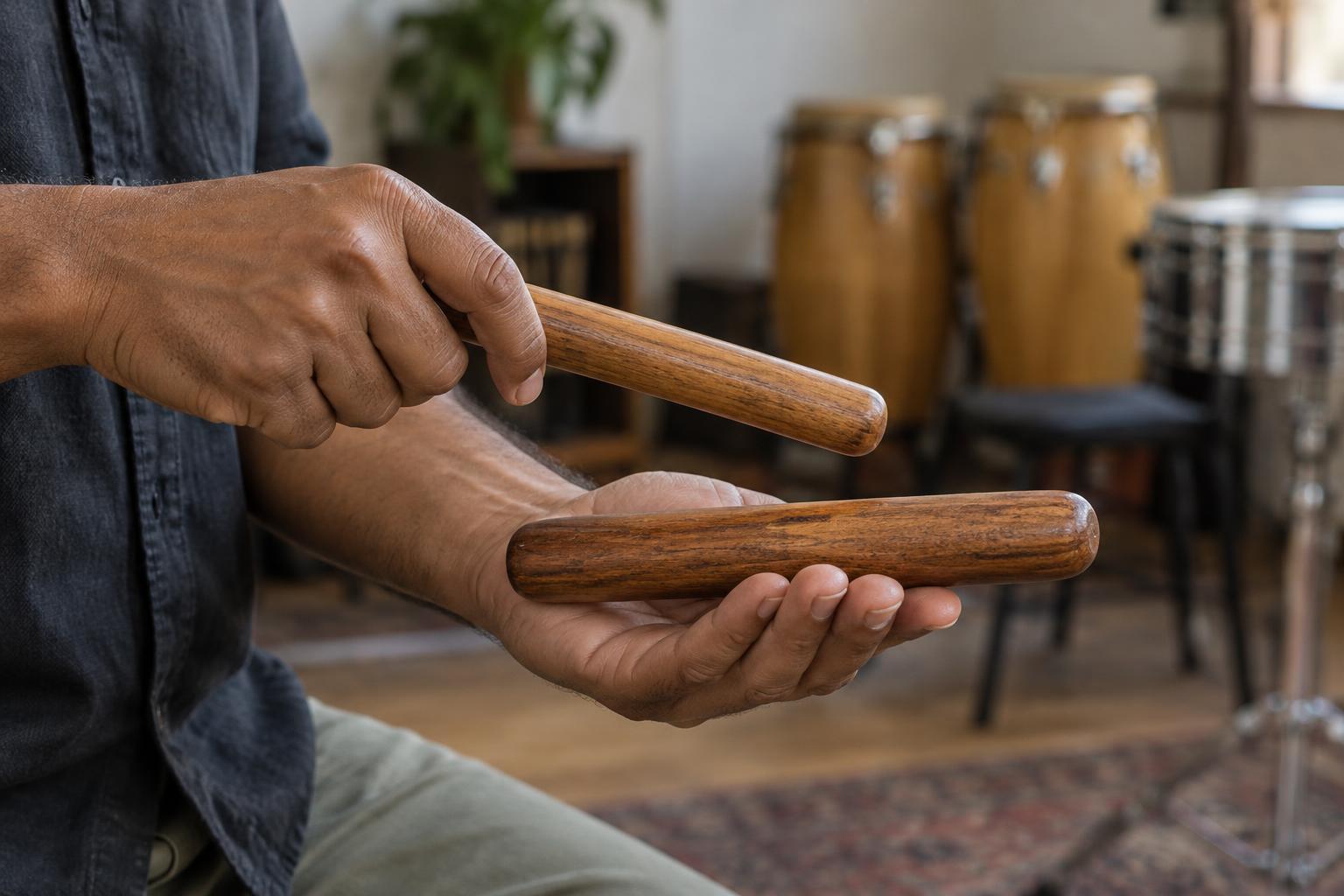
Claves are a pair of short wooden sticks, but they do not do the same job while you play. One is the resting clave: you support it and let it ring. The other is the striking clave: you move it to produce each note. Which hand takes which role is a matter of comfort. What matters most is that neither hand squeezes away the sound.
The instrument’s name is also used for clave, a guiding rhythmic pattern in many Afro-Cuban musical settings. Playing the instrument does not automatically mean playing that pattern; a percussion part can use claves in different ways. Learning to produce a consistent tone gives you a foundation for listening to and playing a rhythm with greater care.
Make a loose cradle for the resting clave
Turn one palm upward and soften your fingers, as though you were holding a small amount of water. Lay the resting clave across the hand so that it touches lightly rather than lying flat against the entire palm. A small space beneath the stick can help it vibrate freely. Curl your fingers enough to keep it secure, but avoid wrapping them tightly around it.
Try a few comfortable positions instead of searching for a single exact point that works for every pair. The size, shape, and material of the claves can affect where they balance and how they sound. If the resting stick feels trapped, adjust its position or loosen your fingers. Keep your wrist easy and your shoulder relaxed; a strained hand makes steady playing harder.
Test the support before practicing a rhythm. Strike once, then listen to the end of the sound. A more open cradle will often produce a fuller ring than a firm grip. Compare those sounds at the same gentle volume so that loudness does not disguise the difference.
Strike cleanly, then let the sticks separate
Hold the striking clave securely enough that it will not slip, with room for your wrist to move. Aim for a clean contact across the resting stick rather than a glancing scrape. A modest motion is usually enough: bring the striker in, make contact, and allow it to rebound. Do not leave it pressed against the resting clave, because that stops the vibration you have just created.
Explore where the sticks meet. Striking near the middle of the supported clave is a useful starting point, but a slight change in contact point may sound clearer with your particular pair. Listen for a distinct attack followed by an audible decay. If you hear a dull knock, check whether your supporting hand is closing around the stick or whether the striker is staying in contact too long.
Clear does not have to mean forceful. Claves can project sharply, especially in a small room. Begin softly and increase the motion only as much as the music requires. If you feel tension building in your fingers, wrist, or shoulder, pause and reset your grip.
Practice tone before speed
Play one note and wait until most of its sound has faded before playing the next. Give each strike the same preparation and release. This slow exercise lets you notice whether one note rings while the next sounds choked. Change only one thing at a time—your supporting fingers, the contact point, or the striking motion—and listen to the result.
Next, play four evenly spaced notes at a comfortable pace, then leave four spaces silent. Keep the quality of each note consistent across the group. The silence gives you time to notice your grip and imagine the pulse continuing. Once that feels easy, try the same exercise at a softer dynamic without losing the clarity of the attack.
You can also record a short passage and listen back at a comfortable volume. The question is not simply whether every hit is audible, but whether the notes have a similar shape and leave room for other sounds.
Fit the sound into the ensemble
In a group, the best clave tone is one that helps others hear the pulse and the part without covering voices or quieter instruments. Listen before raising your volume. Leave space between notes, and resist the urge to fill every gap with an extra strike. A clear, controlled sound can communicate more than a louder, rushed one.
When learning a clave pattern, keep the instrument technique and the rhythmic placement as separate practice goals at first. Speak or clap the pattern, notice how it relates to the other parts, then transfer it to the sticks while preserving your relaxed motion. Afro-Cuban traditions encompass many distinct styles and approaches; pay attention to the specific music and musicians you are learning from rather than assuming one sound or pattern fits every setting.