One player, two ways of supporting the ensemble
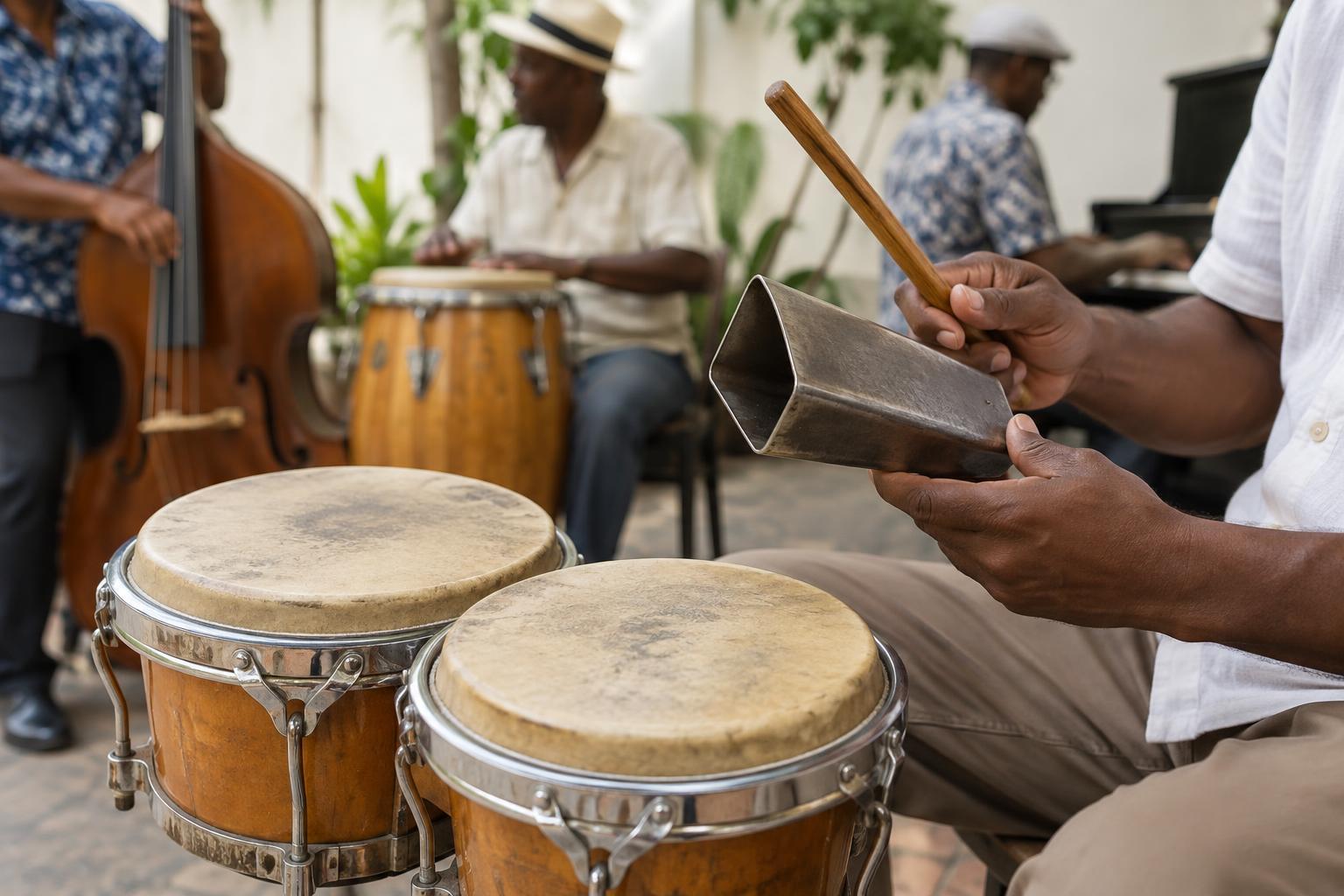
In many son ensembles, the bongó player begins on a pair of small hand drums and later picks up a hand bell, often called a campana. This is not a rule for every recording or performance: instrumentation and arrangements vary. But when the change happens, it offers a clear example of how a percussion part can help shape a song rather than simply keep time.
The shift often accompanies a move from a more spacious opening, where a singer presents verses, toward a more repetitive and energetic section commonly called the montuno. In that later section, a short sung refrain may alternate with improvised lead lines while instruments repeat interlocking patterns. The bongó player’s new sound helps announce and sustain that change in texture.
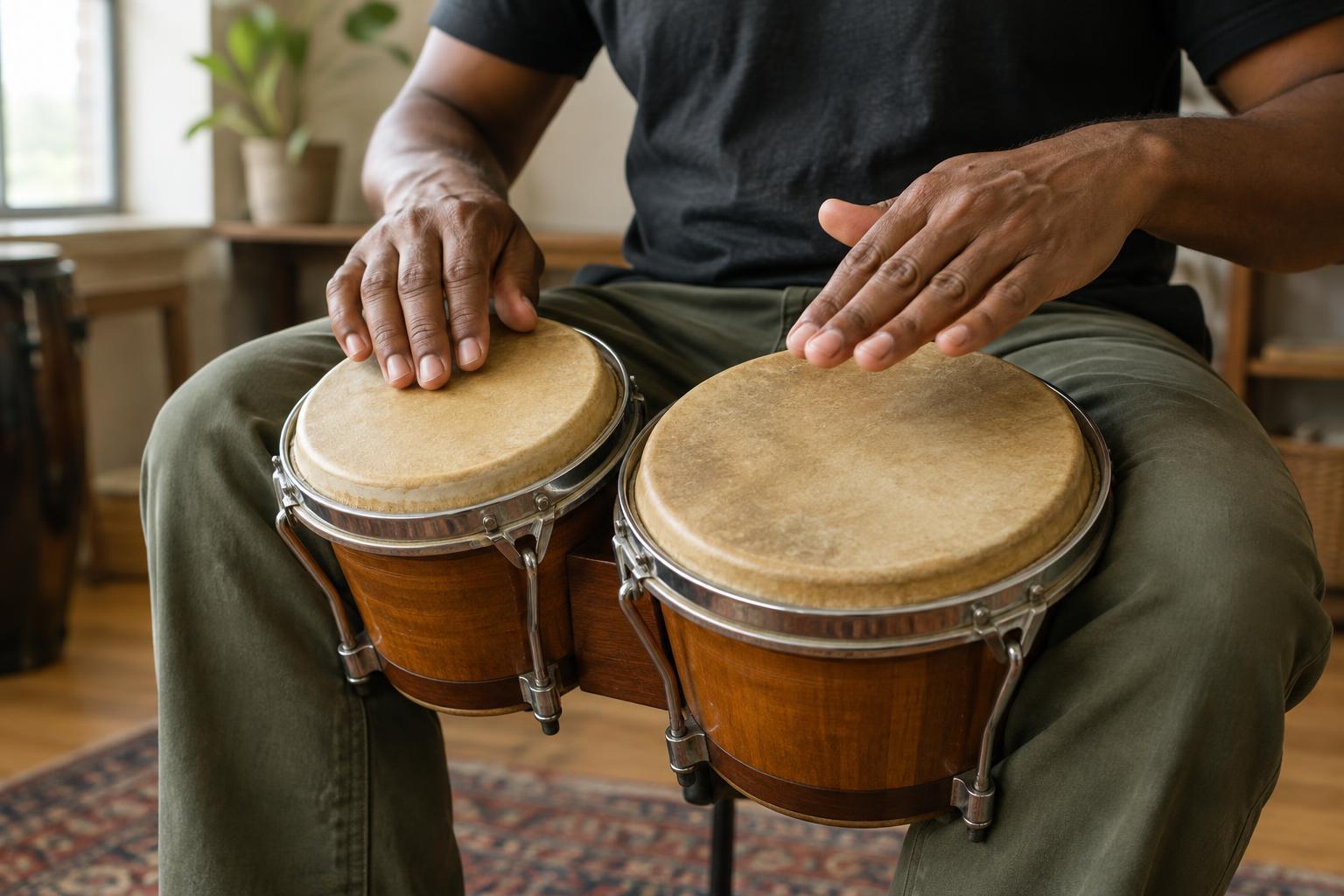
On bongó: a flexible, close-up conversation
A common foundation on bongó is the martillo, a repeating pattern that combines strokes, touches and changes of tone between the two drums. Its details can vary by player and setting. Rather than treating it as a single unchanging sequence, listen for the steady motion it creates and for the small accents that bring the pattern to life.
The drums can support the groove without dominating it. Their short sounds leave room for the voice, guitar or tres, bass and other parts. A player may add fills at the ends of phrases or respond to a melodic gesture, then return to the underlying pattern. Those choices make the part feel conversational: it marks time, but it also pays attention to what the rest of the group is saying.
On hand bell: a brighter point of reference
When the player takes up the bell, the most immediate change is timbre. A struck metal bell projects differently from a hand drum, with a bright attack that can cut through a fuller ensemble. The part generally becomes a more prominent repeating pattern, providing a reference point for dancers and musicians as the montuno continues.
That does not mean the bell plays every beat or replaces all the other timekeeping parts. Its accents have to fit alongside the bass, claves or clave-guided phrasing, and any other percussion in the arrangement. The exact pattern depends on the music and the player. What matters to a listener is the way its recurring sound makes the larger cycle easier to feel, even as the singer and melodic instruments vary their lines.
Hearing the transition without reducing it to volume
It is tempting to describe the move to bell as simply “getting louder.” Energy often rises, but the musical change is more specific. A soft drum part that can bend around a verse gives way to a ringing figure designed to remain recognizable through repetition. The player moves from supplying fine-grained motion and brief replies toward reinforcing a shared, ongoing groove.
Listen also to what changes around the player. A repeating instrumental figure may settle in, the bass may emphasize its pattern more insistently, and the singers may begin exchanging short phrases. The bell makes the transition easier to hear because its sound stands out, but it works as part of an arrangement. If a recording never makes this switch, that does not make it less son; it means the musicians have organized their textures differently.
A listening and practice exercise
Choose a son performance in which you can hear both bongó and bell. On a first listen, follow only the percussion player: notice the drum tones, any fills and the moment the metal sound enters. On a second listen, follow the singer and bass instead. Ask whether the bell arrives with a change in vocal format, a repeated instrumental phrase or a stronger sense of cycling back to the same point.
To explore the roles physically, tap a quiet, even pattern with your hands while leaving space for an imagined verse. Then switch to one consistent, clear tap on a safe, non-ringing surface as you repeat an imagined refrain. This is not a substitute for learning bongó or bell technique; it is a way to notice how sound and repetition affect an ensemble. Finally, listen again and attend to the player’s restraint. The impact of the bell depends in part on the space the drums made before it arrived.