Start with sound, not force
A conga can produce several distinct voices without changing drums. Where your hand lands, which part of it contacts the head, and whether you let the head ring all affect the result. Five useful sounds to recognize are the open tone, bass, slap, touch and muffled tone. Their names describe broad sound families; exact hand techniques and terminology can vary among players and teaching traditions.
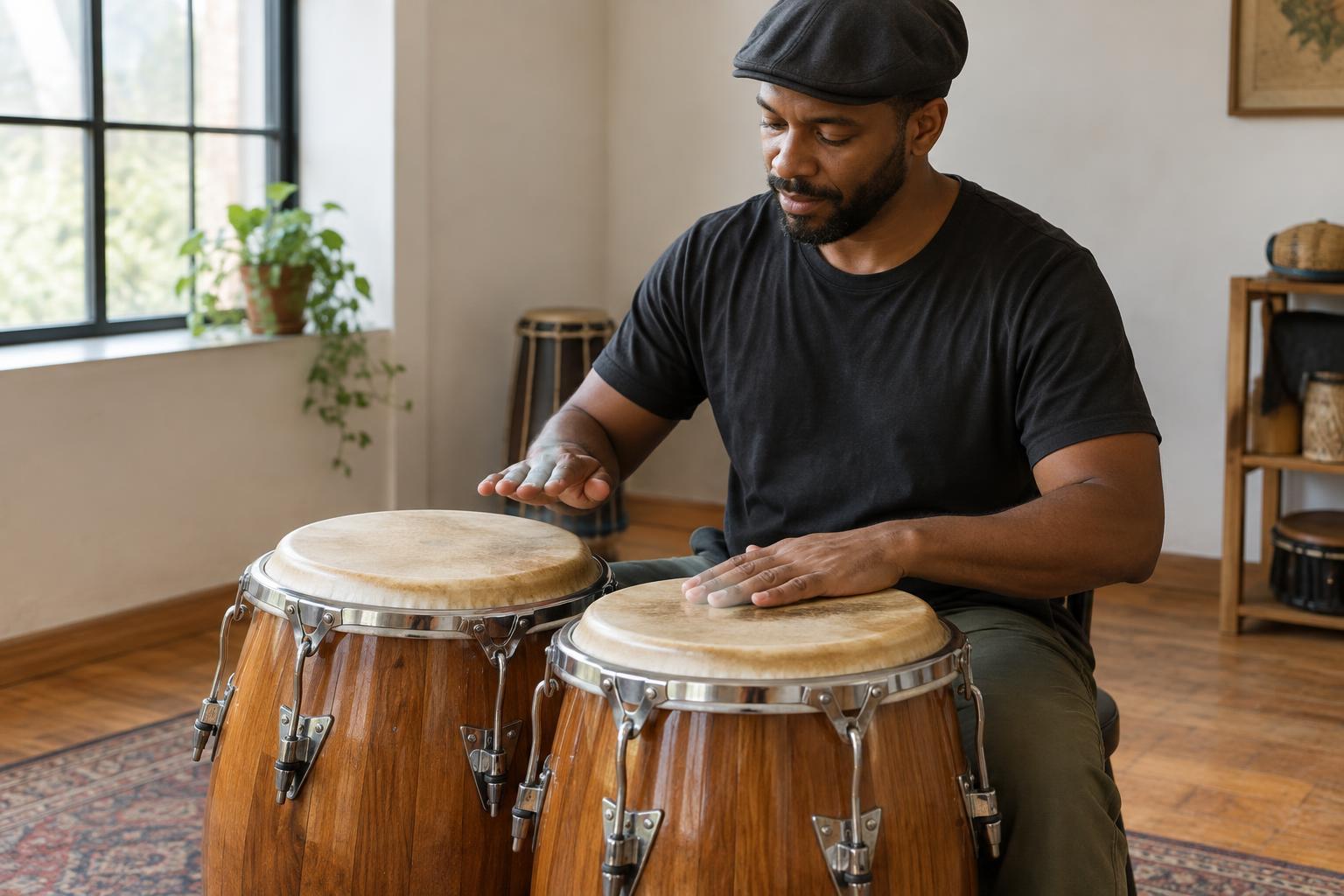
Set the drum at a height where your shoulders can stay relaxed and your wrists can move comfortably. Begin softly. A clear sound usually comes from coordinated contact and release, not a hard strike. If a motion causes pain, stop and adjust it rather than trying to play through discomfort. Listen to the drum after every stroke: the length and quality of the sound matter as much as its volume.
Open tone and bass: ringing edge, rounded center
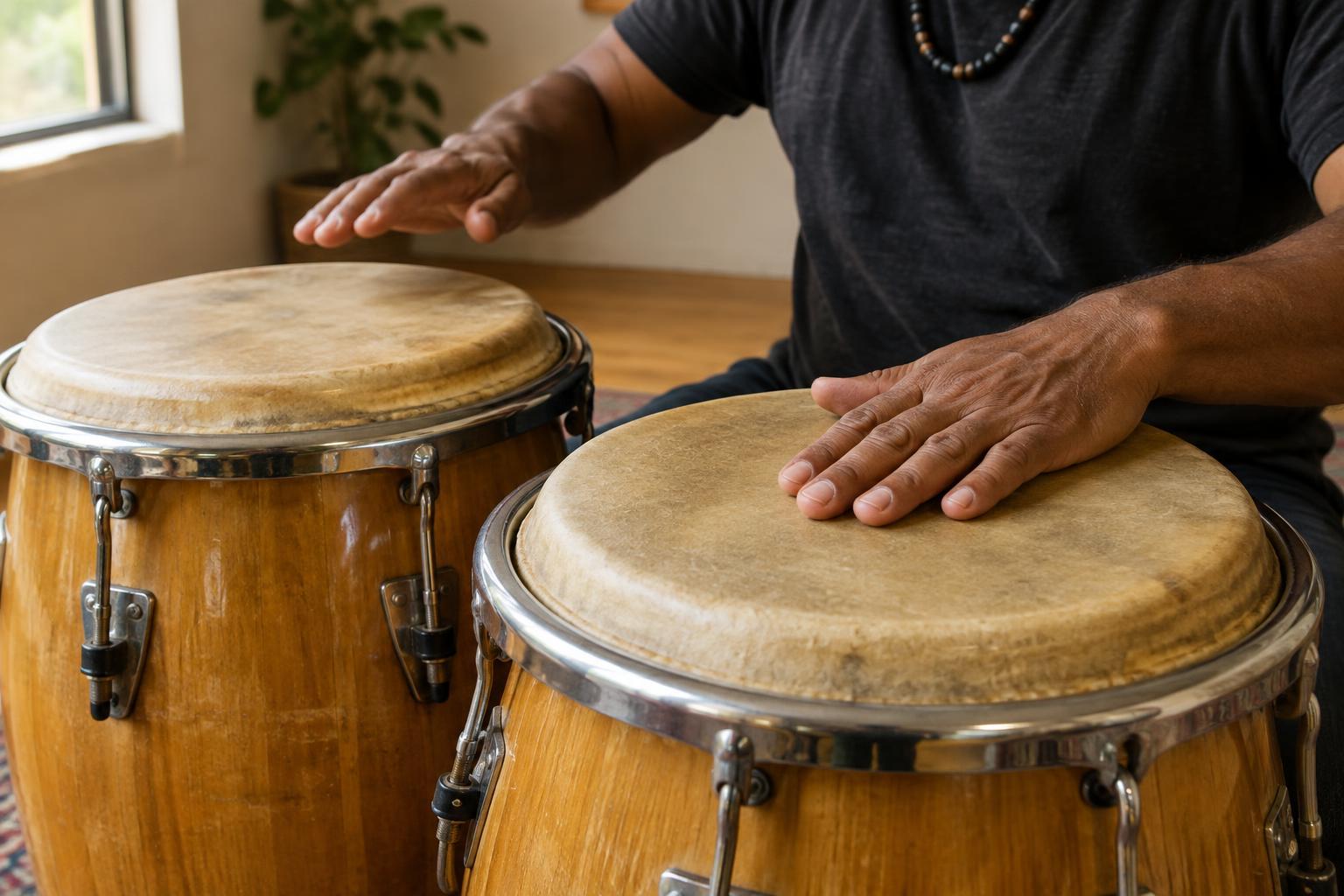
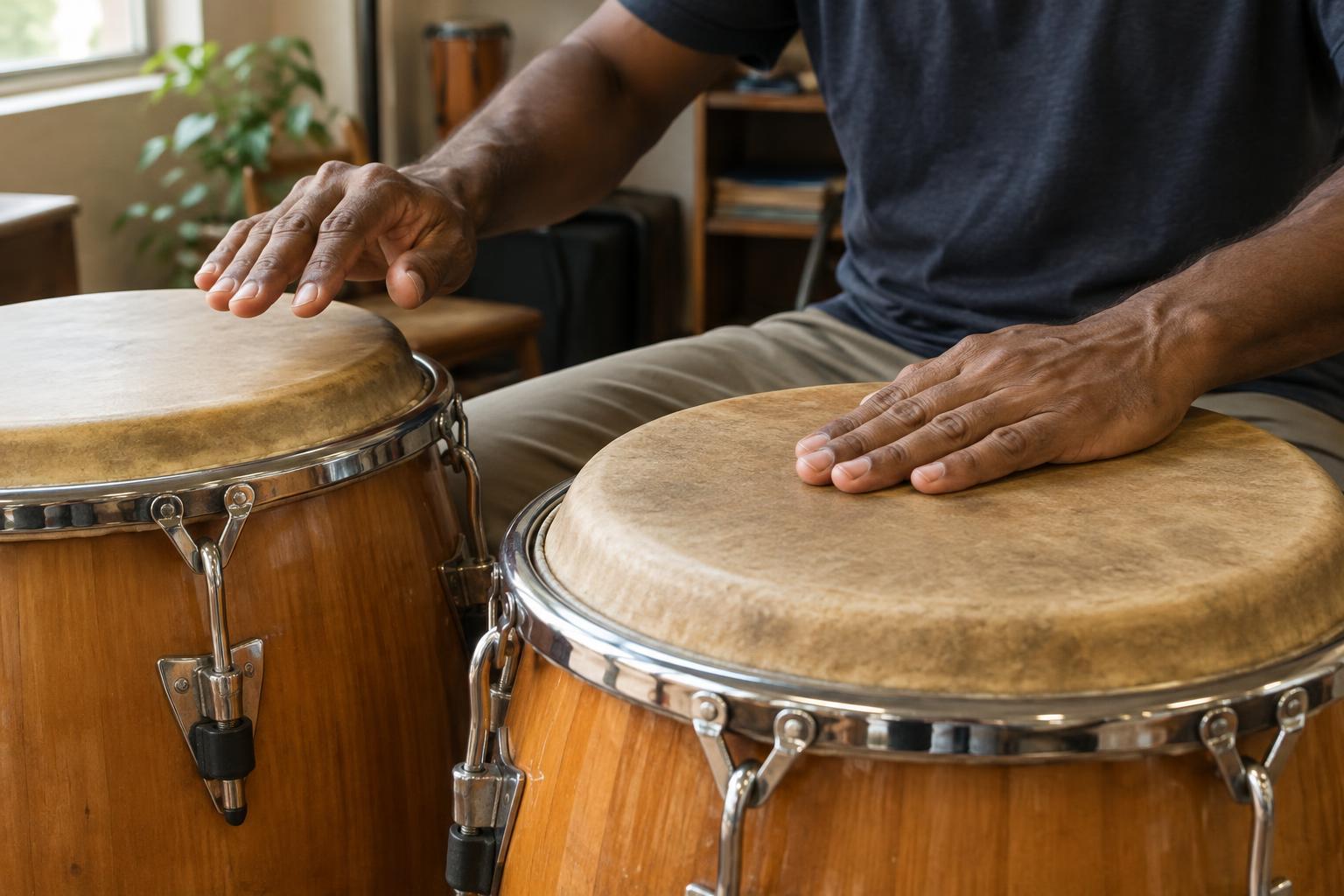
For an open tone, strike near the edge of the head with the fingers and the upper part of the palm close to the finger joints. Let the fingers rebound instead of resting on the head. The result is a pitched, ringing sound. Try moving your hand slightly toward or away from the rim until the tone speaks clearly. Avoid striking the hard rim itself.
For a bass sound, use more of the palm on an area closer to the center of the head. Think of a relaxed, broad contact that brings out a lower, rounder voice. Depending on the drum and your technique, it may have less audible pitch than the open tone. Alternate the two slowly: open, bass, open, bass. Ask whether you can hear a consistent contrast even when both strokes are quiet.
Slap and touch: contrast without a volume contest
A slap is a short, bright accent made with the fingers near the edge. Players use different slap techniques, including open and closed variations, so it is better to learn the motion from a careful demonstration than to force a particular hand shape from a written description. Aim for a crisp sound with a loose hand. Hitting harder is not a substitute for a clean stroke, and a slap need not be the loudest note in every phrase.
A touch is a light contact with the head, often played with the fingertips. It may sound like a soft tap rather than a fully pitched note. Touches can fill the spaces between stronger strokes and help establish a steady flow of motion. Practice alternating a quiet touch with an open tone. Keep the touch genuinely quiet, but give it a clear place in time; soft does not mean vague.
Muffled tone: control the ring
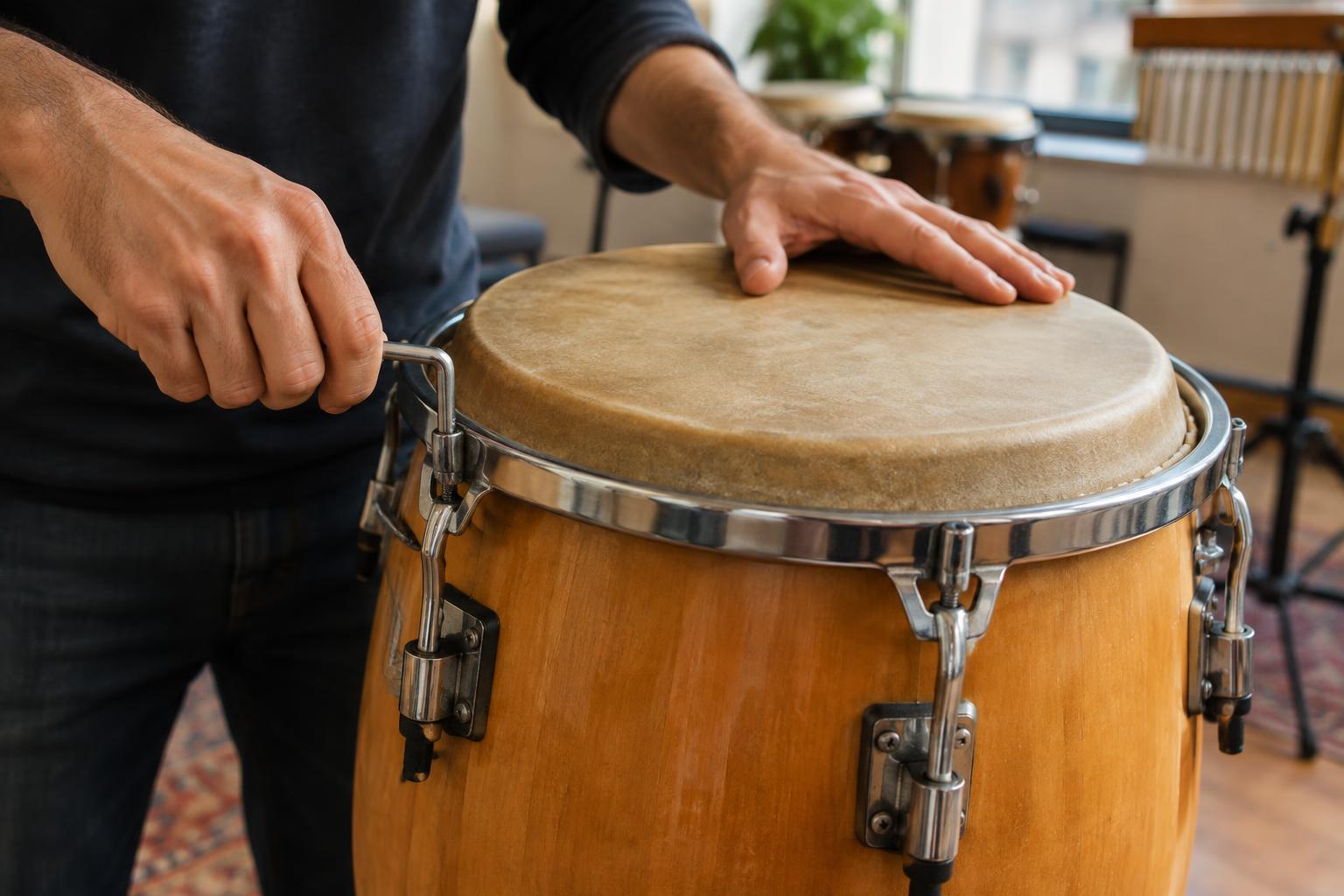
A muffled tone is deliberately shortened or damped. One way to explore it is to strike near the open-tone area while the other hand lightly presses on the head, limiting its vibration. Players also make damped sounds through variations in how the striking hand contacts and releases the head. Compared with an open tone, you should hear a shorter note with less ring. Use just enough pressure to change the sound, and keep both hands relaxed.
Muffling is useful because it changes the shape of a phrase without requiring a new pitch. Play two open tones, then replace the second with a muffled tone. The rhythm stays the same, but the phrase may feel more contained. If you cannot hear the difference, slow down and compare the length of the two sounds rather than their loudness.
Put the five sounds into a listening practice
Practice each sound on its own at a comfortable pace, then try this repeating sequence: bass, touch, open tone, touch, muffled tone, touch, slap, touch. Treat it as a sound exercise, not as a traditional rhythm. Keep the spacing even and make each tone recognizable. Once that feels steady, replace the slap with an open tone and notice how the character of the sequence changes. Recording a short attempt can help you hear contrasts that are hard to notice while playing.
Congas are part of rich Afro-Cuban musical practices, where strokes gain meaning through patterns, ensemble roles and relationships with other instruments. Learning five sounds is a starting vocabulary, not a shortcut to understanding those traditions. As you listen to conga playing, notice which notes ring, which are damped, and which quieter movements connect the accents. Then return to the drum and work on making those differences intentional.