A downbeat is a position, not a volume setting
When you tap along to music, you are following a pulse: a series of regularly spaced beats. Those beats can be grouped into measures. In a four-beat measure, beat one is the downbeat, the point where the count begins again: “one, two, three, four; one, two, three, four.” An accent is different. It is a sound or beat that receives extra emphasis. A musician can accent any beat, or even a note between beats.
This distinction matters because your ear naturally notices bright, loud, or sudden sounds. A snare hit on beat two might stand out more than a soft bass note on beat one. If you treat the snare as the start of every measure, your count may stay steady but land in the wrong place. Volume tells you what has been emphasized; it does not, by itself, tell you how the beats are grouped.
Why beat one can be quiet—or silent
An arrangement does not have to announce every downbeat. A melody may begin before beat one with a pickup, then carry across it. A percussion part may leave space on one so another instrument can be heard. A singer may stretch a syllable over the bar line rather than start a new word there. In each case, the measure still turns over even if no fresh, loud sound marks the moment.
Syncopation makes this especially interesting. It places emphasis where a listener might not expect it, such as on the “and” between two numbered beats. Try saying “one and two and three and four and” at an even pace, then clap only on the “and” after four. That clap may feel as though it launches the next measure, but it happens just before beat one. The following downbeat can be quiet without disappearing.
Listen for a repeating relationship, not one big hit
To find beat one, first establish a comfortable pulse without deciding where the measure starts. Tap a foot or move your hand evenly. Next, listen through several repetitions for patterns that return together: the beginning of a bass phrase, a chord change, a melodic shape, or the way percussion parts fit around one another. Any one cue can mislead you, but their relationship over time gives you a stronger basis for choosing a count.
Try counting four beats in two different positions while the same passage repeats. In one version, call the most striking hit “one.” In another, place “one” a beat earlier or later. Notice which count makes phrases easier to follow over several measures, not just for a single instant. Some passages genuinely allow more than one initial hearing, and a recording may withhold enough context to keep the meter uncertain for a while. Revising your count is part of attentive listening.
Rhythmic patterns can cross the measure
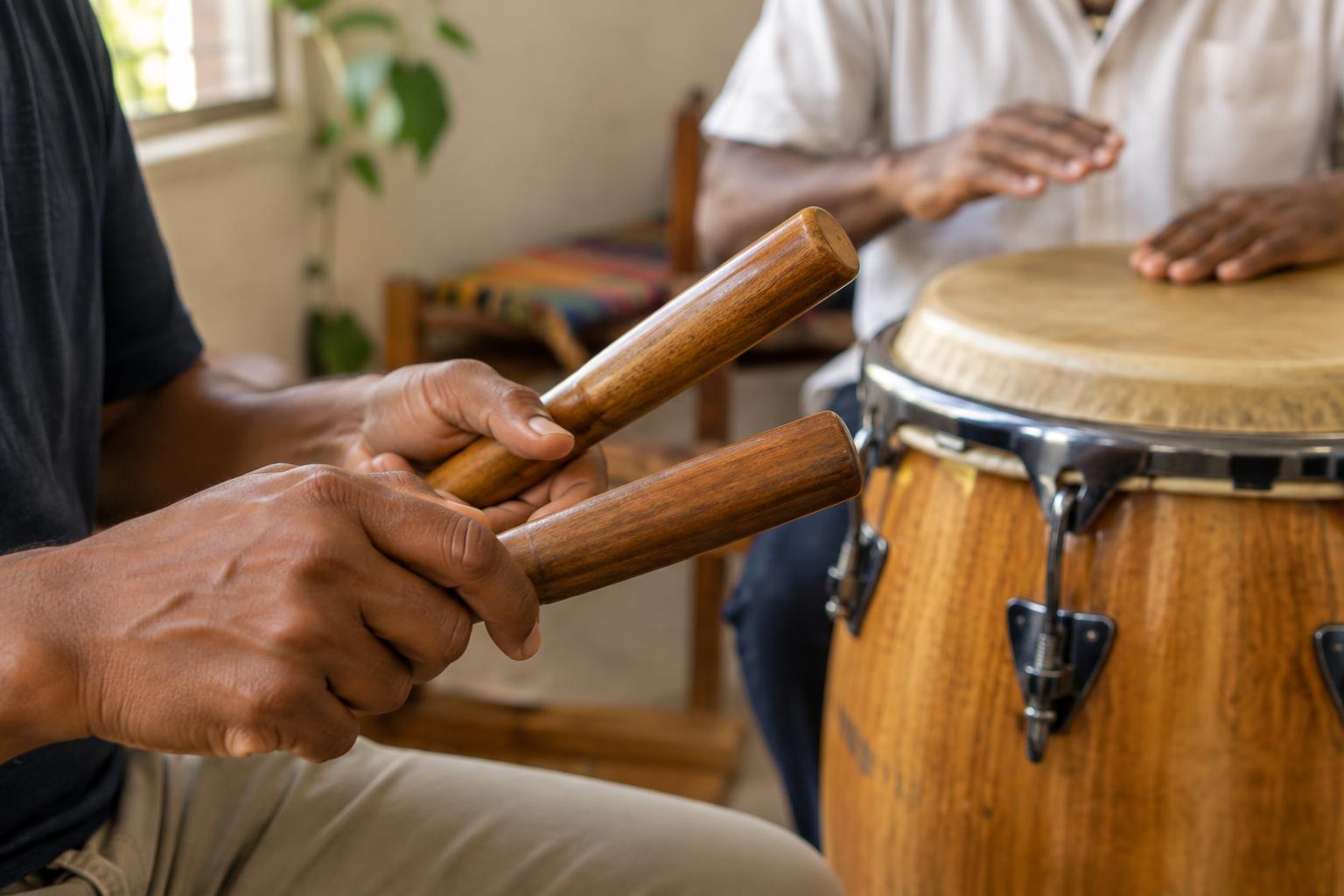
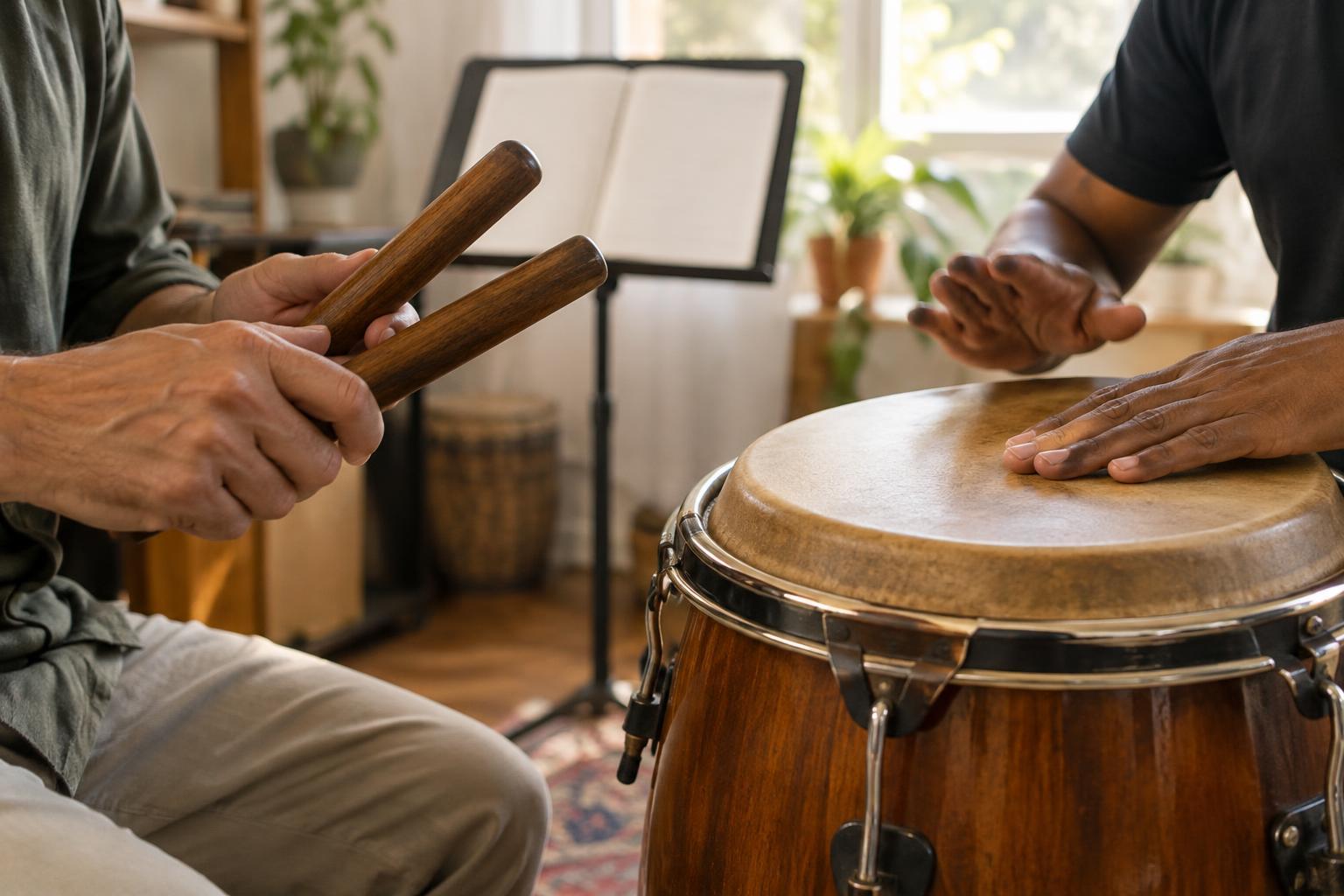
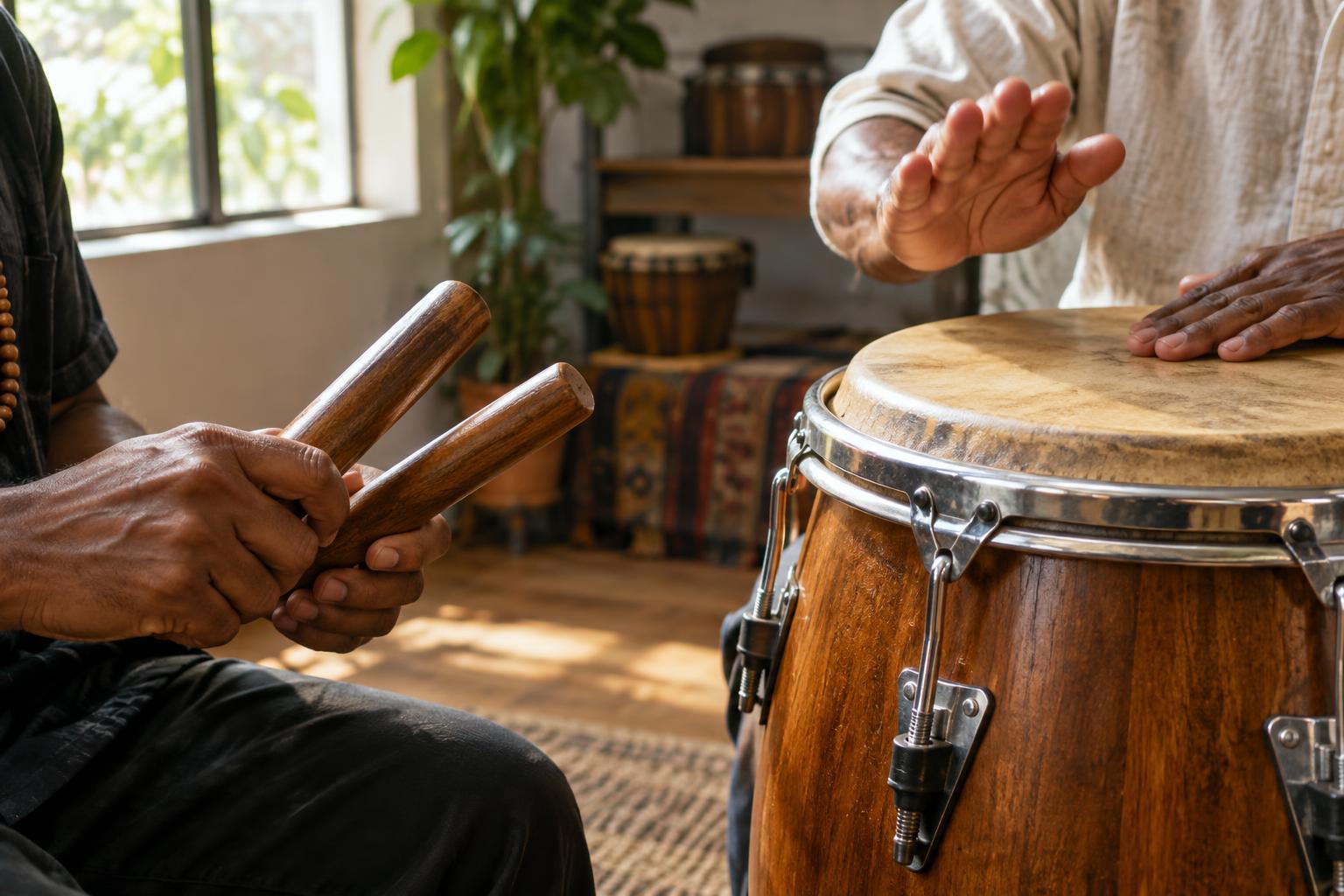
In Afro-Cuban musical traditions, interlocking parts often make the distinction between an accented stroke and a downbeat particularly useful. A clave pattern, for example, provides a recurring rhythmic relationship for other parts to play with. Its strokes are not simply a set of loud markers for “one.” Depending on the music and arrangement, a phrase can begin, answer, or find its balance across the pattern. Hearing one prominent stroke is therefore not enough to establish the whole cycle.
Rather than using clave as a shortcut for locating a bar line, listen to how repeated phrases and accompanying parts relate to it. Keep cultural context in view, too: clave belongs to living musical practices, not just a counting puzzle. If you are learning a particular style, listening closely to complete performances and learning how musicians in that tradition describe the pattern can deepen what a counting exercise alone can teach.
A short exercise for separating emphasis from meter
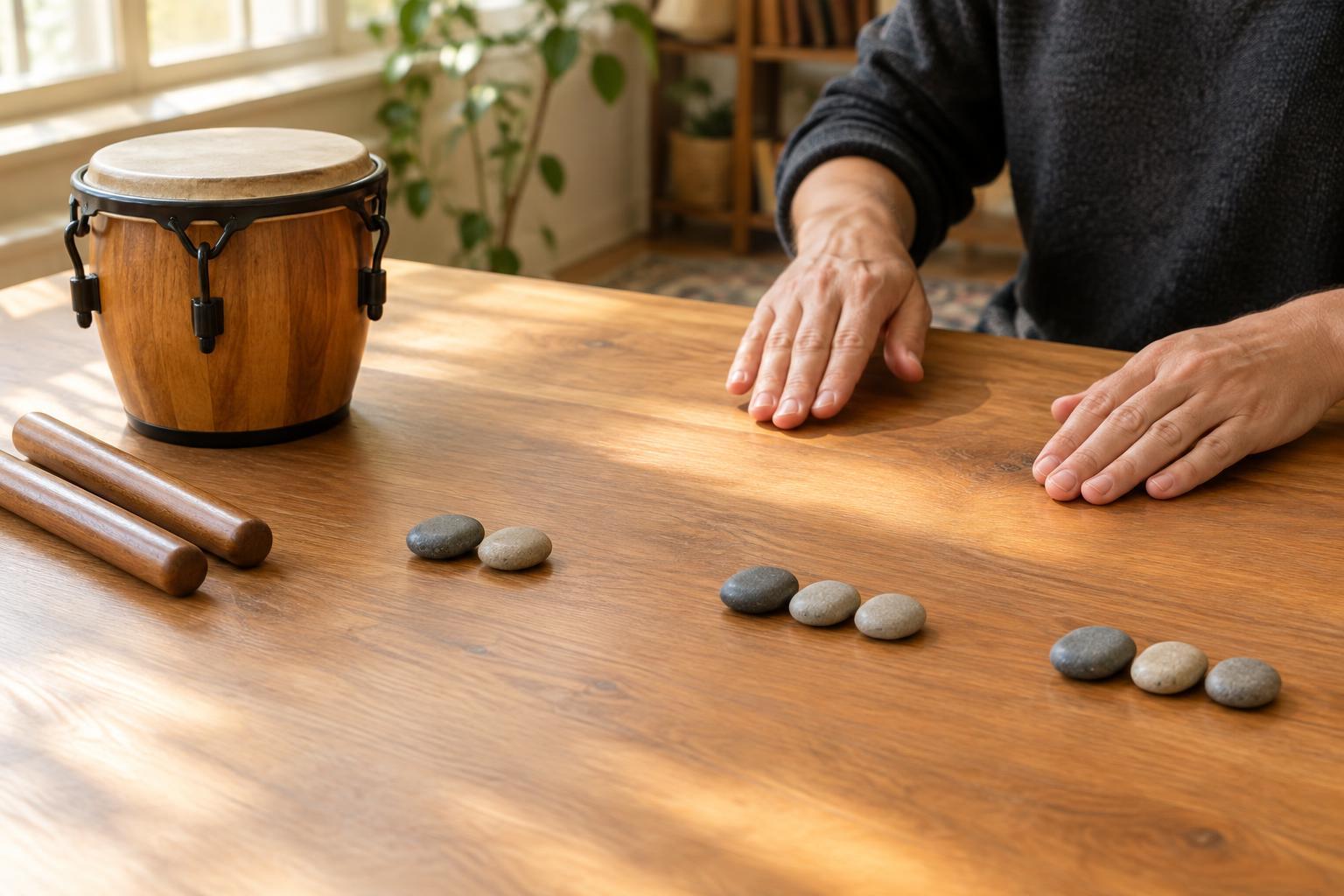
Set a slow, steady four-beat count aloud. Tap your foot on every number and clap loudly on two and four. Your loudest sounds are now accents, while one remains the downbeat. Repeat the pattern, but whisper “one” and keep your foot moving. Then move the clap to the “and” after four, speaking “one and two and three and four AND.” Let the clap lead into the next quiet one without speeding up.
Finally, listen to a familiar passage and try the same separation: keep an even foot tap, count measures softly, and use a hand clap to imitate whichever sound stands out. Does your clap fall on one, another numbered beat, or between beats? The goal is not to force every sound into a neat answer. It is to hear two things at once: the steady framework that helps you count and the accents that give the music its shape.