Mistake 1: Treating the loudest sound as the beat
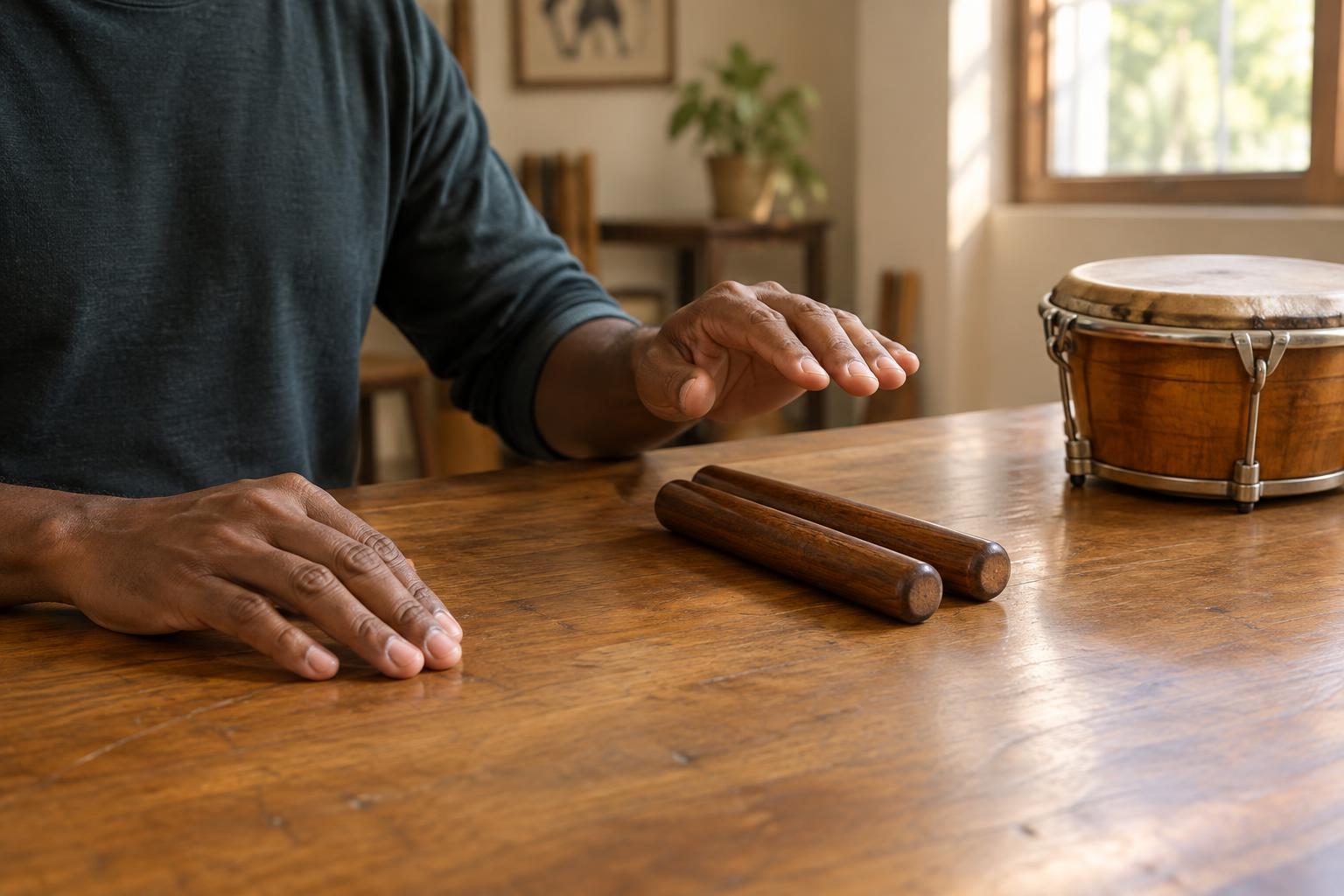
A layered groove can offer several convincing places to tap your foot. A bell might ring sharply, a drum might answer it, and a singer might enter between both sounds. If you follow whichever event is loudest, your foot may speed up, slow down, or change position whenever the arrangement changes. The beat is better understood as a steady pulse you can keep through those changes. Not every beat needs to be struck by an instrument.
Try listening once without counting. Walk in place at a comfortable, even pace and notice whether that pace still feels plausible when a percussion part drops out or a singer begins a new phrase. Then listen again and check your steps against another part, such as the bass. You are looking for a pulse that helps the different parts fit together, not a single sound that explains everything.
Mistake 2: Assuming clave marks every beat
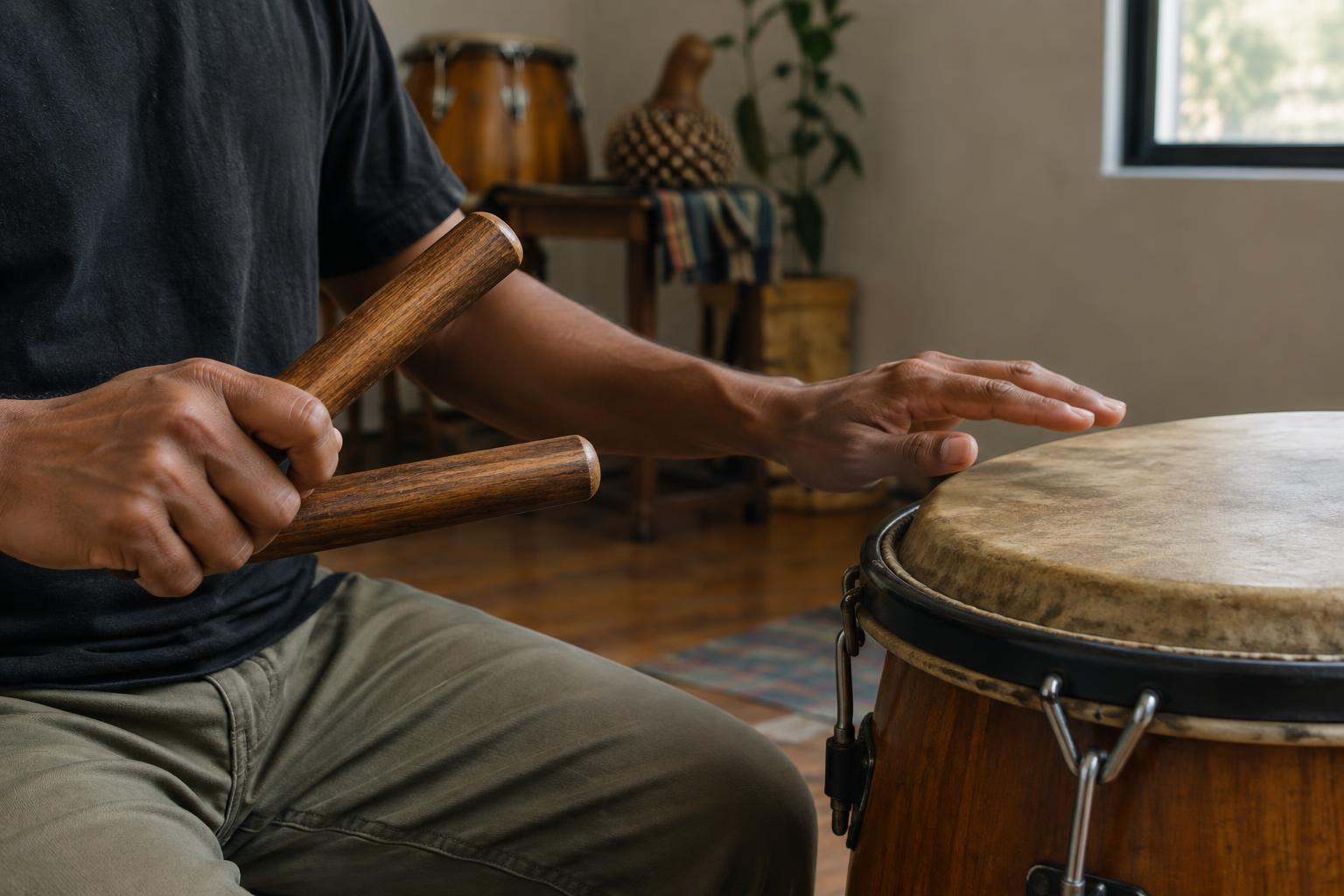
Clave is a recurring pattern that helps organize phrasing in many Afro-Cuban musical settings, but its strokes are not a row of evenly spaced beats. If you try to step on every clave stroke, the gaps between your steps will be uneven. That does not mean the musicians are losing time. The pattern and the underlying pulse have different jobs.
It is also easy to hear a familiar rhythm and immediately label it “3-2” or “2-3.” Those terms can be useful when discussing how a clave pattern relates to musical phrases, but they are not a shortcut for finding the pulse. First establish a steady tap. Only then listen for where a recurring pattern begins and how other phrases relate to it. Some arrangements do not state clave on an obvious instrument, so avoid forcing every sound you hear into a pattern you expected.
Mistake 3: Letting syncopation move your foot
Bass lines, hand drums, piano patterns and vocals often draw attention to spaces between beats. An anticipated bass note, for example, may arrive just before the beat where a new chord feels settled. If you move your foot to every strong bass attack, your sense of the pulse may jump ahead. Instead, let your foot continue evenly while you notice whether a note falls with it or between steps.
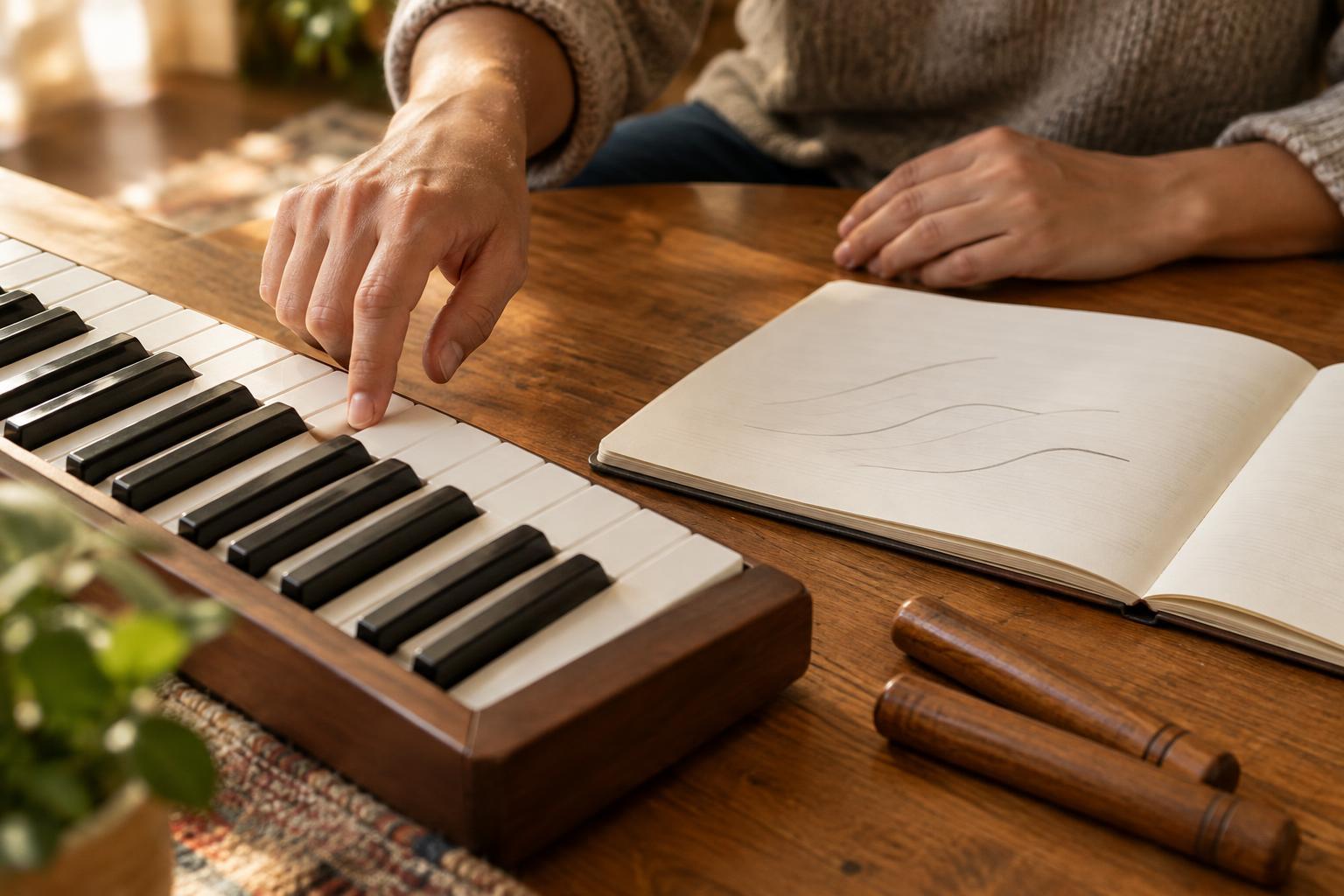
A useful exercise is to tap a steady pulse with one hand and speak “and” halfway between taps. Listen for a short phrase that catches your attention, then decide whether its accents fall on your taps or on the “ands.” You do not need to transcribe the whole passage. Identifying one offbeat accent while your hand stays steady is enough to build the distinction between pulse and rhythmic placement.
Mistake 4: Expecting one instrument to guide you throughout
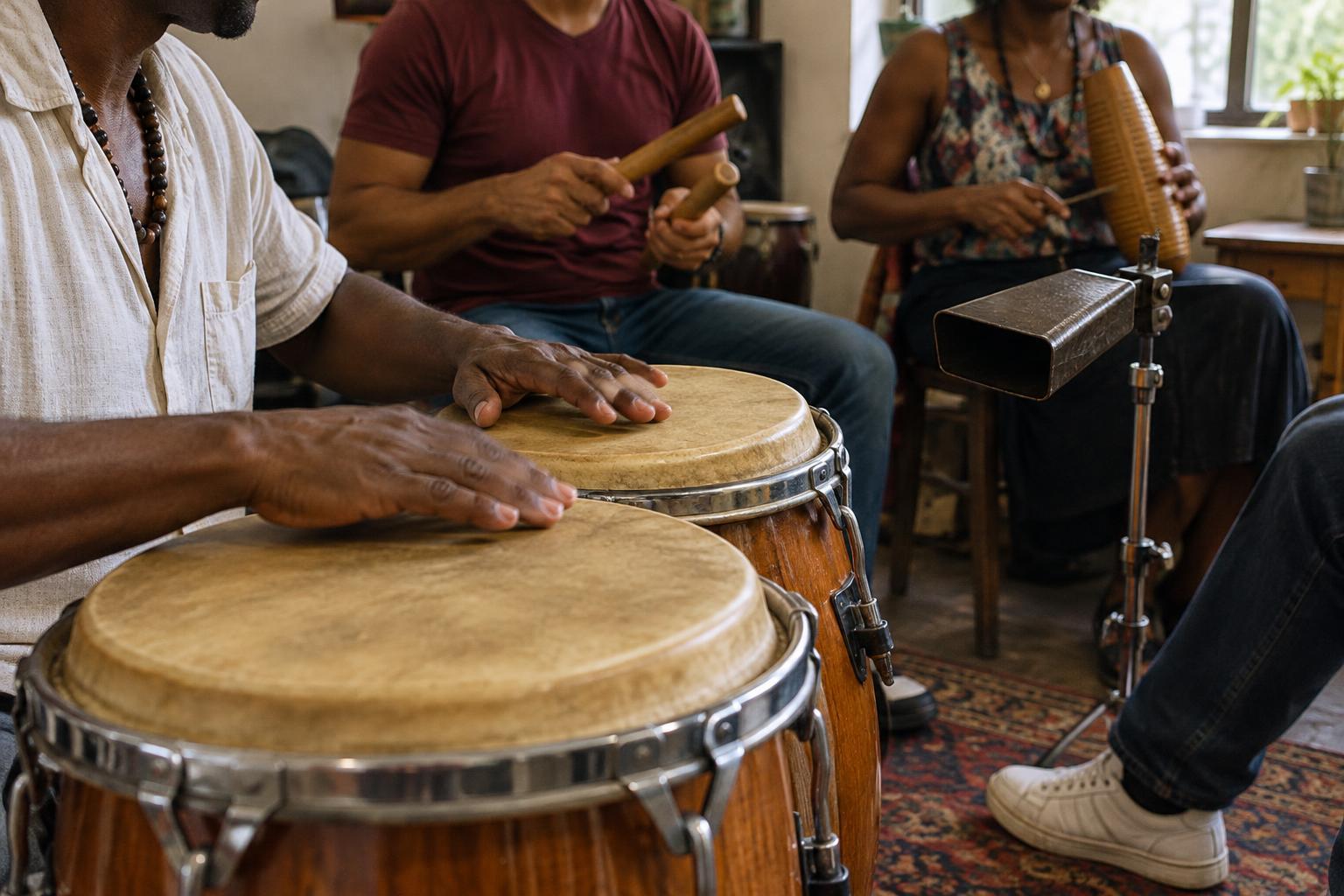
The clearest reference can change within a performance. A bell may become prominent in one section, while a quieter percussion part or the relationship between bass and piano gives you a better guide elsewhere. Instruments can also play variations rather than repeat exactly. When your chosen reference changes, it is tempting to conclude that the beat changed too.
Before an arrangement shifts, try holding the pulse for a few cycles without depending on one timbre. When a new layer enters, keep tapping and ask how it sits against the pulse you already established. If you lose your place, pause and listen for a repeated phrase shared across the ensemble, then restart your tap. This is more reliable than chasing each entrance as though it were a new downbeat.
Mistake 5: Thinking there is only one way to count
A steady pulse can sometimes be felt at different levels: as a slower step, a quicker tap, or subdivisions between them. If two listeners tap at different speeds while both remain steady and aligned with the phrases, they may be hearing related levels of the same groove. Counting is a tool for orientation, not a test of whether you have discovered the only valid number.
For practice, choose a short passage and find a slow, comfortable step. Tap twice as fast without changing where the slower steps fall, then return to the slower pace. Next, keep that pace through a vocal entrance or a change in percussion. When discussing what you hear, describe your reference clearly: “I’m stepping with this repeating pulse” communicates more than insisting that everyone must count the same way. Afro-Cuban traditions include many distinct styles and practices; careful listening leaves room for those differences rather than reducing every groove to one rule.