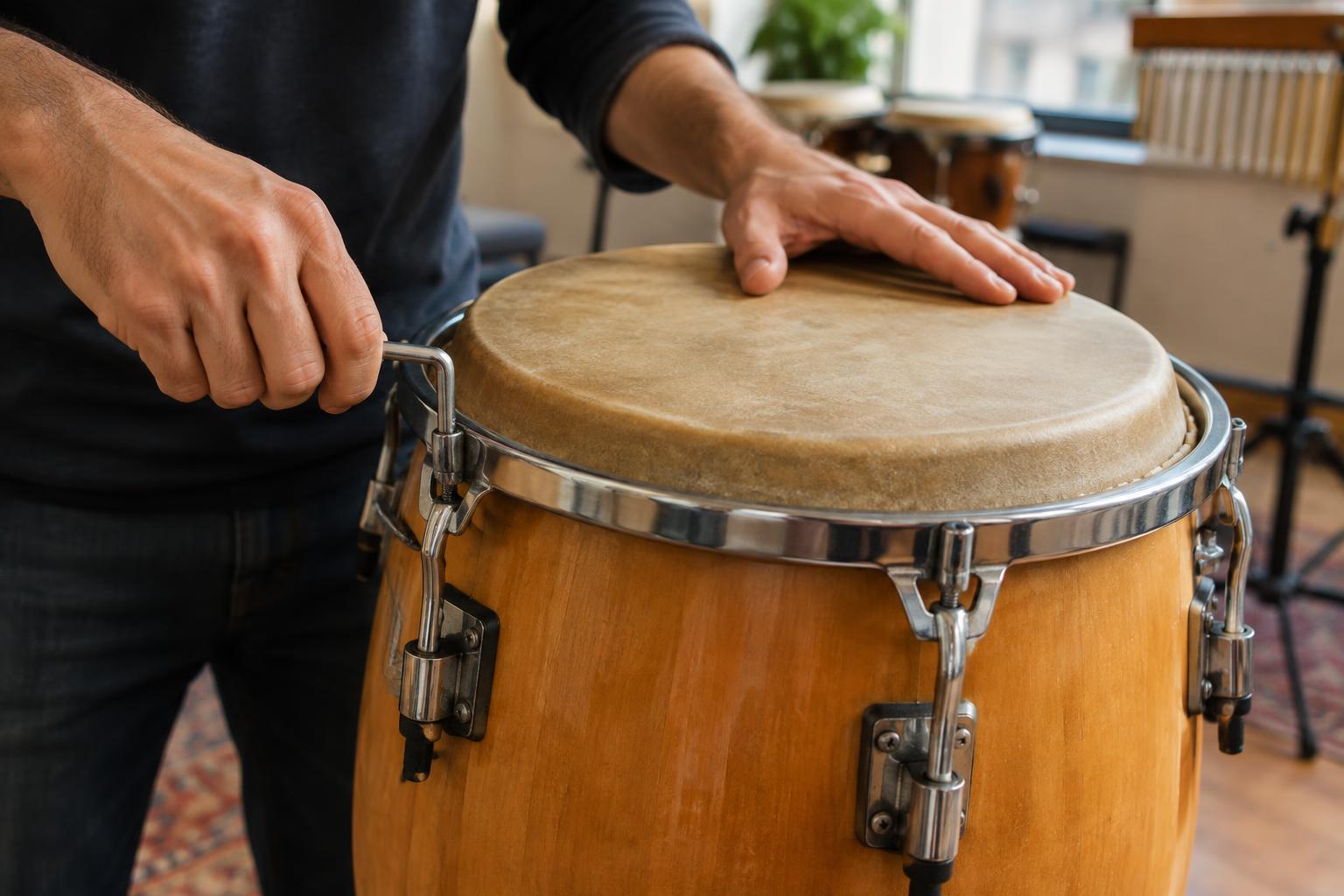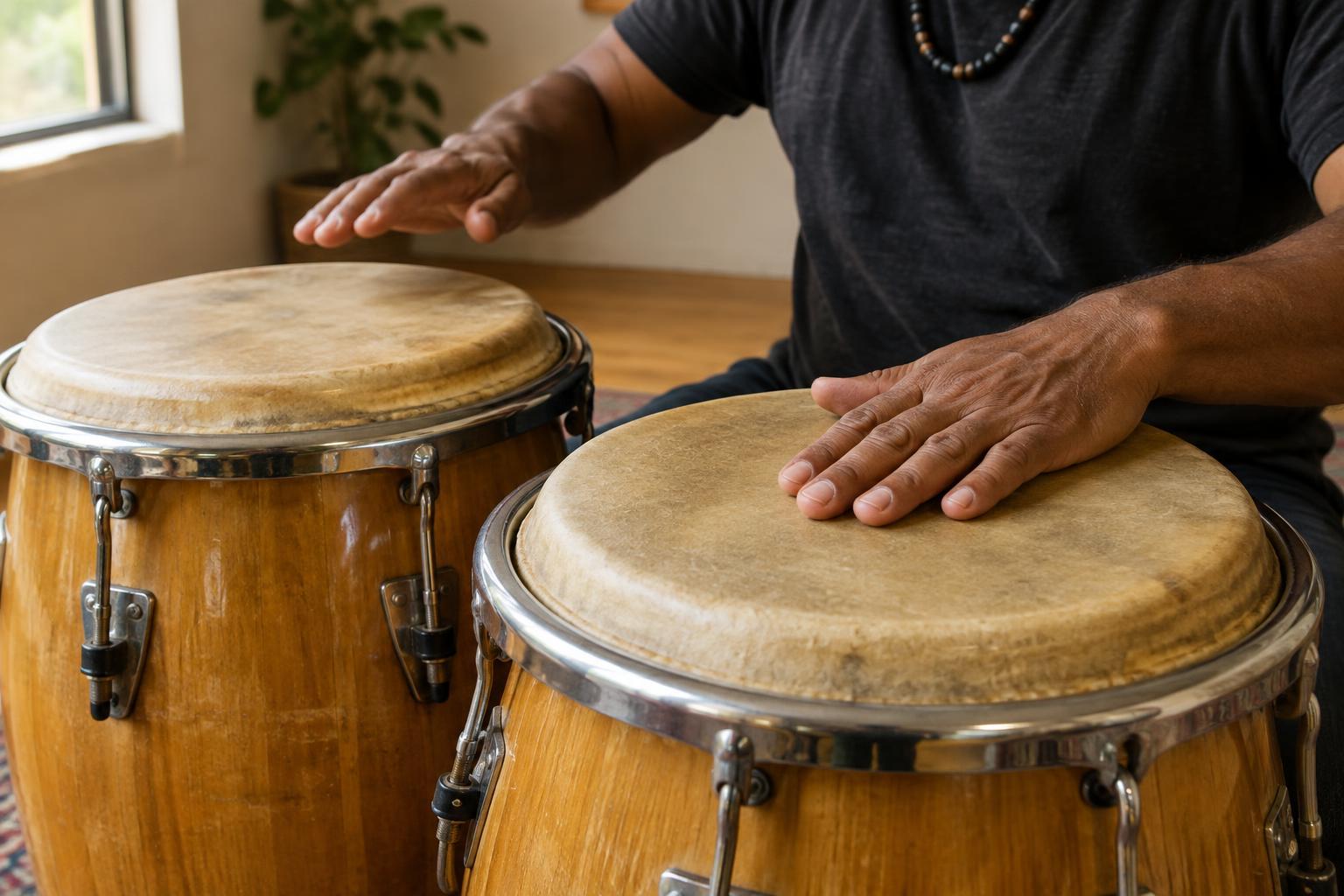
Start with sound, not force
Conga playing asks the hands to produce several distinct sounds from the same drumhead. An open tone, bass tone, muted tone, and slap each use a different contact and release. A common mistake is trying to make every sound louder by striking harder. That can encourage stiff fingers, a locked wrist, or a hand that stays pressed into the head after impact. It often makes the sound less clear, not more.
Begin at a comfortable volume. Notice whether the hand can meet the head and then move freely into the next stroke. For an open tone, the fingers generally contact near the edge and release so the head can ring. A bass tone uses more of the hand toward the center. These are starting points rather than fixed measurements: drum size, head tension, musical style, and the player’s hands all affect the details.
Avoid collapsing or locking the wrist
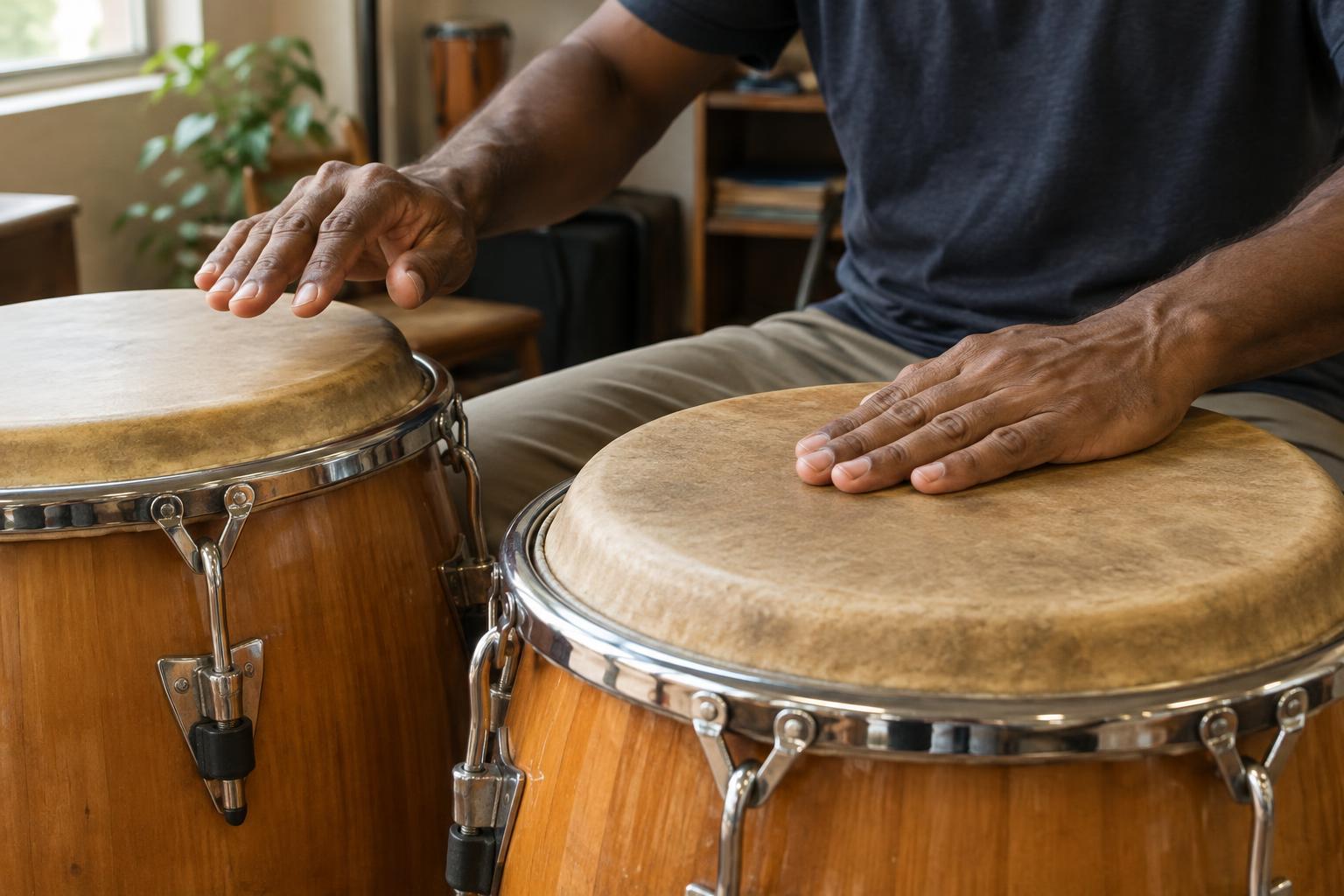
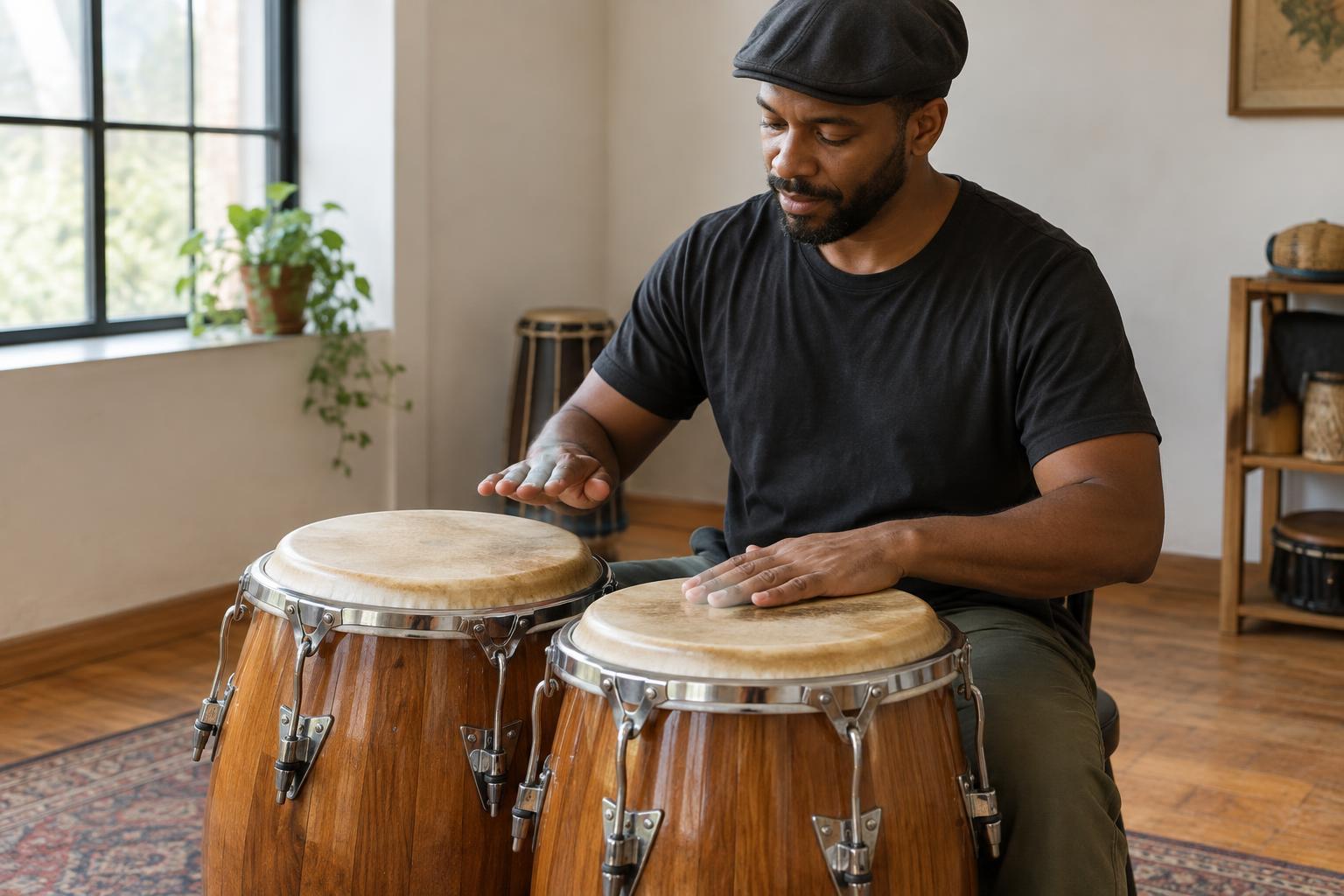
A wrist bent sharply back, dropped far forward, or held rigid can make even a simple pattern feel like work. Players sometimes compensate for a drum that is too high, too low, or too far away by reaching from an awkward angle. Before changing your stroke, check your setup. Sit or stand so your shoulders can stay relaxed and your forearms can travel toward the playing area without an exaggerated bend at the wrist.
Try a quiet alternating pattern and watch your hands. If your elbows flare, your shoulders rise, or your wrists remain fixed between notes, pause and adjust your position. Small changes in seat height or drum placement may help. The aim is not to keep every joint perfectly still or straight; it is to allow comfortable movement rather than holding the body in a strained shape.
Let the fingers respond instead of bracing them
Another common habit is spreading the fingers as wide as possible or squeezing them together throughout a phrase. Either extreme may make it harder to vary the contact needed for different sounds. On an open tone, loosely gathered fingers can help create a consistent contact area. For other strokes, the fingers may move differently. Avoid copying the outline of someone else’s hand without listening to the sound and noticing how your own hand feels.
Slaps deserve particular patience. Trying to force a sharp sound by driving stiff fingertips into the head can be uncomfortable and may produce an inconsistent result. Work slowly with a teacher or a reliable demonstration, paying attention to the motion and release rather than chasing volume. It is fine to leave slaps out of a practice session while you build control with gentler tones.
Give each stroke room to rebound
Pressing the hand into the head after an open tone can choke its ring. Pulling the hand away with a sudden, tense motion can be just as tiring. Instead, experiment with a light strike followed by an easy release. Compare the sound when the hand lingers with the sound when it moves away naturally. The goal is to hear and feel the difference, then choose the contact that fits the stroke.
Play a short sequence of open tones and bass tones at a slow, steady pulse. Keep the volume modest and listen for a clear contrast. If you notice yourself tightening to keep time, slow down further. Good timing does not require muscular force; a manageable tempo gives you space to prepare each hand position and recover before the next note.
Build a practice routine your hands can sustain
Technique grows through repetition, but repeating an uncomfortable motion is not the same as improving it. Warm up with soft, simple strokes, take breaks, and increase speed or intensity gradually. Record a brief passage and listen for evenness: an unexpectedly harsh note may reveal where you are forcing a stroke. You can also practice a rhythm quietly while focusing on relaxed transitions between sounds.
Conga techniques are taught in varied Afro-Cuban musical settings, and a knowledgeable teacher can help connect hand movement to the rhythm and sound you are learning. Treat any single description of hand placement as a guide, not a universal rule. If playing causes pain, numbness, or symptoms that persist, stop and seek appropriate professional guidance rather than trying to play through it.