Start with the pulse
When you tap your foot evenly to music, you are often following a pulse: a recurring reference that helps you feel where time is going. In music counted in four, you might call its beats one, two, three and four, then repeat. A drummer, bassist or dancer may help you feel that steadiness, even when nobody plays a note on every beat.
A rhythmic pattern is different. It selects particular moments within that flow and leaves others open. You can keep tapping a steady pulse while clapping a pattern that lands between taps, skips a beat or stretches across several beats. That distinction is the first step toward understanding clave: the pulse is a reference for time, while clave is a particular way of organizing events within it.
What the word clave can mean
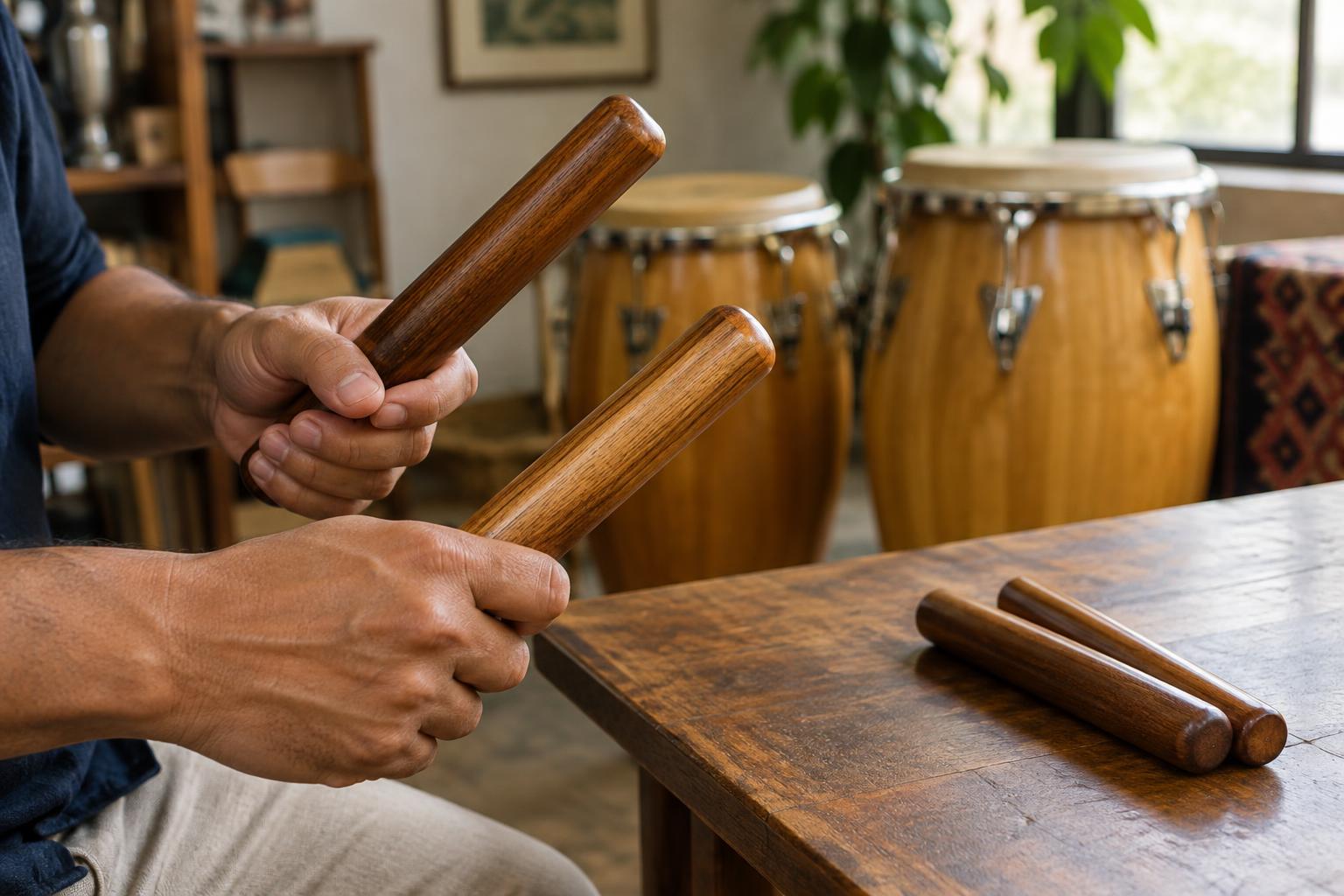
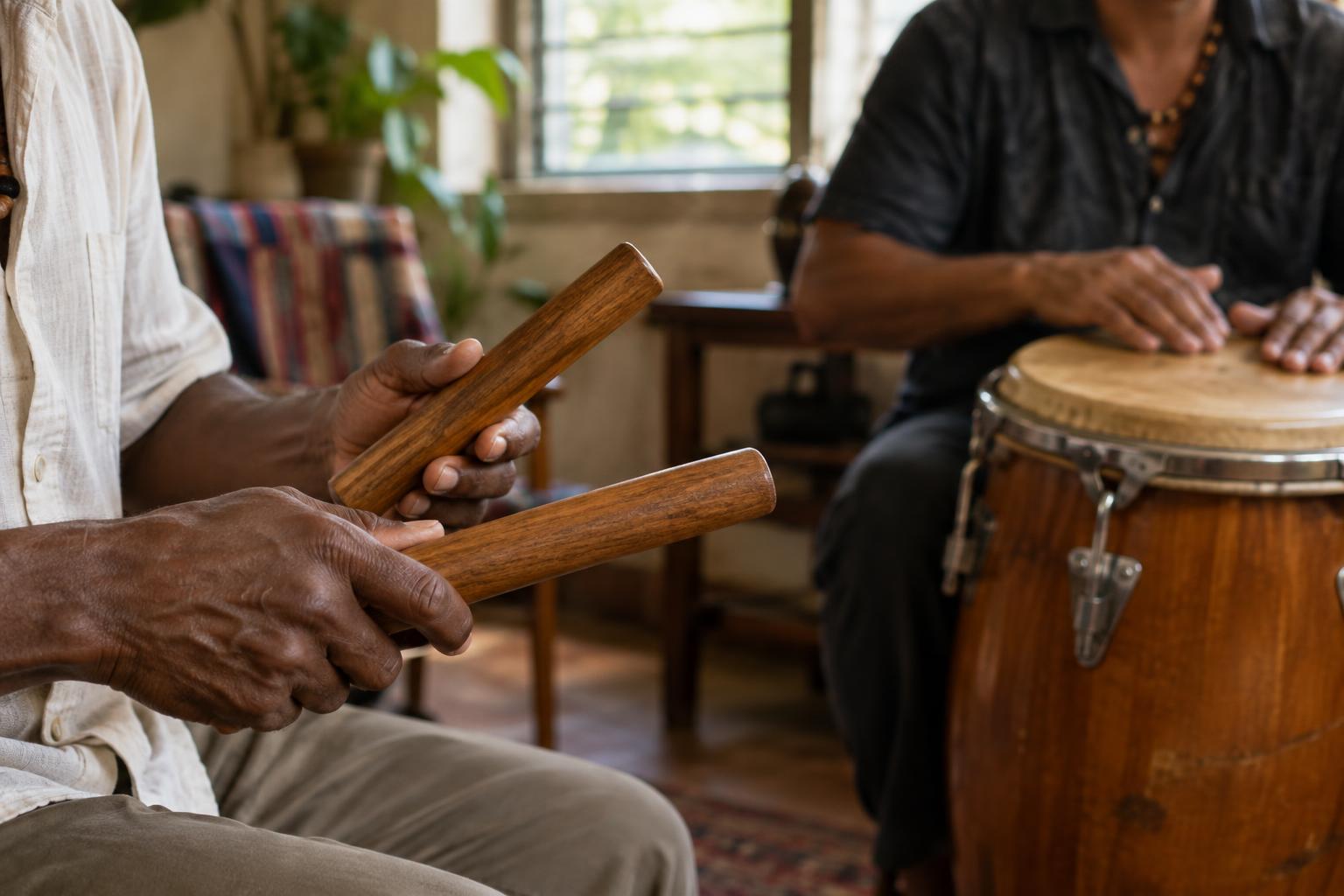
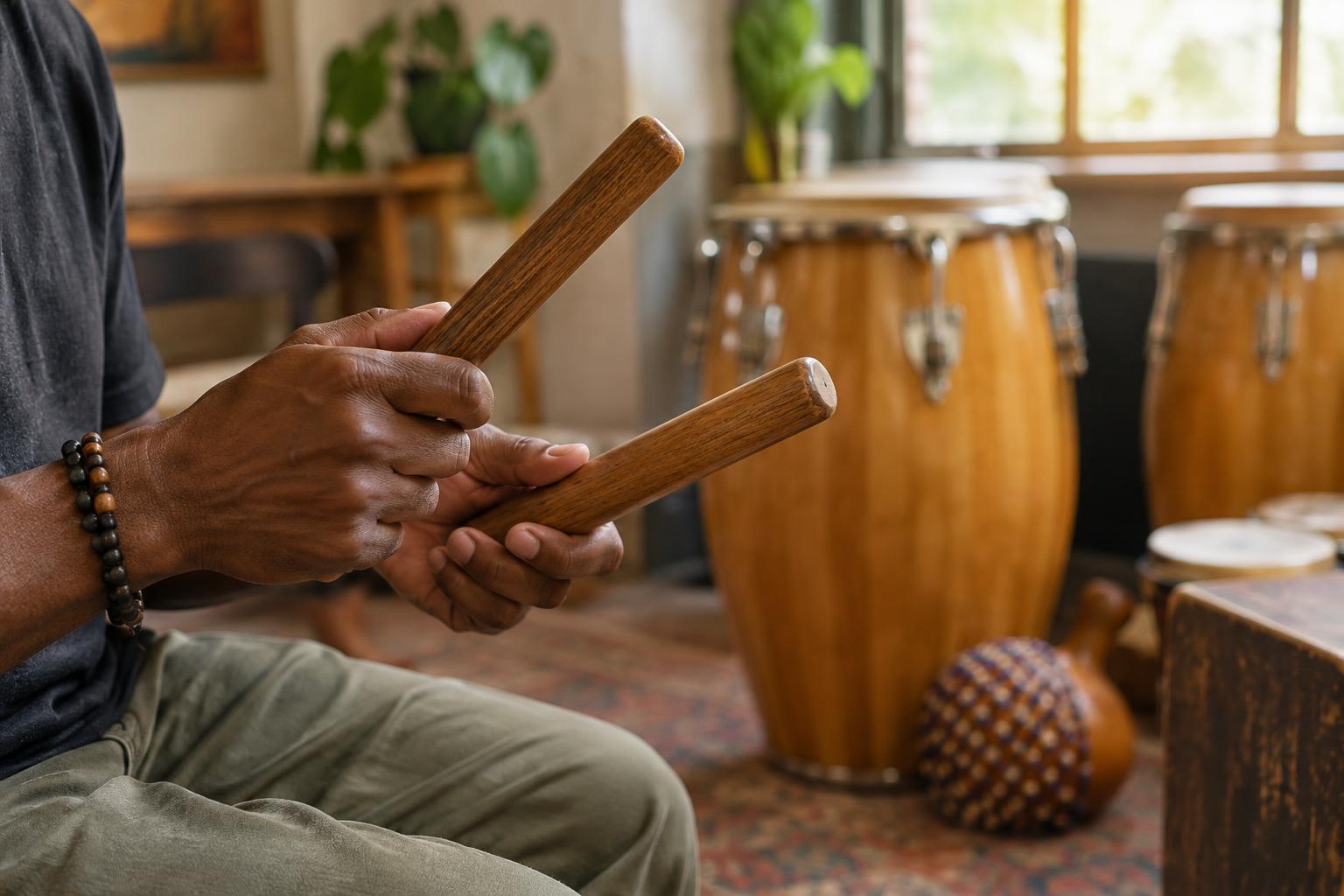
Claves are also a pair of wooden sticks struck together. Their clear sound can make a rhythmic pattern easy to hear, but the instrument and the pattern are not the same thing. A clave pattern can shape the music even when no one is playing the sticks. Listen to the percussion, bass, piano or vocal phrasing, and you may hear how their parts relate to it.
In Afro-Cuban musical traditions, clave is often understood as an organizing pattern rather than a replacement for the beat. That description is useful, but it should not flatten a varied musical landscape into one rule. Different styles use different patterns and ways of feeling them. Learning one common example is a starting point for listening, not a claim that every Afro-Cuban performance works the same way.
Hear the two sides of son clave
One widely taught example is son clave. In a common way of counting it, the pattern spans two groups of four beats and contains five strokes. One group has three strokes, on beat one, the “and” after beat two, and beat four. The other has two strokes, on beats two and three. When the three-stroke group comes first, it is called 3–2 son clave; when the two-stroke group comes first, it is called 2–3.
Notice what this count does not say. There is no clave stroke on every beat, and one stroke falls between beats. If you mistake the strokes for the underlying pulse, the timing can feel lopsided or hard to follow. Keep the pulse steady underneath instead. The contrast between the two is part of what gives the pattern its character: you can feel continuous time while hearing an uneven sequence of accents.
Practice the difference in your hands
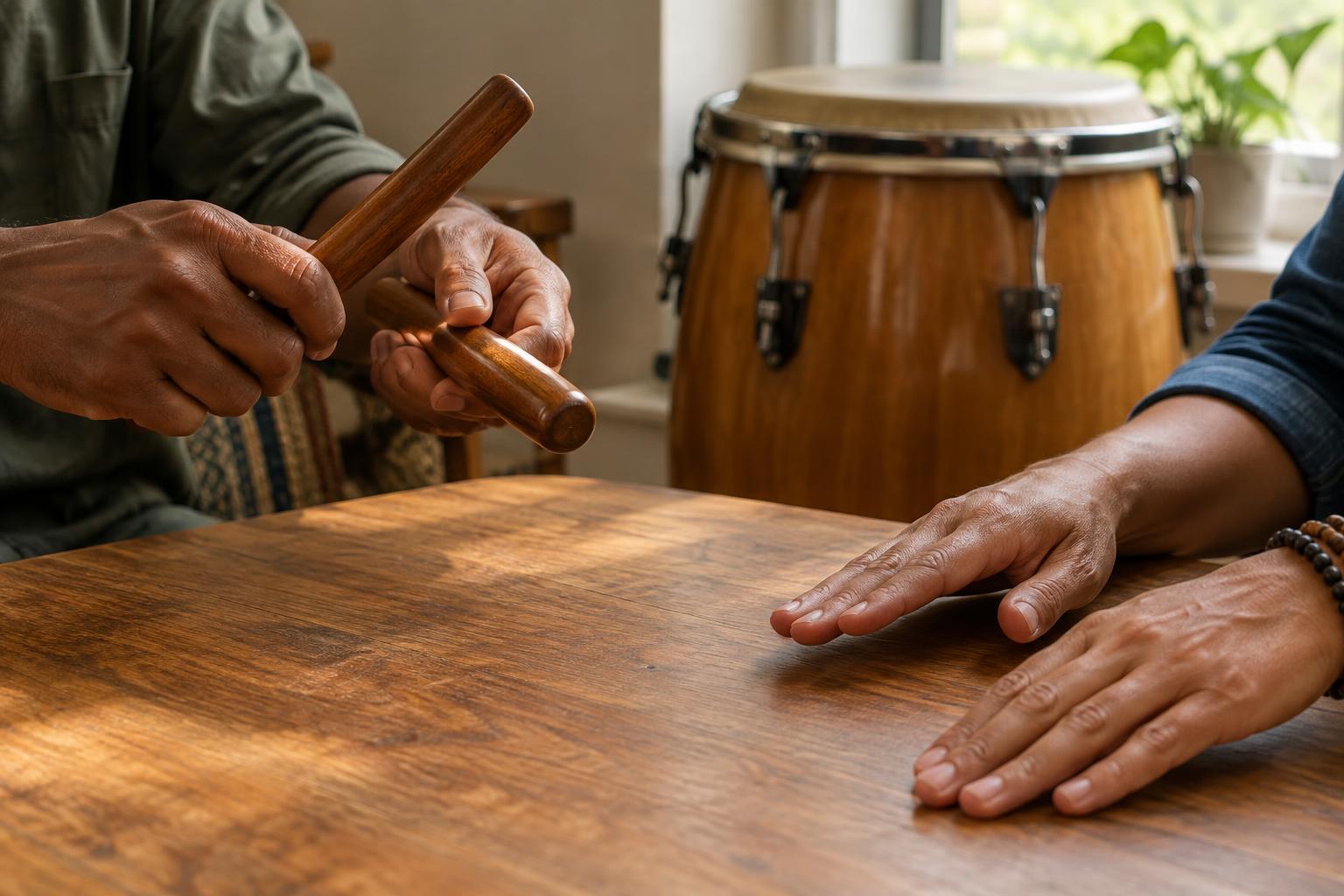
First, count four evenly and tap your foot once per number. Repeat until you can keep the taps going without concentrating on each one. Then clap only on beat one, the “and” after two, and beat four of one group; clap on beats two and three of the next. Continue repeating both groups without stopping your foot. Go slowly enough that the foot taps remain even.
Next, switch the order of the groups. The claps are the same five events, but starting with the two-stroke side changes how the repeating phrase begins. If the exercise becomes confusing, return to the foot taps alone, then add one group of claps at a time. The aim is not speed. It is to feel that the pulse continues through the spaces where the clave does not sound.
Take the idea into listening
When listening to music, begin by finding a comfortable, steady tap rather than immediately hunting for claves. Then notice recurring accents: do some fall between your taps, and do they seem to form a longer phrase? If you can hear a clave-like pattern, follow it for several repetitions. Pay attention to how other parts leave space, answer one another or place notes around it.
Not every recording will make clave obvious, and clapping a familiar pattern over a piece does not prove that it belongs there. Let the music guide your interpretation. The useful question is not simply “Where is the beat?” but “How do the parts move against a steady pulse, and what longer pattern helps them fit together?”