A two-bar pattern with two different sides
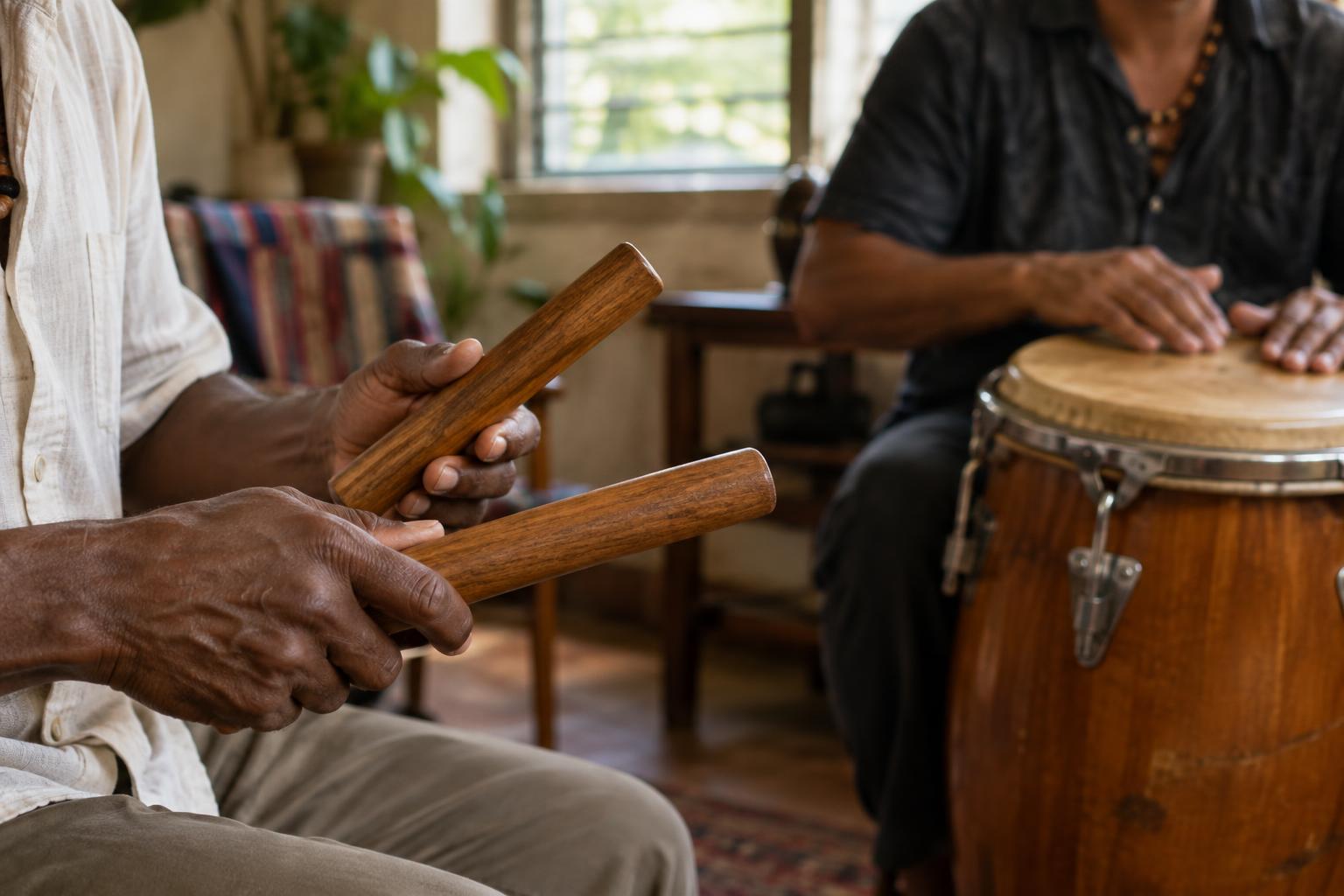
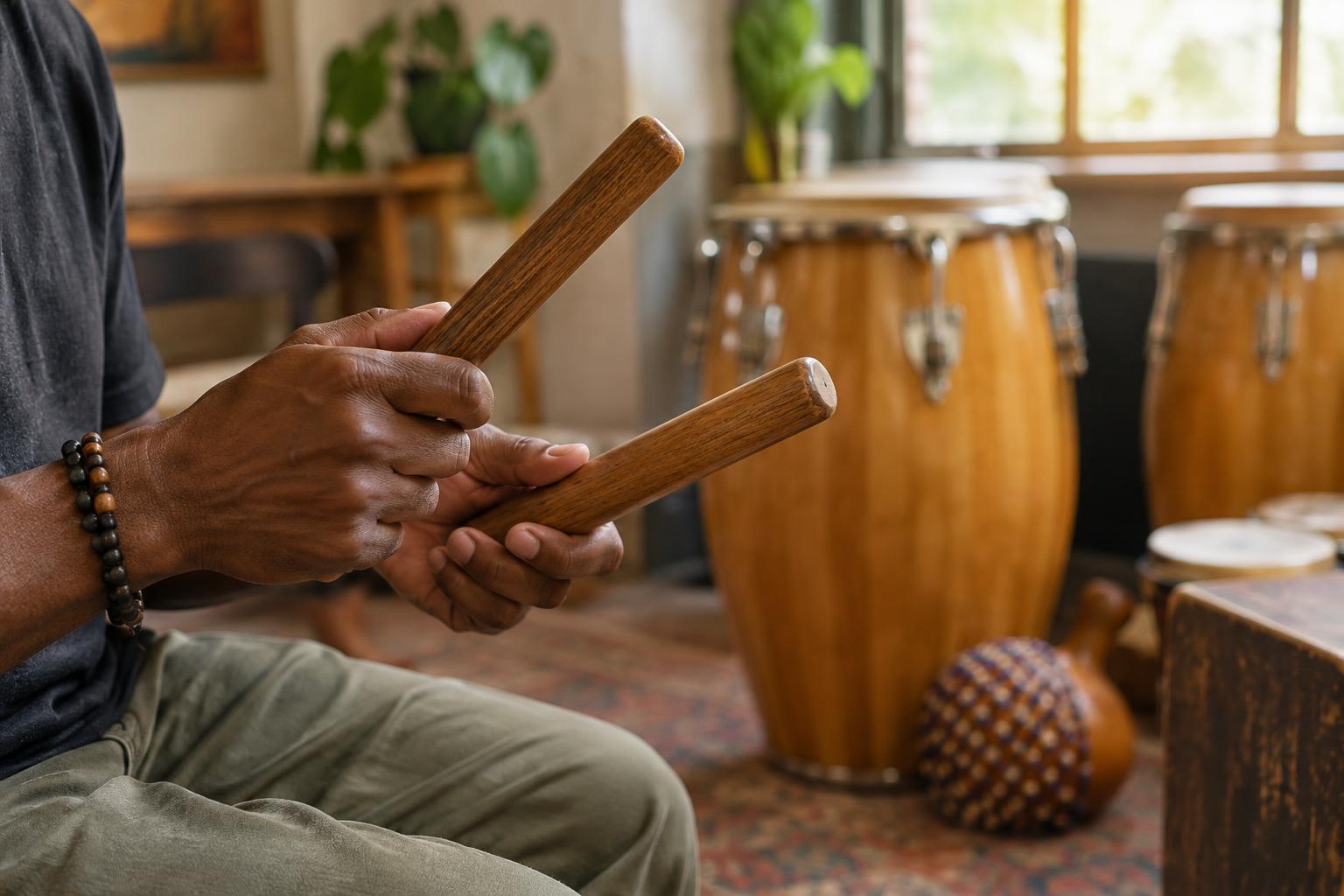
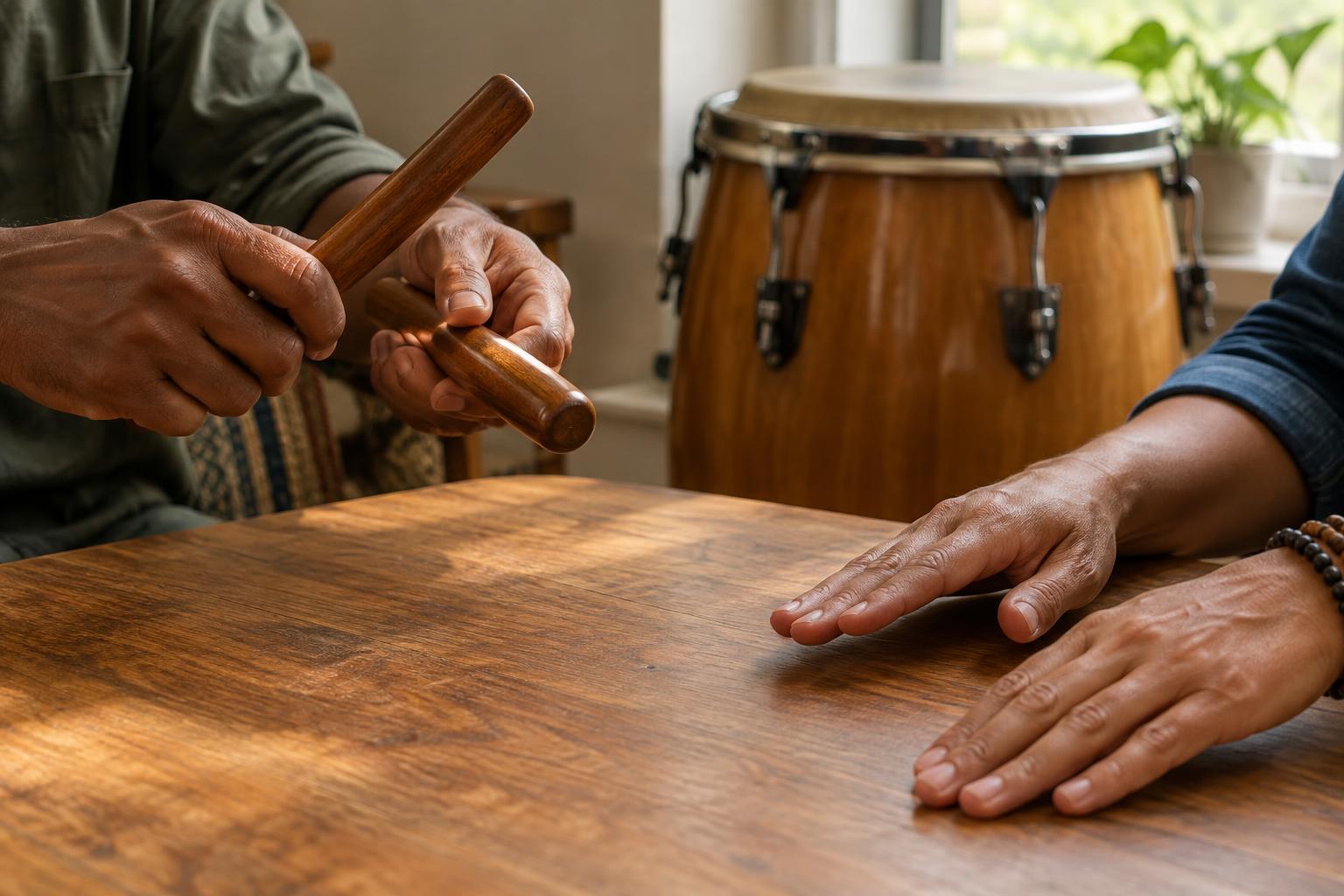
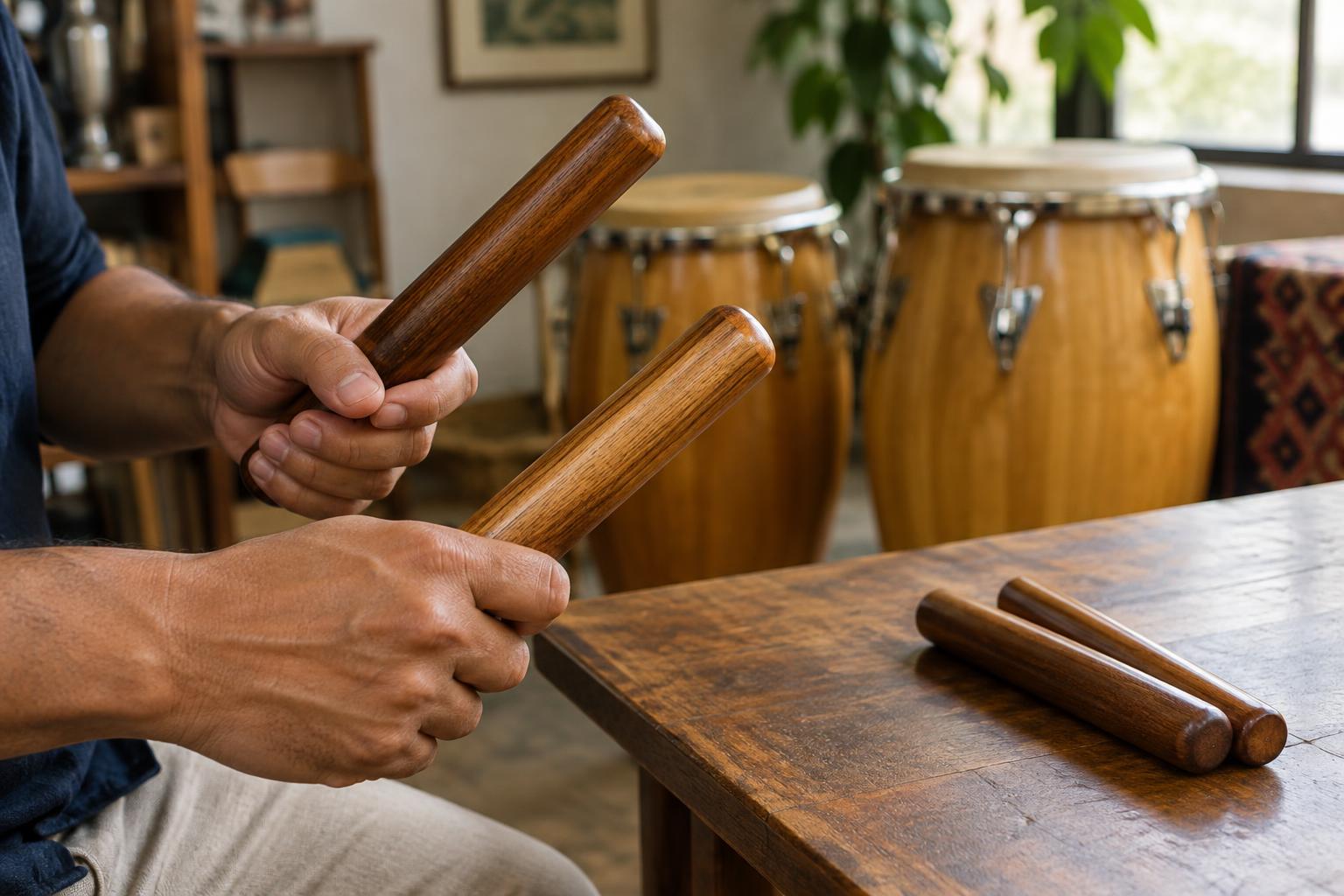
Clave is both the name of a pair of wooden sticks and a rhythmic reference point in several Afro-Cuban musical traditions. In many styles, musicians organize a phrase around a repeating two-bar cycle. A familiar example is son clave, which has five strokes across those two bars: three strokes on one side and two on the other.
The labels 3–2 and 2–3 tell you the order of those sides. In 3–2, the three-stroke side comes first and the two-stroke side follows. In 2–3, the two-stroke side comes first. Neither label means playing three beats against two beats, and neither says how fast the music should go. They describe the orientation of a pattern within a phrase.
You will encounter other clave patterns, including rumba clave, whose strokes differ from son clave. The examples below use son clave so that the idea of direction stays clear. The three-side and two-side relationship is useful, but it should not erase the differences among styles or the ways musicians within those traditions interpret a phrase.
Count 3–2 and 2–3 son clave
Count two bars of four beats each: “1, 2, 3, 4 | 1, 2, 3, 4.” To make room for strokes between beats, add “and” halfway between each number. In a common way of counting 3–2 son clave, strike on beat 1, the “and” of 2, and beat 4 in the first bar. In the second bar, strike on beats 2 and 3. Say the counts steadily while tapping only those five points.
For 2–3, put the same sides in the opposite order: strike on beats 2 and 3 in the first bar, then beat 1, the “and” of 2, and beat 4 in the second. Nothing has been added to the pattern. What changes is which side occupies the first bar of the two-bar phrase.
The bar line matters here. If you begin counting one bar later, the same repeating sound can be labeled with the opposite direction. That does not mean direction is meaningless; it means you need to know where the musical phrase is being heard to begin. An isolated five-stroke loop may not tell you enough about that on its own.
Hear the phrase, not just the clicks
In an arrangement, a percussion instrument may state clave plainly, imply it through another pattern, or leave it unplayed. Listen for how a melody, bass line, piano figure, or horn response sits across two bars. Repeated beginnings and endings can help you hear where a phrase settles, while accents and rests can make its relationship to clave clearer.
Avoid deciding the direction from the first loud note you hear. A singer might enter before a bar begins, and a strong accent does not always mark beat 1. First find a steady pulse. Then listen through several repetitions, noticing which musical gestures return together. Try tapping each side of the clave against what you hear. If the relationship feels unclear, keep listening rather than forcing a label after one pass.
Clave can help musicians coordinate parts, but it is not a test that every note must land on a clave stroke. Lines can answer the pattern, move around it, or create tension against it. Treating 3–2 and 2–3 as descriptions of a larger rhythmic relationship is more useful than treating them as rules for every accent.
A short practice sequence
Start without a recording. Walk or tap your foot on four even beats per bar. Count two bars aloud, then clap 3–2 son clave while keeping your foot steady. Repeat until you can feel the two-stroke side as part of the same cycle, not as a restart. Switch to 2–3, keeping the same tempo and the same five stroke positions.
Next, speak “three side, two side” or “two side, three side” once per bar while clapping. After several cycles, stop clapping but continue counting; then bring the claps back in. This checks whether you can hold the pattern internally rather than relying on the last stroke to tell you where you are.
Finally, listen to a piece in which you can follow a recurring phrase. Tap a quiet pulse and try either direction over several repetitions. Note where you hear the start of the phrase and what helped you choose it. If neither direction seems convincing, that is a useful observation: the excerpt may not make the orientation obvious, or it may call for a more style-specific way of listening. The goal is to hear relationships more carefully, not to attach a label to every recording.