One instrument, several voices
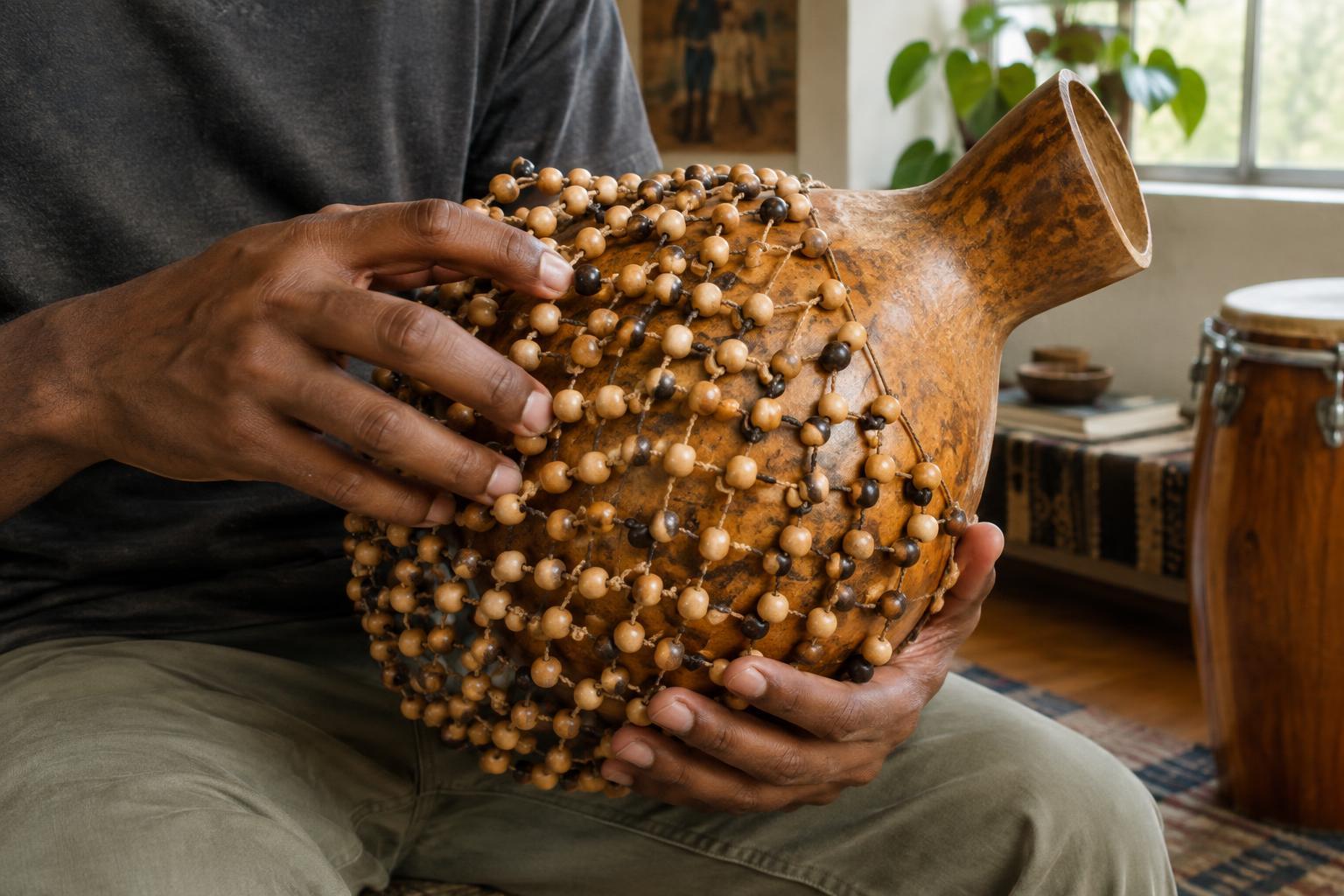
A chekeré is a hollow gourd covered by a loose net of beads or shells. When the net moves against the gourd, it produces a bright, textured sound. The hollow body also resonates when struck. Those two parts make the instrument capable of short clicks, broad rattles and deeper accents. The exact response depends on the gourd, the net and how freely the beads move.
Chekeré playing is connected to Afro-Cuban musical traditions, with roots in African gourd-rattle traditions. This introduction focuses on basic sound production rather than presenting one pattern as the way to play in every setting. If you are learning music from a particular tradition, listen to experienced players and study how the instrument functions within that music, not just how to make an isolated sound.
Get comfortable with the instrument
Hold the chekeré securely without pinning the net against the gourd. On many instruments, one hand can steady the neck while the other supports or strikes the rounded body. Others balance more comfortably in a different position. Let the beads hang and check that they have room to travel. A relaxed grip makes it easier to hear the difference between a freely moving net and one you have accidentally muted.
Begin with small motions. Tip the gourd gently in one direction and then back, allowing the beads to cross its surface. Listen for when the sound begins and ends: the net may continue moving after your hands stop. Now shorten the motion so the beads make a compact, clearly timed sound. This is useful control, not a test of how fast you can shake.
Inspect the instrument before playing. A loose strand or damaged gourd may worsen under force. You should not need to swing the chekeré hard to get a lively sound; controlled movement usually gives you more choices.
Separate the gourd from the net
To hear the gourd itself, keep the net relatively quiet and tap the body lightly with an open palm or fingers. Try different comfortable contact points and notice changes in tone. Avoid striking so hard that the gourd or your hand feels strained. A firm, clean contact can make an accent; a softer touch can add a quieter pulse beneath the beads.
Next, give the net the leading role. Move the gourd so the beads slide or fall across it, then pause long enough to hear their decay. A quick change of direction can create a sharper accent, while a longer, smoother motion gives a more spread-out rattle. Try to make each sound on purpose. The aim is to distinguish a bead-led sound from a hand-struck gourd sound, even when they eventually overlap.
Finally, combine them: move the net toward the gourd and add a light palm accent at the end of its travel. If the result is a blur, slow down. Listen for two events—the beads moving and the hand meeting the gourd—before deciding whether you want them together or slightly apart.
Build a small practice vocabulary
Count four even beats aloud. On each beat, make one short net sound, leaving silence between sounds. Keep your motion small enough that the beads do not rattle through the gaps. When that feels steady, play a gourd tap on beat one and net sounds on beats two, three and four. Switch their roles so you can choose an accent rather than always making the same motion.
For a second exercise, keep the same count but alternate a short net sound with a longer one. Do not speed up for the short sound or slow down for the long one; change only how the beads move. Record a brief pass if you can, then listen for accidental extra rattles and uneven accents. At a comfortable pace, repeat the exercise quietly. Soft playing often makes control easier to assess.
When playing with others, leave space to hear the bell, drums, voices or other timekeeping parts. A chekeré can add motion without filling every gap. Rather than assuming one shaking pattern fits any clave-based music, listen to where the ensemble places its accents and learn the arrangement you are playing.
Listen, adjust and care for the sound
Different chekerés can reward different motions. A heavier net may respond more slowly; a tighter net may give you less travel. If a technique sounds weak, try changing the angle, the size of the motion or where you support the gourd before adding force. Your ears are the best guide to whether the sound is clear and fits the music.
After playing, handle the gourd and net gently and store the instrument where it will not be crushed or knocked over. Basic care preserves the sounds you are learning to control. Most importantly, treat technique as a way into listening: the chekeré becomes more expressive when you can hear both its individual sounds and its place in a larger rhythmic conversation.