The first sound is not the whole timeline
Yes, a song can begin without a clave stroke. It might open with a voice, a bass note, a chord, a pickup before the downbeat, or even a moment of silence. None of those openings tells you, by itself, whether clave is shaping what follows. The useful question is not “Did I hear a clave stick at the start?” but “How do the musical phrases relate to the underlying rhythmic cycle?”
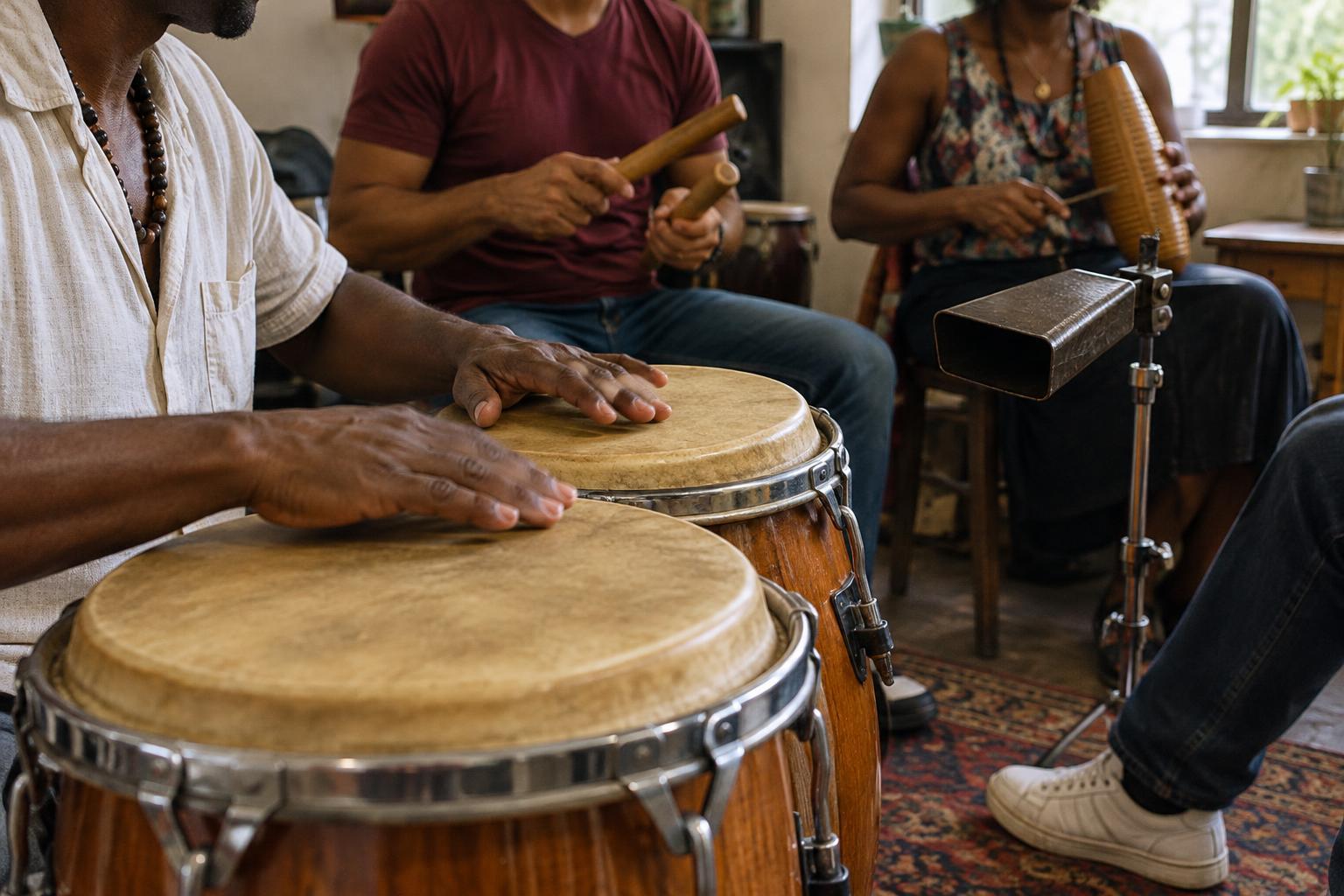
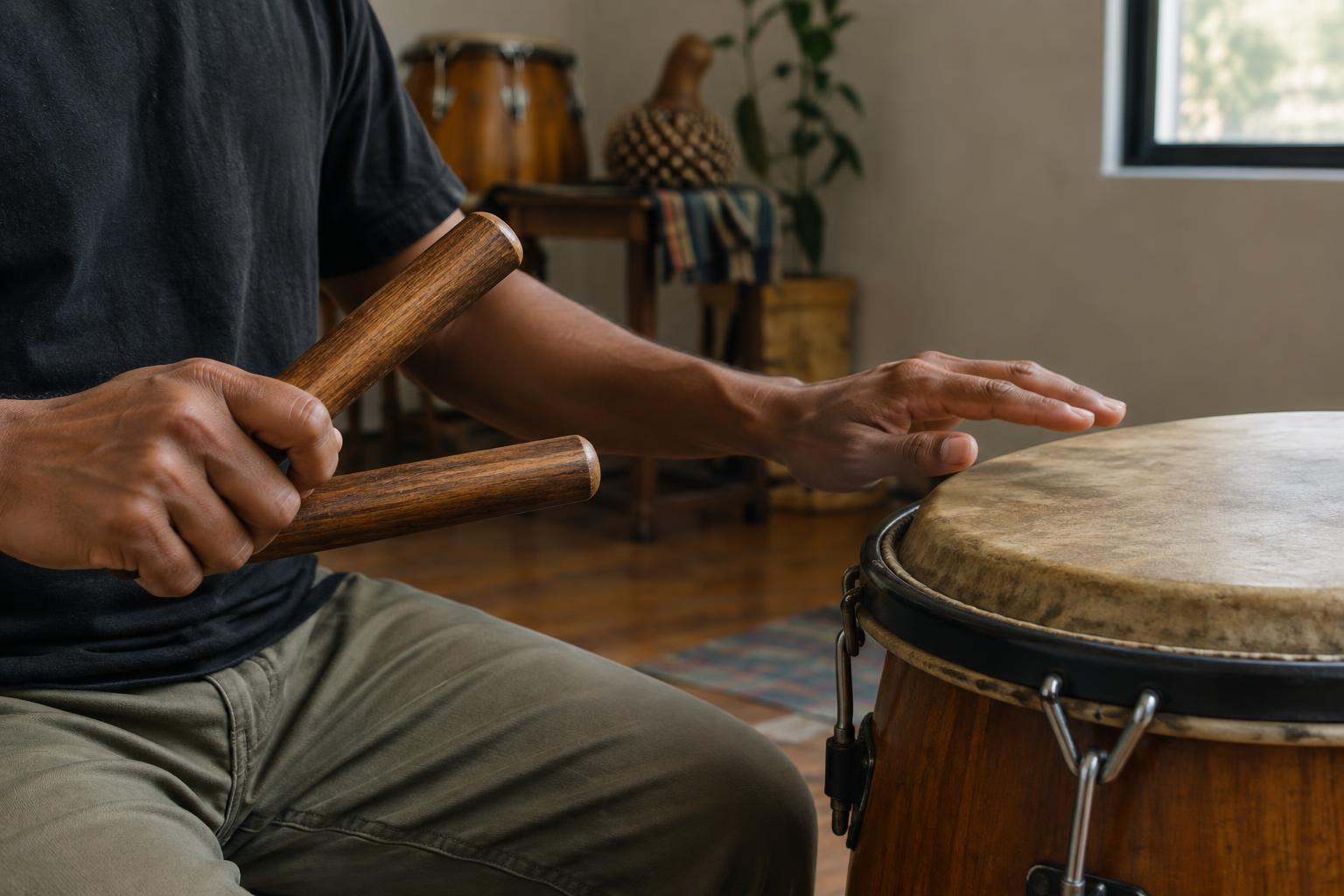
In many Afro-Cuban styles, clave is both a recognizable pattern and a way of organizing musical ideas. Musicians may play it on sticks, suggest it through other instruments, or leave it unplayed while arranging phrases around it. Those are different situations. An audible clave part gives the listener a direct reference; an implied clave asks the listener to hear how accents and phrases fit together over time.
A pattern can have a silent first beat
Son clave is commonly heard as a five-stroke pattern spread across two measures of four beats. One measure has three strokes, and the other has two. In a basic 3–2 son clave exercise, count “one, two, three, four” twice. In the first measure, clap on beat one, the “and” after beat two, and beat four. In the second, clap on beats two and three. To practice 2–3, begin with that two-stroke measure, then play the three-stroke measure.
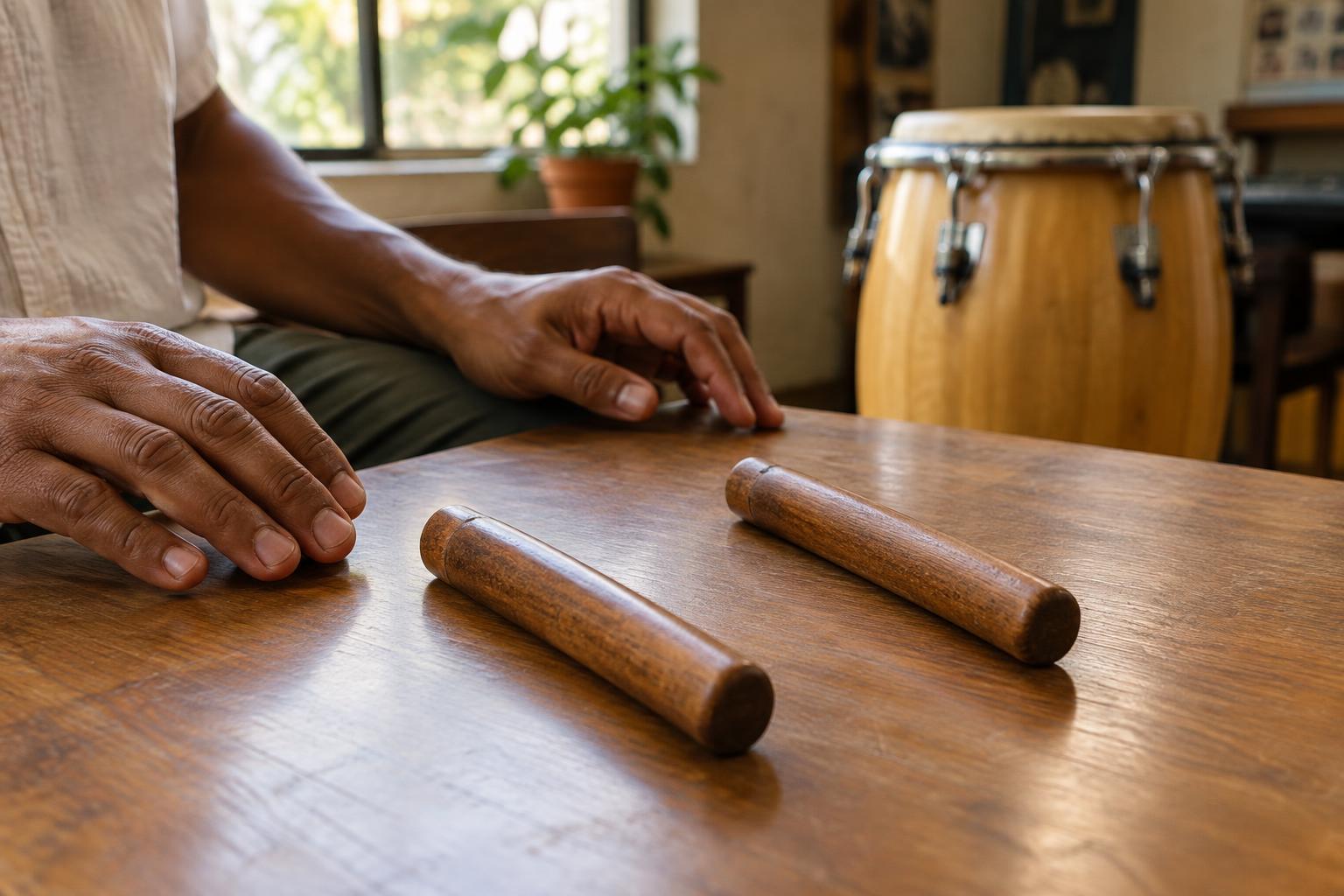
Notice what happens when the cycle begins on its two-stroke side: beat one passes without a clave stroke. The timeline has begun, but the pattern’s first sound arrives on beat two. This is one straightforward reason a piece can start without an audible stroke at its first counted beat. The opening might also start before that beat, or the arrangement might omit the clave part altogether.
The labels 3–2 and 2–3 describe which side of this two-measure cycle comes first in the passage you are counting. They do not mean that every instrument must play three notes and then two. Nor can you always determine a song’s orientation from its first note. You need enough of the phrase to hear how the parts relate.
Listen for relationships, not a single hit
Imagine a singer begins alone on beat one while the percussion enters later. That first vocal note may be a meaningful part of a clave-based phrase even though no clave stroke sounds beneath it. Likewise, a chord can land in a space between clave strokes without being “outside” the rhythm. The spaces matter: they give other parts room to answer, sustain, or create tension.
When listening, find a steady pulse first. Then notice where a vocal line begins and ends, where recurring accents appear, and whether bass, chords, and percussion seem to return to the same two-measure relationship. A single entrance may be ambiguous; repeated phrases offer better clues. If the music does not give you enough evidence, it is fine to leave the orientation undecided rather than force a 3–2 or 2–3 label onto it.
These listening habits are especially helpful when moving between recordings and styles. Clave is not one interchangeable rule for all Afro-Cuban music, and performers make distinct choices about how directly to state a pattern. Treat a counted clave as a listening aid, not as a test that every musical detail must pass.
Try starting the cycle in silence
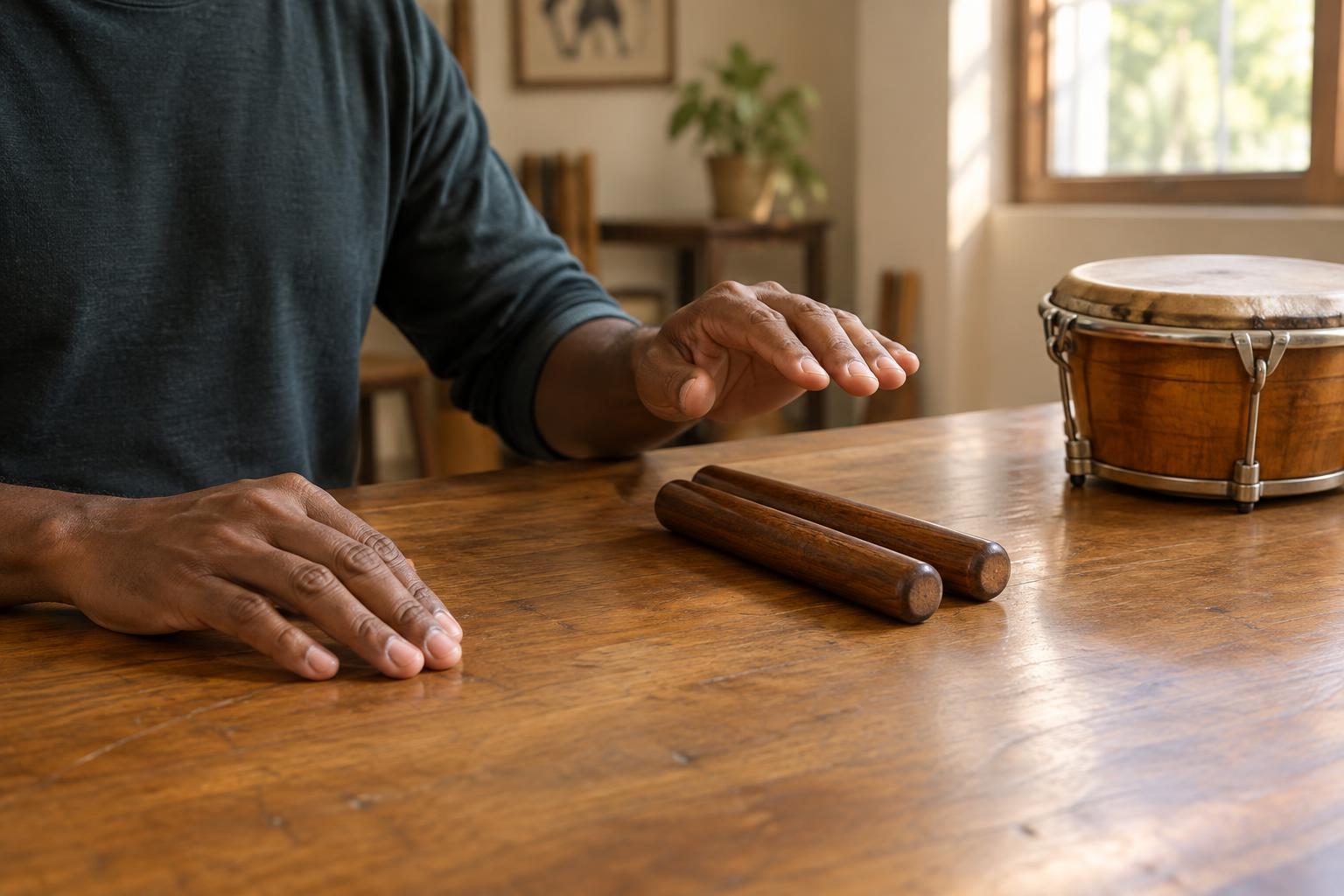
Set a comfortable, even pulse and count two measures of four aloud. For a 2–3 son clave exercise, leave beat one of the first measure silent; clap on beats two and three. In the next measure, clap on beat one, the “and” after beat two, and beat four. Repeat without stopping. Keep counting through every gap so the silent first beat feels like part of the cycle, not a delay before it.
Next, speak a short phrase on the silent beat one while you keep clapping. Try it again with your phrase beginning before the first counted beat. In both cases, the phrase can begin before the first clave stroke you play. Finally, stop clapping but continue counting and speaking. See whether you can still feel where the claps would fall.
This exercise separates three things that are easy to confuse: the beginning of a piece, the beginning of a counted cycle, and the first audible stroke of a pattern. They may coincide, but they do not have to. Hearing that distinction makes a quiet or unexpected opening less puzzling—and gives you more to listen for when the rest of the ensemble enters.