Two instruments, many ways to play rumba
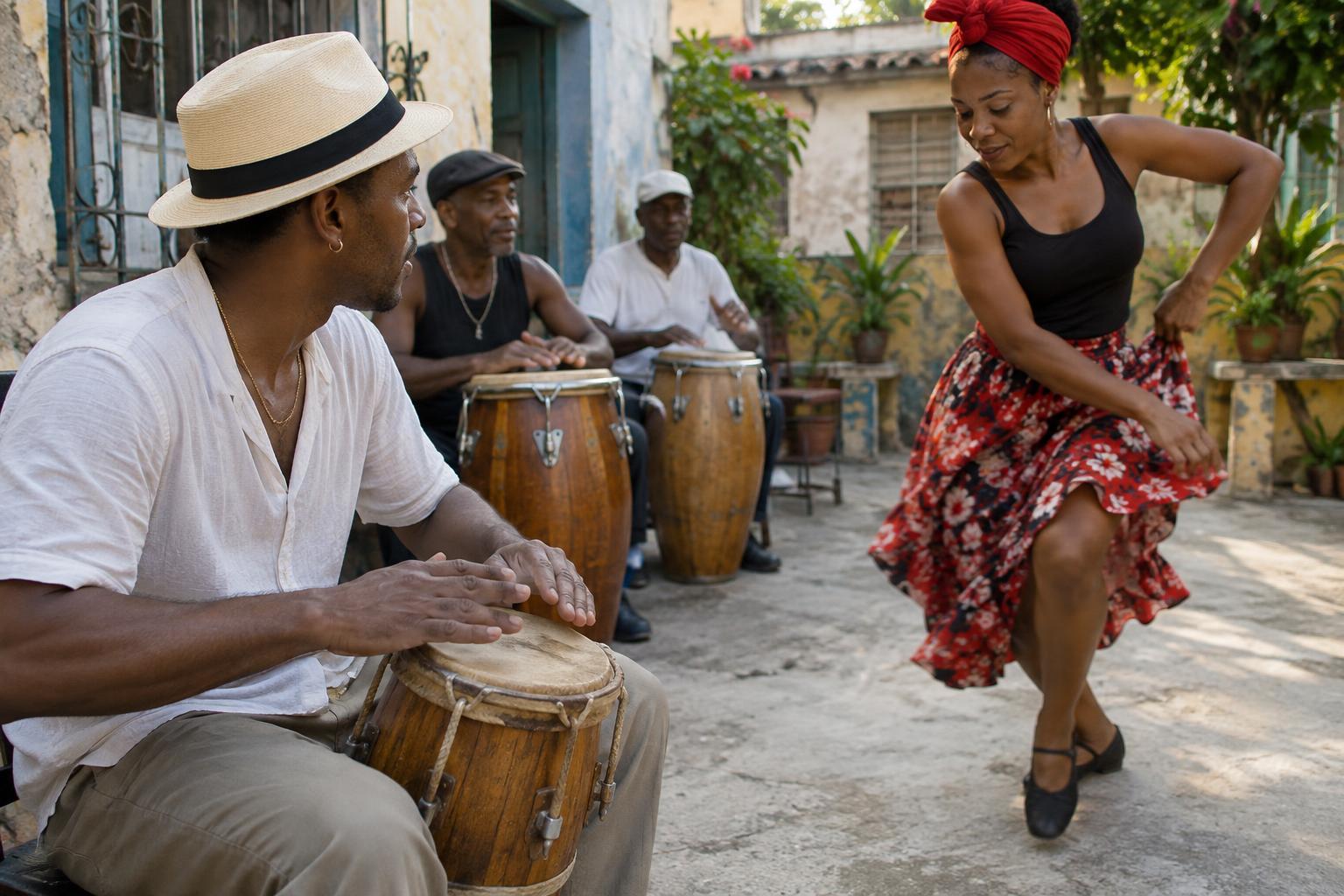
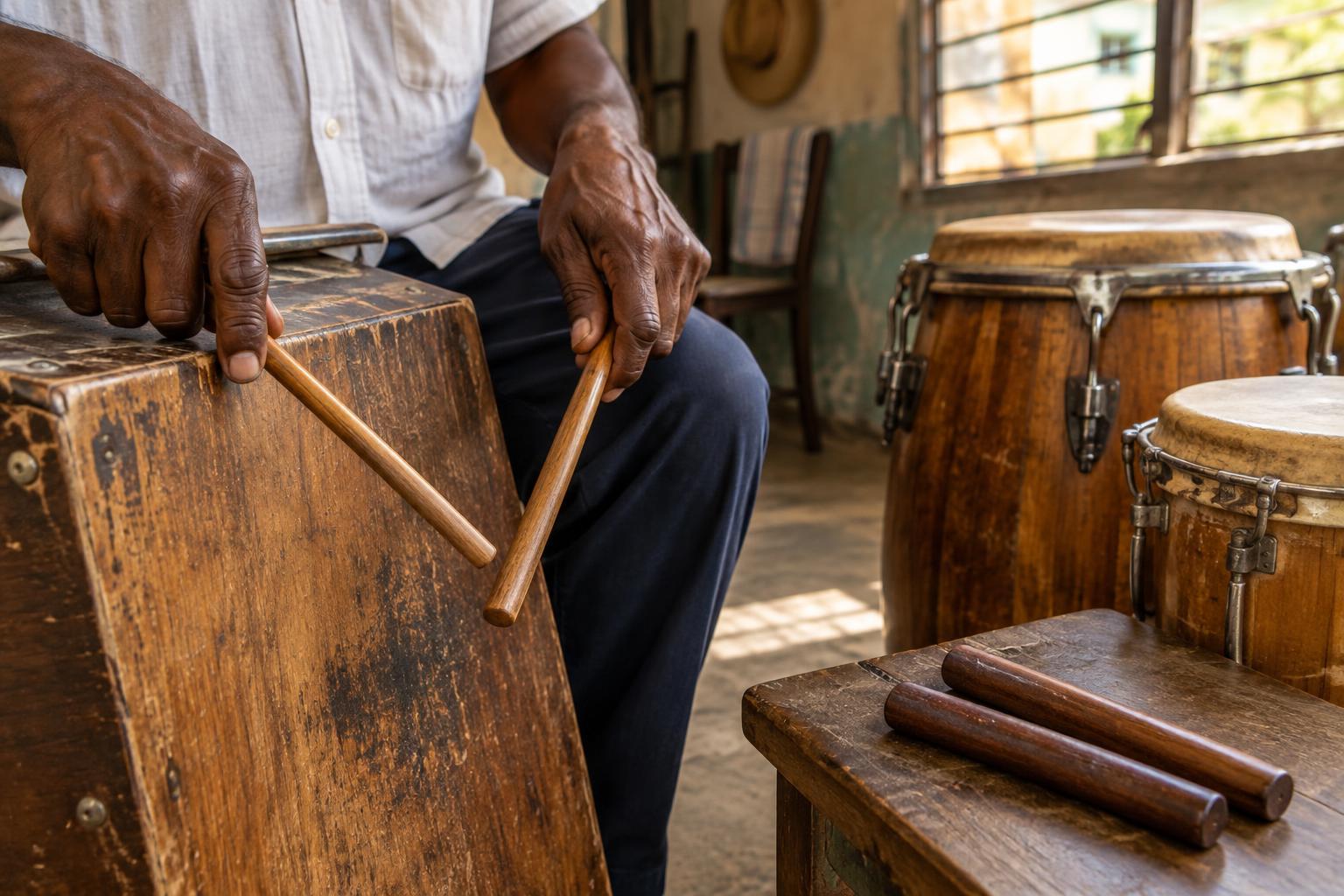
In Cuban rumba, the percussion is a conversation rather than a single repeating beat. Singers, dancers, claps, sticks, and drums all help shape the music. Cajones and congas can take part in that conversation, but they offer different sounds and invite different movements from a player’s hands.
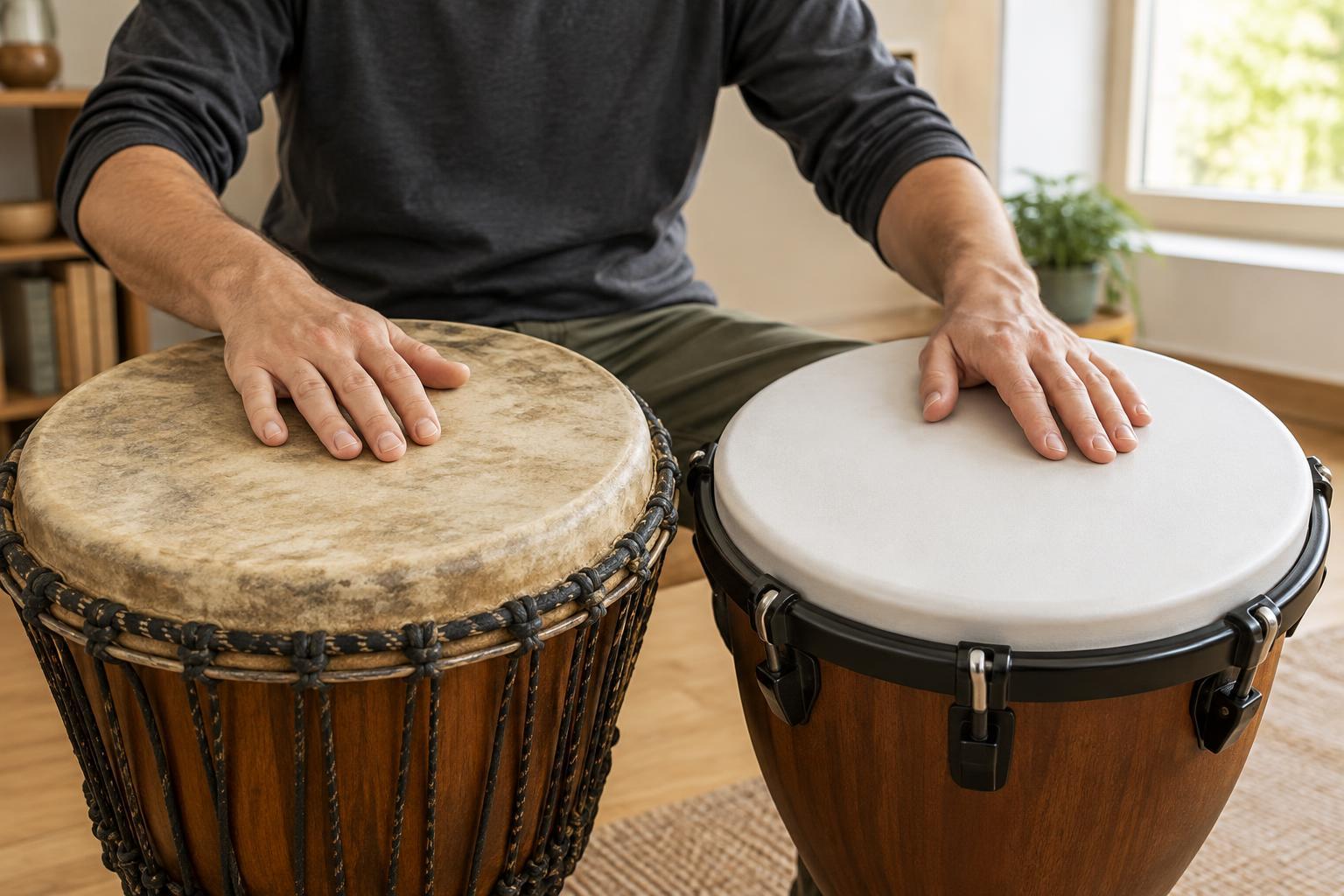
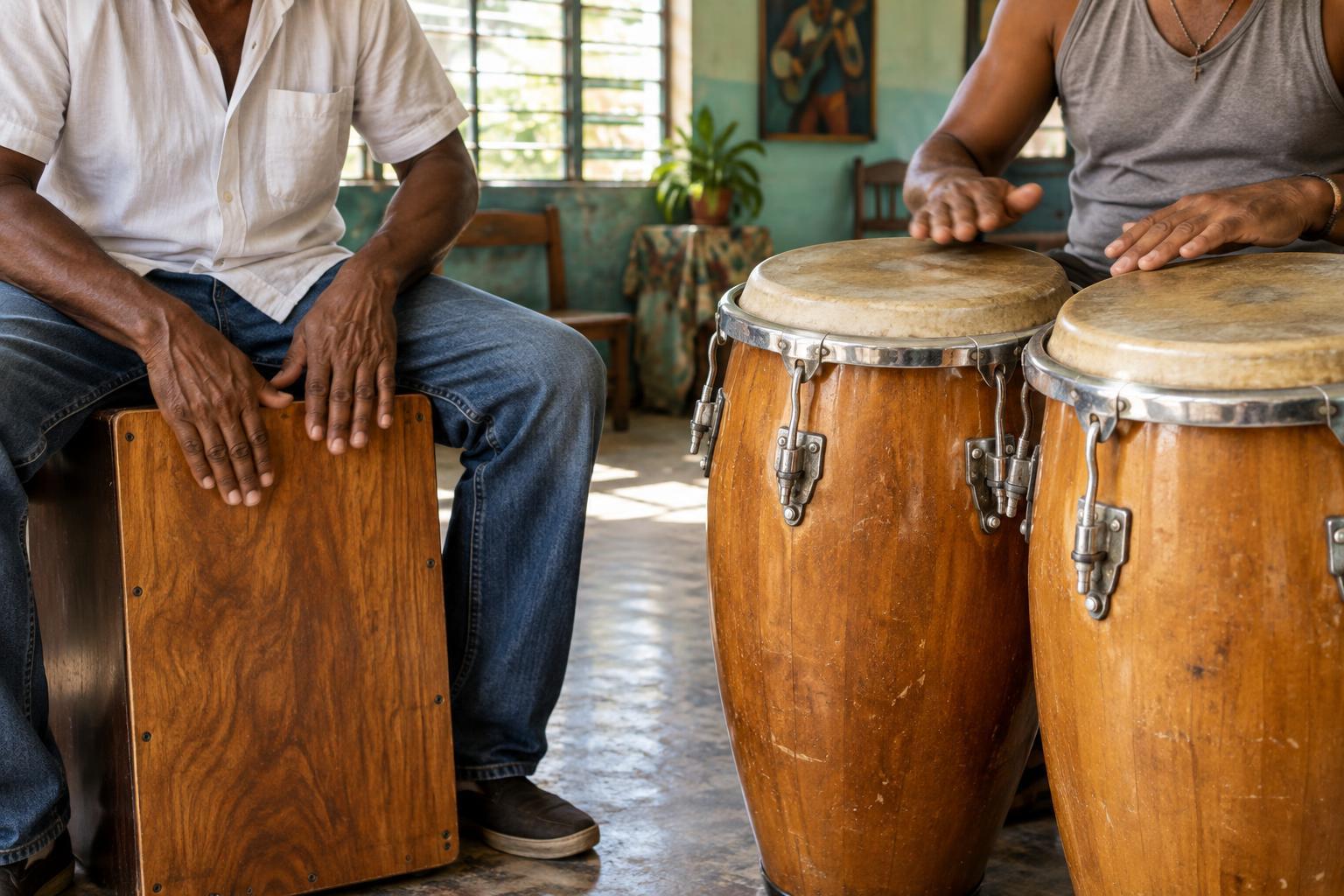
A Cuban rumba cajón is a wooden box played as a percussion instrument. Congas are tall, open-bottomed drums with heads traditionally made of animal skin, though other head materials are also used. Wooden boxes have an important place in rumba’s history; accounts of the tradition describe players using available boxes and other everyday objects. Rumba also varies across communities, ensembles, and styles, so neither instrument should be treated as the one required sound.
What you hear: wood against drumhead
A cajón produces sound when the player strikes its wooden surface. Hits nearer an edge tend to sound higher and sharper, while hits farther inward can give a lower, rounder thump. The size, construction, and playing position of the box affect its voice. It can make a crisp rhythmic pattern without the sustained resonance of a drumhead.
A conga offers a broader range of tones from its head. An open tone can ring clearly; a bass stroke brings out a lower sound; a slap creates a cutting accent; and a damped stroke gives a shorter note. Those sounds depend on where the hand lands, how it contacts the head, and whether the other hand stops the vibration. In a group, a cajón’s dry attack may make the rhythmic outline especially easy to hear, while a conga’s ringing and muted notes add contrast within it.
How the hands approach each instrument
On a cajón, a player can alternate hands across different parts of the box to separate low notes from sharp accents. The useful technique is not simply to hit harder: a relaxed stroke and a clear choice of striking area often produce more contrast with less effort. Cajones used in Cuban rumba should not automatically be pictured as the snare-equipped, front-facing boxes familiar from some other music. Their construction and playing position can differ.
On conga, hand shape and release are central. For an open tone, the fingers meet the head and move away so it can vibrate. For a damped note, the hand remains in contact. Slaps require a controlled motion that brings out a bright sound without forcing the hand. Players also use quieter touches between accents to keep the pulse moving. These distinctions take time to develop, and comfortable motion matters more than volume.
Both instruments reward listening across several cycles before adding more notes. A stroke that sounds impressive alone may crowd a singer or obscure a dancer’s movement. In rumba, a well-placed space can be as useful as a strong accent.
Musical roles depend on the ensemble
Rumba ensembles often distinguish between parts that hold a recurring foundation and parts that answer the song or respond to dance. Depending on the style and the players, percussion roles may be associated with names such as salidor, tres dos, and quinto. These names describe musical functions and particular drums in many conga-based settings; they are not a rule that every group must use the same lineup.
A box can help carry a steady pattern, supply contrasting accents, or join the exchange between parts. A conga can do the same, using its wider range of head sounds to distinguish one gesture from another. Rather than assigning an instrument a fixed job, listen for what its player is doing: maintaining a cycle, leaving room for the song, or making a phrase that answers a dancer. The relationships among the parts tell you more than the instrument names alone.
A simple way to listen and practice
Start by tapping a steady pulse with your foot while listening to a rumba performance. Notice which sounds repeat predictably and which seem to comment on the singing or dancing. Then focus on timbre: can you distinguish a short wooden knock from a ringing open drum tone or a sharp slap? You do not need to identify every part immediately. Following one sound for several cycles is a useful first step.
For a hands-on exercise, choose a comfortable, unhurried pulse. On a suitable wooden surface, alternate a lower central tap with a lighter tap near the edge. On a conga, if one is available, alternate a soft damped touch with an open tone. Keep the spacing even and the volume modest. Next, leave one expected note silent and listen to how the pattern changes. This is an exercise in touch and attention, not a substitute for learning rumba’s specific parts from experienced practitioners. As you listen further, notice how each player makes room for the others.