Two drums, one conversation
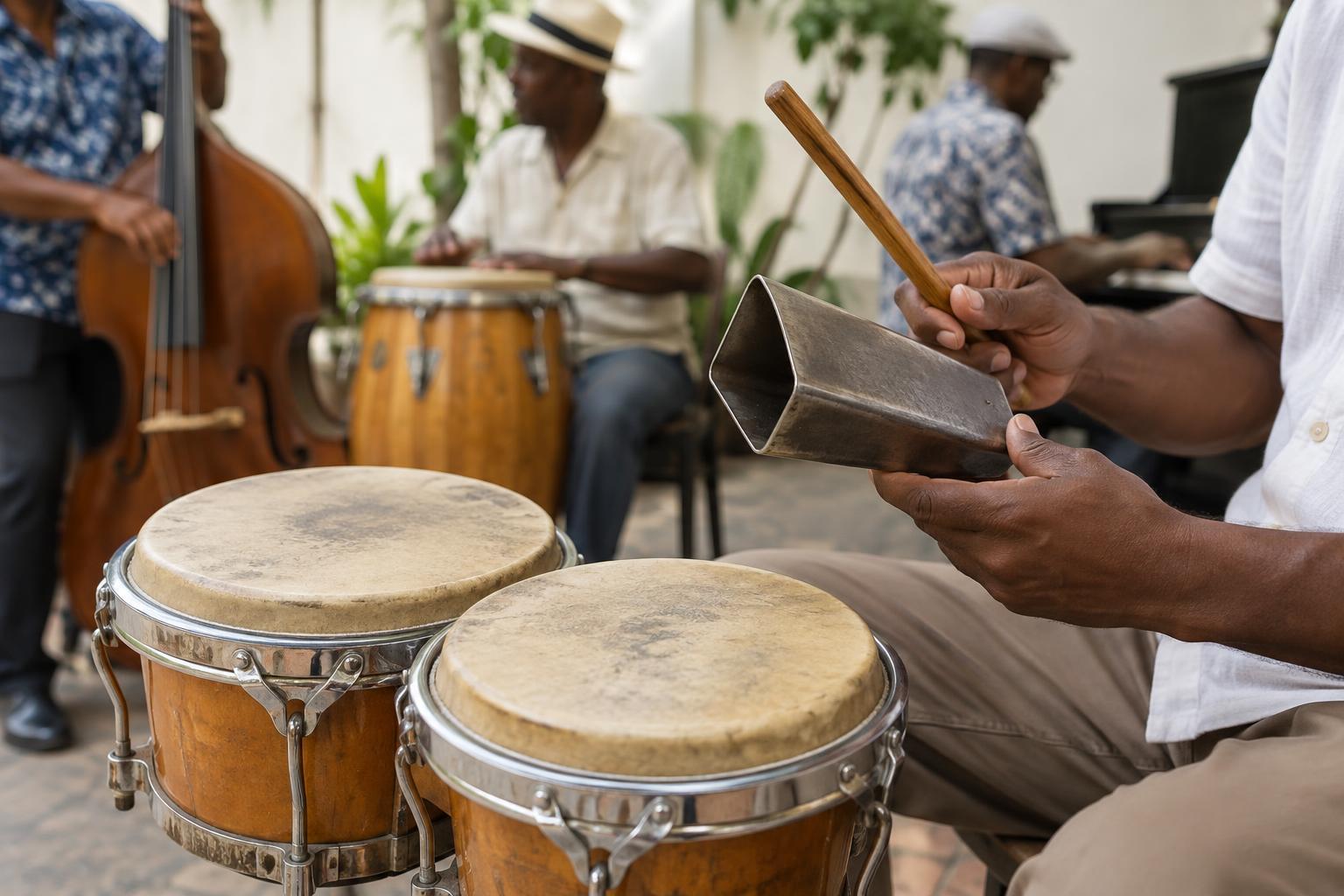
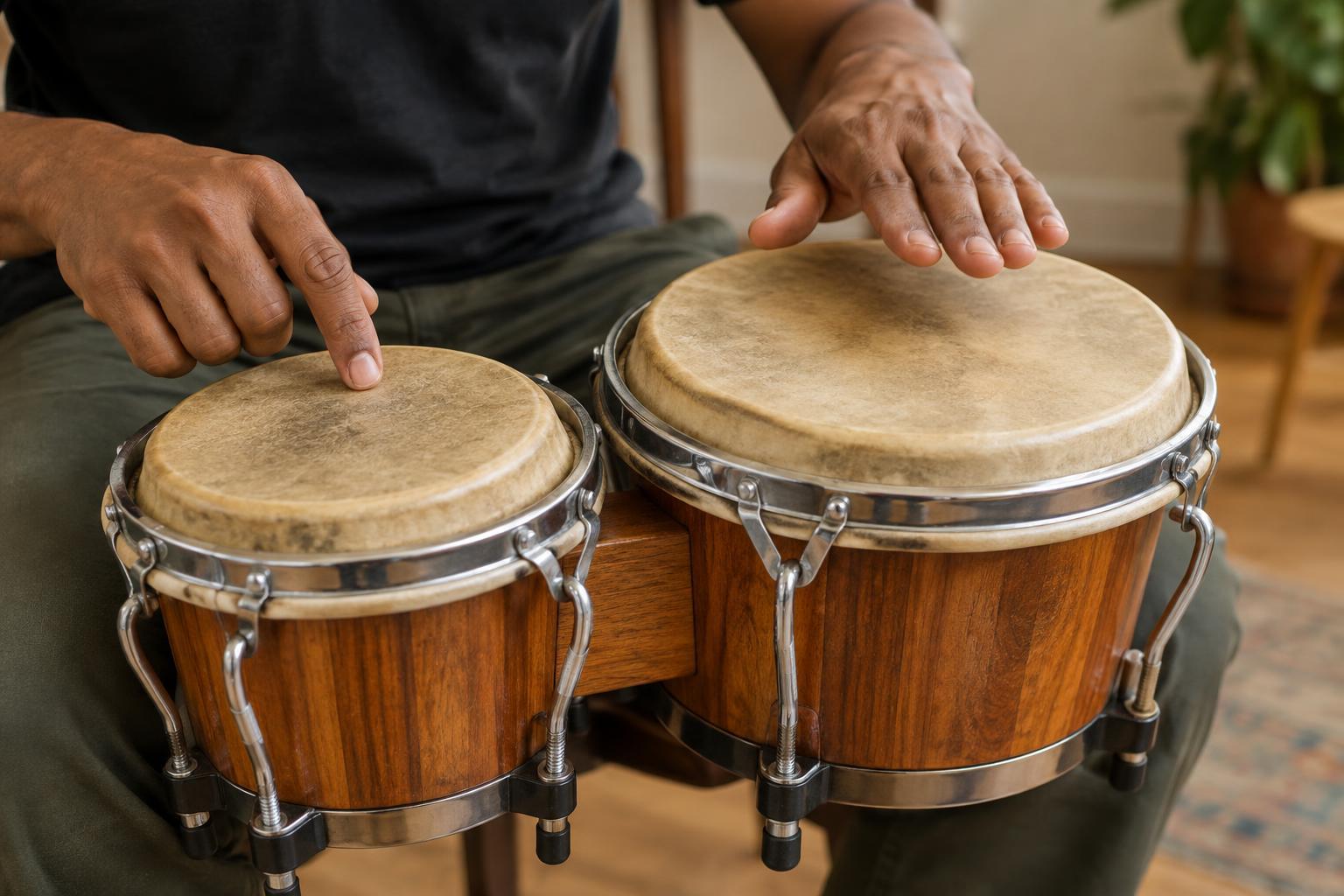
A bongó is a pair of small hand drums joined by a bridge. The smaller drum is called the macho, and the larger is called the hembra. Those names identify the drums; they do not prescribe a player’s role or a fixed musical character. In much Afro-Cuban music, the pair offers a useful contrast: the macho often speaks with a high, crisp sound, while the hembra provides a lower, rounder reply.
That contrast helps a player make a rhythm clear without relying on loudness alone. A short, bright stroke can stand out as a point of emphasis, while a fuller tone can give the phrase weight. The two voices work together, and their precise sounds vary with the instrument, its tuning and the hands playing it.
What the instrument is made of
Each drum has a shell, a playing head and hardware that holds the head under tension. The shells are commonly made of wood, though other materials are used. Heads may be natural skin or synthetic material. A bridge connects the shells, and tuning lugs allow the player to adjust each head’s tension. These parts matter as a system: changing the head or its tension can alter the sound even when the shell stays the same.
The macho’s smaller head is a major reason it tends to produce a higher pitch. The hembra’s larger head can move air in a way that gives lower strokes more body. Tension adds another difference. A tighter head generally responds with a higher, more immediate sound; a looser one tends to sound lower. Players usually tune the drums to contrast with each other, but there is no single pitch or interval that every bongó must use.
Shell shape, head material and the way the head meets the rim also affect sustain and attack. It is more useful to listen to a particular pair of drums than to assume every macho will sound sharply metallic or every hembra deeply resonant. Even two instruments of similar size may respond differently under the same hands.
The hand changes the sound
Anatomy sets up the contrast, but technique brings it into focus. A finger stroke near the edge often gives a defined attack; a stroke closer to the center may produce a different balance of tone and overtones. An open stroke lets the head vibrate after contact. A muted stroke leaves a finger or hand touching the head, shortening the sound. These differences can be especially easy to hear on the high macho, where a brief attack cuts through an ensemble.
The hembra is not limited to low, open notes. A player can use muted touches, edge strokes and accents on either drum. The labels high and low describe their general relationship, not a rule that assigns every kind of stroke to one side. If you are beginning to play, aim for a relaxed hand and a clear release after each open stroke. Hitting harder is not necessarily the best way to get a more distinct tone.
How the contrast serves a rhythm
In a traditional bongó pattern often called martillo, the hands alternate touches and accents across the pair. The pattern gains motion from changes in sound as well as from the timing of the strokes. You can listen for the macho’s bright notes marking part of the phrase and the hembra’s lower notes answering or reinforcing it. Particular patterns and accents depend on the musical setting, so it helps to hear the bongó alongside the other instruments rather than in isolation.
This is especially important when listening to Afro-Cuban music. Bongó parts participate in a larger rhythmic conversation that may include clave, bass, voice and other percussion. The two drums do not carry the whole groove by themselves. Paying attention to when each voice enters can reveal how a player leaves space for the rest of the ensemble.
A simple exercise for ears and hands
Start by playing one comfortable open stroke on the macho, then one on the hembra, at an even pace. Keep your effort similar on both. Notice differences in pitch, how long each note rings and how strongly each attack stands out. Next, alternate four strokes on each drum, moving from soft to moderately firm without forcing the sound. Can you keep the tones clear as the volume changes?
Finally, tap a steady pulse with your foot and alternate a light macho stroke with a fuller hembra stroke. Reverse the emphasis and hear how the phrase changes, even though the timing stays the same. If you are listening rather than playing, try identifying high and low bongó notes in a recording before following the full rhythm. The goal is not to reduce each drum to one sound, but to recognize how two related instruments give a player room to shape a musical conversation.