The beat is a pulse you can follow
When you tap your foot along with a song, you are probably following its beat: a repeating pulse that helps you keep your place in time. The beat does not have to be played by one instrument on every tap. You might hear it clearly in a drum part, or infer it from the way several instruments fit together.
A useful comparison is walking. Your steps can continue at a regular pace while you speak in phrases of different lengths. In music, the beat provides a point of reference even when the sounds around it are busy or uneven. It can also feel less obvious during a pause or a sparse passage. If you can keep tapping through that space and arrive with the next phrase, you have kept track of the beat.
Rhythm is the pattern, not just the pulse
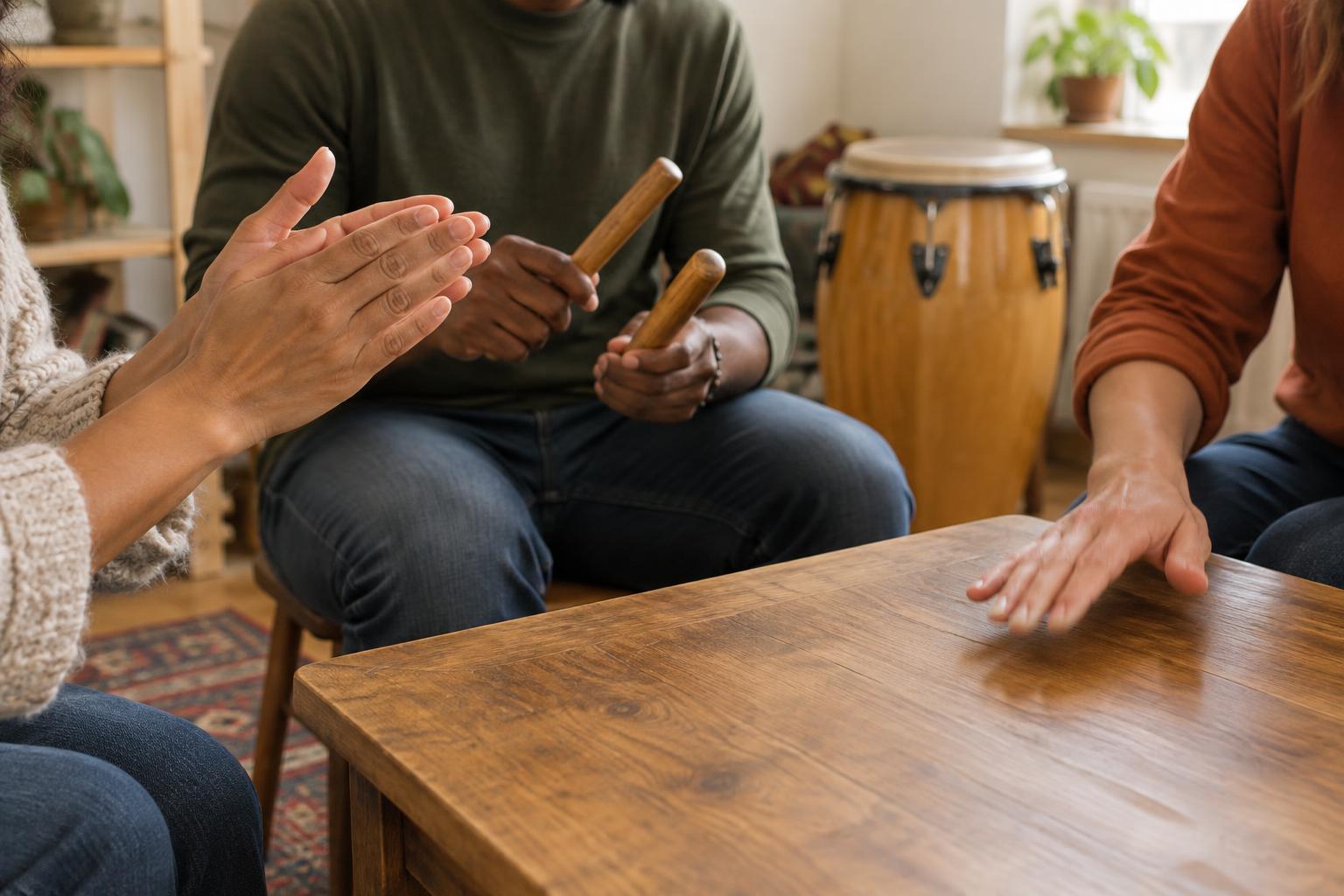
Rhythm describes when sounds happen and how long they last, including the spaces between them. Clap “clap, clap-clap, rest, clap” while your foot keeps a steady beat. Your foot and hands are doing different jobs: the foot marks the pulse, while your hands make a rhythm. A melody, bass line or percussion part can each have its own rhythm against the same beat.
Not every note needs to land on a beat. A note between beats can create a sense of lift or surprise; this is one way syncopation can arise. Nor does rhythm require a drum. A singer’s phrasing or the timing of a guitarist’s strums can give you a strong sense of rhythmic shape. Listening for both sounds and silences makes that shape easier to notice.
Tempo tells you how quickly the beat moves
Tempo is the speed of the beat. If you tap one beat per second, then tap the same beat twice as quickly, you have changed the tempo. You could clap the same rhythm at either speed: its pattern stays recognizable, but the time it takes to play changes. Musicians sometimes describe tempo in beats per minute, though words such as slow, moderate and fast are enough for a first listening exercise.
A busy rhythm does not necessarily mean a fast tempo. Many notes can fit between beats at a moderate pace, while a fast piece can have a simple part with long spaces. This is a common source of confusion: the number of sounds you hear is not, by itself, a measure of how quickly the underlying pulse is moving. Try finding a pulse you can tap comfortably before deciding whether the tempo feels fast.
How they work together when you listen
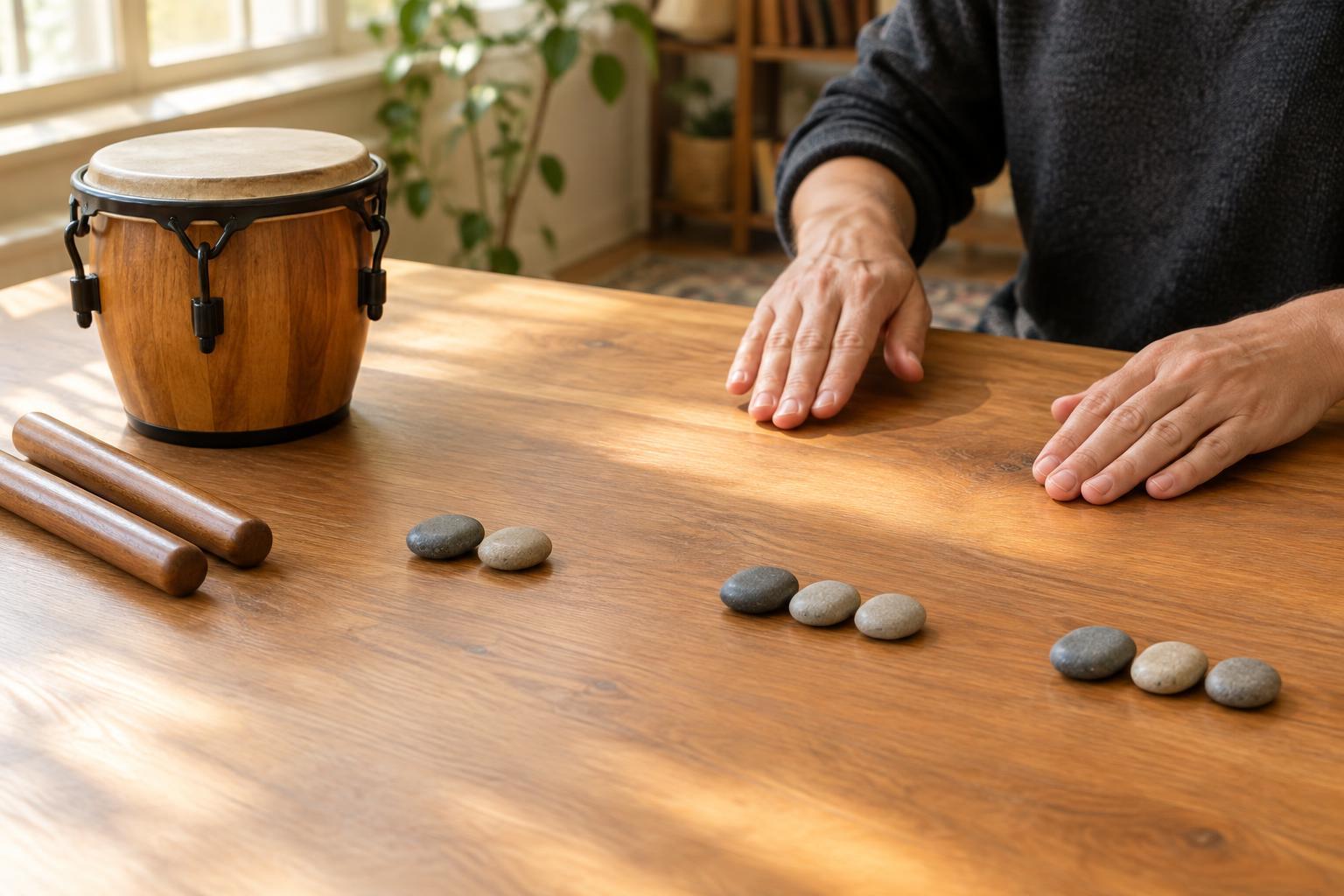
Imagine a steady sequence of four taps. That is your beat for the exercise. Clap only on the first and third taps: you have made one rhythm. Now clap on all four, or add a clap halfway between two taps: you have changed the rhythm while keeping the beat and tempo the same. Finally, repeat one of those patterns while tapping faster. This time you have changed the tempo.
In an ensemble, different players may emphasize different points around a shared pulse. In many Afro-Cuban musical settings, a clave pattern serves as an important organizing reference for how parts relate across a repeating cycle. It is a rhythmic pattern, not simply another name for the beat or for tempo. Particular practices vary across styles and traditions, so it is worth listening to a piece on its own terms rather than assuming every percussion part follows the same formula.
A short practice routine
Choose a recording with a pulse you can follow. First, tap along for a few phrases without worrying about the individual drum hits. If your tapping drifts, listen to another part, such as the bass or a repeated accompaniment figure, and try again. Next, keep tapping while you quietly copy one short rhythm you hear. Notice which sounds fall with your taps and which fall between them.
Then pause the recording and recreate the exercise yourself: tap a steady beat, clap a short pattern over it, and repeat that pattern at a slower and then a faster tempo. Keep the clapped pattern simple enough that you can tell when it changes by accident. The goal is not to find the one correct tap for every recording. It is to separate three questions: What pulse am I following? What pattern is being played around it? How quickly is that pulse moving?