A drum built for many sounds
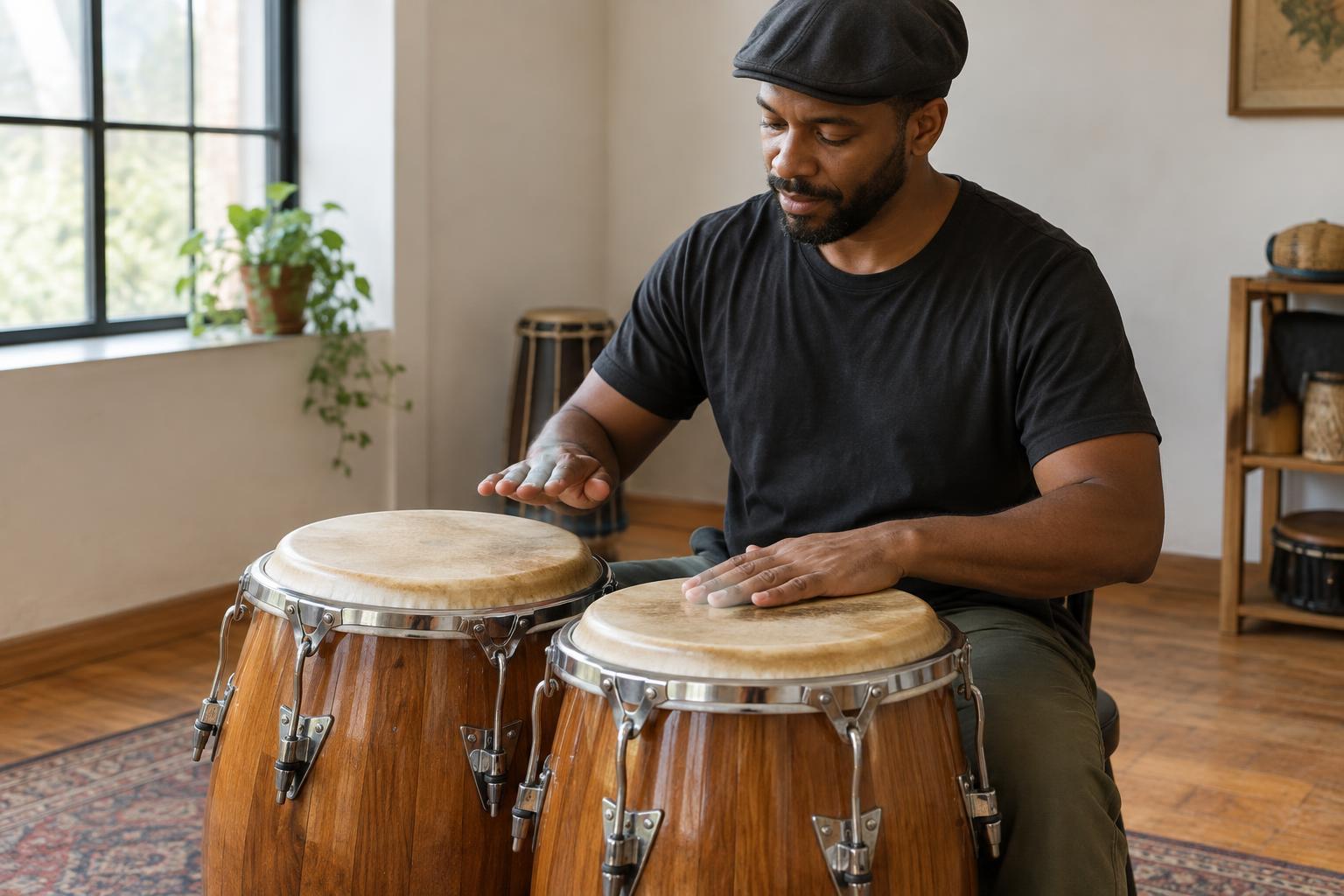
A conga is a tall, open-bottomed hand drum closely associated with Afro-Cuban musical traditions. Players can draw several distinct sounds from one drum: a deep open tone, a short bass sound, a crisp slap, and quieter touches that help carry a pattern. Those sounds come from the relationship between the player’s hands and the instrument’s parts, not from any single component alone.
A useful way to understand the drum is to follow sound from the top down. The hand sets the head in motion. The rim supports its edge, while the shell shapes how the vibration projects. Hardware holds the assembly together and lets the player adjust tension. Knowing what each part does makes it easier to listen closely, describe a sound, and handle the instrument with care.
The head: where the sound begins
The head is the playing surface stretched across the top of the drum. Conga heads are commonly made from animal skin or synthetic material. Natural skin can vary from head to head and may respond to changes in humidity. Synthetic heads tend to be more consistent across changing conditions, though players may prefer one material over another for its feel and sound.
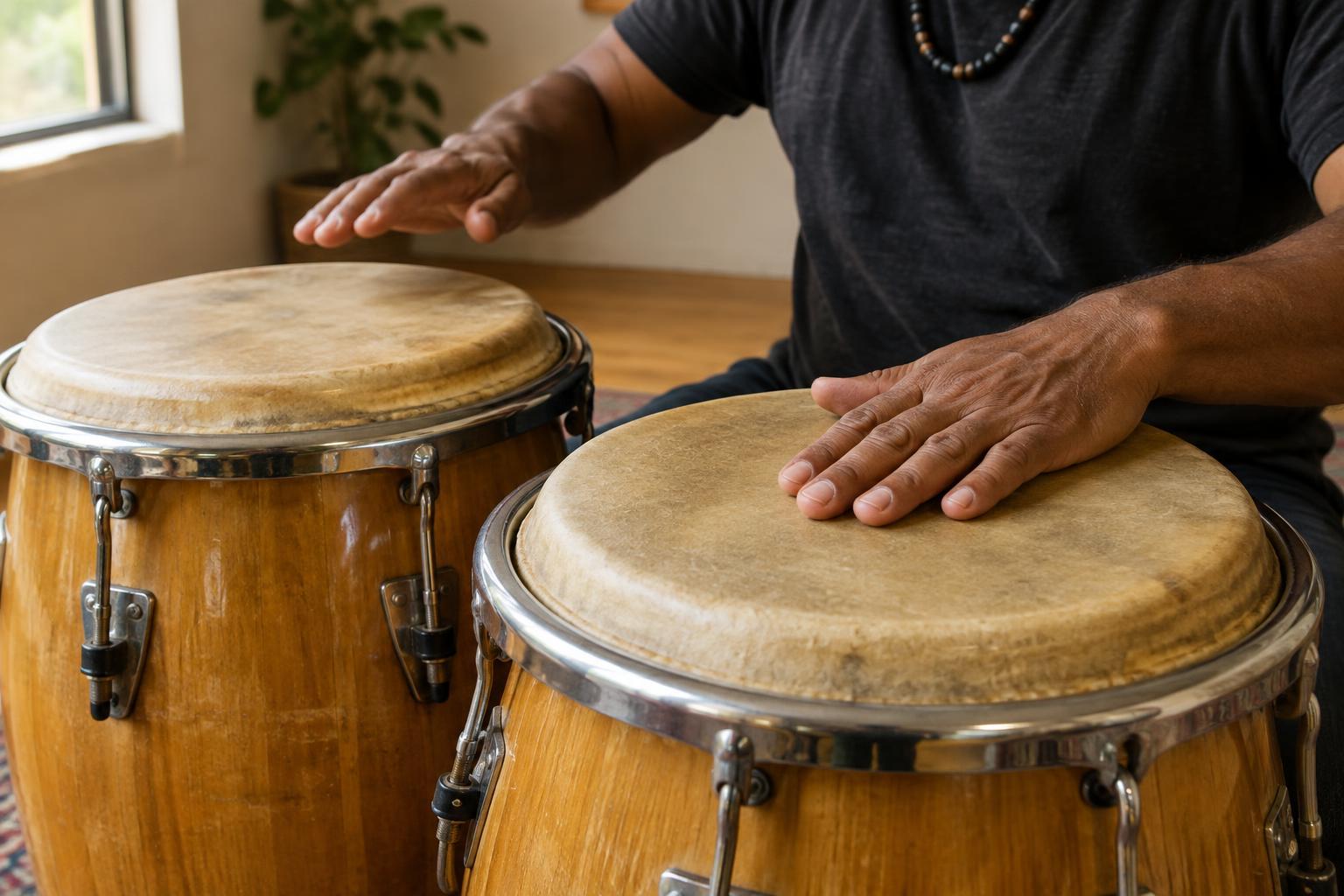
Tension changes the head’s response. A tighter head generally produces a higher pitch and a quicker, brighter attack; a looser head generally gives a lower pitch and a softer feel. Tension is only part of the picture: head thickness, drum size, hand placement and technique also affect what you hear. Strike near the edge for a ringing open tone, then compare it with a gentle touch closer to the center. Even without playing a full rhythm, you can hear how one surface offers different possibilities.
The shell: shape, material and projection
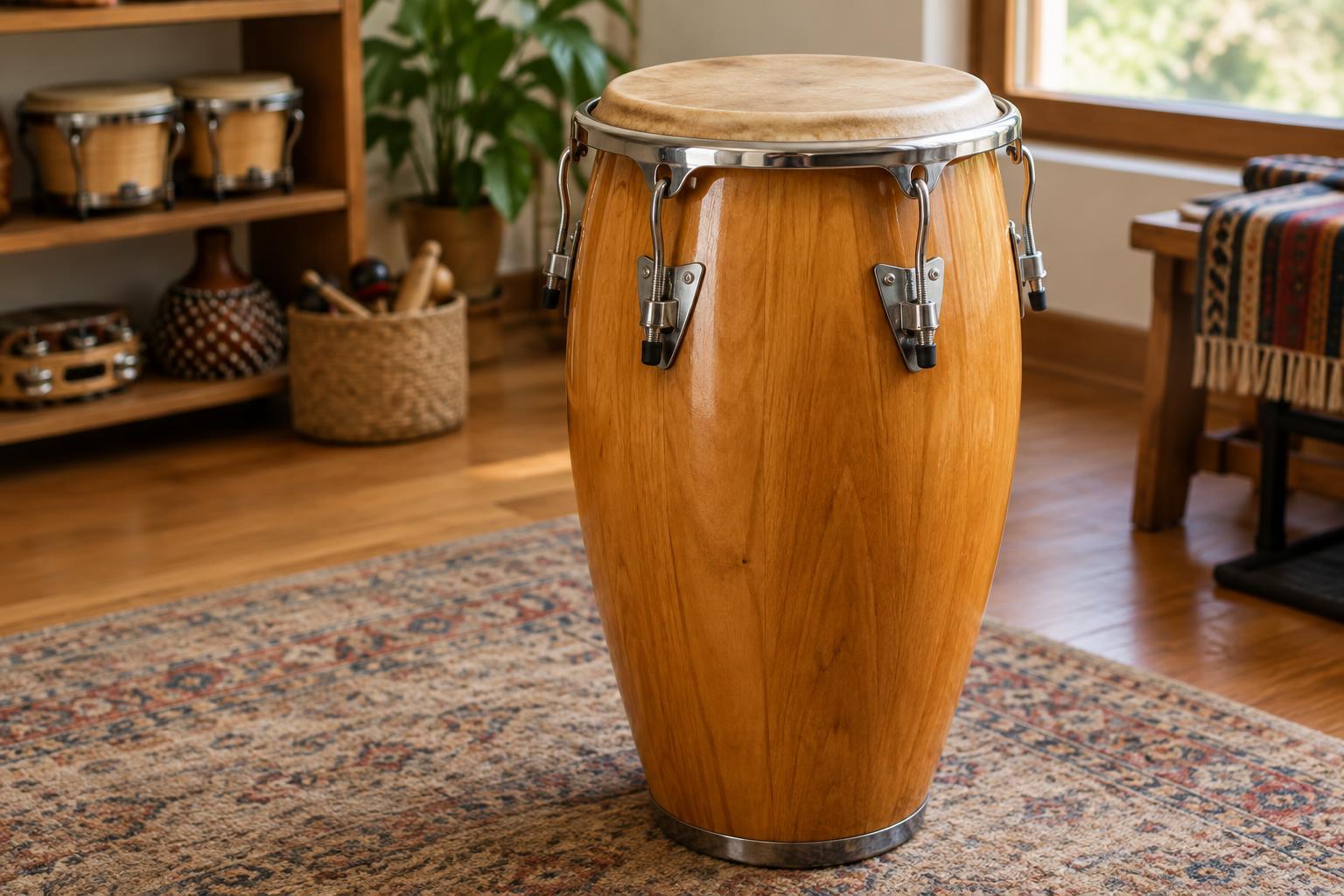
The shell is the drum’s hollow body. Conga shells are often made from wood or fiberglass, with variations in height, width and contour. The lower end is usually open. When the head vibrates, the air inside the shell moves too, contributing to the drum’s tone and the way it carries into a room.
Shell material matters, but it does not supply a simple guarantee of a particular sound. Construction, head choice, tuning, room acoustics and the player all contribute. Wider drums often support a lower-sounding role than narrower ones, although the relationship is not determined by diameter alone. If you can listen to two congas side by side, compare the length of each open tone and the character of its bass sound rather than judging only which seems louder.
The rim: a boundary you can feel
The rim sits around the edge of the head and helps hold it in place. On many modern congas, a metal hoop presses the head against the shell through a flesh hoop or collar beneath the head’s edge. Rim profiles differ: some are shaped to leave more room for the hands, while others place the metal closer to the playing surface.
That shape affects comfort and access to the edge of the head, where many strokes are made. The rim is not the target for ordinary hand strokes. If your hand repeatedly meets metal instead of the head, slow down and check your position. Watching an experienced player can help you see how small changes in hand placement produce different sounds without requiring a forceful strike.
Hardware: holding tension evenly
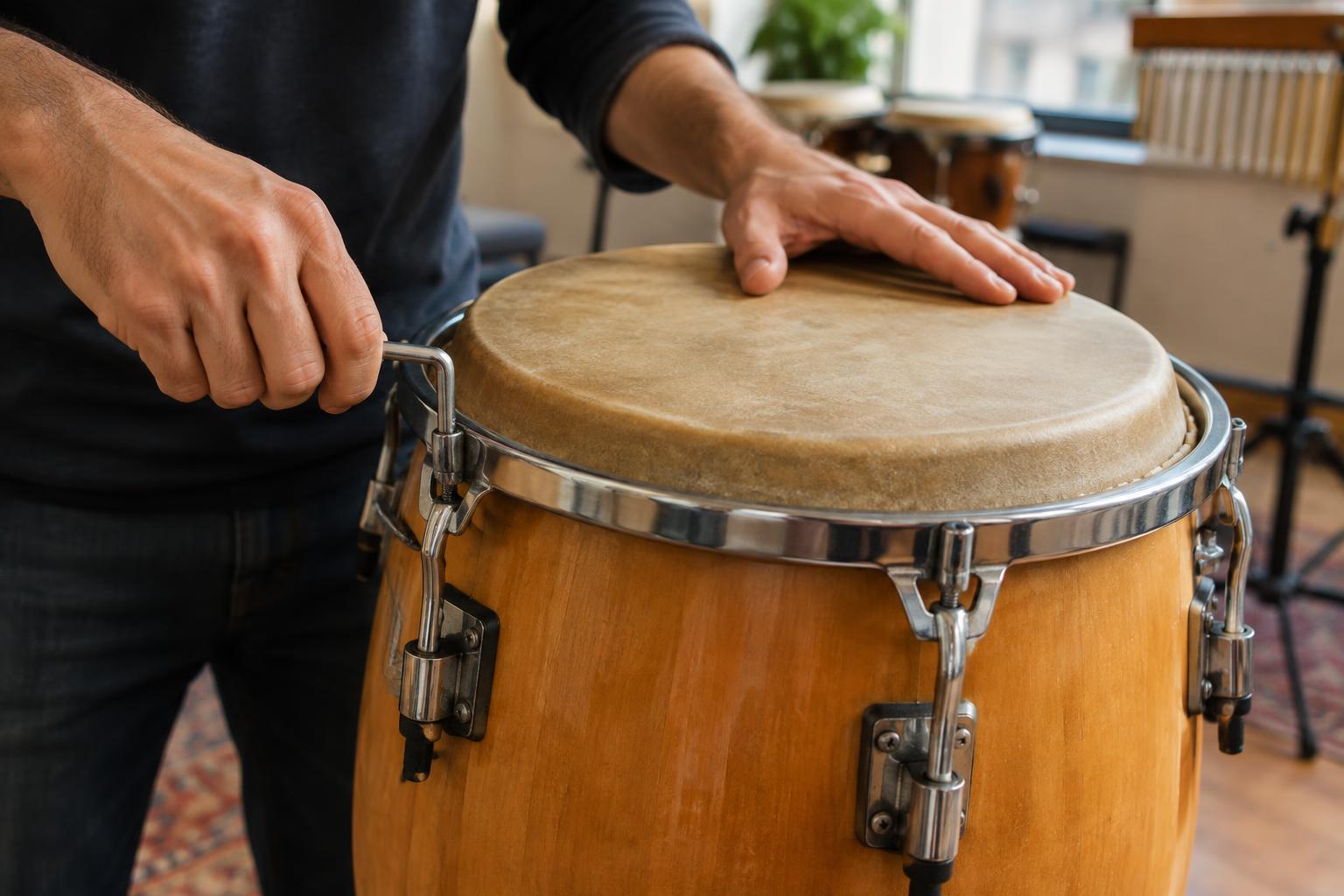
On a tunable conga, metal lugs or rods connect the rim to fittings mounted on the shell. Nuts on the rods let the player raise or lower the head’s tension. Tuning is usually done in small, even adjustments around the drum rather than by tightening one point dramatically. This helps the head sit evenly and makes it easier to hear what each adjustment changes.
Before making changes, tap gently at several points near the edge and listen for large differences in pitch. Check that the hardware is secure and that no loose part rattles when the drum is played. If a nut resists turning, do not force it; the issue may need closer inspection. Protecting the head, rim and fittings is part of keeping the instrument playable.
The parts are easiest to understand as a working system. A clear open tone depends on a responsive head, supportive rim, stable tension and a shell that lets the sound speak. Listening to that whole system is as valuable as learning the names of its components—and it offers a starting point for appreciating the varied ways congas are played in Afro-Cuban music and beyond.