Two different ways a note matters
Duration describes how long a sound lasts. Accent describes the emphasis a sound receives or the attention it attracts. The two can overlap: a long, loud note may stand out. But they are not the same thing. A quiet note held across several beats may become part of the background, while a brief handclap can make you notice exactly where you are in the measure.
Imagine walking at a steady pace. One footstep might be sharper than the others without lasting any longer. That sharper step changes how the pattern feels. Musical accents can work in a similar way. They may come from a stronger attack, an unexpected placement, a change in sound, or a moment when other parts leave space. To understand a rhythm, it helps to ask both “How long is this sound?” and “What does this sound make me notice?”
The attack can speak before the sound fades
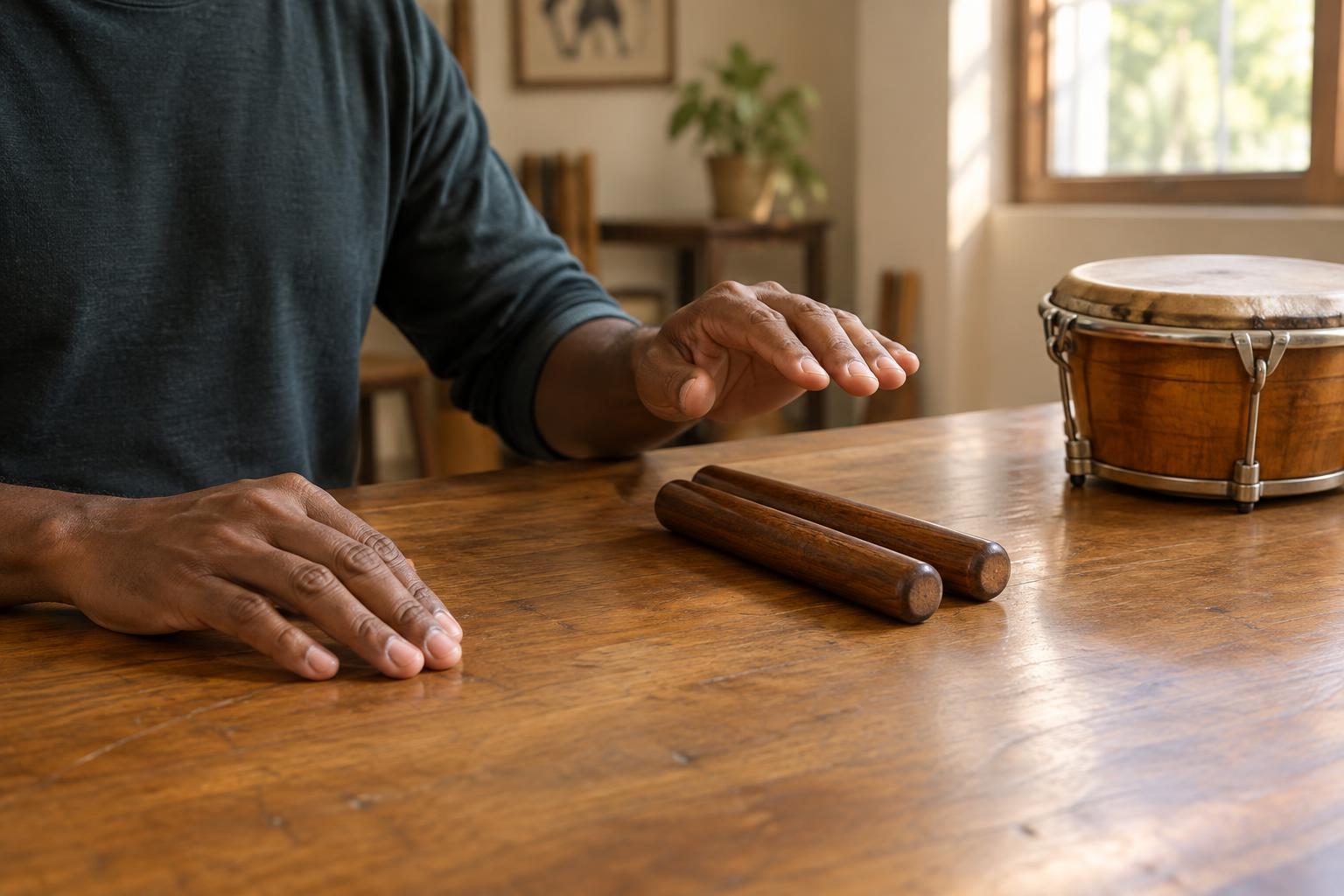
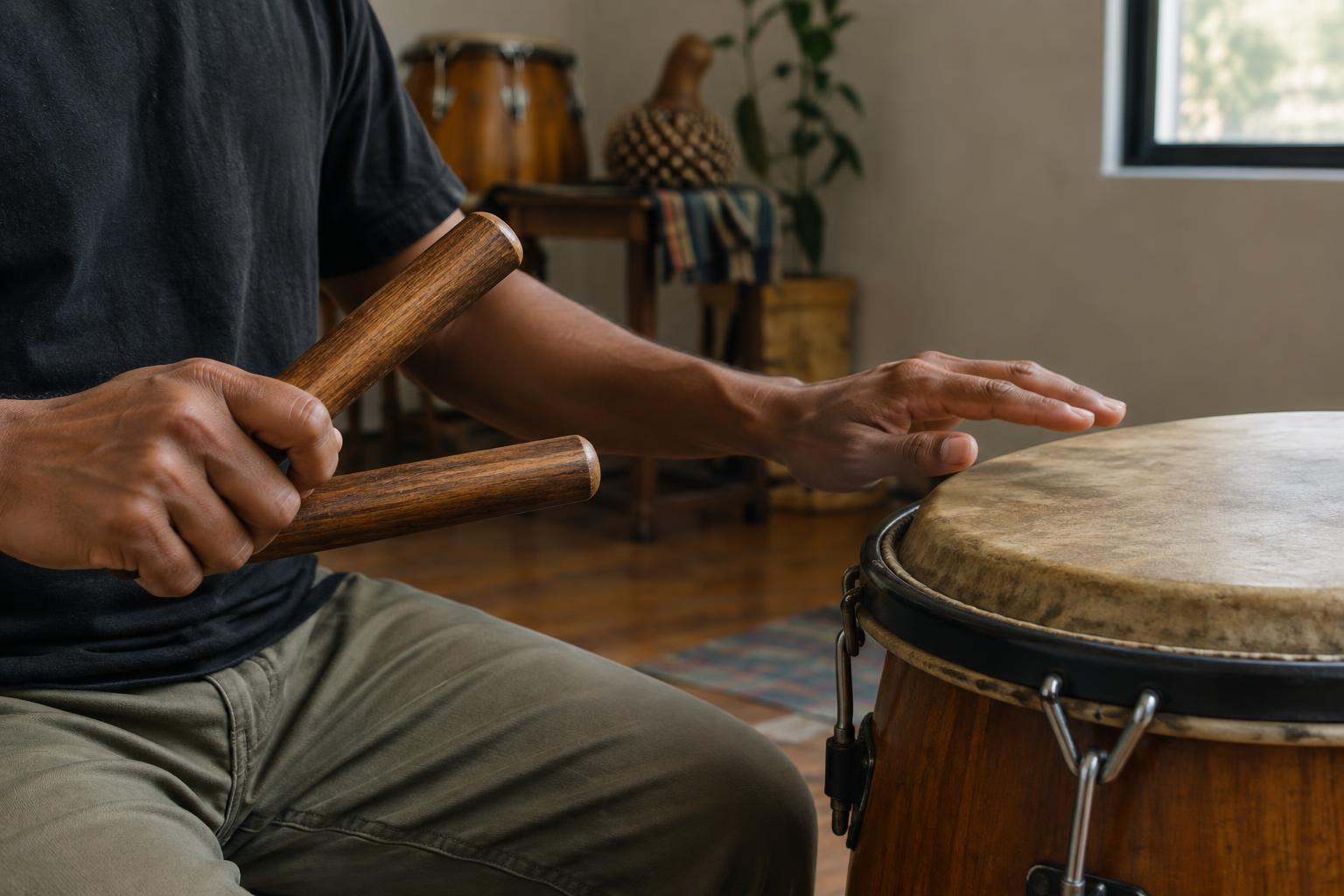
A short note can carry weight because its beginning is clear. A stick strike, a plucked string or a crisp consonant gives the ear a precise point in time. Even when the sound fades quickly, that point can help mark a beat or define a pattern. A sustained tone may fill more time, but its continuing sound does not create a new beginning at every instant.
Loudness is only one way to create emphasis. A brighter tone can stand out against darker sounds; a single low hit can stand out among higher ones. Placement matters too. An ordinary-sounding tap may feel important if it arrives where the listener has learned to expect something else. Conversely, a forceful hit surrounded by many equally forceful hits may attract little special attention.
Silence strengthens this effect. A brief sound followed by a rest can leave its position exposed, giving the listener time to register it. The note has ended, but its role in the pattern remains audible through expectation: you hear where the next event does, or does not, arrive.
Rhythmic weight belongs to a pattern
No note has a fixed amount of rhythmic weight in isolation. Count “one, two, three, four” evenly and clap once on one. Now keep counting and clap once between two and three. Neither clap needs to be louder or longer, yet the second may feel more surprising because it falls between the numbered beats. Its effect depends on the steady pulse you kept underneath it.
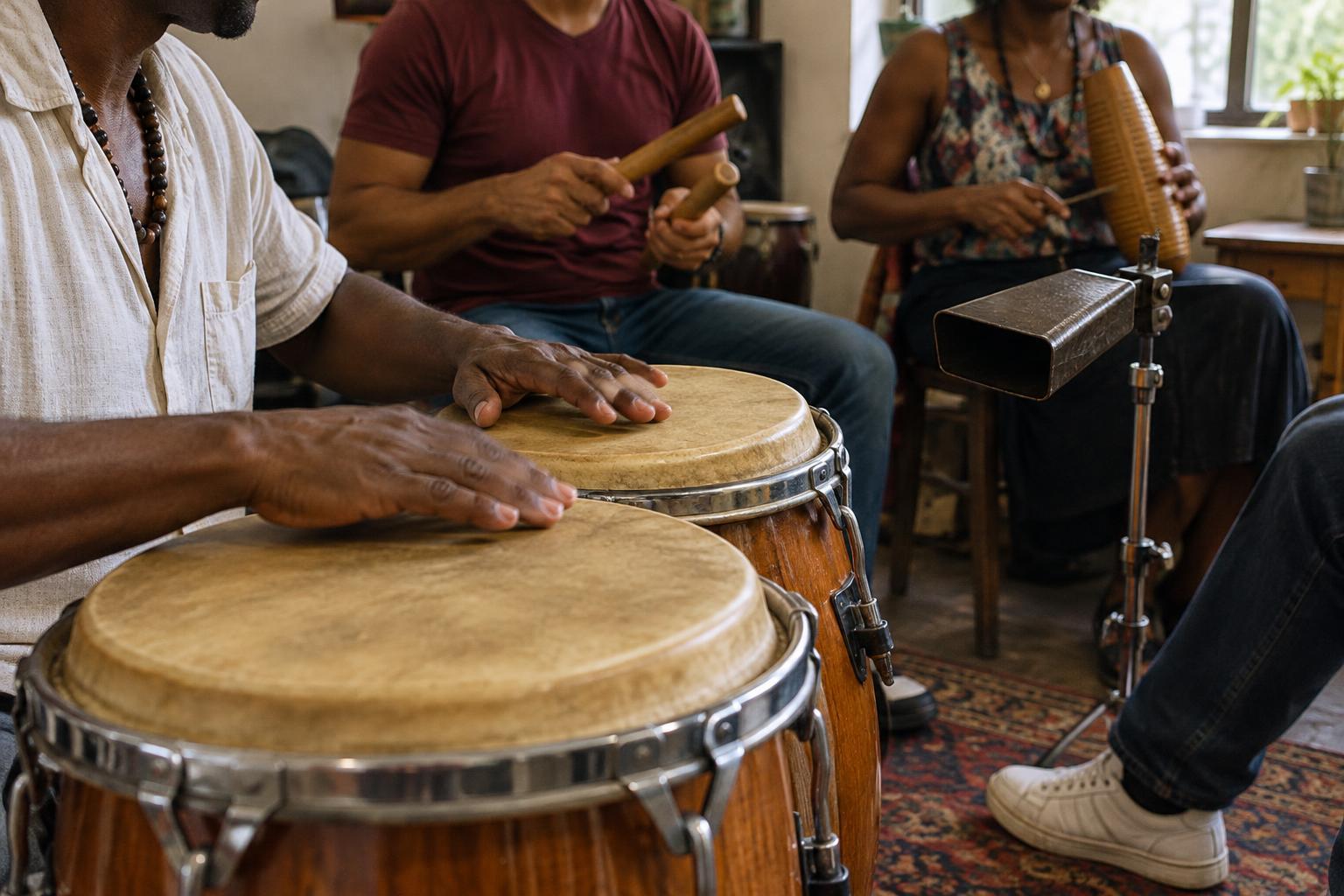
Repeated patterns create expectations of their own. In Afro-Cuban music, clave refers to a guiding rhythmic relationship that can help organize how parts fit together. It is not simply a set of notes to accent as hard as possible. The placement of sounds, the spaces between them and their relationship to other instruments all matter. Different traditions and styles use rhythmic patterns in distinct ways, so a useful listening habit is to notice how the parts relate rather than assume that one percussion sound explains the whole arrangement.
This is why a small gesture from one musician can affect the feel of a larger ensemble. Its importance may come from confirming a shared pattern, answering another part or creating tension against a steady pulse. Rhythmic weight is often something the musicians build together.
Hear the difference with a simple exercise
Set a comfortable, steady pulse by tapping your foot. Say “one and two and three and four and,” giving each word and each “and” an even amount of time. Clap briefly on each number while you continue speaking. Then clap briefly only on each “and.” Keep the claps equally short and at roughly the same volume. Notice how changing their position alters the feel, even though their duration has not changed.
Next, return to clapping on the numbers. Make only the clap on three slightly sharper, without holding it longer or speeding up. Then try the opposite: keep every clap gentle but let the sound on three ring, if you are using an instrument that can sustain. Compare the results. Does the longer sound draw your attention in the same way as the sharper attack? There is no need to force a single answer; the sound you use and the surrounding pattern will influence what you hear.
Put the idea to work when listening
Choose a short passage of music and tap along with a pulse you can maintain comfortably. On the first listen, notice the longest sounds. On the next, notice the briefest, clearest attacks. Ask which events help you locate the pulse, which fall between your taps and which seem to answer another part. If you lose the pulse, start again with a simpler layer rather than trying to track everything at once.
When practising or arranging, resist making every important note louder. Try leaving room around a short sound, changing its tone or placing it in conversation with another part. A note does not have to occupy much time to shape how time feels. Its weight comes from what happens before it, where it lands and what the music allows you to hear afterward.