Hear the groove before memorizing the strokes
A tumbao is a repeating percussion pattern that helps give many Afro-Cuban dance-music arrangements their forward motion. On conga, it is not simply a string of eight equally loud hits. Its quieter touches keep time, while accents and ringing open tones give the pattern its shape. There are many tumbao variations, so the version below is a starting point rather than a rule for every song or style.
First, count aloud: “1 and 2 and 3 and 4 and.” Keep the eight syllables evenly spaced, and let your foot mark the four numbered beats. Before touching the drum, listen to a recording with congas and try to notice the brighter, ringing notes. Can you hear them near the end of the measure? Listening for that arrival will make the hand movements easier to understand.
Get comfortable with four useful sounds
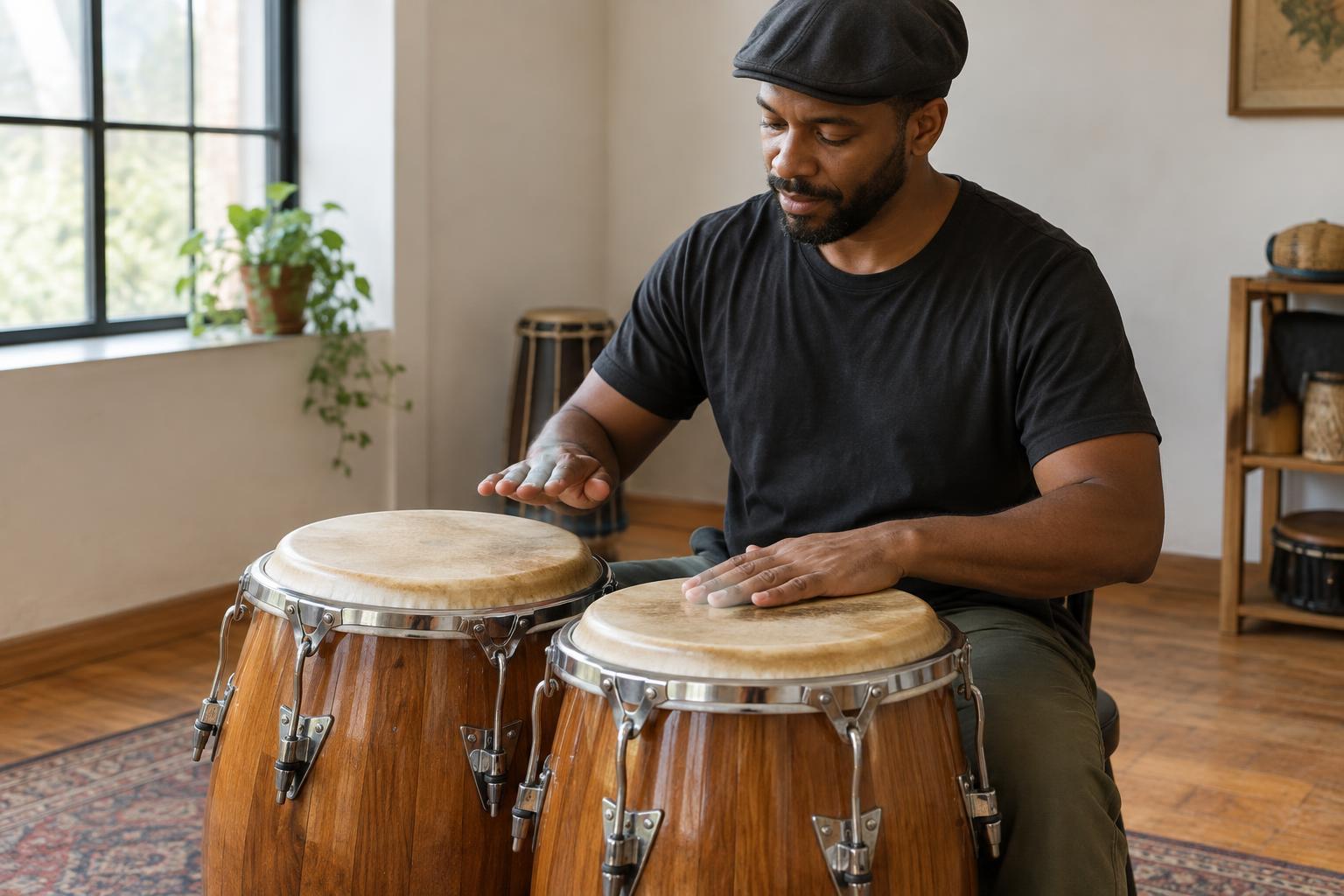
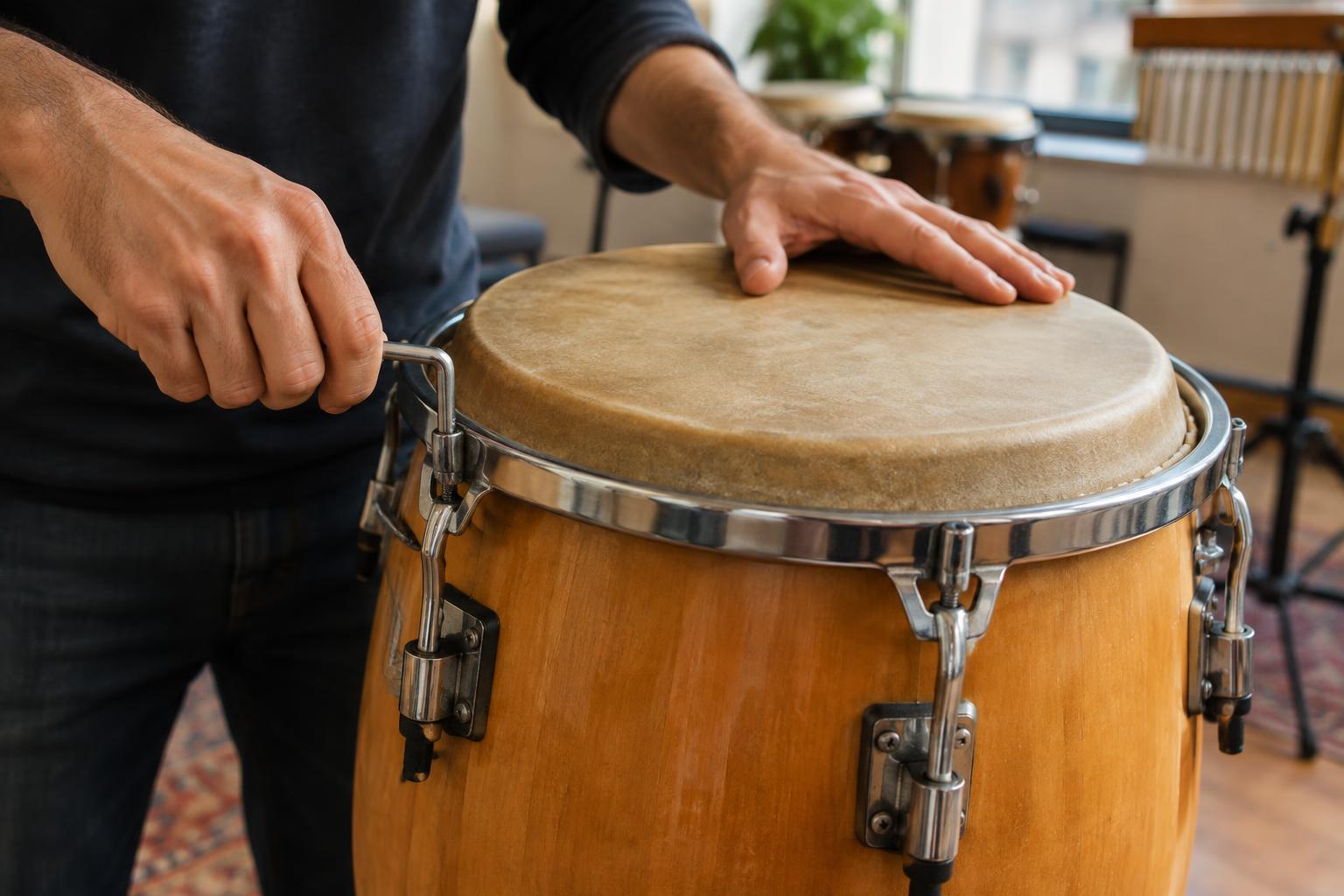
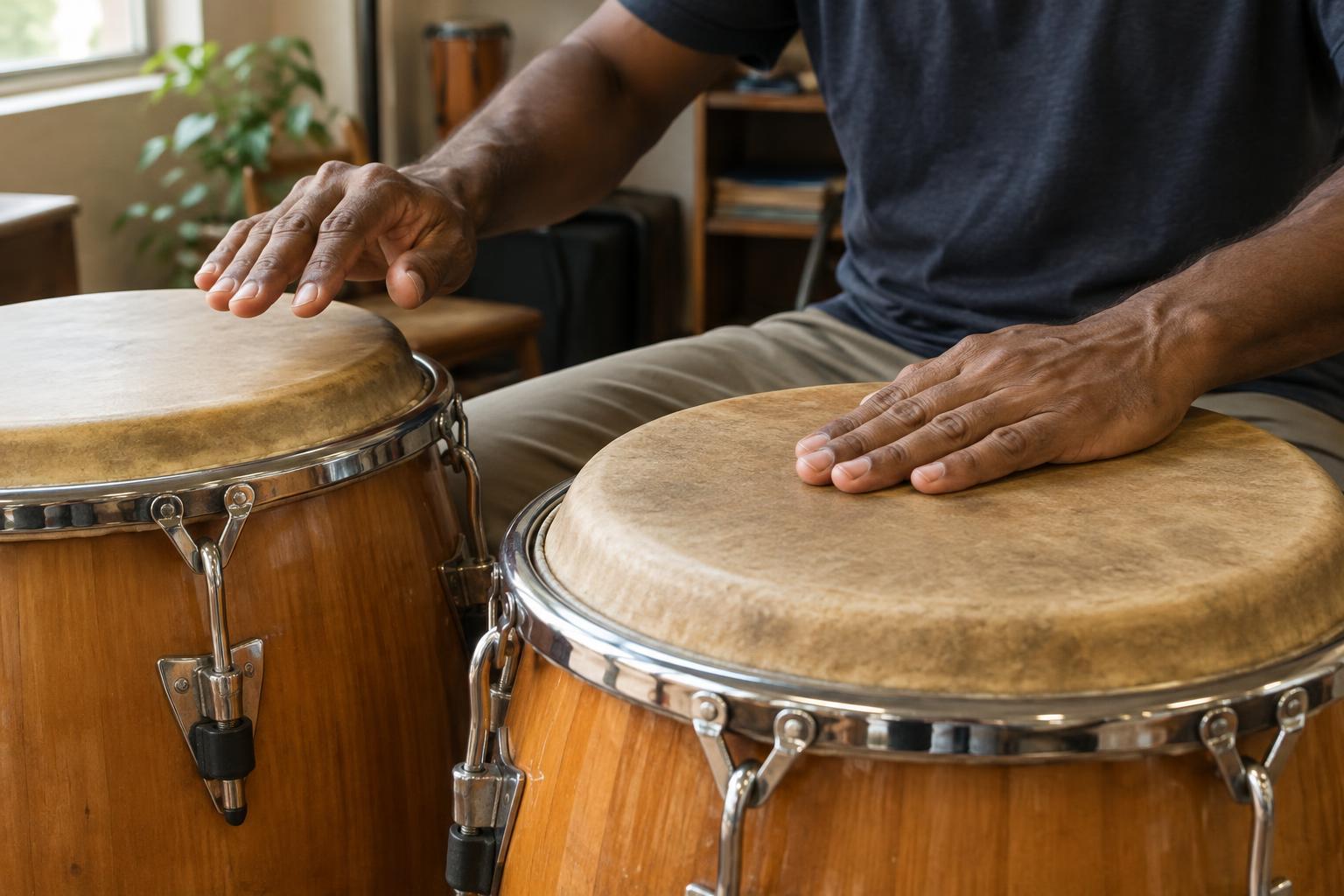
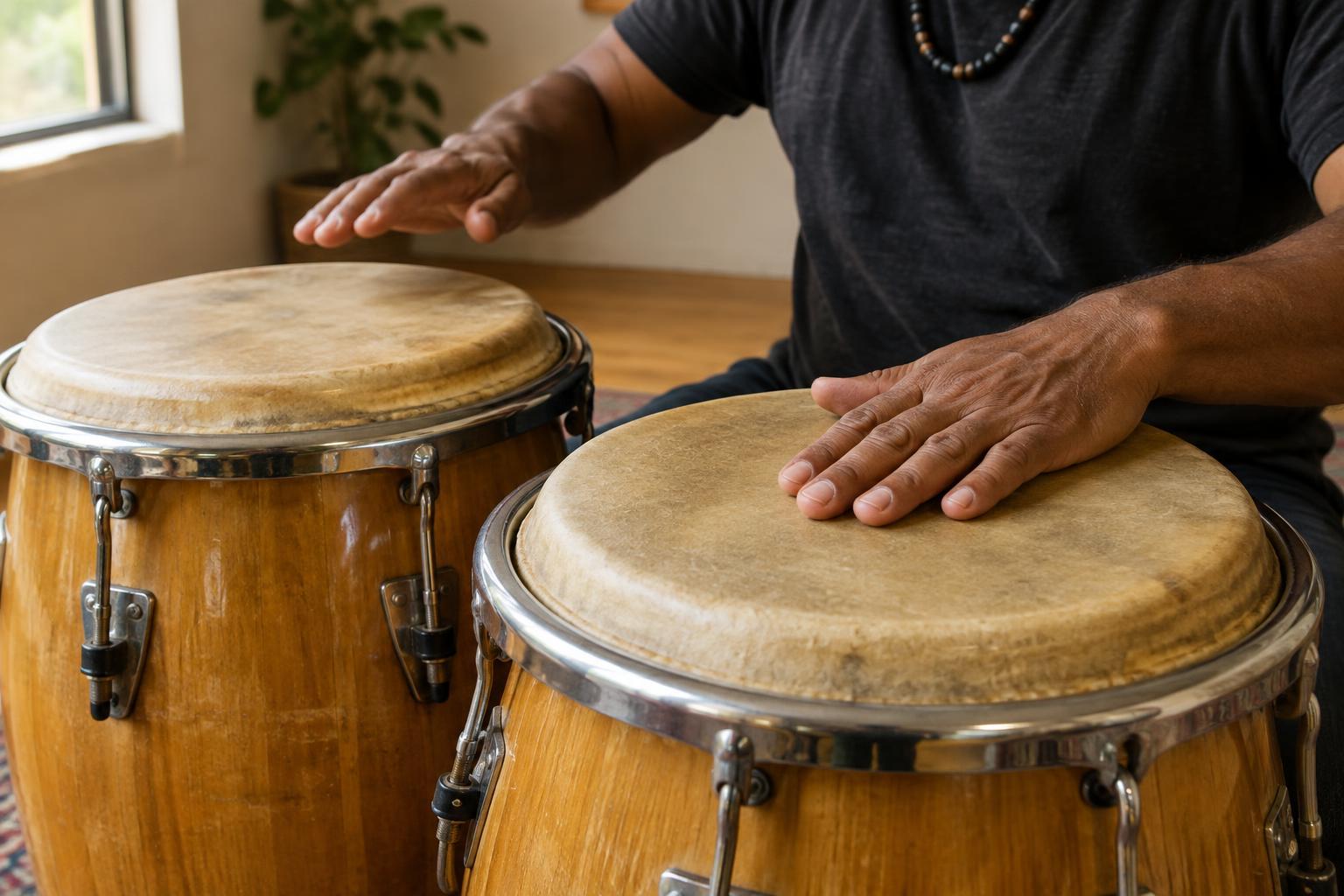
Begin at a volume that lets your hands stay relaxed. For a heel stroke, let the lower part of your palm touch the drumhead near its center. For a toe, or fingertip, stroke, let your fingers make a light follow-up touch. Practice heel–toe slowly as a rocking motion. These two sounds can be quiet; their job in this exercise is to keep the pulse moving.
For an open tone, strike near the edge with your fingers together and lift your hand so the head can ring. Avoid leaving your fingers pressed against it. A slap is a sharper, more percussive sound, but it need not be forced. Slap techniques differ among players, and a clean sound can take time to develop. If it feels uncomfortable, use a light tap in its place while you learn the rhythm. Stop and adjust if your hands hurt.
Build one measure in small pieces
Here is one simplified pattern over the count “1 and 2 and 3 and 4 and”: heel, toe, slap, toe, heel, toe, open, open. In other words, play heel on 1, toe on the and of 1, slap on 2, toe on the and of 2, heel on 3, toe on the and of 3, then open tones on 4 and the and of 4. Some players use different sticking or change particular strokes; keep your attention on the timing and sound for now.
Learn it in layers. Repeat just the six heel, toe, and slap touches through the and of 3, counting aloud without speeding up. Next, play only the two open tones on “4 and,” leaving space before them. Finally, join the pieces and repeat the measure. Let the second open tone lead into the next 1, but do not rush across that boundary. If the full pattern becomes uneven, return to a slower count or practice one half of the measure at a time.
You can assign hands in a way that feels controlled rather than trying to force a single hand pattern immediately. A teacher or experienced player can help you find efficient technique as you progress. At first, consistency matters more than speed.
Turn the exercise into music
Once you can repeat the pattern steadily, try making the heel and toe touches softer than the slap and open tones. This difference gives the groove breathing room. Record a short practice take and listen back: are the eight subdivisions even, and do the open tones ring clearly? Counting through the playback may reveal a hesitation that was hard to notice while playing.
Then put on music with a clear pulse and listen before joining in. Afro-Cuban rhythm is an interaction among parts, not a conga pattern played in isolation. Other instruments may mark the beat or phrase it differently, and the relationship to clave matters in the wider arrangement. If you cannot yet identify those layers, keep your part simple and listen for where the measure begins. Treat this basic tumbao as a doorway to learning from recordings, players, and the musical traditions that give the pattern its meaning.