The same space, a different pulse
A bar of 6/8 and a bar of 3/4 each contain the equivalent of six eighth notes. If you play six evenly spaced taps, the notes alone will not tell a listener which meter you intend. The difference is how those notes are grouped and which beats feel like the main points of arrival.
In a typical 6/8 feel, the six eighth notes form two groups of three: ONE-two-three FOUR-five-six. The main pulse lands on the first and fourth eighth notes. Each pulse lasts a dotted quarter note and divides into three. In a typical 3/4 feel, the notes form three groups of two: ONE-and TWO-and THREE-and. The main pulse lands on the first, third and fifth eighth notes. Each pulse lasts a quarter note and divides into two.
Time signatures describe a framework, not an automatic accent pattern. A melody can emphasize unexpected notes, and a drummer can play across the beat. Still, hearing two broad pulses or three broad pulses is the most useful starting point.
Count the beat before counting every note
To feel 6/8, tap your foot twice at a comfortable pace. Say “ONE-la-li TWO-la-li,” placing three evenly spaced syllables inside each foot tap. Your hands can play all six subdivisions while your foot marks the two larger beats. Notice that the second foot tap aligns with the fourth subdivision, not the third.
Now keep the six hand taps equally spaced but move your foot to three beats per bar. Say “ONE-and TWO-and THREE-and.” The foot now aligns with subdivisions one, three and five. Nothing has changed about the spacing of the hand taps; you have changed what you treat as the beat.
This explains why counting to six can be misleading. “One, two, three, four, five, six” identifies positions but does not reveal their hierarchy. For a clear demonstration, alternate between lightly tapping all six notes and playing only the main pulses. Two notes suggest 6/8’s broad shape; three suggest 3/4’s.
What notation can—and cannot—show
Written music often makes the intended grouping visible. In 6/8, eighth notes are commonly beamed in two groups of three. In 3/4, they are often shown in three groups of two. Rests, ties and the placement of longer notes can reinforce those patterns. These are helpful reading cues, but the sound may be more complicated than the beaming suggests.
Tempo markings also need care. An eighth note moving at the same rate in both meters does not mean the main beats occur at the same rate. In 6/8 the dotted-quarter pulse spans three eighth notes; in 3/4 the quarter-note pulse spans two. When comparing passages, ask whether you are holding the subdivision steady or holding the beat steady. Those are different experiments.
Neither meter requires a particular mood or speed. A slow 6/8 passage can feel spacious, while a quick 3/4 passage can feel lively. Listen for repeated points of emphasis rather than relying on a label such as “rolling” or “dance-like.”
When the groupings overlap
Musicians can deliberately make the same six subdivisions suggest both groupings. Over six evenly spaced notes, one part might accent notes one and four, while another accents one, three and five. This contrast is often called a two-against-three grouping. A temporary emphasis on three groups of two inside a passage felt in two groups of three is one way a hemiola can be heard.
An accent does not necessarily change the meter. A bass line, melody or percussion part may pull your ear toward a competing pattern while the broader phrase and supporting parts maintain the original pulse. Before deciding that the time signature has changed, listen through several bars: where do phrases begin again, and which pulse helps the parts fit together?
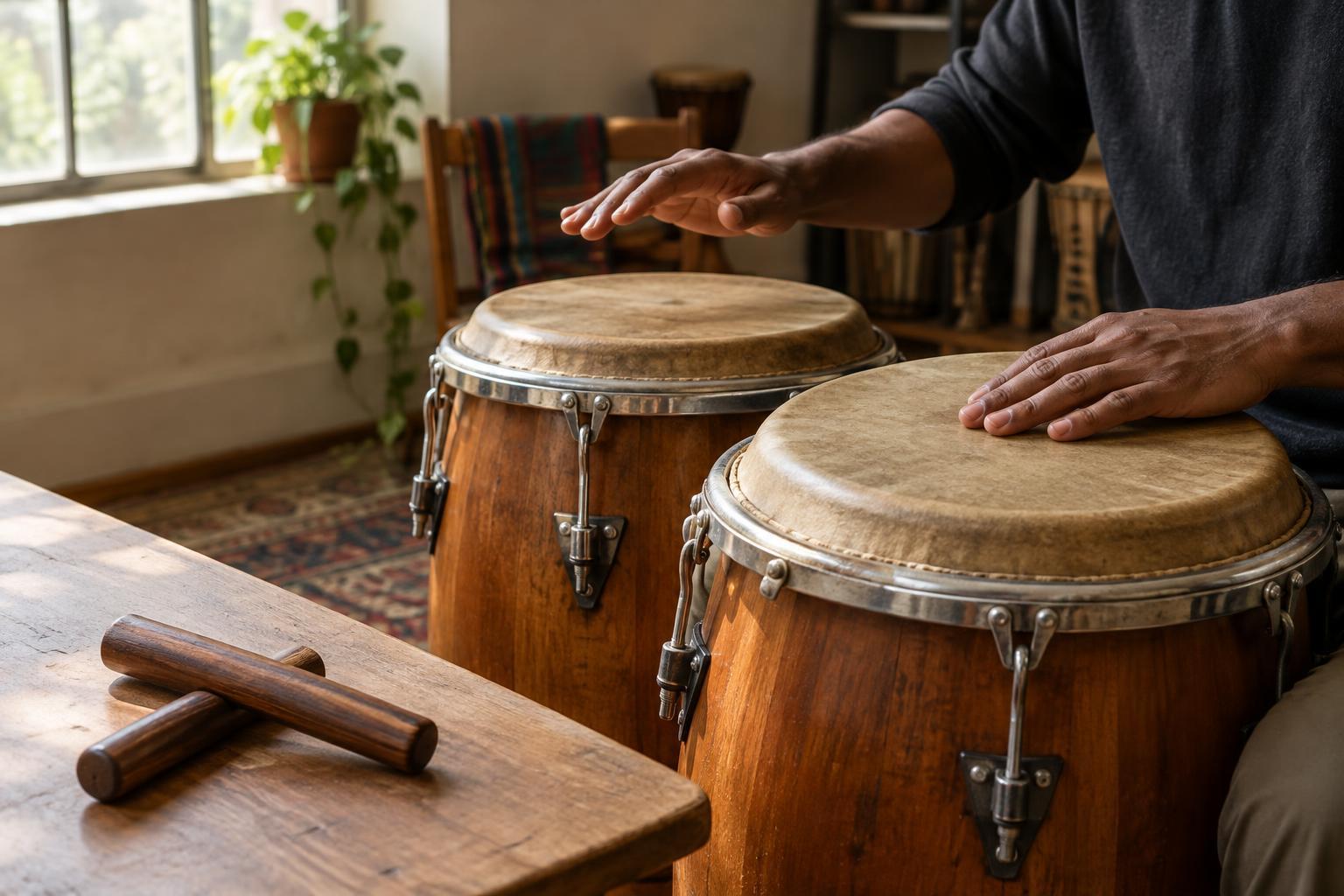
This distinction is useful when listening to layered percussion, including music from Afro-Cuban traditions. Such music can involve interlocking rhythmic roles that are not captured by calling every accent a new downbeat. Attend to the relationships between parts and to the particular piece, rather than treating one simple counting pattern as a rule for an entire tradition.
A short practice routine for your ears and hands
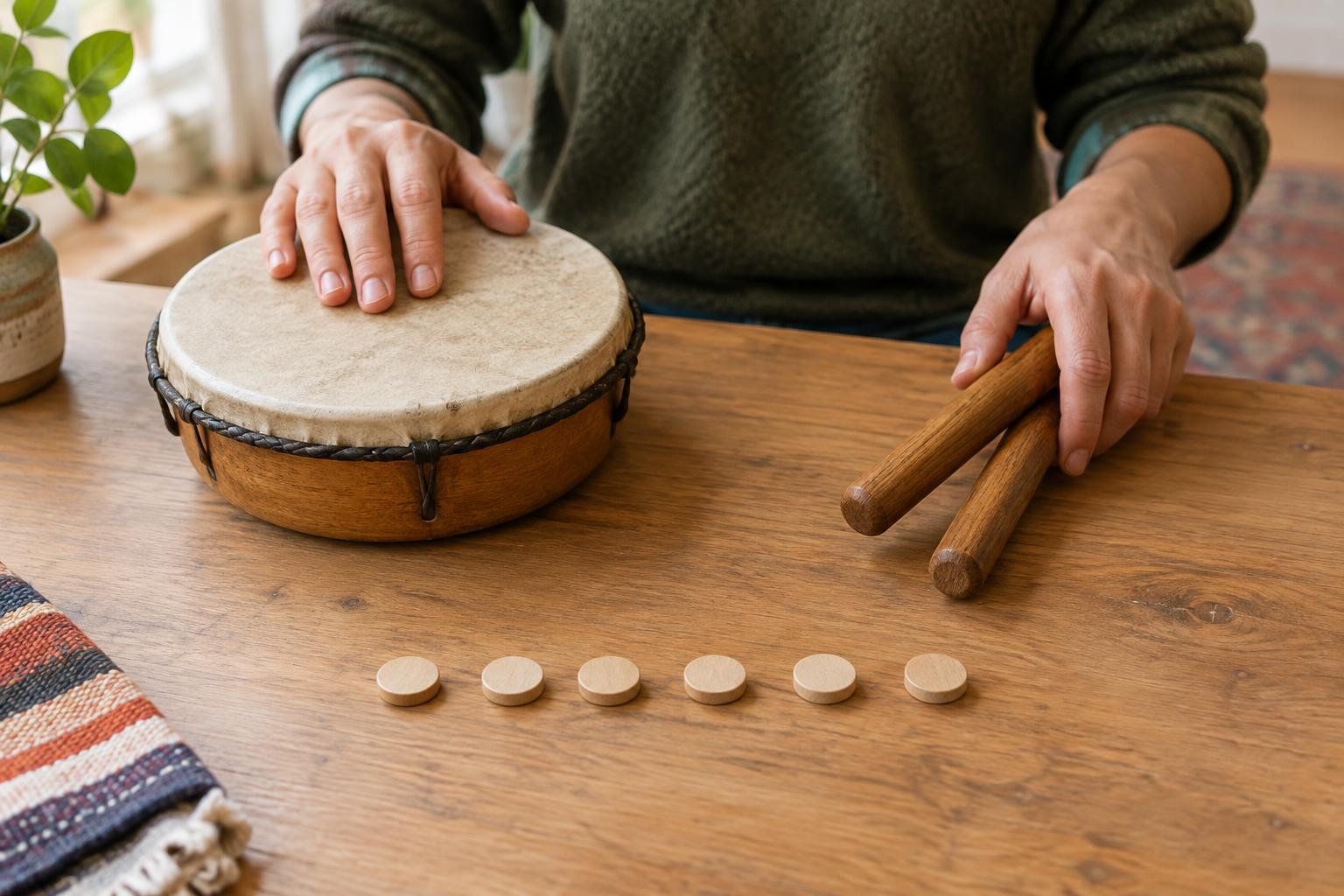
Set a steady stream of six eighth-note taps per bar, using a metronome or your own quiet counting. First accent notes one and four for four bars. Keep the taps unchanged, then accent notes one, three and five for four bars. Repeat until the change in pulse feels clear without speeding up or slowing down.
Next, separate the roles: tap all six notes with one hand and mark the larger beats with the other. Try two beats per bar, then three. If coordination gets difficult, slow down and speak the groupings aloud. Recording a few bars can help you hear whether your subdivisions remain even.
Finally, apply the exercise to a short piece of music. Find its most stable pulse before counting the smaller notes. Listen to where accompaniment, bass and melody support that pulse—or play against it. The goal is not to force every passage into a tidy label. It is to hear how six equal subdivisions can become different musical experiences depending on how performers organize them.