
Rhythm FundamentalsA short walk can become a useful rhythm exercise. Learn how to use steps as a reference, hear subdivisions and phrases, and practice without mistaking your footsteps for the music’s beat.
Read article · 4 min↗
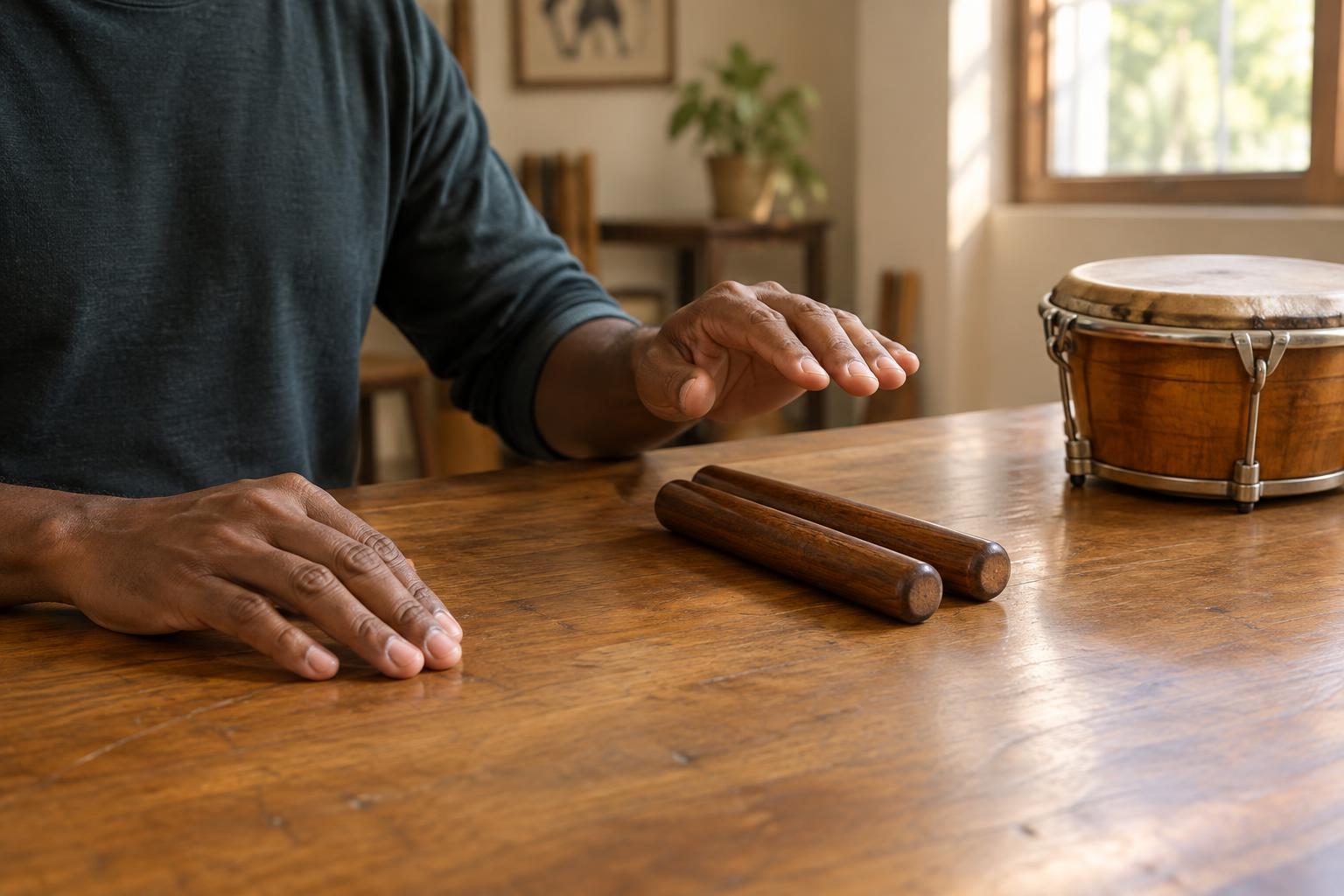
Rhythm FundamentalsA rest in the music does not necessarily mean the pulse has stopped. Learn how to carry a steady beat through gaps in a melody, sparse percussion and breaks in an arrangement.
Read article · 4 min↗
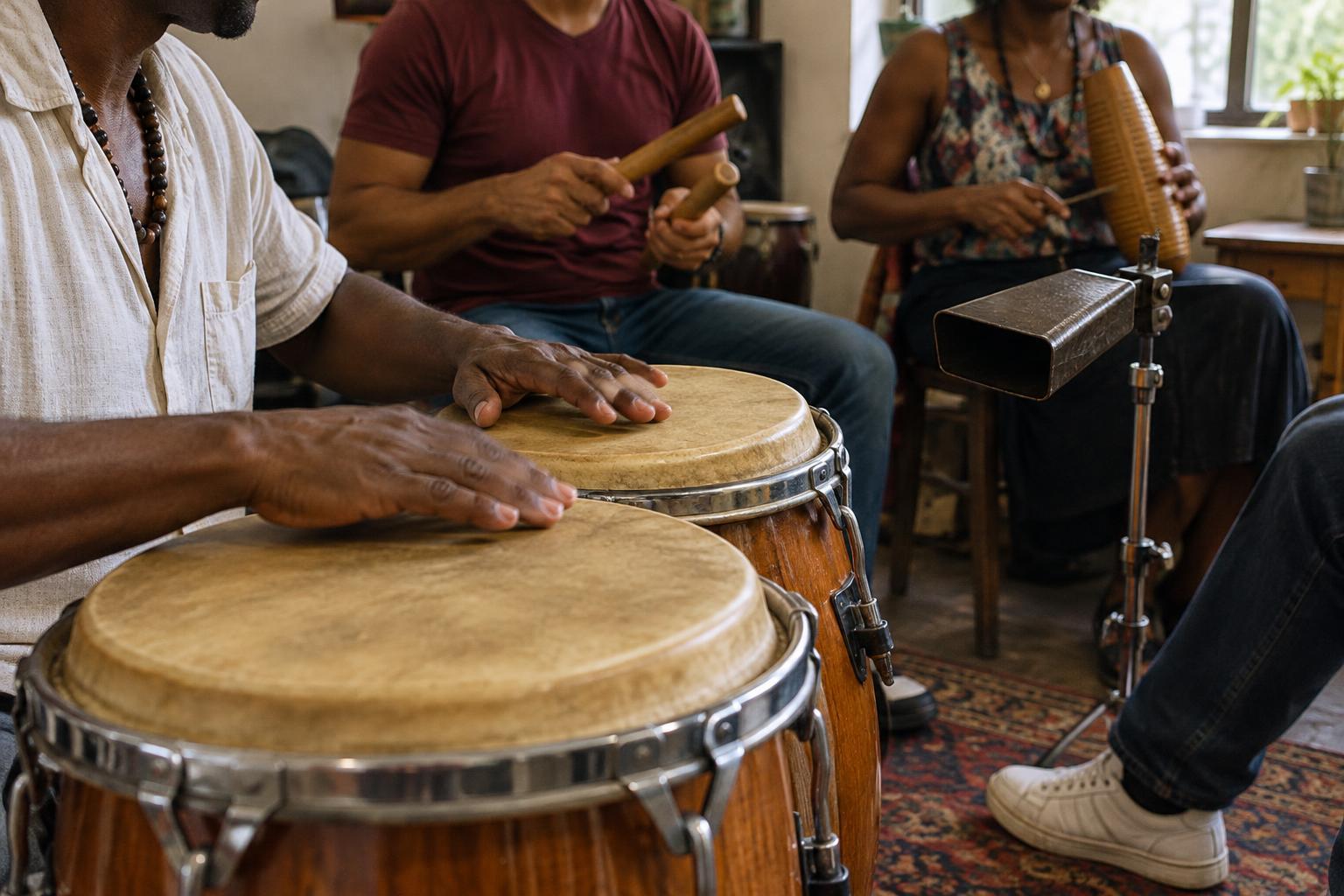
Rhythm FundamentalsIn a layered Afro-Cuban groove, the loudest or most memorable sound may not mark every beat. Learn to distinguish pulse from clave, avoid common listening traps, and use simple exercises to stay oriented.
Read article · 4 min↗
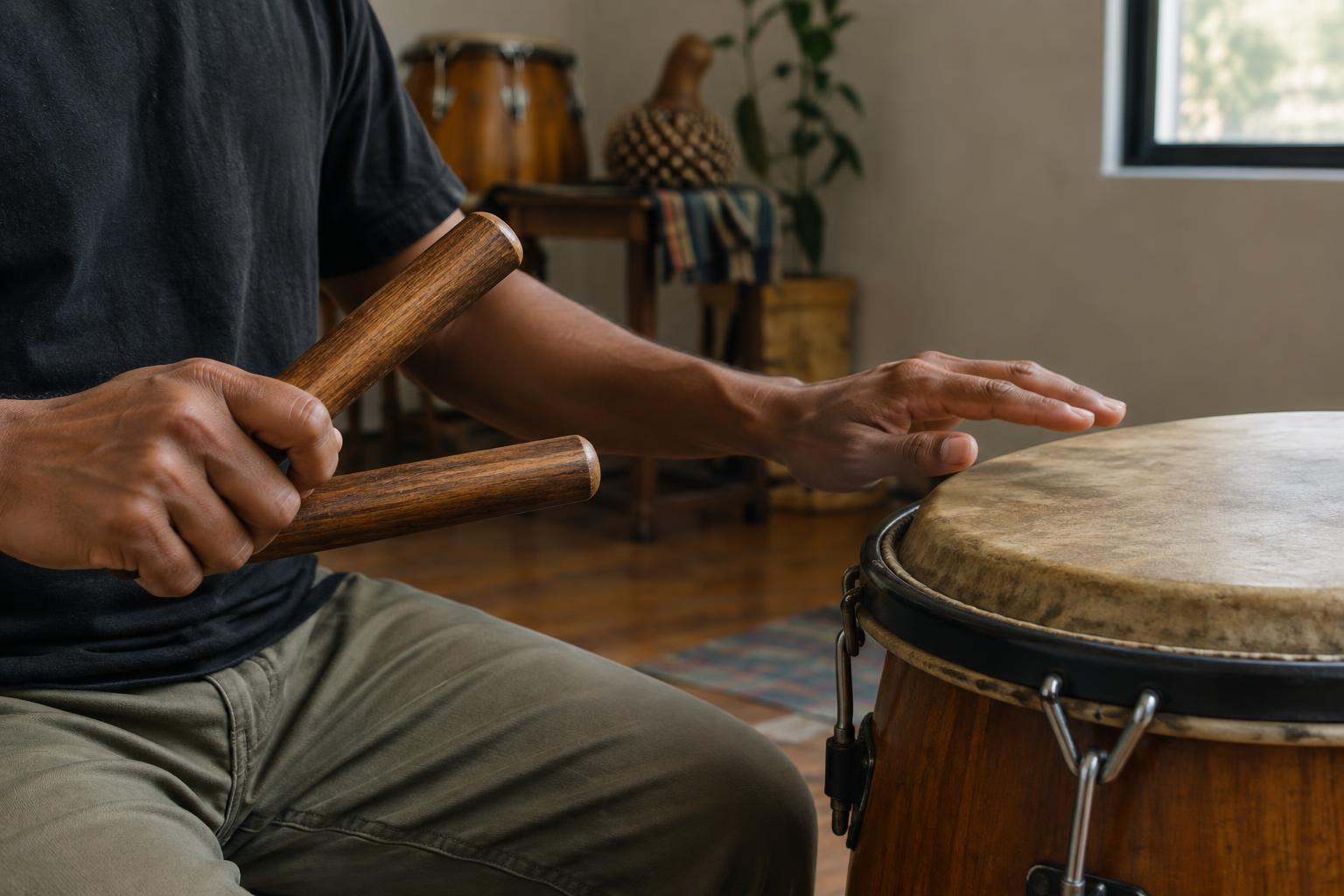
Rhythm FundamentalsA long note takes up more time, but it does not always draw more attention. Learn how attacks, placement, silence and surrounding parts can give a short note a strong rhythmic role, then try simple listening and clapping exercises.
Read article · 4 min↗
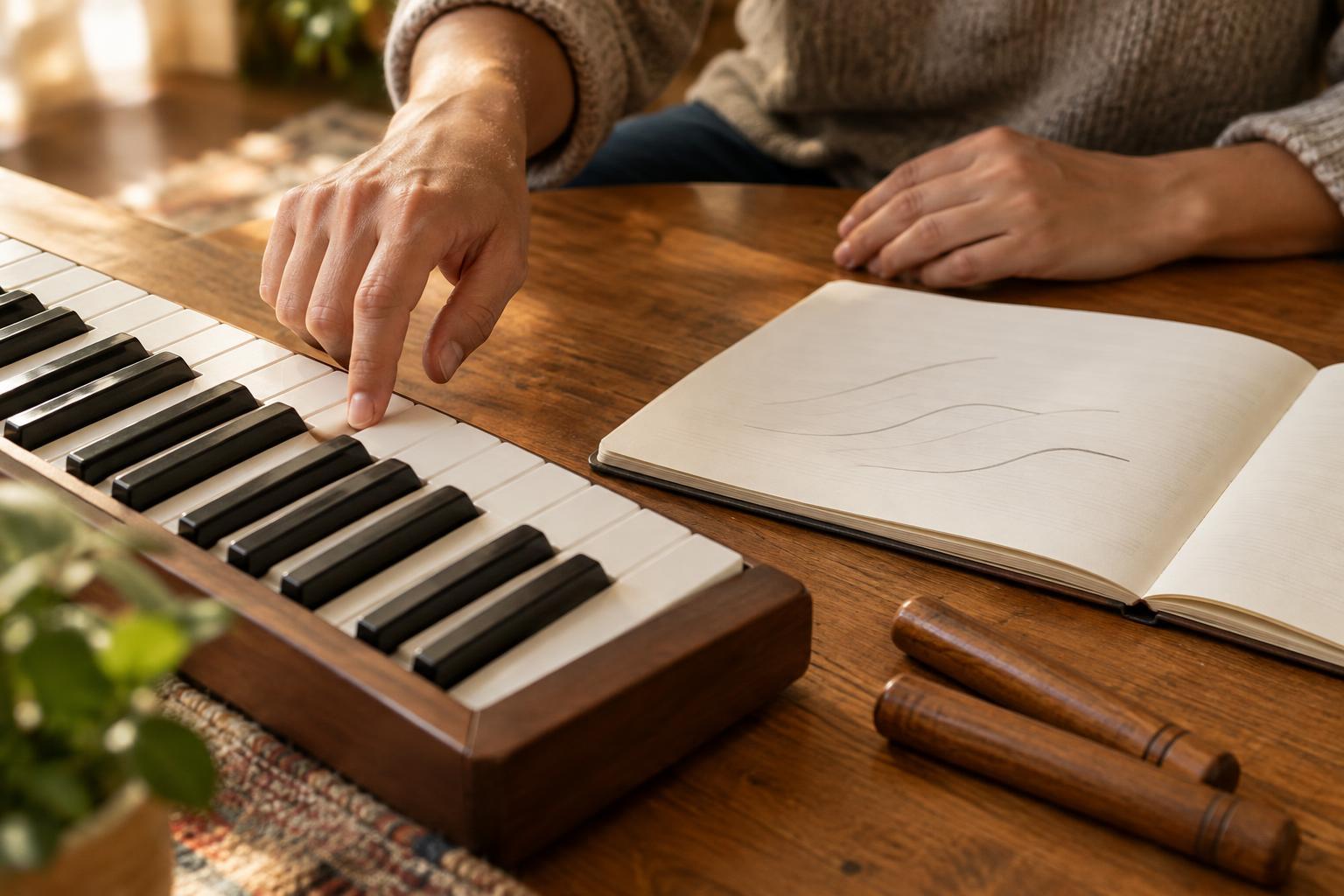
Rhythm FundamentalsA tie joins two written notes of the same pitch into one sound. Learn how to count a tie across a beat, distinguish it from a slur, and hear the difference between a note’s duration and its attack.
Read article · 4 min↗
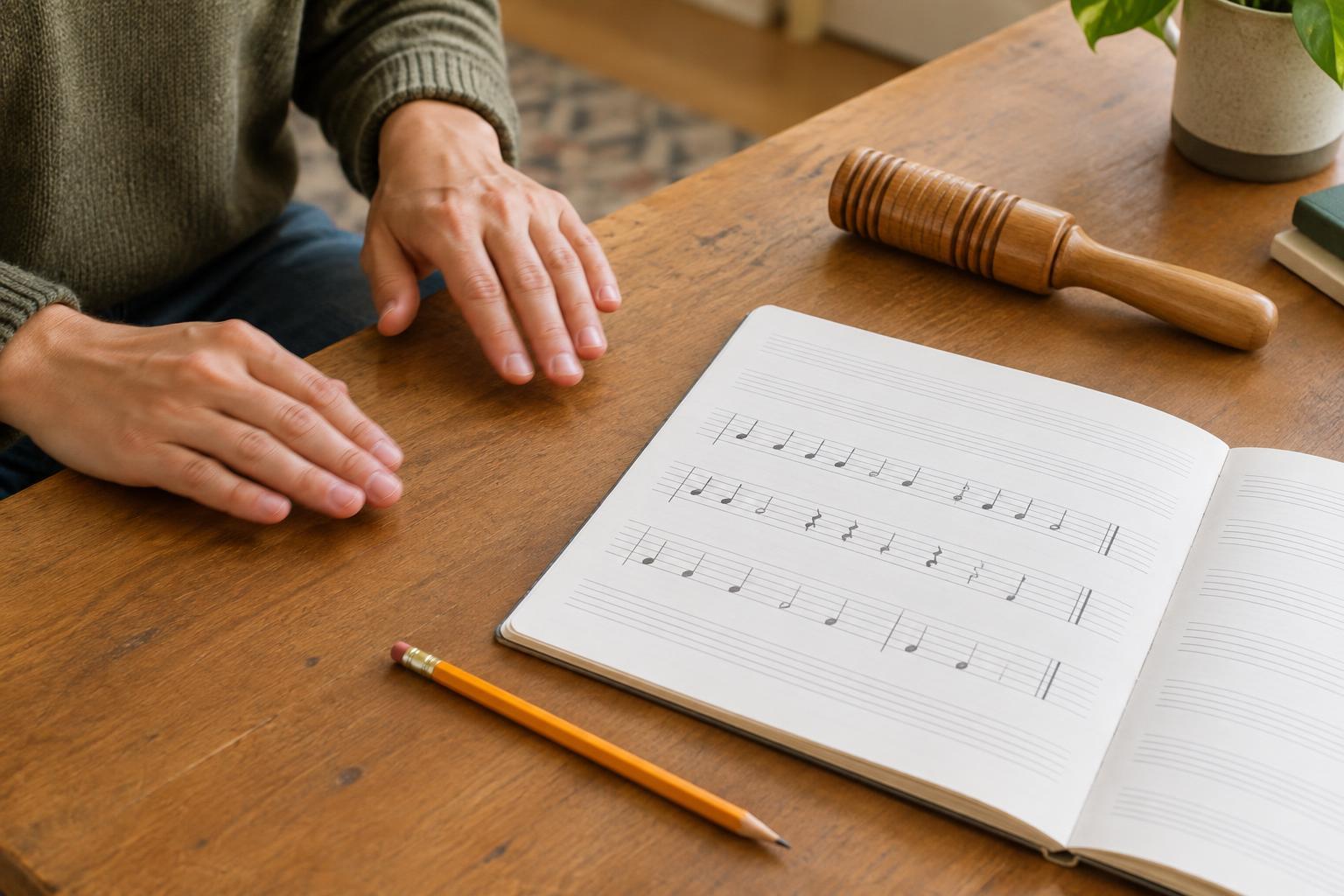
Rhythm FundamentalsRhythmic notation shows when sounds begin, how long they last and where silence belongs. Learn the basic note values, rests and bar lines, then try a few counting exercises to connect what you see on the page with what you hear.
Read article · 5 min↗
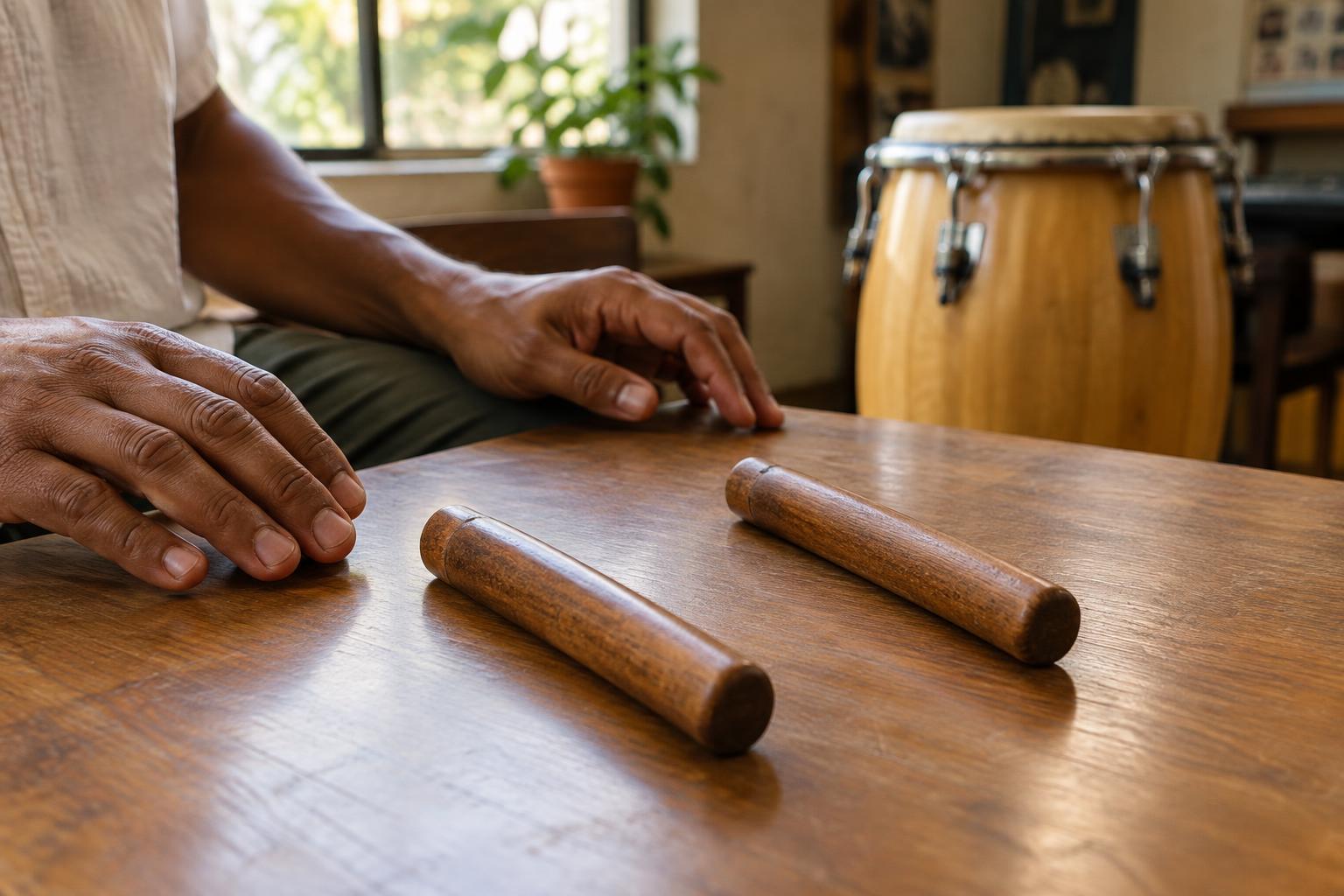
Rhythm FundamentalsA clave-based song does not have to open with the sound of a clave stroke. Learn to separate the underlying two-bar timeline from the notes an arrangement chooses to play, and try a listening exercise for finding its orientation.
Read article · 4 min↗
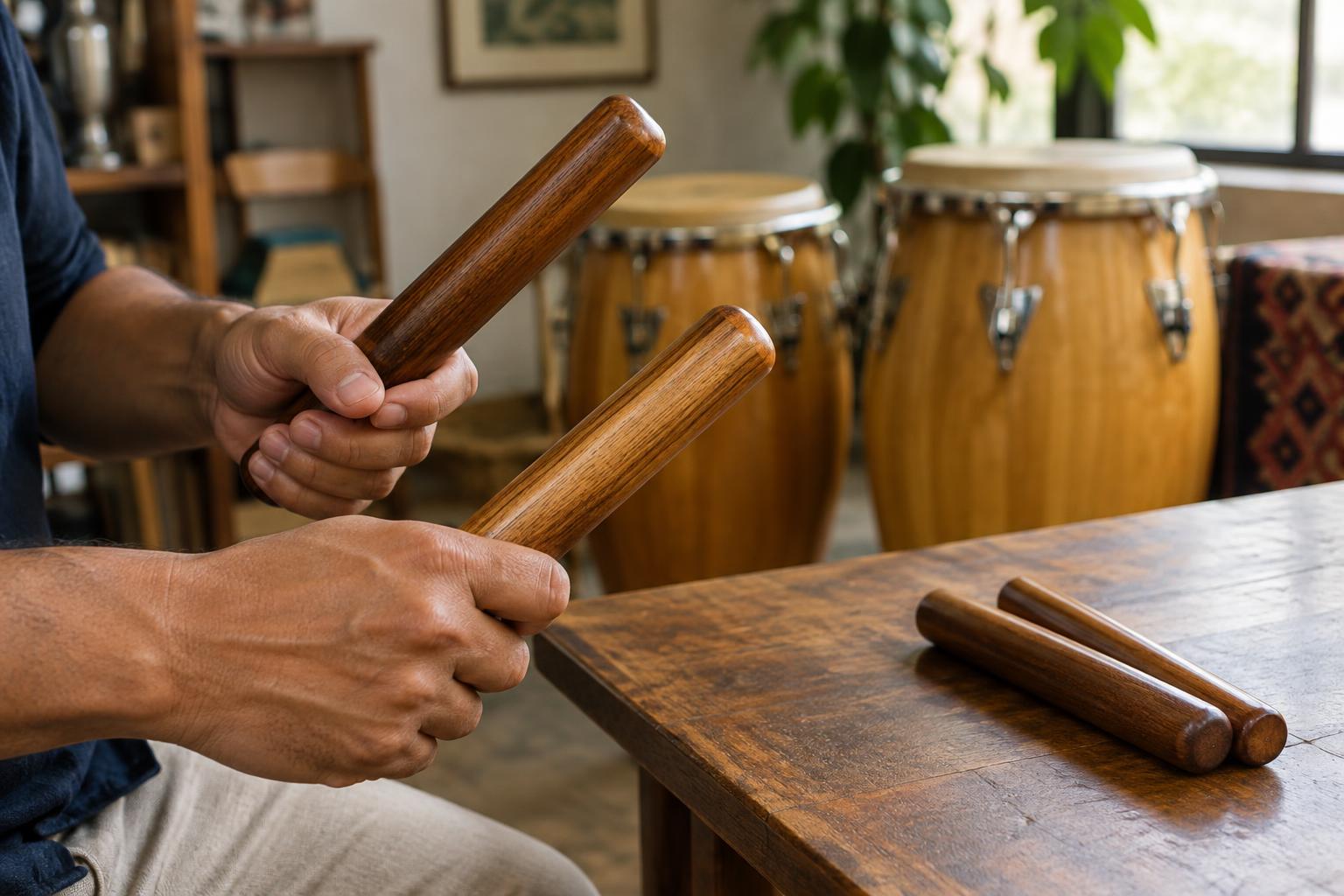
Rhythm FundamentalsThe numbers 3–2 and 2–3 describe which side of a five-stroke clave pattern comes first. Learn to count a two-bar son clave, hear how a phrase relates to it, and practice both directions without treating clave as a rigid rule.
Read article · 4 min↗
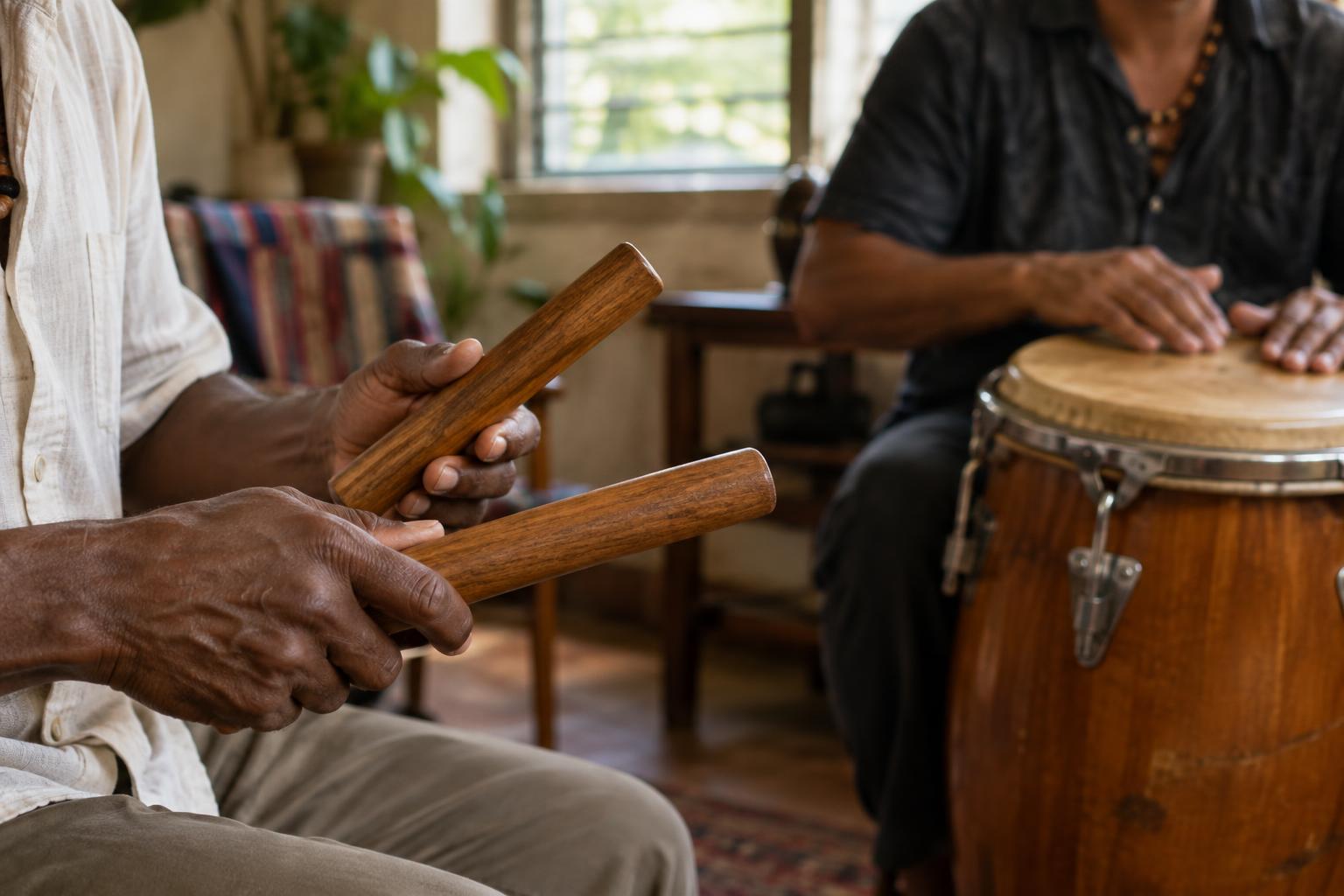
Rhythm FundamentalsBeing in clave is not simply a matter of playing the right five hits. It means hearing how a phrase relates to a repeating rhythmic cycle, even when the clave itself is not played. Learn what 3–2 and 2–3 describe, why parts can leave space around the pattern, and how to practice hearing its orientation.
Read article · 4 min↗
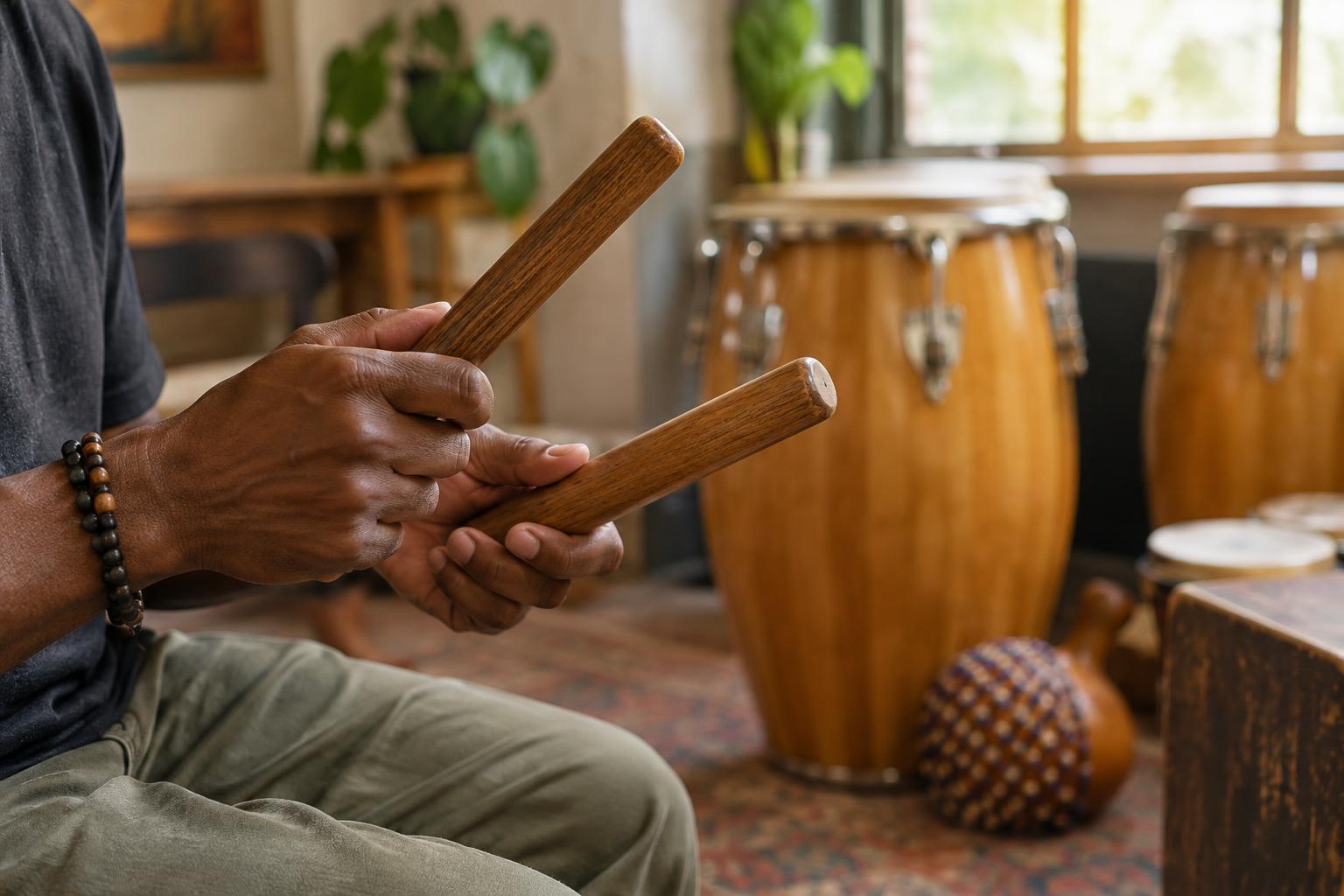
Rhythm FundamentalsA beat gives you a steady reference; clave gives a musical phrase its shape. Learn how to hear the difference, follow a common son clave pattern and practice without reducing Afro-Cuban rhythm to a counting trick.
Read article · 3 min↗
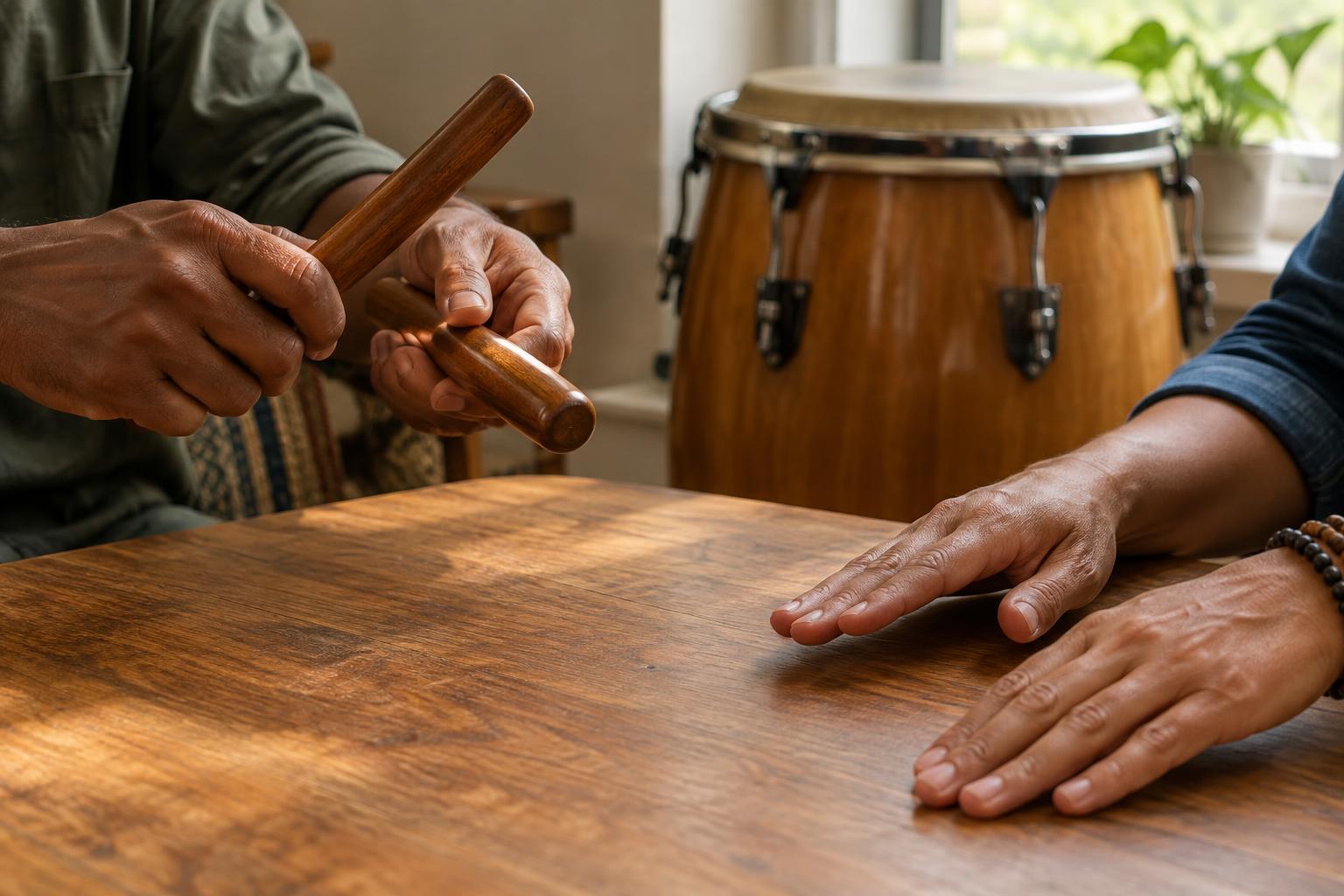
Rhythm FundamentalsPolyrhythm and cross-rhythm both create movement between rhythmic layers, but they draw attention to different things. Learn how to hear the difference, try a simple three-against-two exercise, and recognize accents that push against a steady pulse.
Read article · 4 min↗
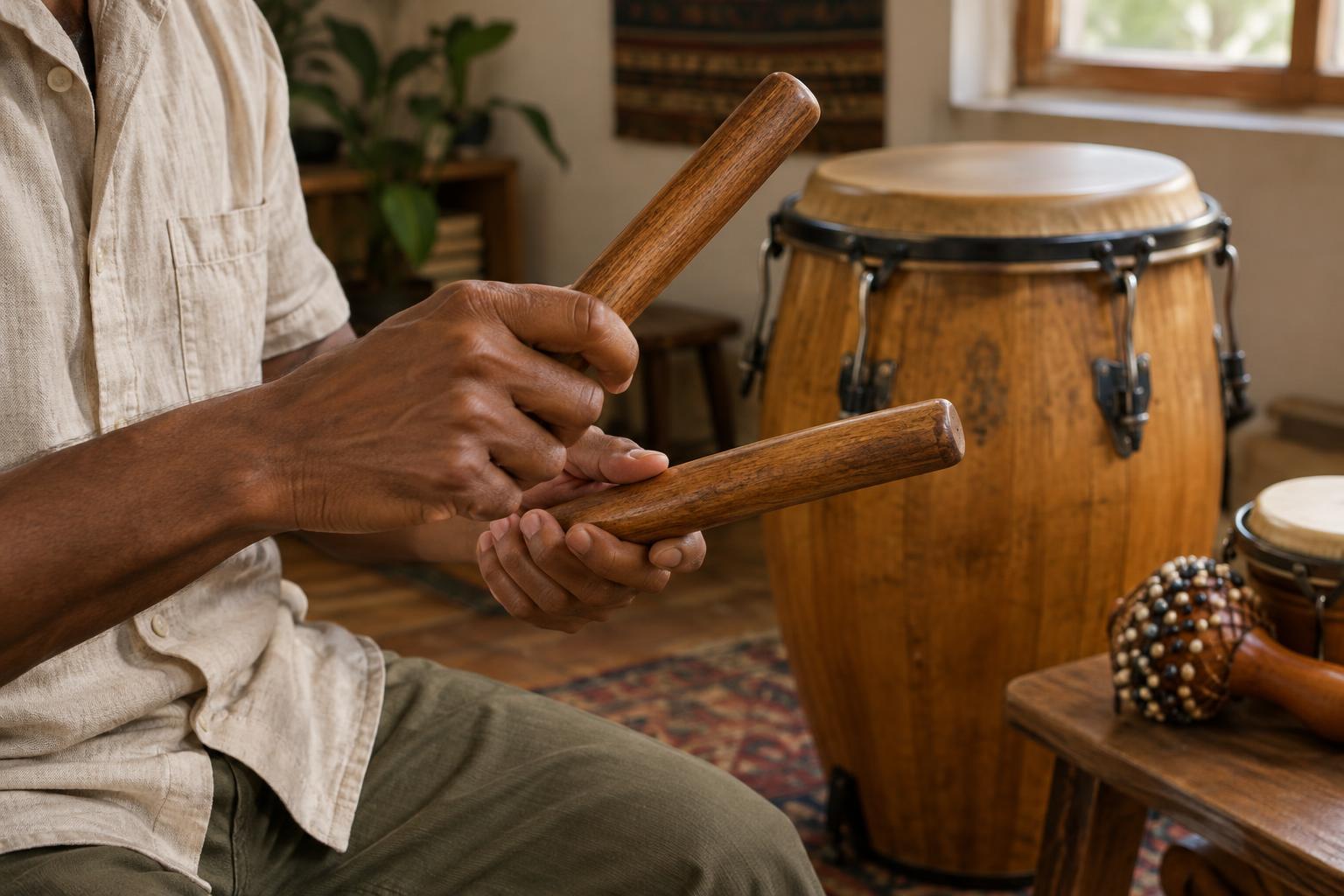
Rhythm FundamentalsA rhythmic ostinato is a repeating pattern that gives listeners and musicians a point of reference. Learn how it shapes a groove, how to hear it among other parts, and how to practice creating one without confusing repetition with rigidity.
Read article · 4 min↗
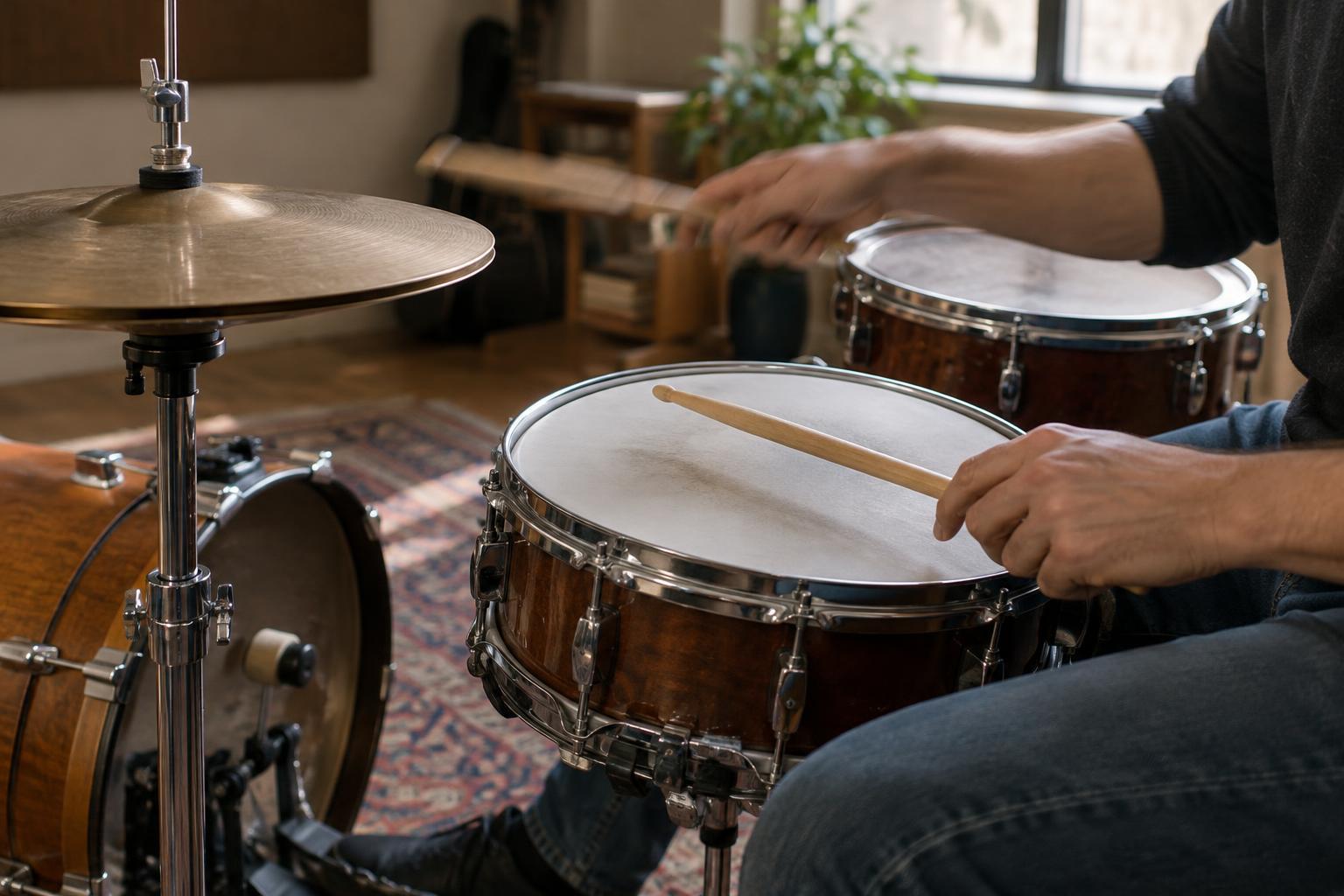
Rhythm FundamentalsA groove can suddenly feel spacious or urgent while the underlying tempo stays put. Learn how half-time and double-time feel work, what to listen for, and how to practice the shift without losing your place.
Read article · 4 min↗
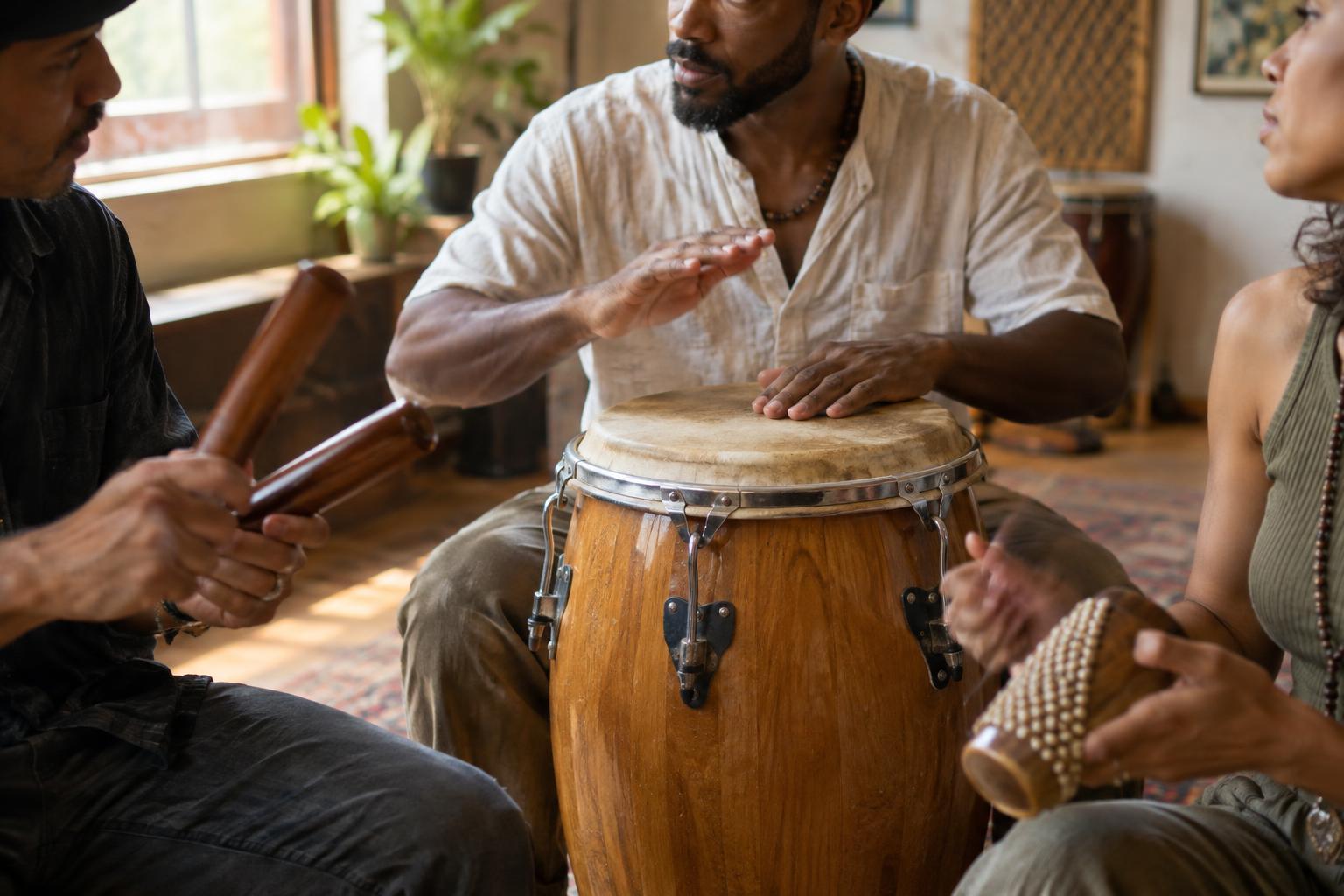
Rhythm FundamentalsA note can arrive before or after an expected beat without losing the pulse. Learn how anticipation and delay work, how they differ from accidental rushing or dragging, and how to practice hearing and playing both.
Read article · 4 min↗
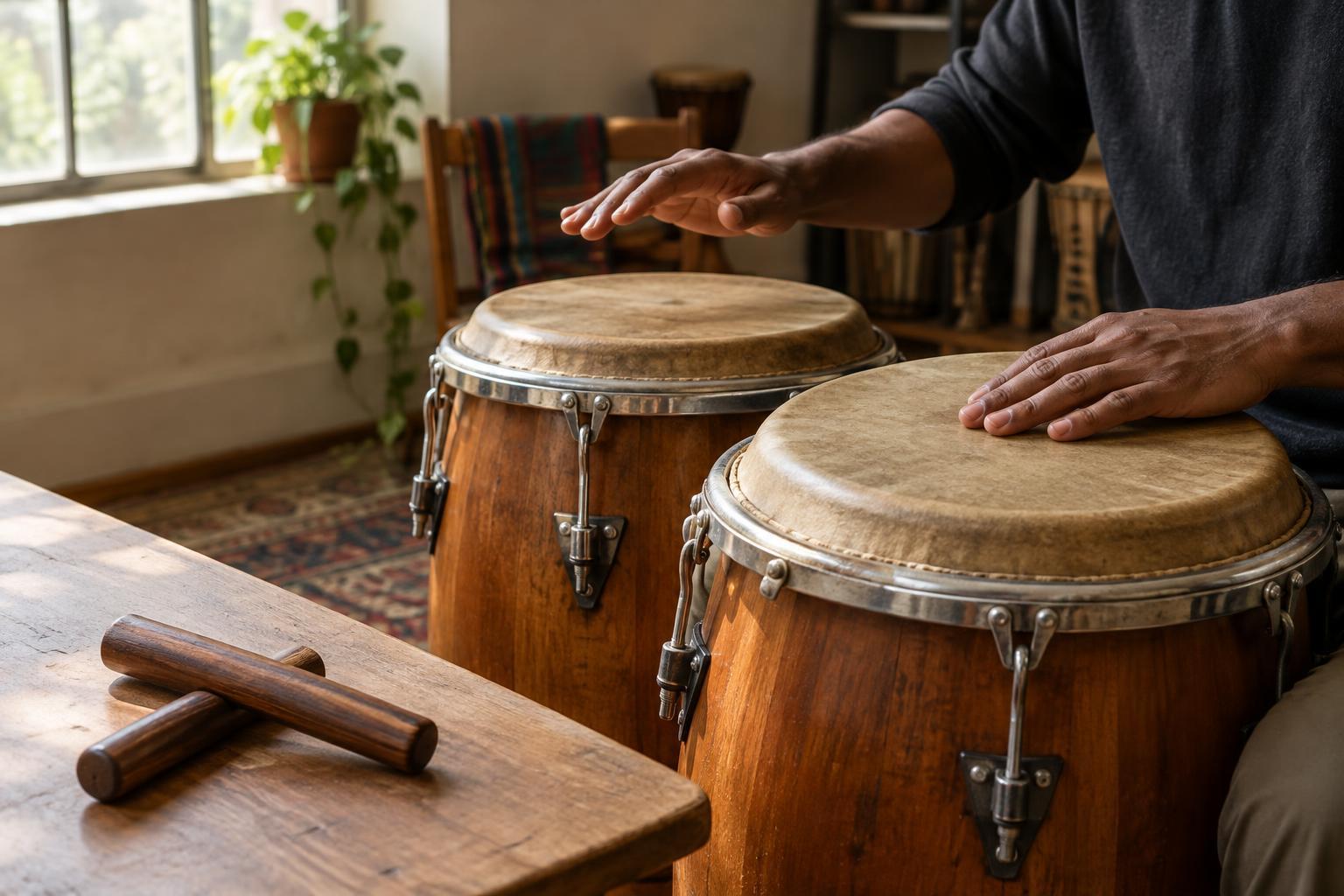
Rhythm FundamentalsSyncopation shifts emphasis away from where a listener expects it. Learn how a steady pulse, repetition, and the surrounding parts make an offbeat accent feel surprising without losing its place.
Read article · 4 min↗
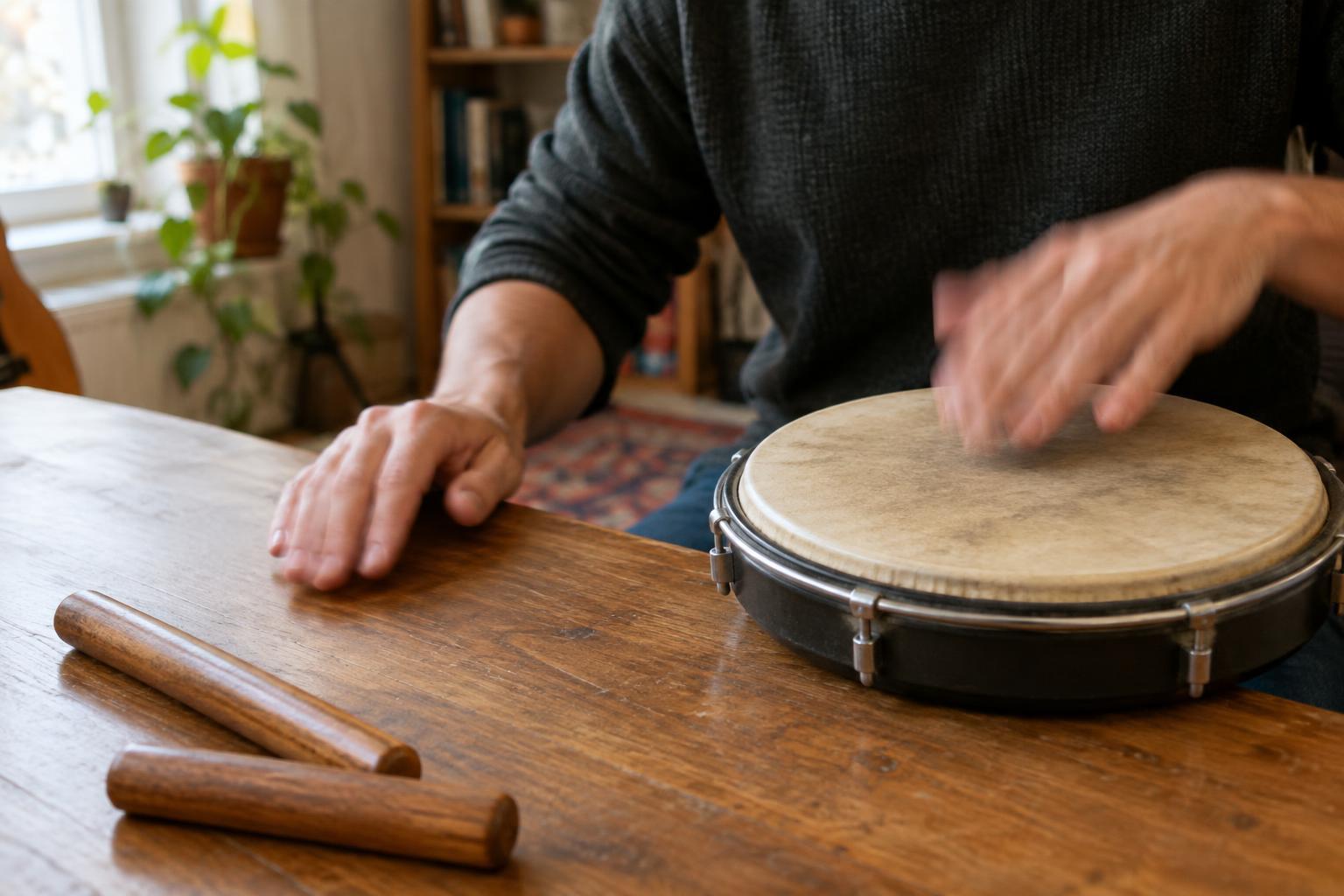
Rhythm FundamentalsStraight and swung eighth notes can fit within the same steady beat, yet feel remarkably different. Learn to hear the spacing between notes, keep the pulse steady, and practice each feel without treating swing as a rigid formula.
Read article · 4 min↗
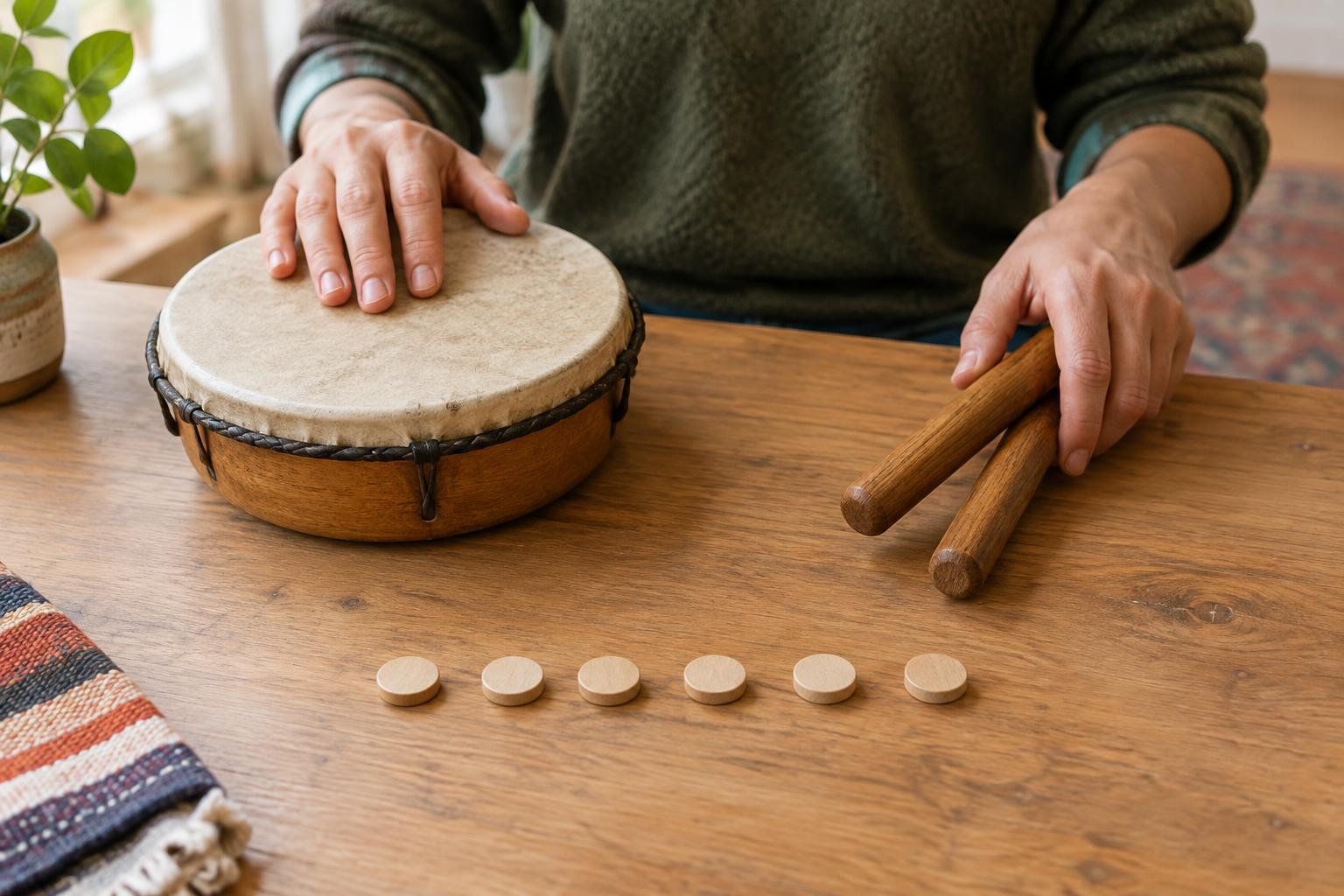
Rhythm FundamentalsBoth 6/8 and 3/4 can hold six eighth notes per bar, but they organize those notes differently. Learn to hear the underlying pulse, read the grouping, and practice switching between the two feels.
Read article · 4 min↗
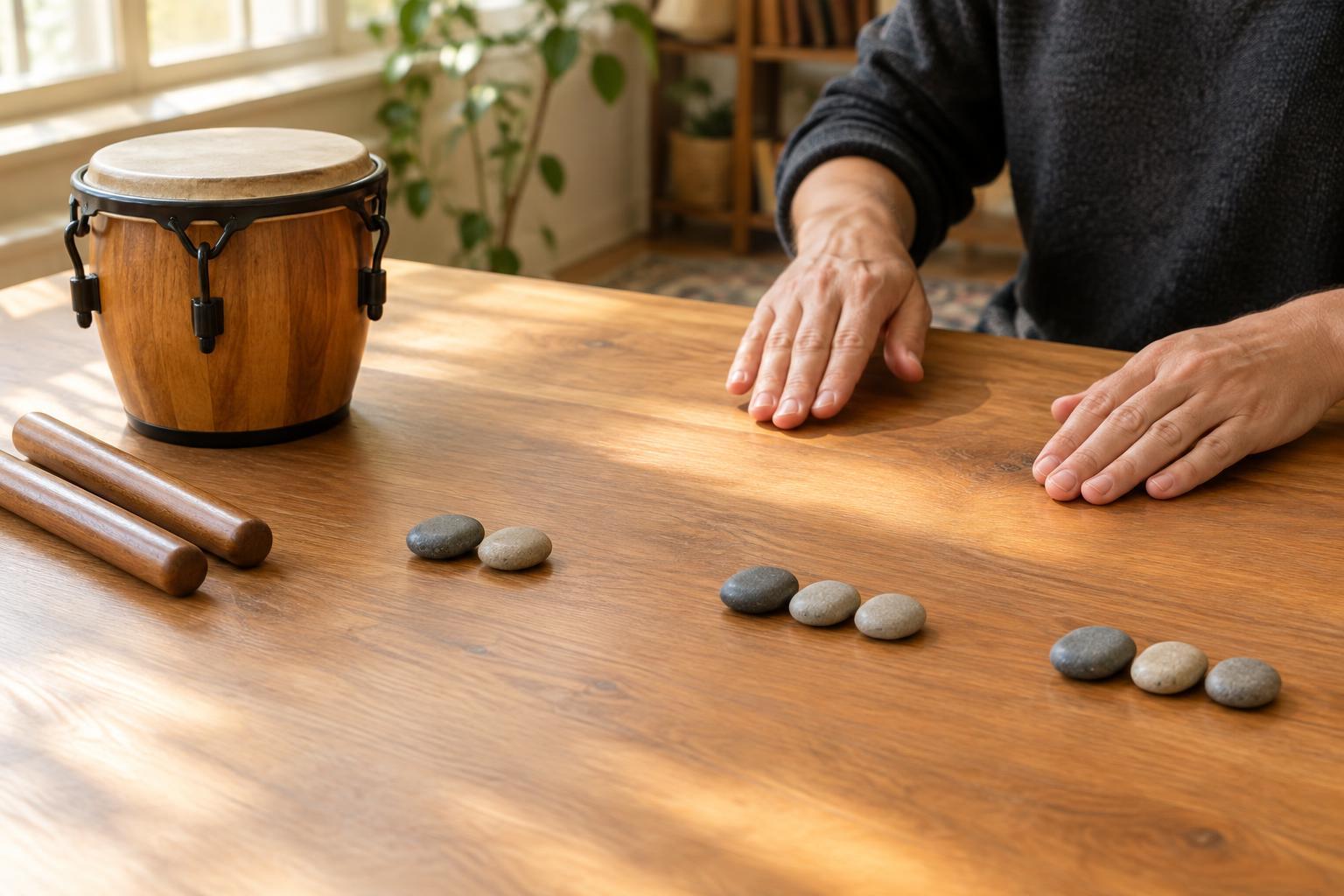
Rhythm FundamentalsSimple and compound meter describe how a beat is usually divided: into two equal parts or three. Learn to hear the difference, compare 3/4 with 6/8, and practice keeping the beat steady while the subdivisions change.
Read article · 4 min↗
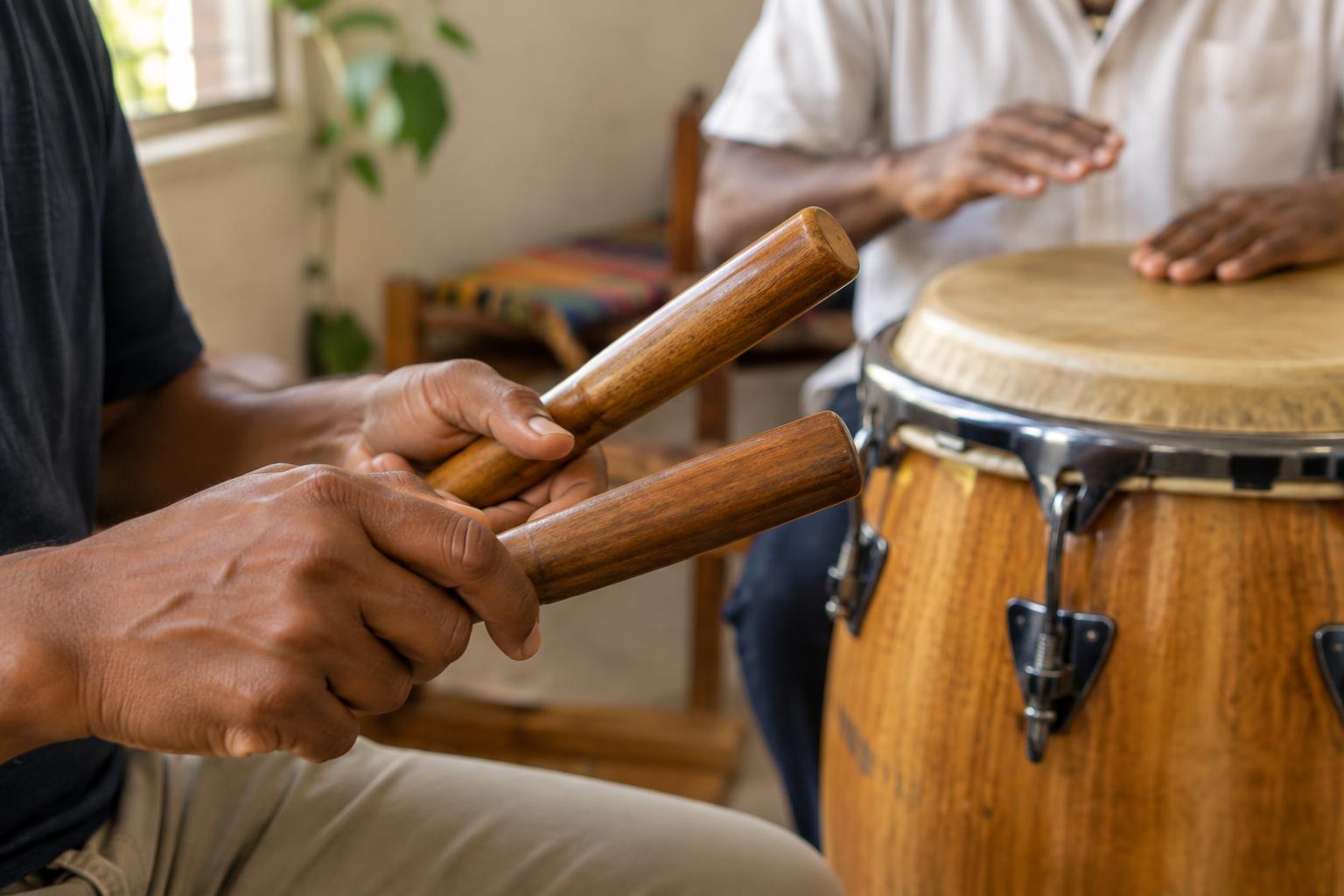
Rhythm FundamentalsAn onbeat lands with a main pulse; an offbeat lands between pulses. Learn to hear both by keeping a steady beat, counting subdivisions, and listening for how notes move around the pulse.
Read article · 4 min↗
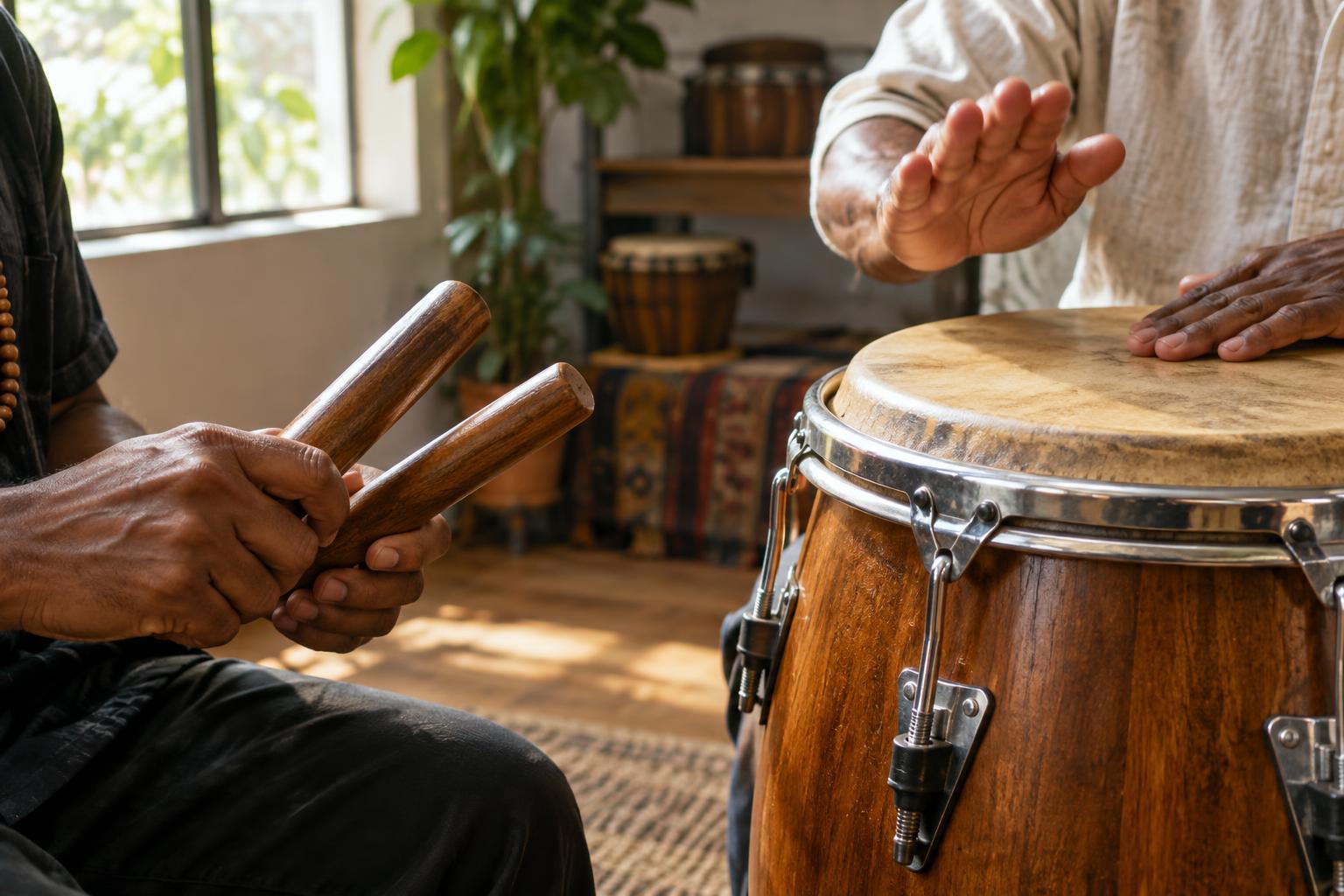
Rhythm FundamentalsA sharp drum hit can feel like the start of a measure even when it is not. Learn how downbeats, accents, and syncopation work together, and try simple listening exercises to find beat one without relying on volume.
Read article · 4 min↗
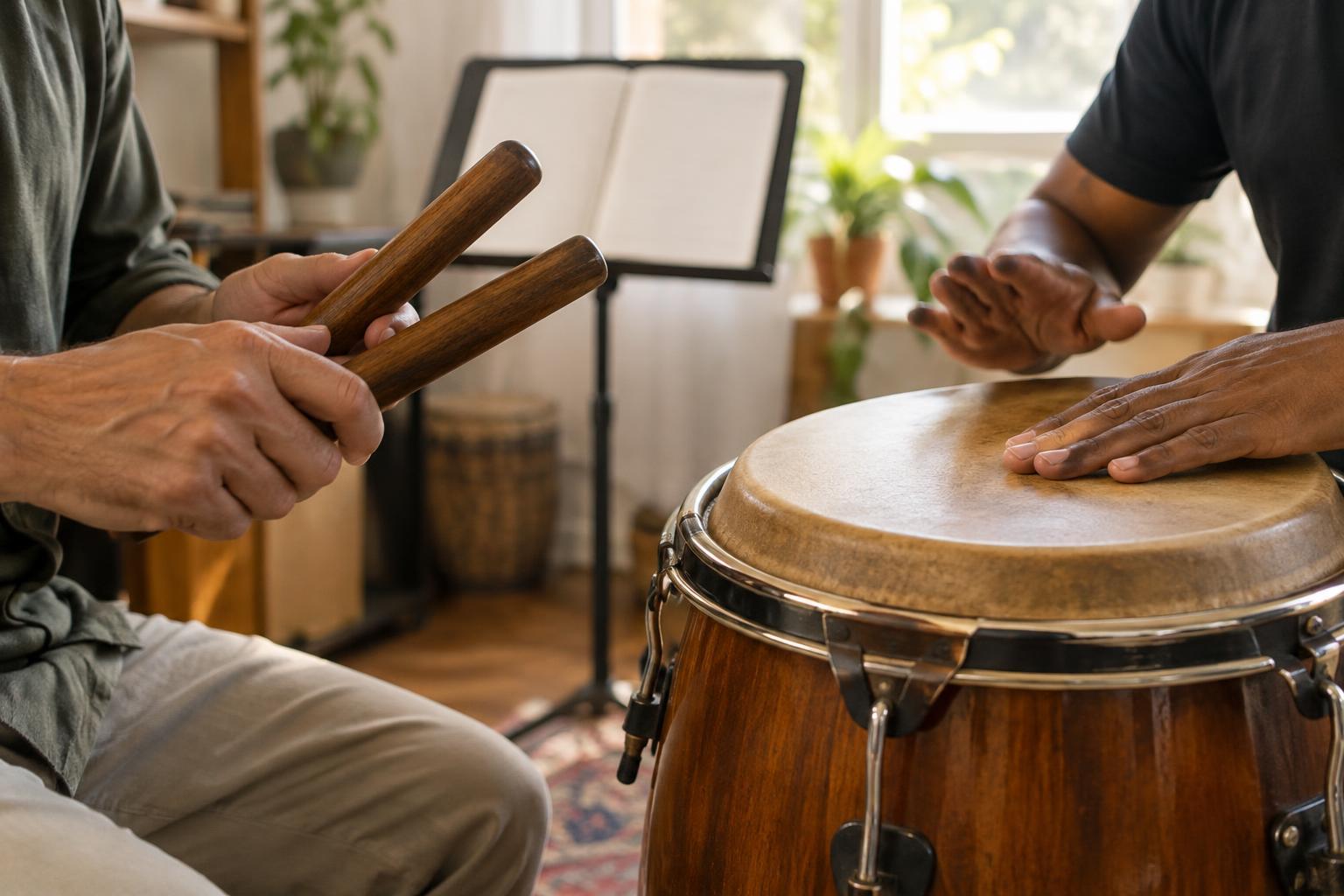
Rhythm FundamentalsA time signature helps musicians organize beats and bars, but it does not capture every accent, subdivision or rhythmic conversation. Learn how to read the notation while listening for the groove beyond it.
Read article · 4 min↗
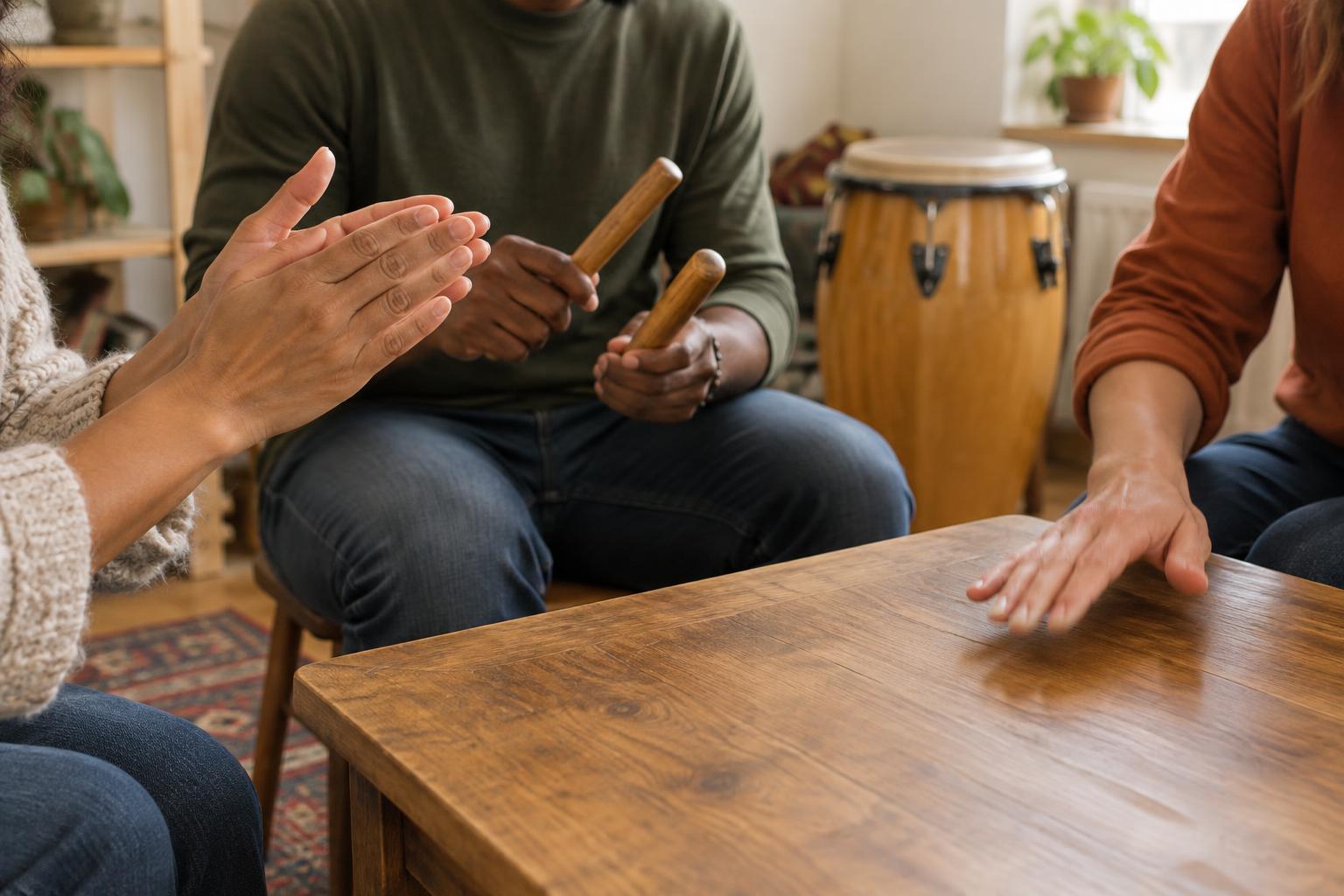
Rhythm FundamentalsBeat is the steady pulse you follow, rhythm is the pattern of sounds and silences around it, and tempo is how fast that pulse moves. Learn to hear the difference with simple listening and clapping exercises.
Read article · 4 min↗