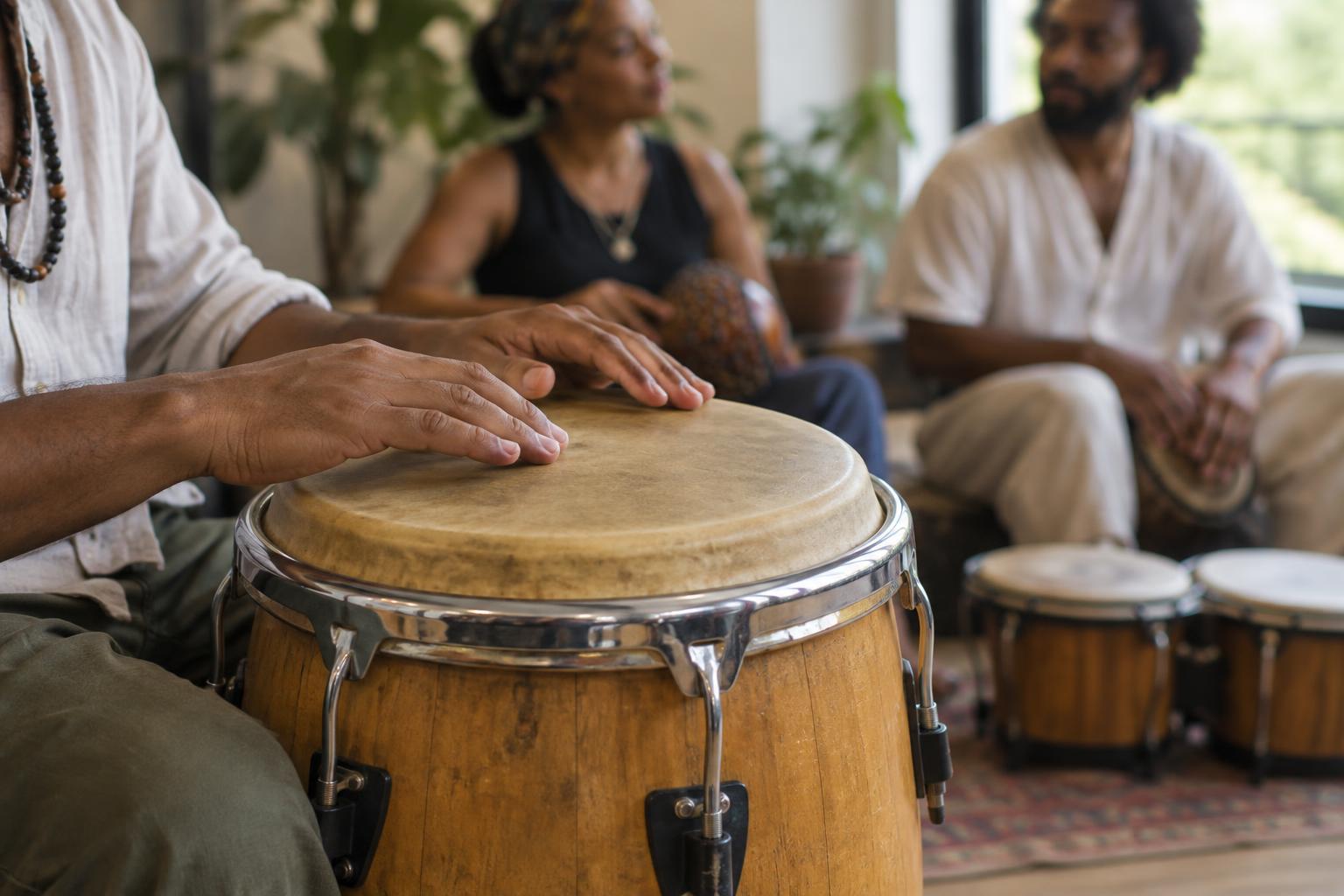
PercussionQuiet playing is more than striking a drum softly. Learn how to keep a clear pulse, shape accents, and listen to the ensemble when the music calls for less volume.
Read article · 3 min↗
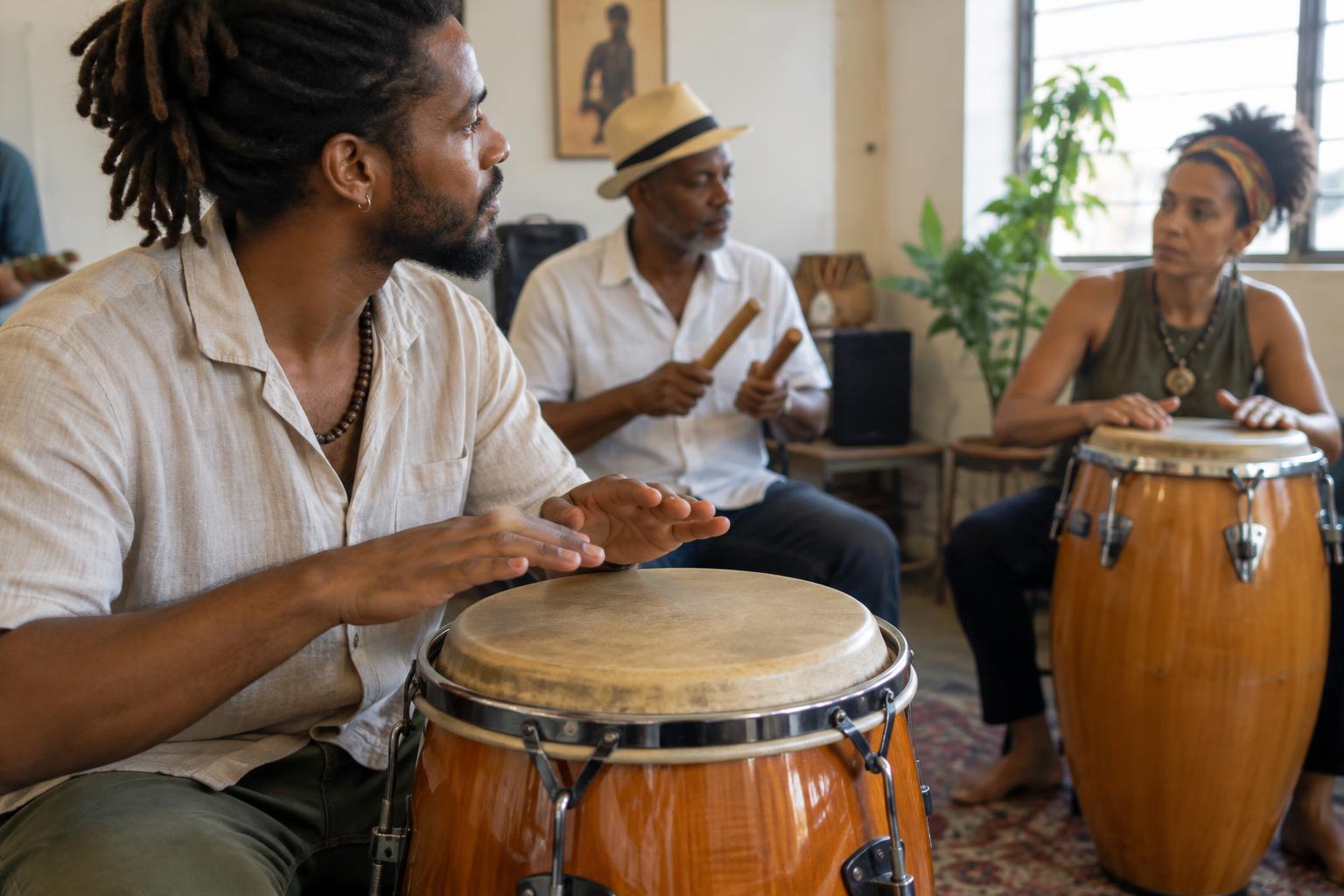
PercussionA percussion entrance can feel harder than a continuous pattern: you have to keep your place while someone else carries the pulse. Learn how to count rests, listen for reliable cues, and enter without rushing or overpowering the ensemble.
Read article · 3 min↗
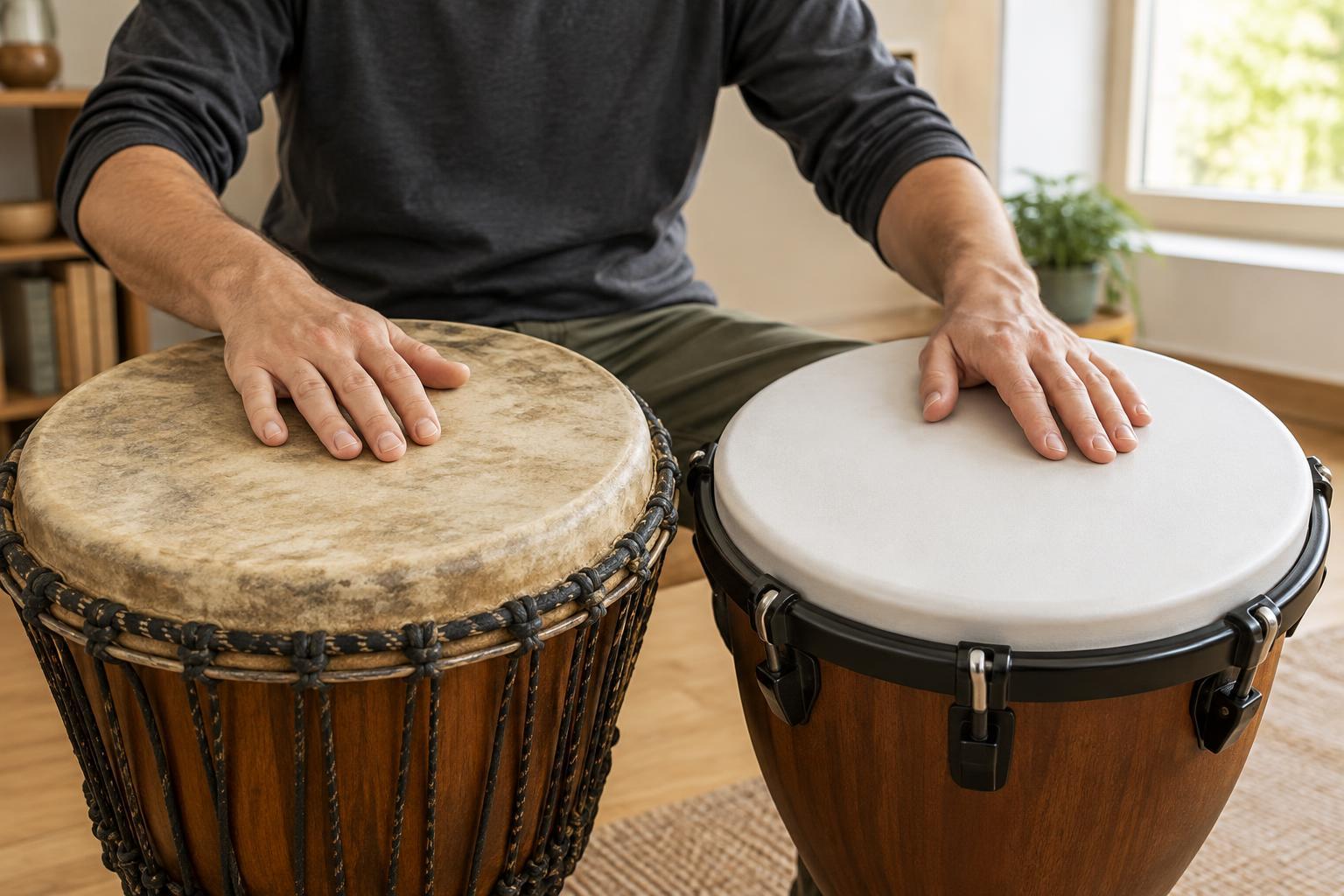
PercussionA drumhead changes how a hand drum responds to touch, tuning and weather. Learn what natural skin and synthetic heads tend to offer, how to compare them by ear and how to choose for your instrument and playing situation.
Read article · 4 min↗
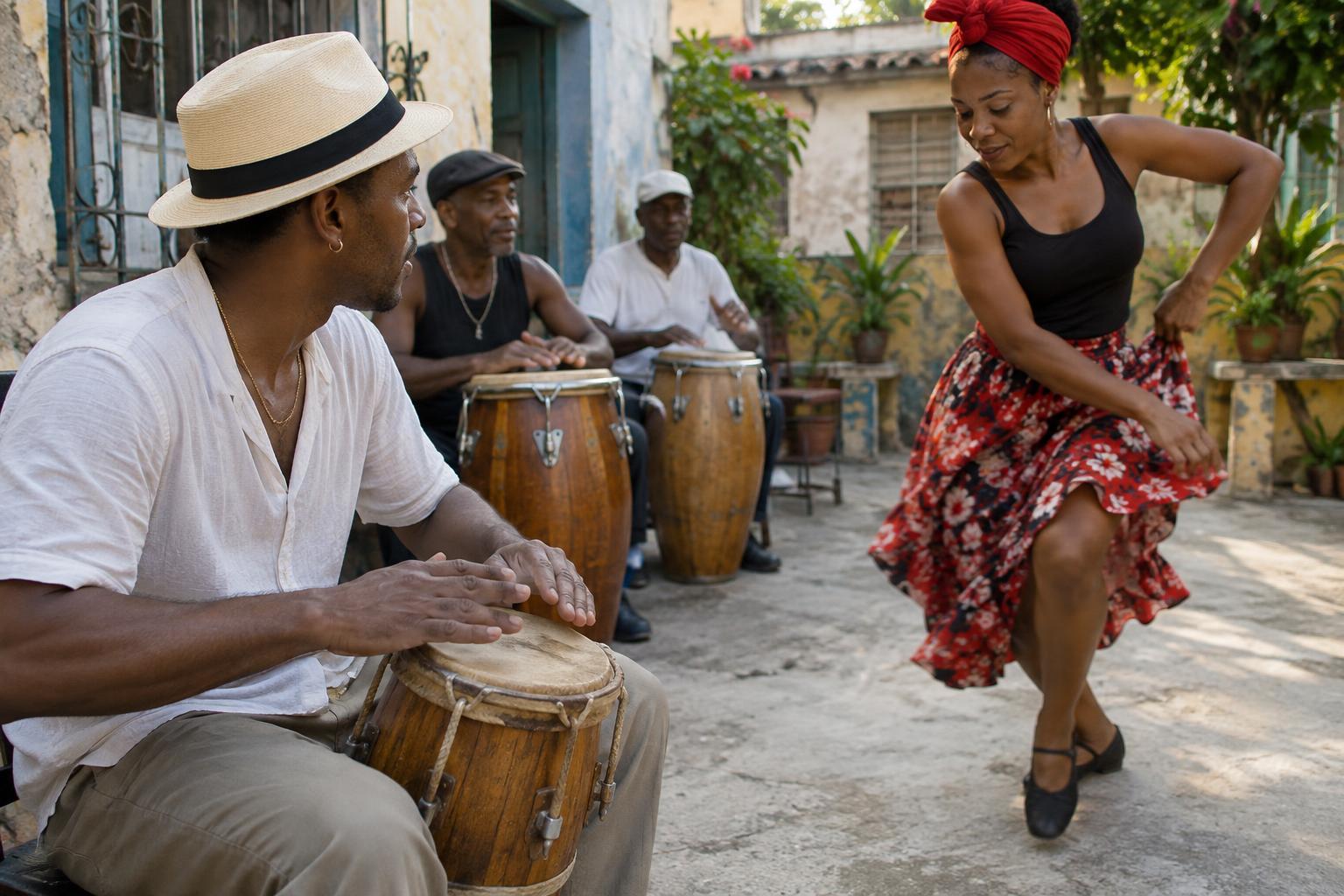
PercussionIn Cuban rumba, the quinto does more than decorate the beat. Listen to how this high-pitched drum shapes short phrases around a dancer’s movement, leaves space, and responds to the rest of the ensemble.
Read article · 4 min↗
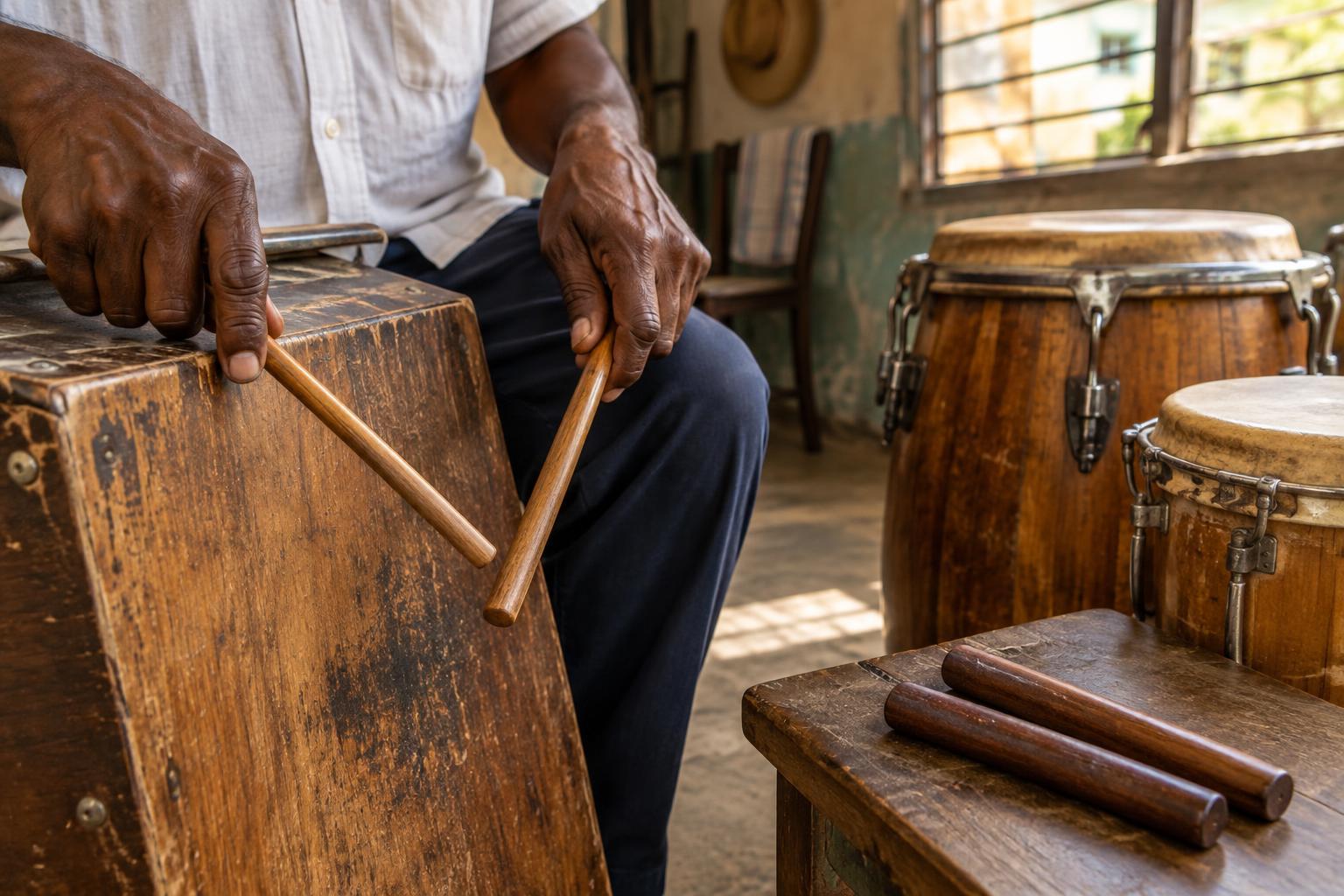
PercussionPalitos are the stick-played sounds that help give Cuban rumba its forward motion. Learn where the practice fits in rumba’s history, how to hear it alongside clave and drums, and how to explore the texture without treating one pattern as the only correct version.
Read article · 4 min↗
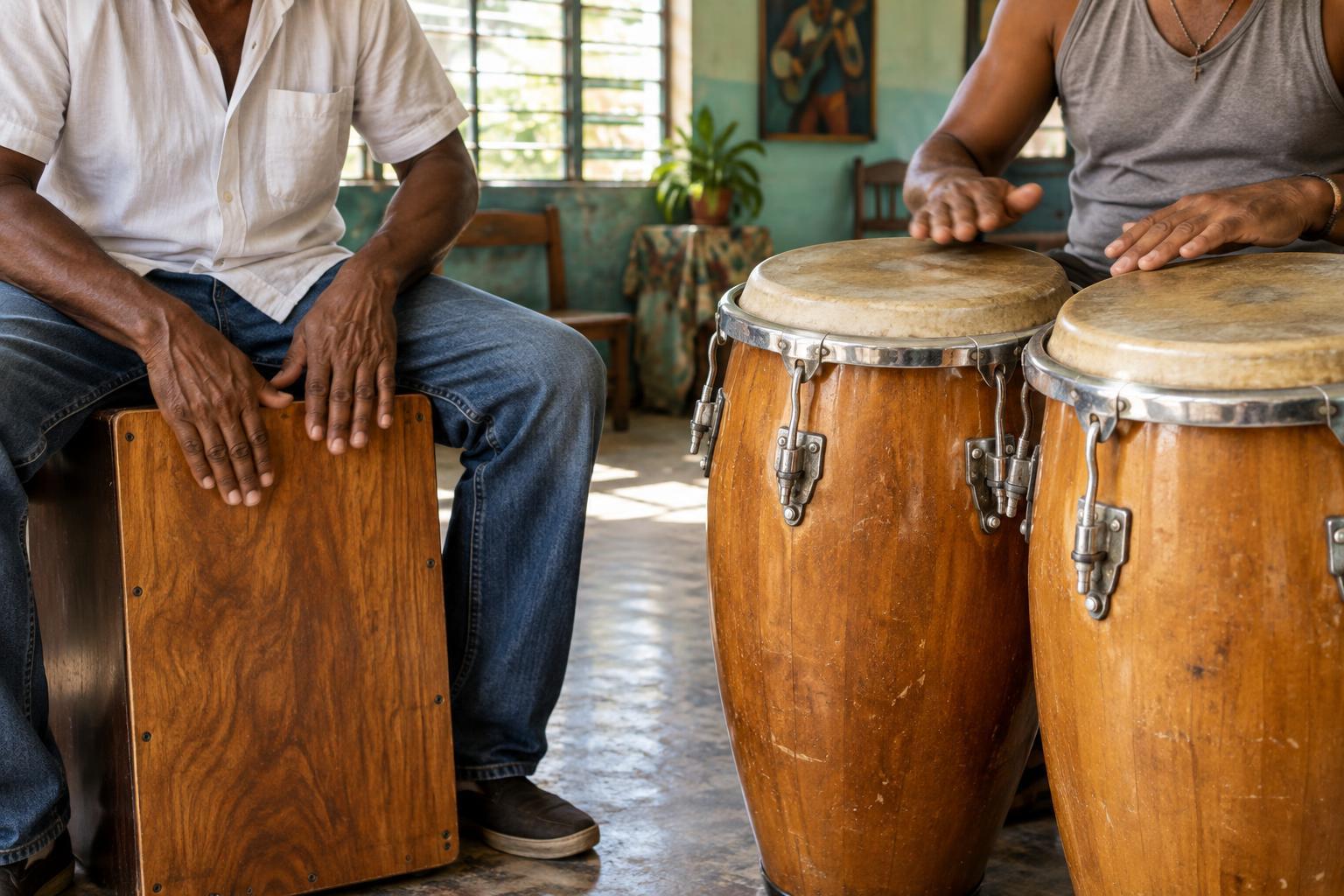
PercussionCuban rumba can be played on wooden boxes, skin-headed drums, or a combination of percussion instruments. Learn how cajones and congas differ in sound, touch, and musical role—and what to listen for when they play together.
Read article · 4 min↗
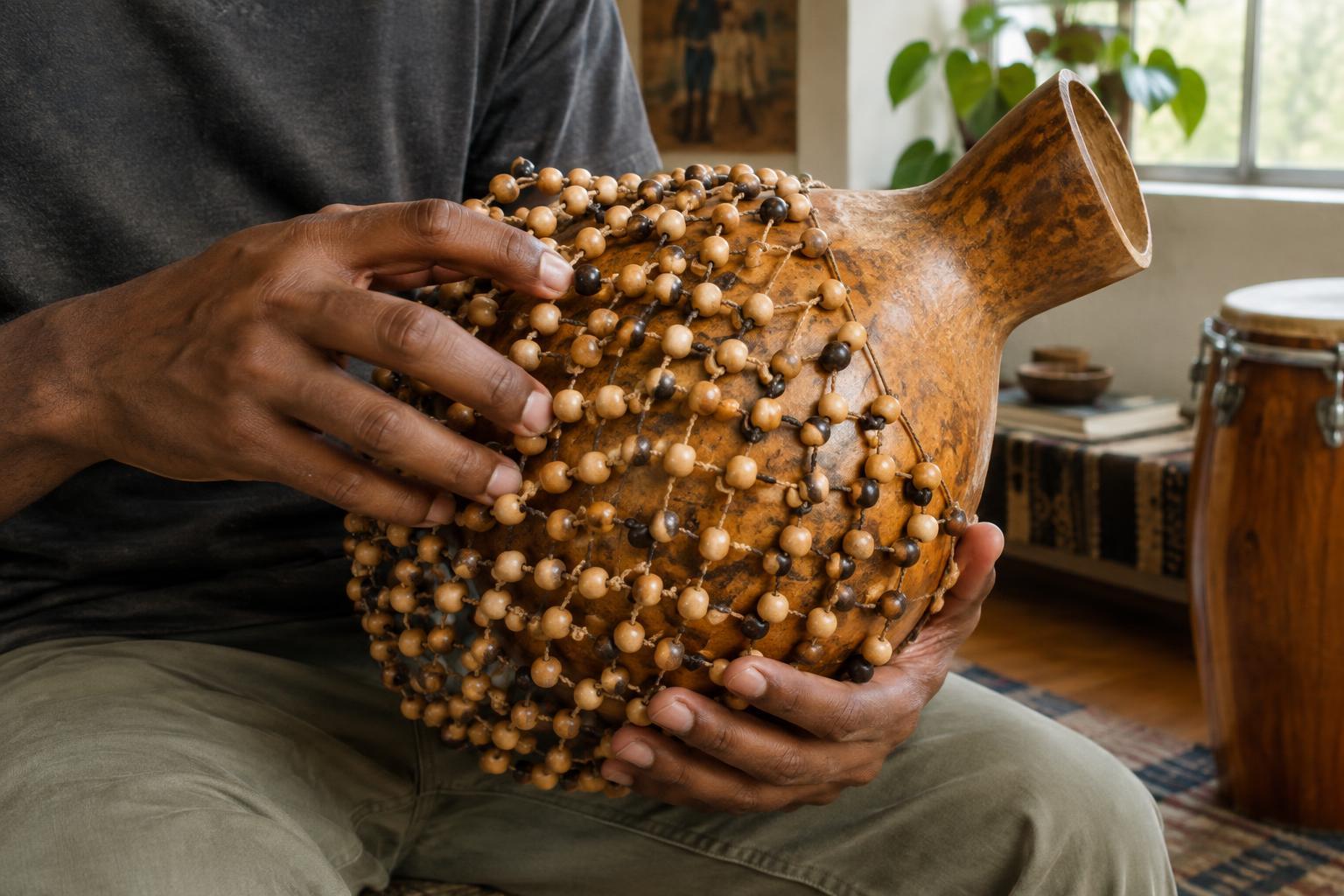
PercussionThe chekeré offers more than a single shaking sound. Learn how the gourd, bead net and your hands work together, then try simple exercises for clearer accents and steadier time.
Read article · 4 min↗
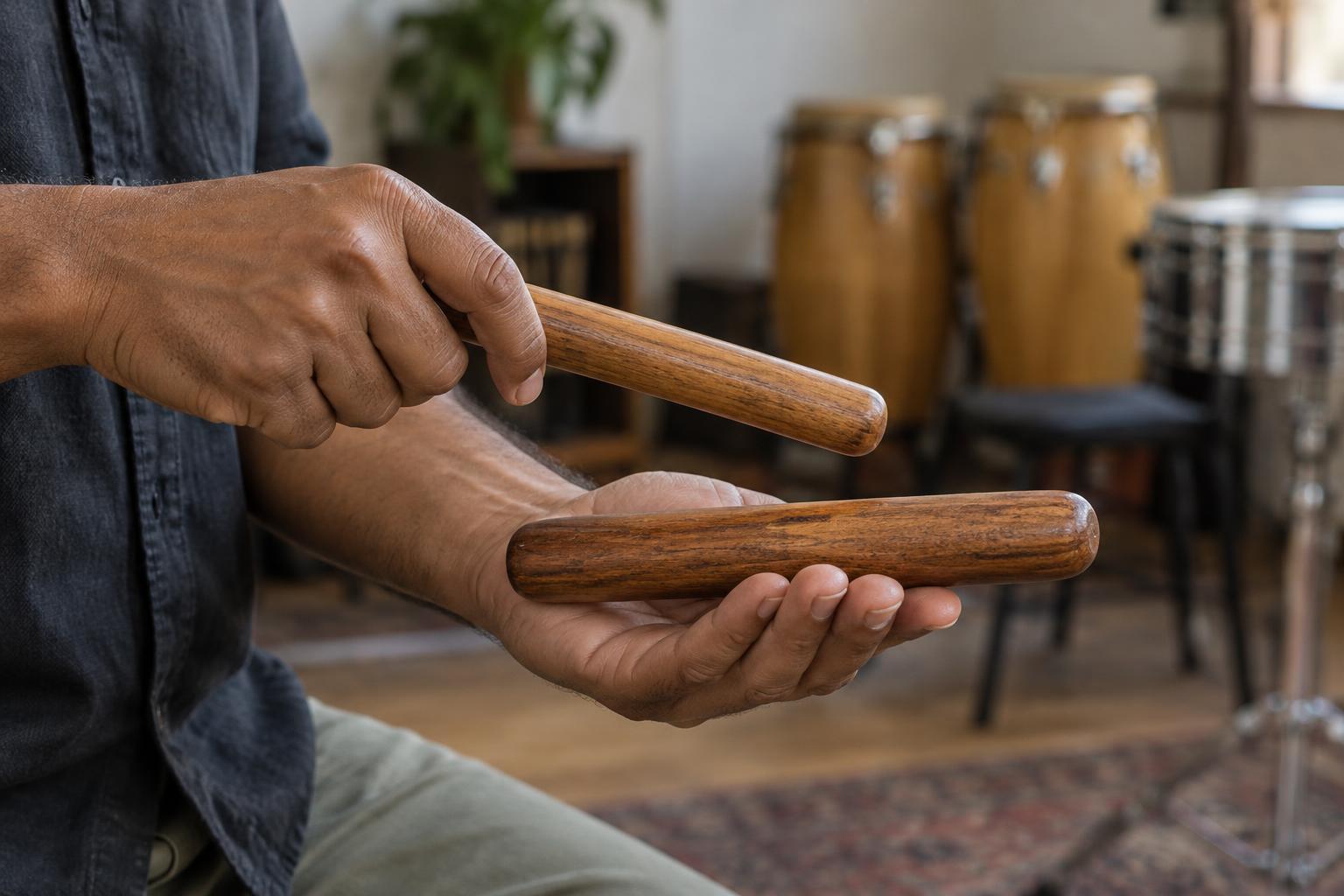
PercussionA ringing clave sound begins before the strike. Learn how to support the resting stick, use a relaxed motion, listen for a clear tone, and practice without overpowering the music.
Read article · 4 min↗
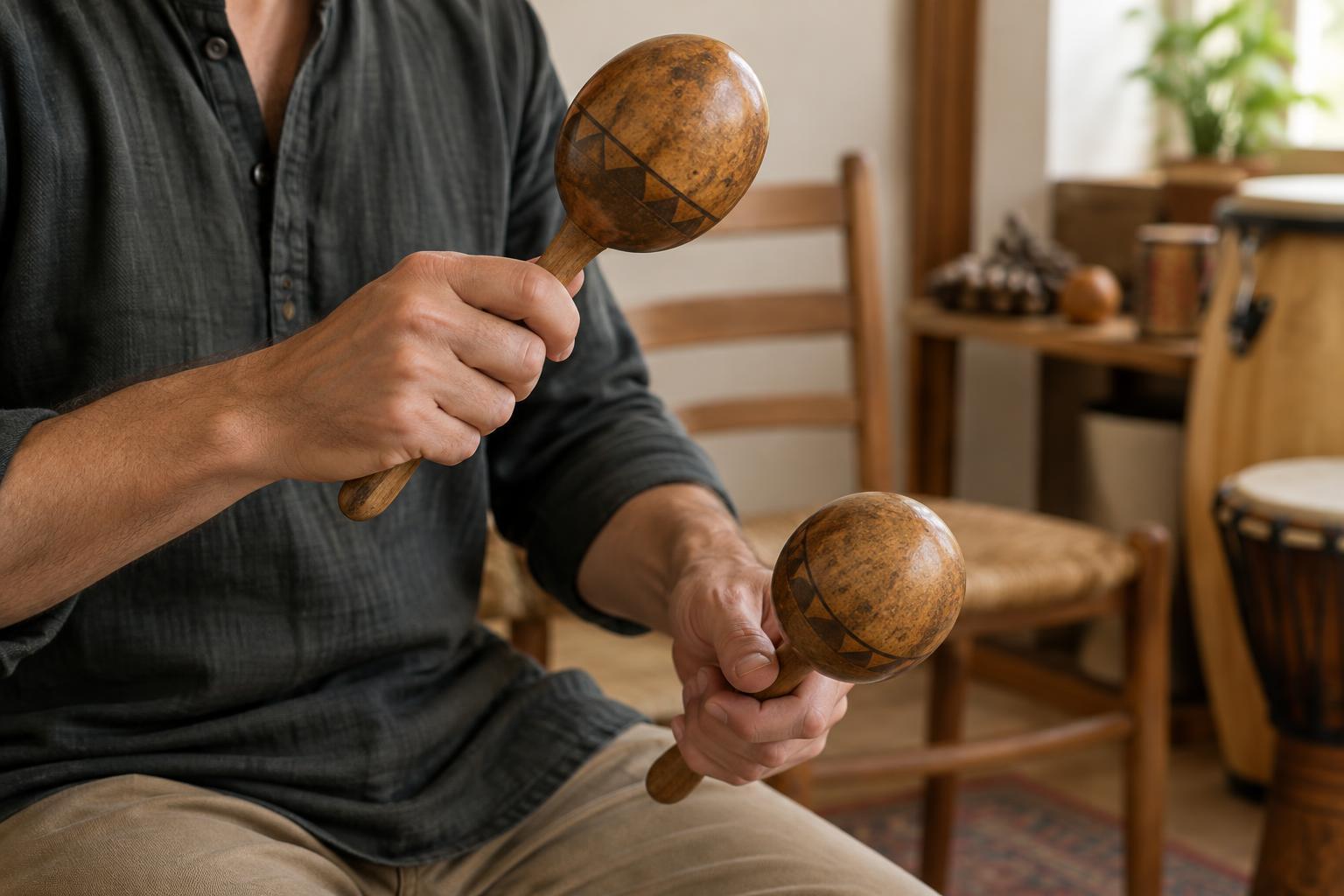
PercussionAlternating maracas can do more than keep a steady pulse. Learn how to use small movements, clear accents and simple listening exercises to give a repeated pattern shape without overwhelming the music.
Read article · 4 min↗
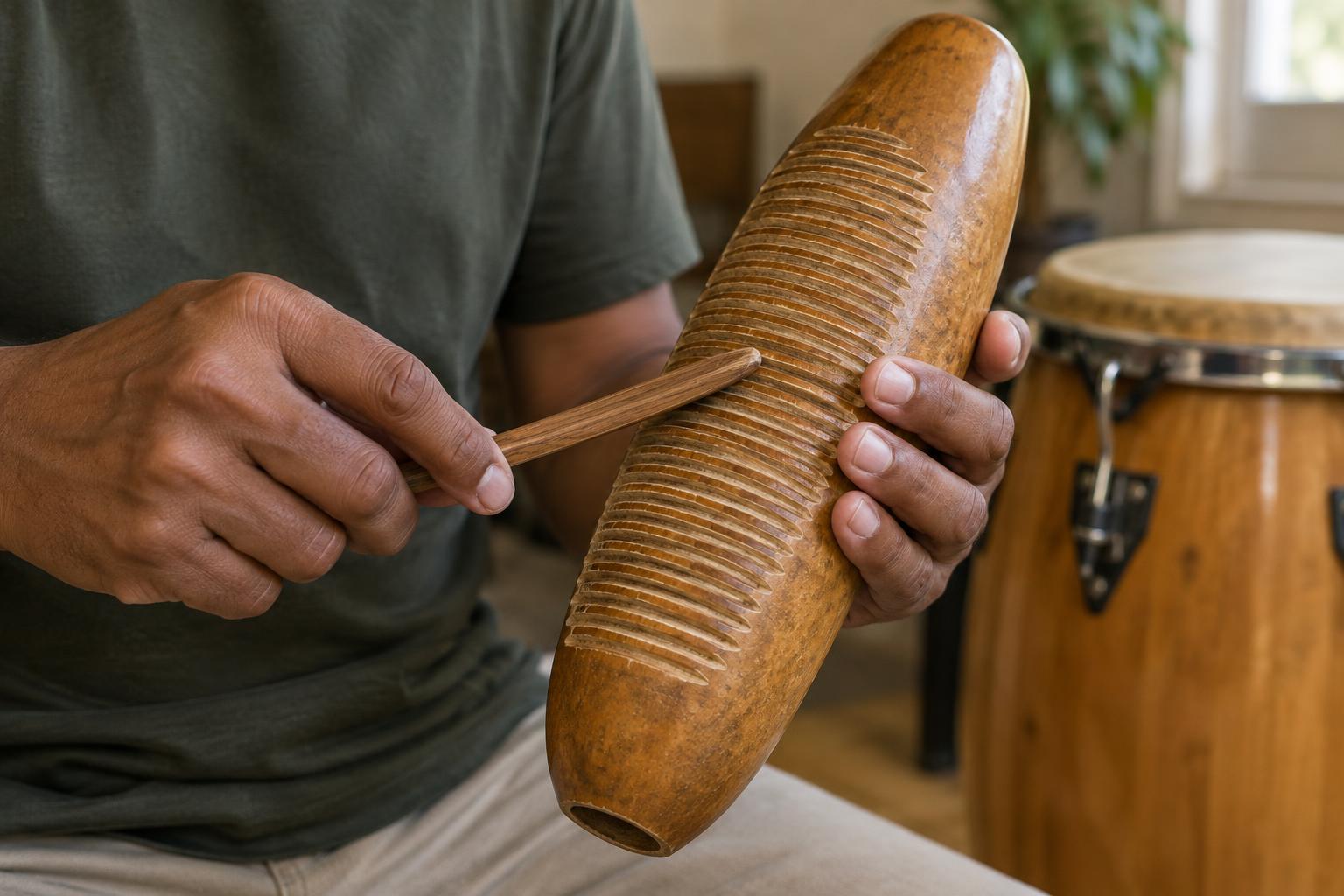
PercussionA practical guide to holding the güiro, shaping long and short scrapes, and building a steady part that supports the ensemble.
Read article · 4 min↗
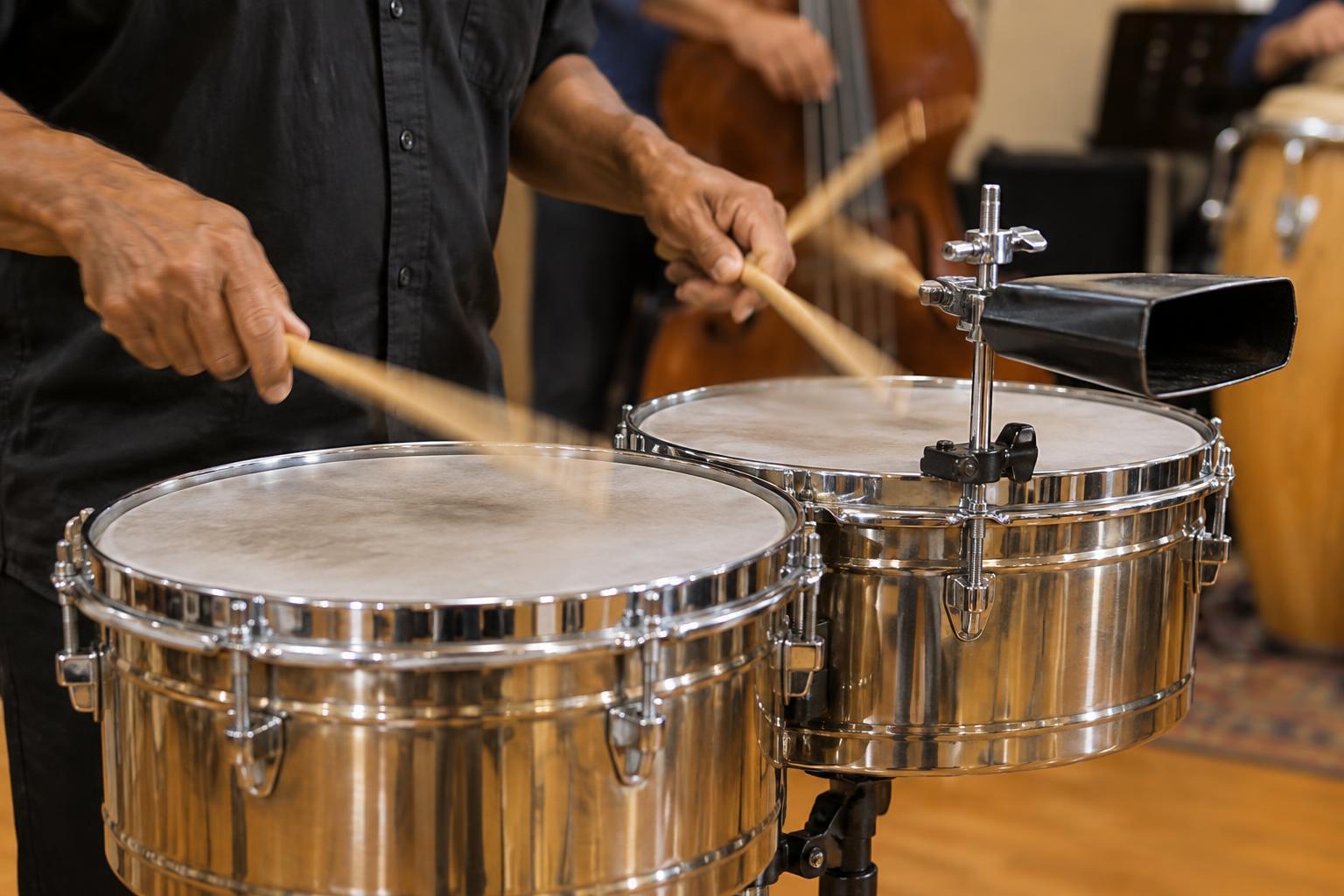
PercussionAn abanico is more than a fast flourish. Learn how timbales players use a rolling fill, a clear ending and a well-placed return to the groove to mark a musical transition.
Read article · 4 min↗
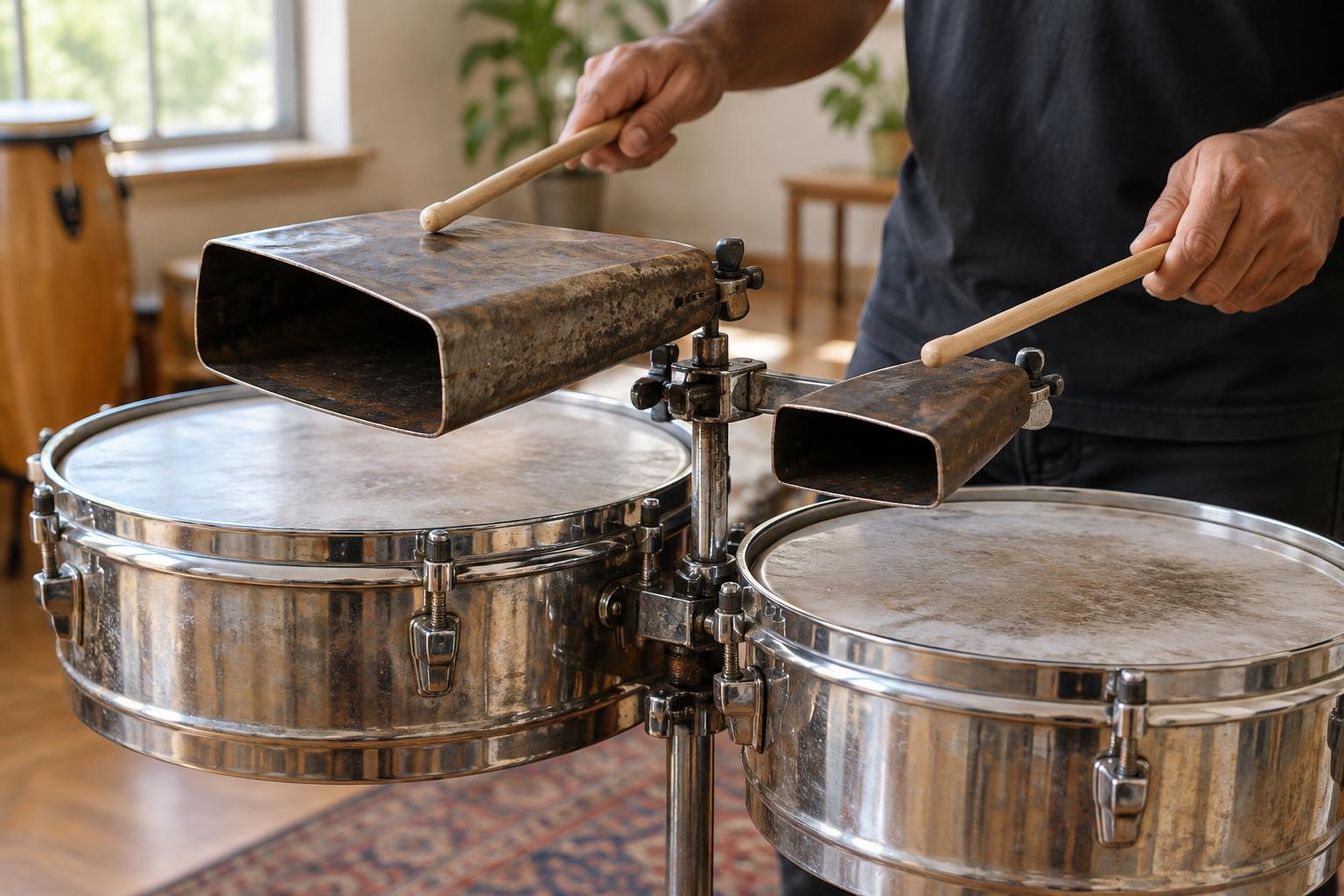
PercussionThe low and high timbales bells do more than add two pitches to the percussion section. Learn how their sound, placement and rhythmic roles can help you follow an arrangement—and try simple exercises for hearing the difference.
Read article · 4 min↗
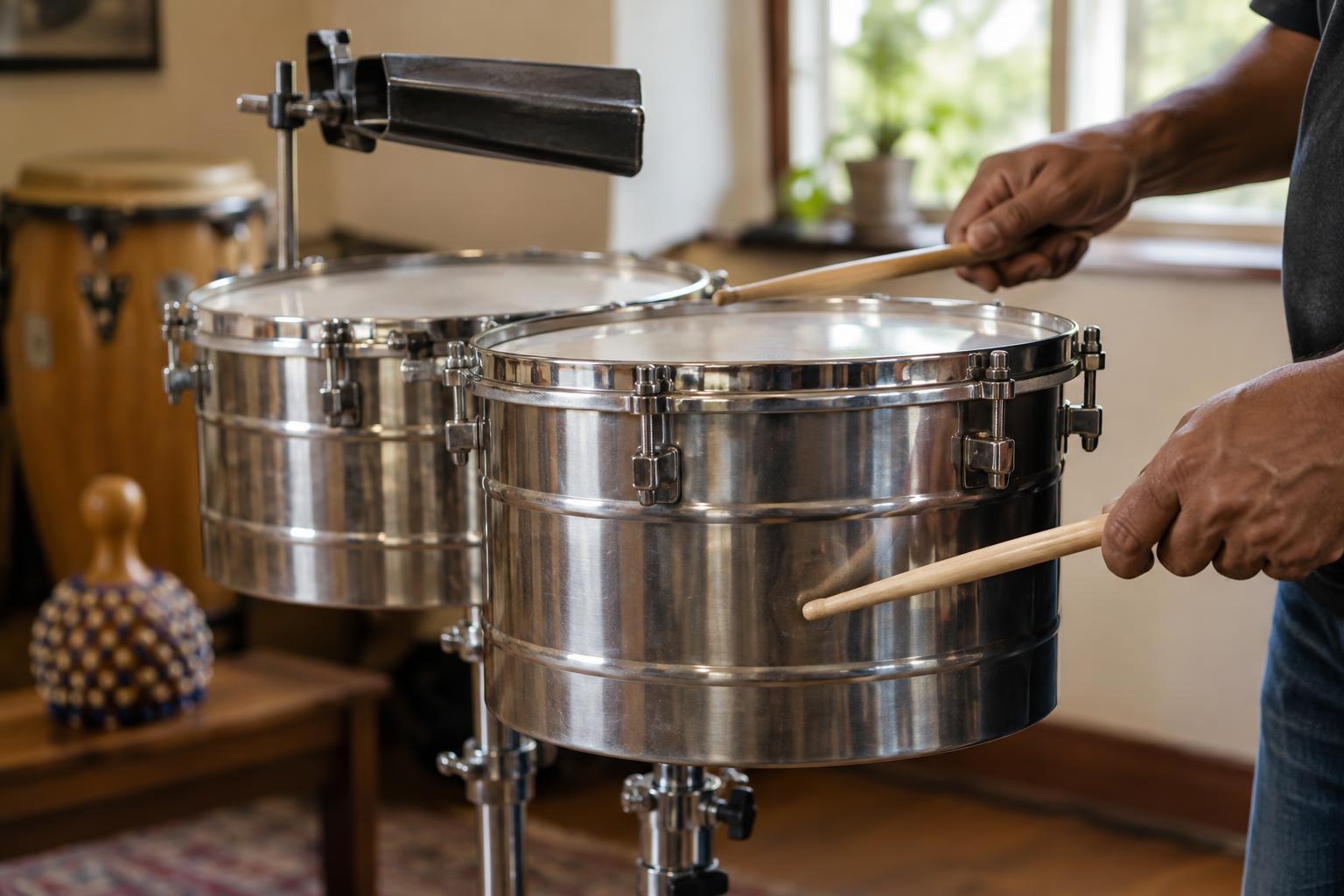
PercussionCáscara is a repeating rhythmic figure played on the shell of a timbal. Learn a two-bar practice pattern, develop a light and even stick sound, and hear how the part fits alongside clave, bass, and other percussion.
Read article · 4 min↗
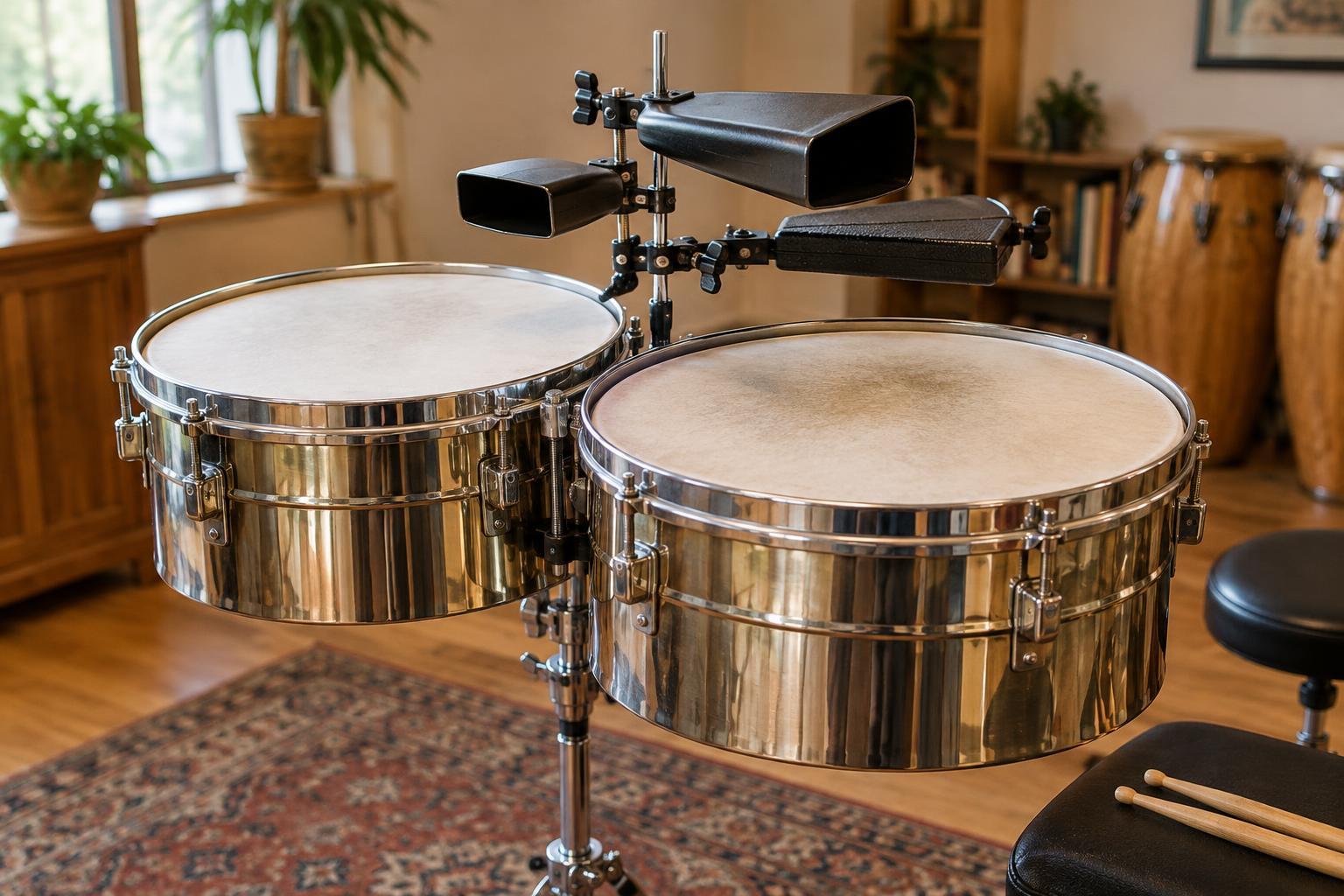
PercussionTimbales offer more than two drum sounds. Learn what their open-bottom shells, heads, rims, bells and mounted accessories do, and how to listen for each part in an arrangement.
Read article · 4 min↗
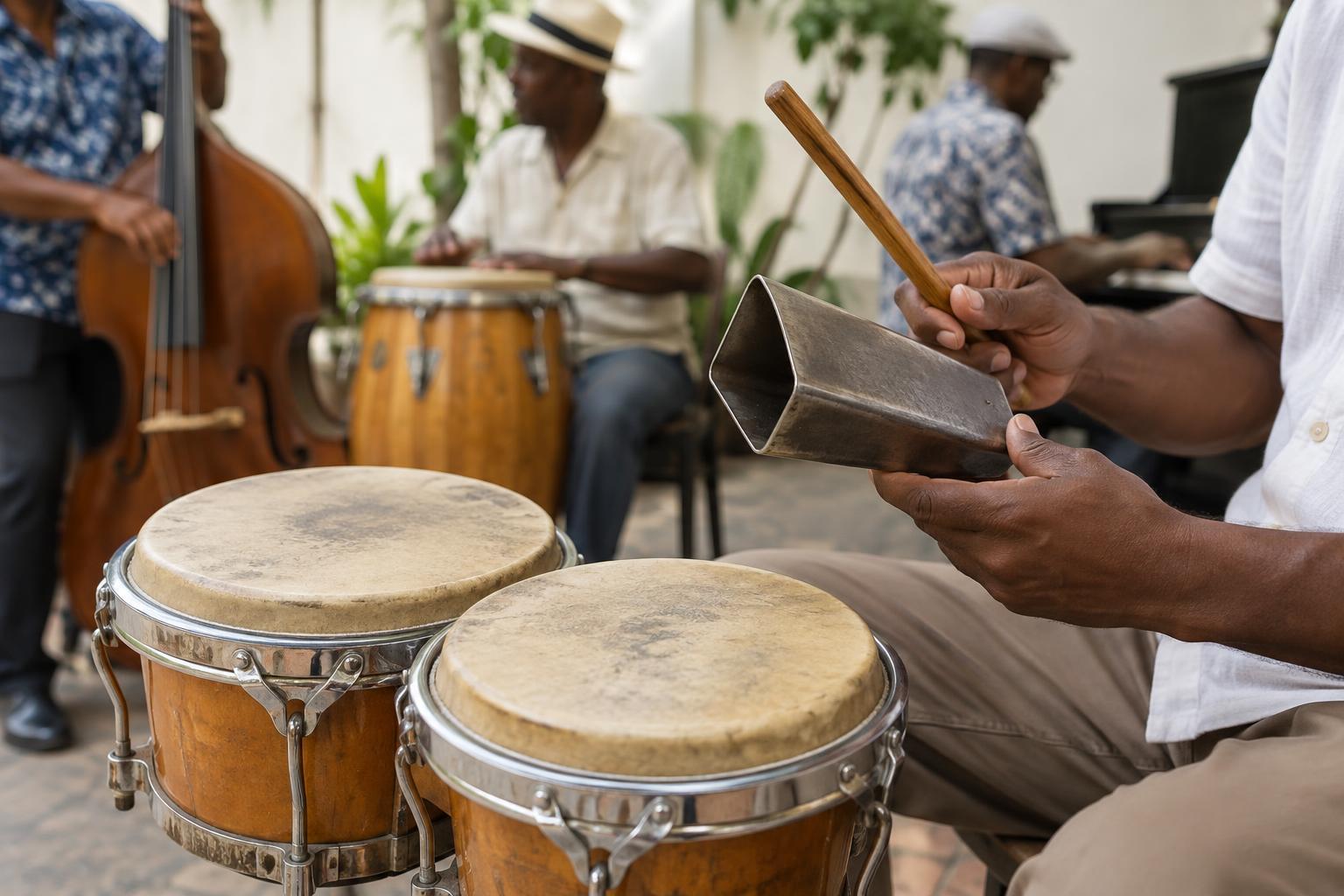
PercussionIn many son arrangements, the bongó player moves from a light, conversational drum pattern to a bright hand-bell part as the music opens into a montuno. Learn what changes in the player’s sound and role, and how to hear the transition.
Read article · 4 min↗
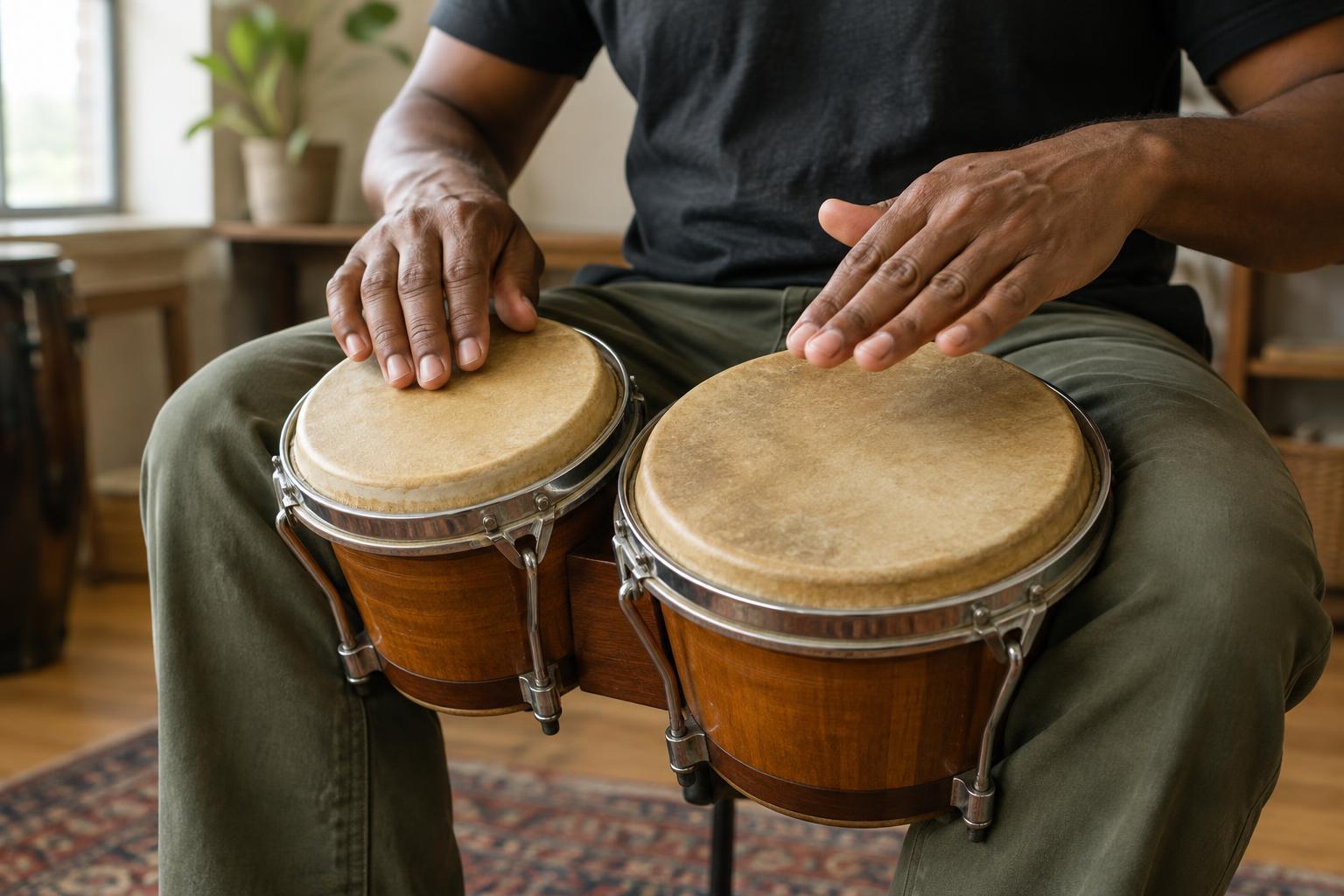
PercussionThe martillo is a foundational bongó pattern in many Afro-Cuban styles. Learn how to make its light high-drum taps, muted heel-and-fingertip strokes, and low-drum note work together, then build a steady practice loop you can hear and feel.
Read article · 4 min↗
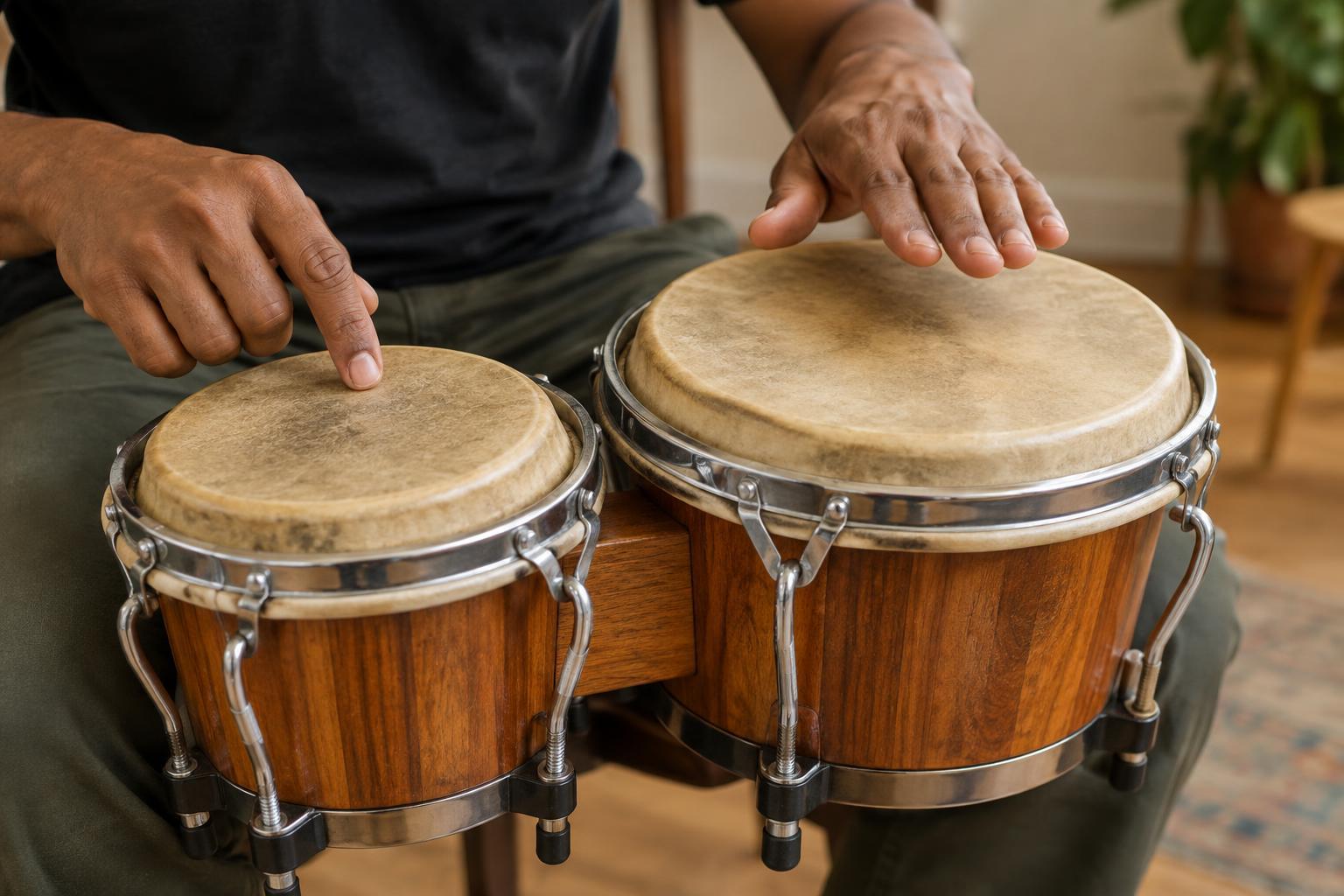
PercussionThe two drums of the bongó share a frame but speak in contrasting voices. Learn how head size, tension and playing technique shape the bright macho and fuller hembra, then try a simple exercise to hear the difference.
Read article · 4 min↗
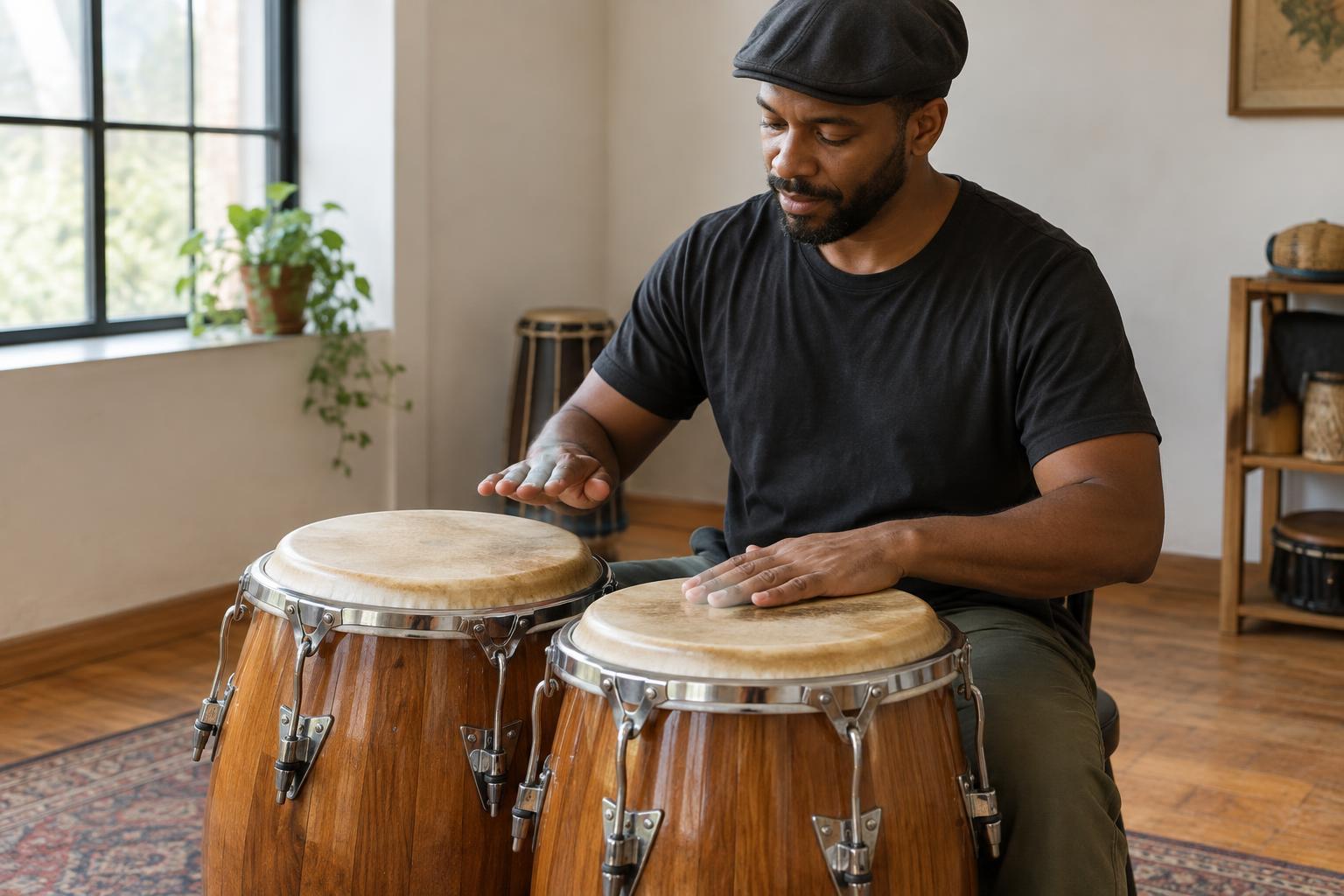
PercussionConga technique is about more than where the hand lands. Learn how wrist alignment, relaxed fingers, drum setup, and patient practice can help you produce clearer sounds without forcing every stroke.
Read article · 4 min↗
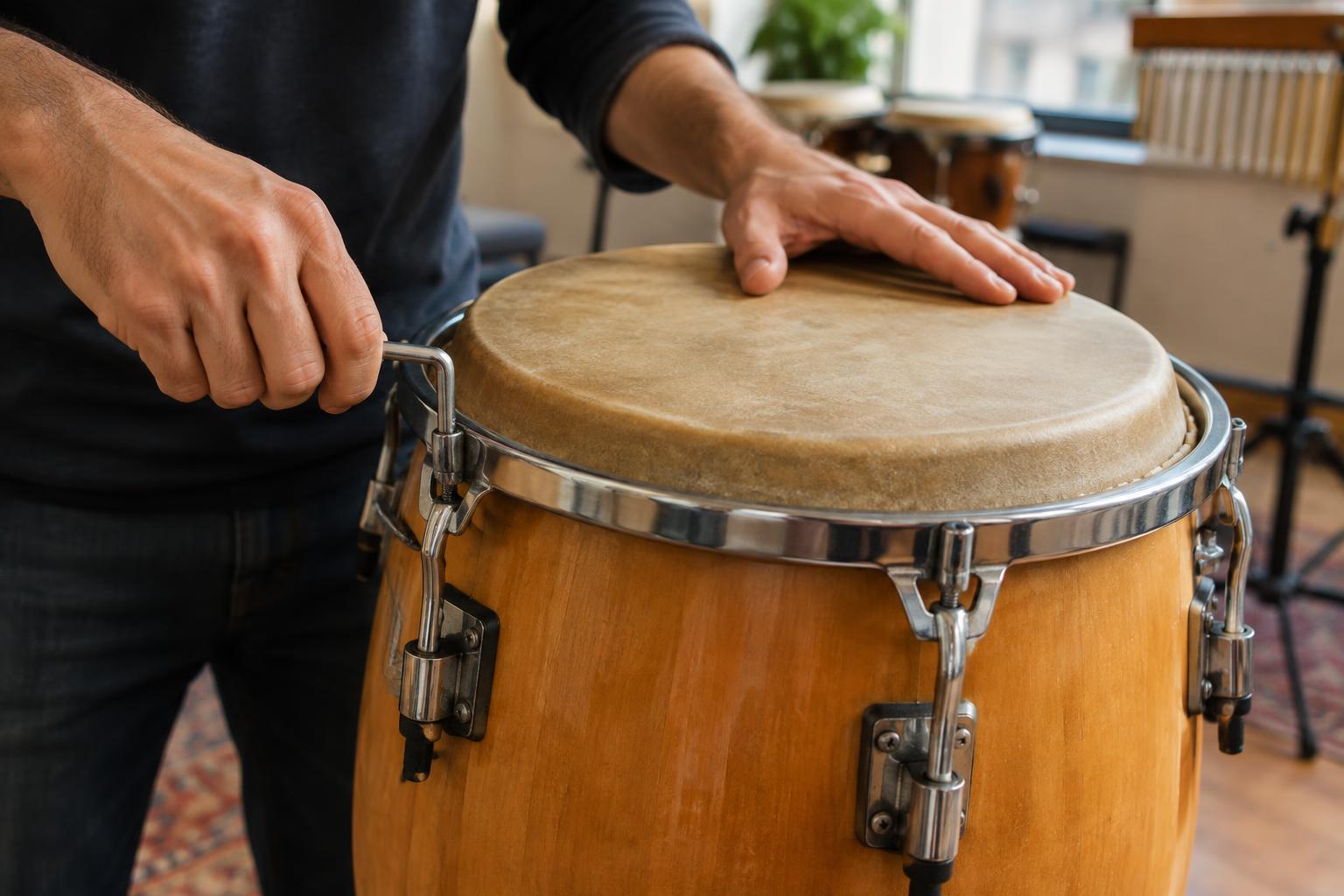
PercussionA conga should respond with a clear, comfortable tone, not feel strained under the wrench. Learn a gradual tuning method that keeps tension even around the head, helps you hear when to stop, and accounts for changes in a natural skin.
Read article · 4 min↗
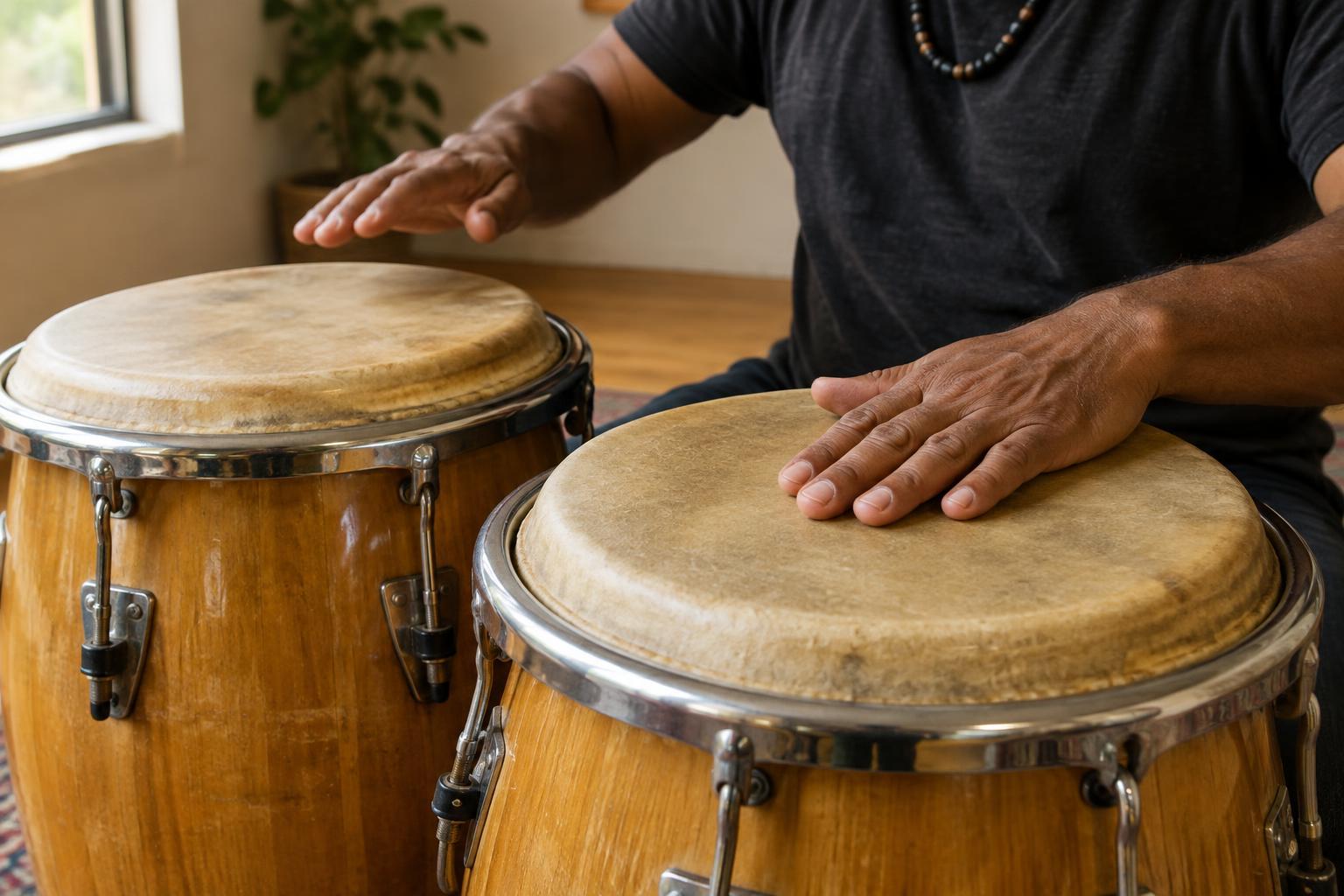
PercussionThe conga tumbao is easier to learn when you separate its sounds before trying to play the whole groove. Start with a steady count, build a simple eight-stroke pattern, and listen for how the open tones lead into the next measure.
Read article · 3 min↗
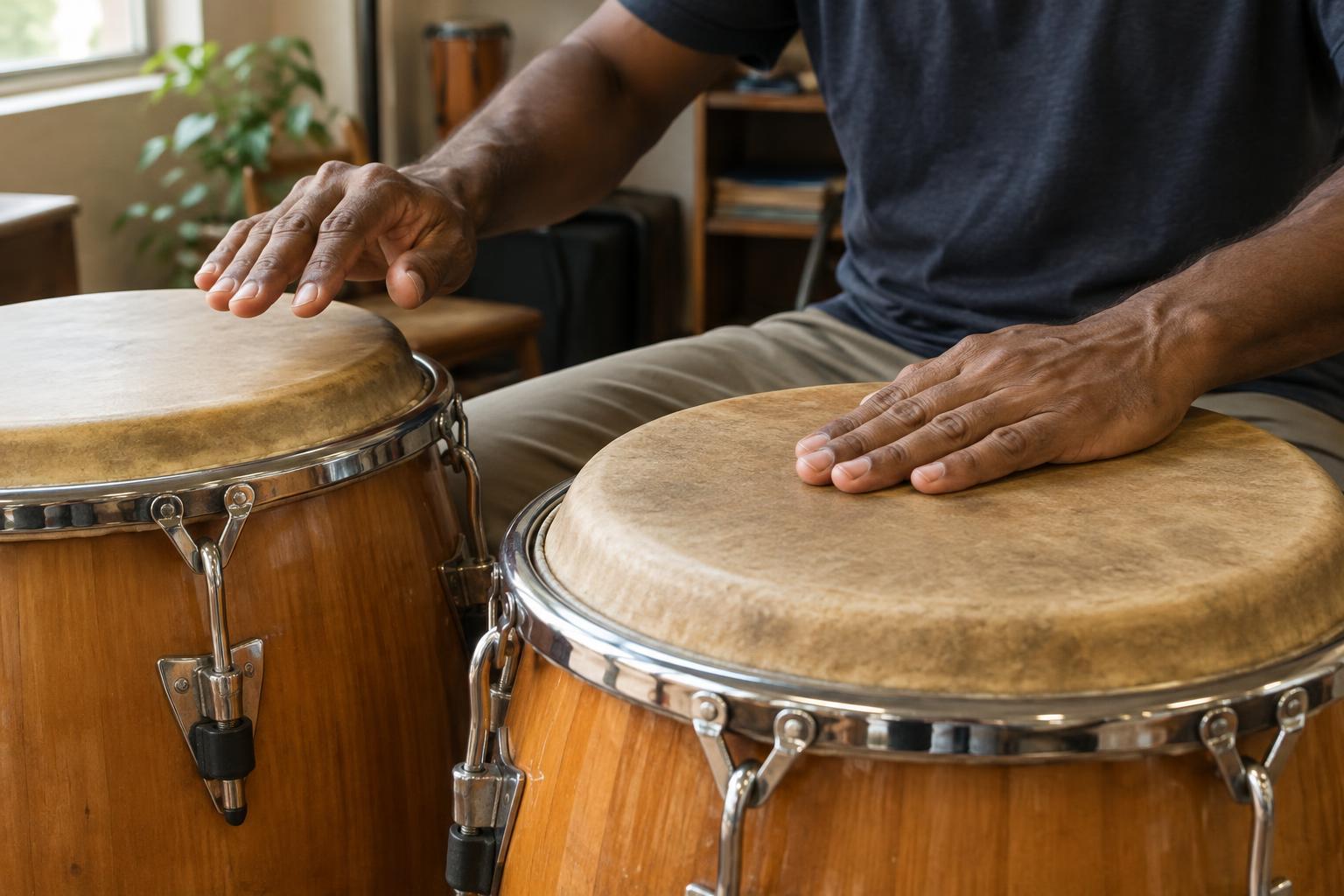
PercussionLearn how five common conga sounds are made, how to tell them apart by ear and how to practice them as parts of a musical phrase rather than isolated strikes.
Read article · 4 min↗
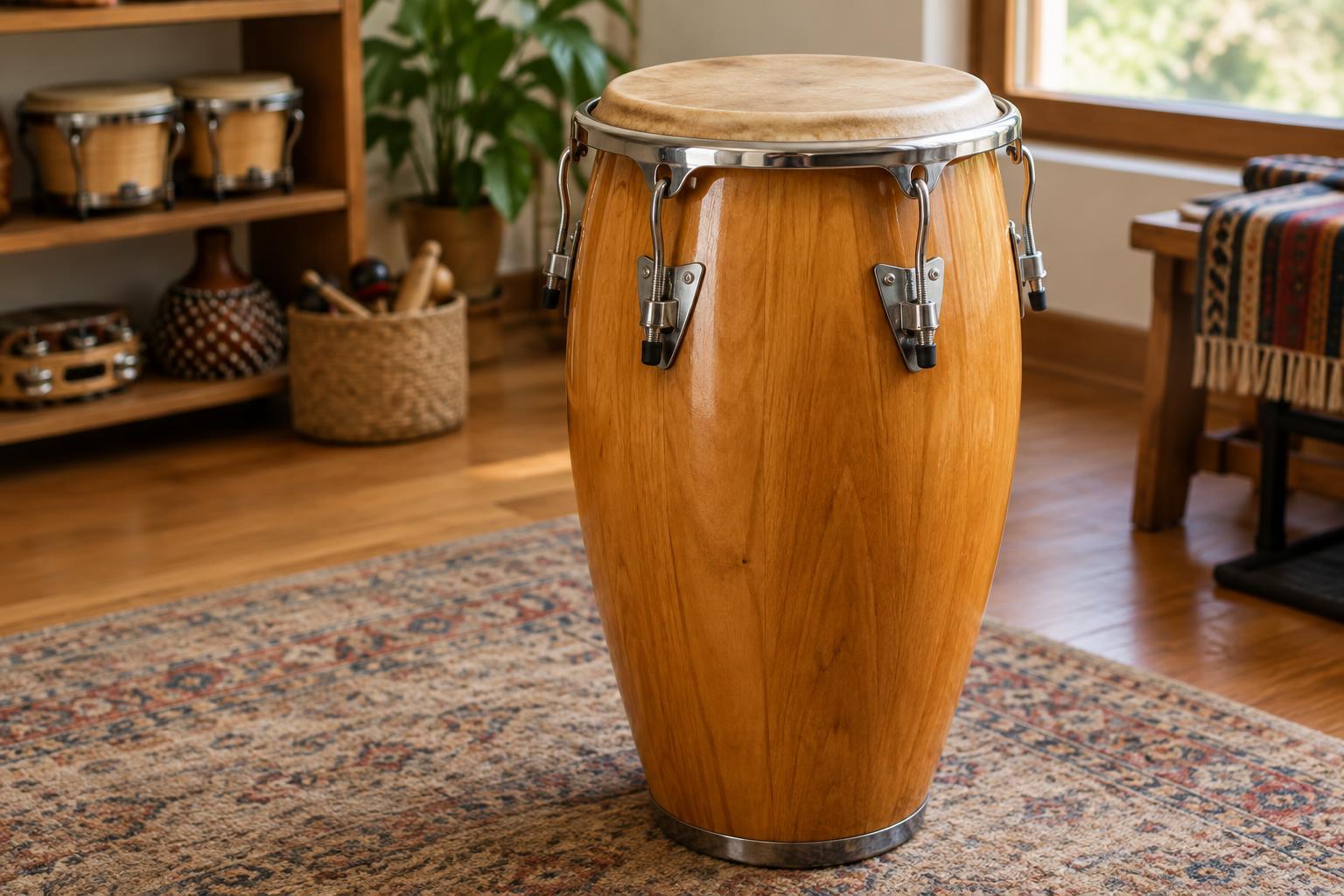
PercussionA conga drum is more than a hollow shell with a stretched head. Learn what its main parts do, how they shape sound and feel, and what to notice when listening, playing or caring for the instrument.
Read article · 4 min↗